


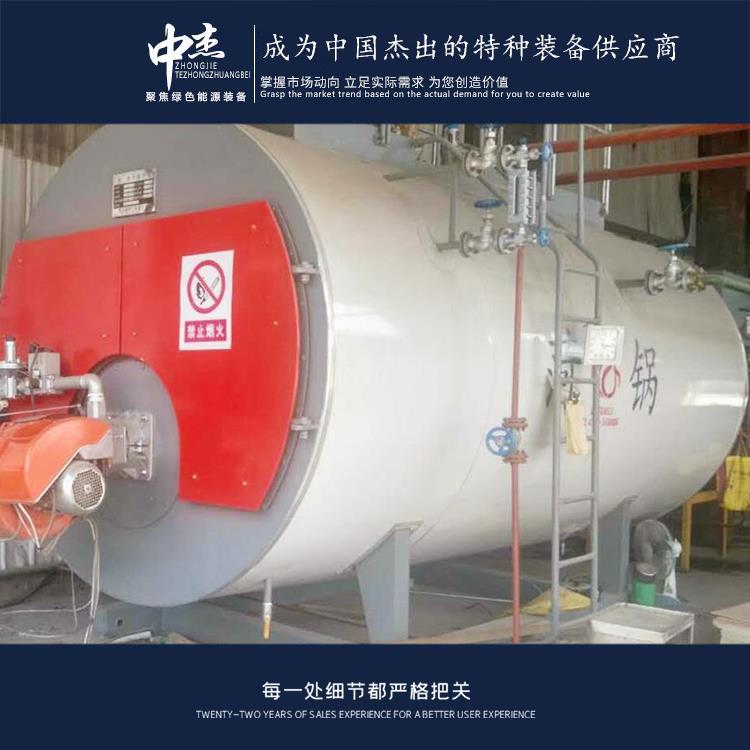

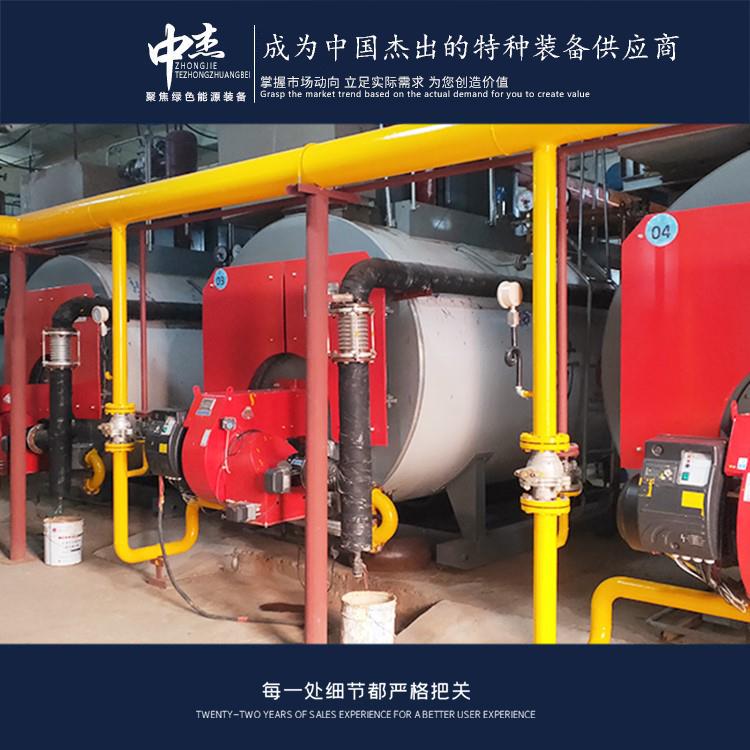
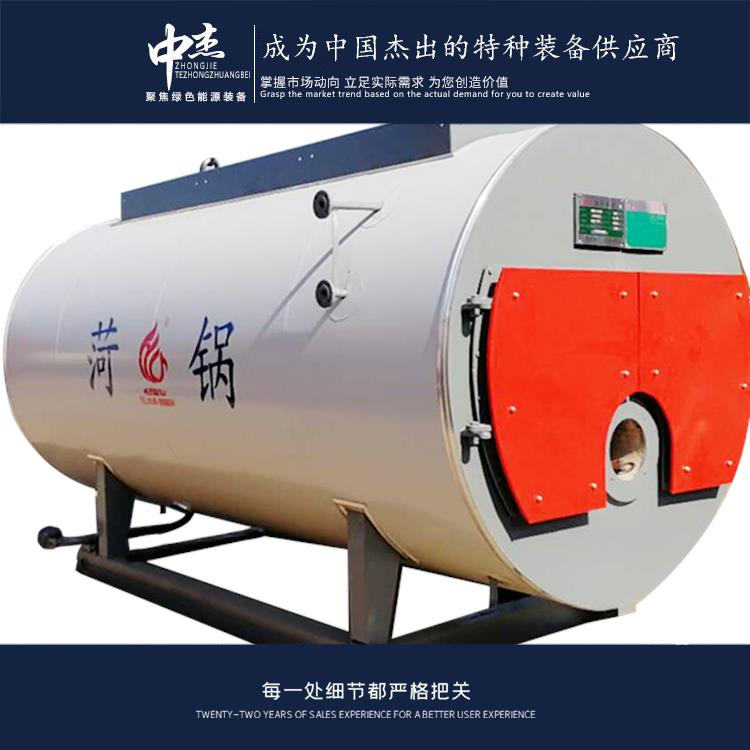


















Shandong Zhongjie Special Equipment (formerly Heze Boiler Factory Co., Ltd.) was established in 2001, located at No. 2218 Jinnan Road, Economic and Technological Development Zone, Heze City. With a registered capital of 50 million yuan and total assets of 500 million yuan, the company has seven business centers: boilers, deep-freeze containers, pressure vessels, central air conditioning, engineering installation, international trade, and Internet of Things. It has three factory sites on Jinnan Road, East Changjiang Road, and Bohai Road, covering a total area of 200,000 square meters, with the main workshop spanning 83,000 square meters. The company currently employs 710 people, including 247 engineers and technicians, and 82 intermediate-level technicians. In December 2016, it was recognized as a "High-tech Enterprise" by the Science and Technology Department. In June 2021, it was identified as a "Specialized and New Enterprise in Shandong Province" by the Industrial and Information Technology Department. In June 2022, it was recognized as a "Gazelle Enterprise in Shandong Province" and in August 2022, as a "Specialized and New Small Giant Enterprise" by the Ministry of Industry and Information Technology.
A thermal oil heater is a device that uses thermal oil as a heat transfer medium, transferring heat energy produced by combustion or electric heating to the equipment or process that requires heating. The working principle of a thermal oil heater involves heating the thermal oil to a certain temperature and then circulating it through a pump to the equipment or process being heated, transferring heat to the heated object. The thermal oil exchanges heat with the heated object in a heat exchanger, raising the temperature of the object while cooling down the oil, which then returns to the furnace for reheating in a continuous cycle. The heat transfer process in a thermal oil heater primarily relies on the thermal conductivity of the oil. Thermal oil has high thermal conductivity, enabling rapid heat transfer to the heated object for efficient heating. Additionally, it boasts high thermal stability, allowing it to operate stably at high temperatures without decomposition or oxidation.
A thermal oil heater typically consists of the furnace body, combustion system, flue gas system, heat exchanger, circulating pump, and control system. The furnace body is the main part of the heater, used to contain the thermal oil and the combustion system. The combustion system is responsible for burning fuel to produce heat energy and heat the thermal oil. The flue gas system is used to exhaust the flue gases produced by combustion. The heat exchanger is the equipment where heat exchange occurs between the thermal oil and the heated object. The circulating pump is responsible for circulating the thermal oil back to the furnace for reheating. The control system is used to monitor and control the operating state of the thermal oil heater to ensure safe and stable operation.
Thermal oil heaters offer high temperature control accuracy, fast heating speed, low energy consumption, and simple operation, and are widely used in industrial fields such as chemical processing, textiles, food processing, papermaking, as well as in special heating processes.
The management system for gas heat-conducting oil furnace equipment mainly includes the following aspects:
1. Equipment Safety Management System: Establish and improve the safety management system for gas heat-conducting oil furnace equipment, clarify responsibilities and authorities, and ensure the safe operation of the equipment. This includes safety operation procedures, emergency response plans, equipment inspection and maintenance schedules, etc.
2. Equipment Maintenance Management System: Establish an equipment maintenance management system, clarify maintenance responsibilities and plans. This includes regular equipment inspections, maintenance, and repairs to ensure normal and safe operation of the equipment.
3. Equipment Operation Management System: Establish an equipment operation management system, clarify operation procedures and requirements. This includes start-up, shutdown, adjustment, and monitoring processes to ensure equipment safety and operation.
4. Equipment Accident Management System: Establish an equipment accident management system, clarify reporting, investigation, and handling procedures for accidents. This includes reporting requirements for equipment accidents, responsibility追究, cause analysis, and improvement measures to reduce accidents and minimize losses.
5. Equipment Training and Assessment System: Establish an equipment training and assessment system to ensure operators possess necessary skills and knowledge. This includes equipment operation training, safety training, and technical training, along with regular assessments and evaluations of operators.
6. Equipment Inventory and Record Management System: Establish an equipment inventory and record management system to record equipment operation, maintenance records, and accident records. This includes inventory management, maintenance record filling and preservation, and accident record organization and analysis for equipment management and issue tracing.
The above are some basic contents of the management system for gas heat-conducting oil furnace equipment incidents. Specific management systems should be formulated and improved based on actual conditions. At the same time, relevant laws and regulations and standards must be followed to ensure the safety and environmental performance of the equipment.
Steam boiler equipment water treatment refers to the process of treating water in steam boilers to ensure normal operation and extend the lifespan of the equipment. Here are some basic knowledge points about steam boiler equipment water treatment:
Water Quality Requirements: The water quality in steam boilers is of high importance, usually requiring the removal of impurities, dissolved oxygen, and hardness substances. Impurities and hardness substances can lead to scaling and corrosion on the inner walls of the boiler, while dissolved oxygen can cause corrosion and the formation of bubbles.
Removal of Impurities: Common methods for removing water impurities include sedimentation, filtration, and ion exchange. Sedimentation involves adding chemicals to make impurities settle, filtration removes impurities through filtering media, and ion exchange uses resins to adsorb and exchange ions to remove impurities from the water.
Adjusting Hardness: The hardness substances in water are mainly salts of calcium and magnesium, which can cause scaling on the inner walls of the boiler. Hardness can be adjusted by adding chemicals or using water softening equipment to prevent scaling issues.
Removing Dissolved Oxygen: Dissolved oxygen can cause corrosion and the formation of bubbles. It can be removed by adding oxidizing agents or using deaeration equipment.
Controlling pH Level: The pH level of water in steam boilers affects equipment corrosion and scaling. It is usually necessary to control the pH level within an appropriate range, using buffering agents or regulators to adjust the pH level.
Regular Testing and Maintenance: Regular water quality testing of steam boiler equipment, including measuring hardness, dissolved oxygen, and pH levels, should be conducted. Based on the test results, appropriate water treatment measures and maintenance should be implemented.
Steam boiler equipment water treatment is a crucial aspect for ensuring normal boiler operation and extending the lifespan of the equipment. Rational water treatment measures can effectively prevent scaling, corrosion, and malfunctions on the inner walls of the boiler.
The reasons for uneven heat distribution in steam boilers may include the following aspects:
- Uneven combustion: During the combustion process, an uneven mixture of fuel and air, or an improperly designed and adjusted burner, can lead to uneven combustion. This results in some areas producing more heat while others produce less.
- Pipe blockage: If there is blockage or scaling in the transmission pipes of a steam boiler, it can cause uneven heat transfer. Blockage or scaling hinders steam flow, limiting heat transfer in some areas while allowing better heat transfer in others.
- Heat exchanger issues: In a steam boiler, problems such as scaling, corrosion, or blockage in the heat exchanger can lead to uneven heat transfer. These issues affect the heat conduction efficiency of the heat exchanger, impacting heat transfer in certain areas.
- Water level problems: Inaccurate or unstable water level control in a steam boiler can result in uneven steam production. Both high and low water levels can affect steam production and distribution, leading to uneven heat distribution.
- Boiler load changes: Changes in boiler load can also cause uneven heat distribution. When the load suddenly increases or decreases, the boiler's heat production and distribution may not adjust in time, resulting in uneven heat distribution.
To address the issue of uneven heat distribution in steam boilers, regular inspection and maintenance of the boiler equipment are necessary to ensure the normal operation of combustion and heat exchange processes. Additionally, reasonable adjustment of burners and control systems, maintaining stable water levels, cleaning pipes and heat exchangers, and improving efficiency are essential.
Shandong Zhongjie Special Equipment, welcome customers to our factory for business discussions.
WeChat Official Account

Scan to follow Official Account



















