


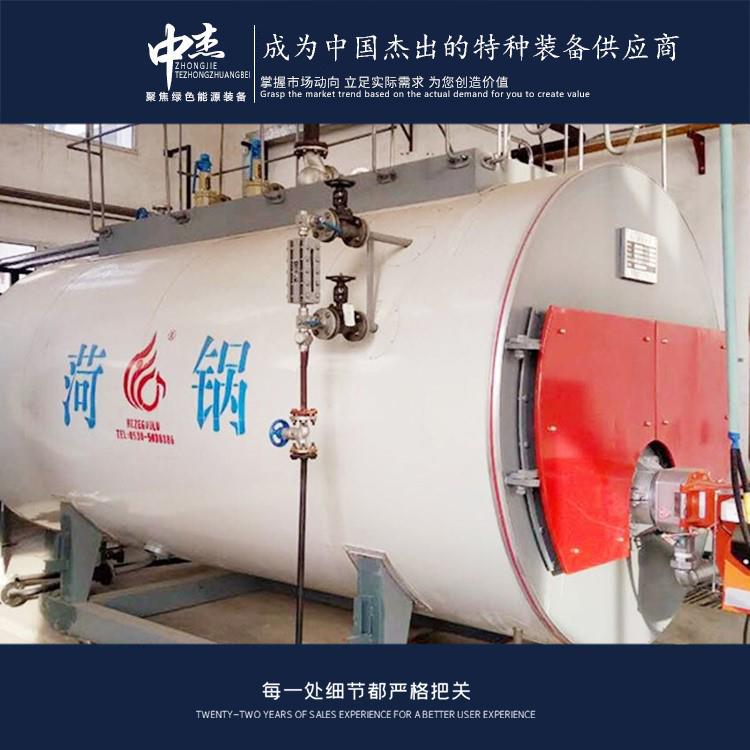

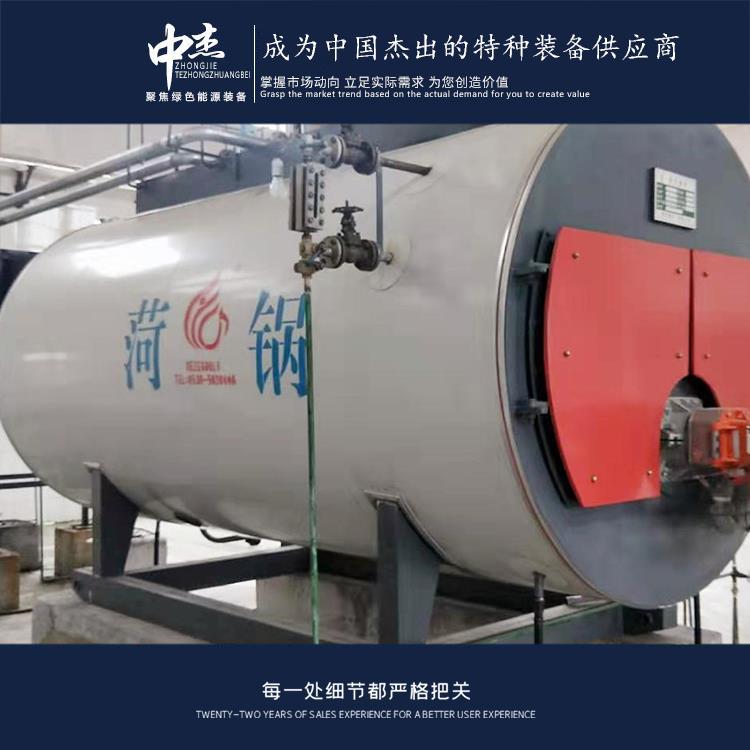
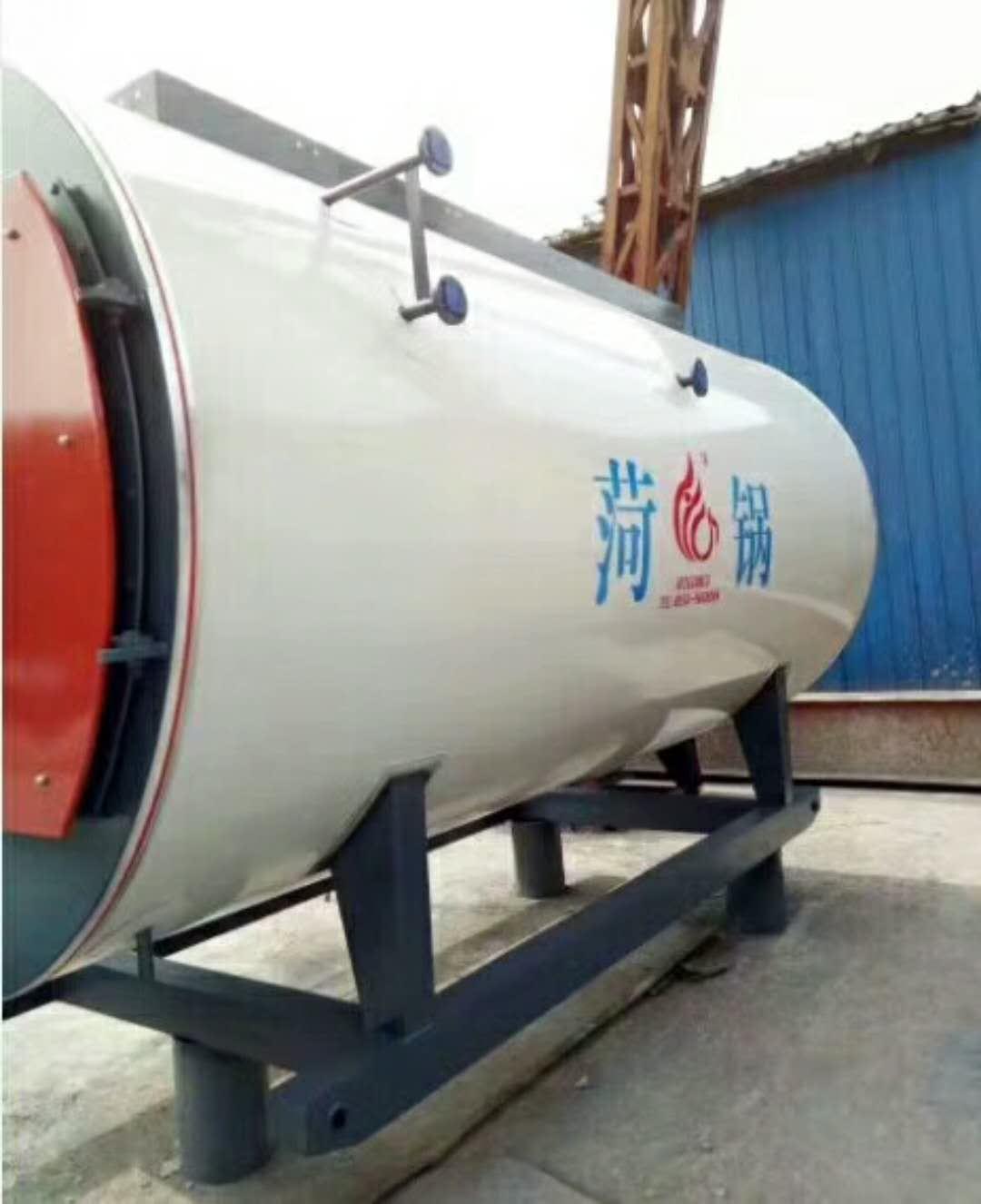


















Shandong Zhongjie Special Equipment's main products include: fuel (gas) boilers, organic heat carrier boilers, biomass boilers, waste heat recovery boilers, and other boiler products; vacuum insulation cryogenic pressure vessels such as LNG tanks, oxygen/nitrogen/argon tanks, and CO2 tanks; pressure vessel products like denitrification engineering equipment, heat storage and energy storage equipment, and complete chemical equipment; as well as central air conditioning and HVAC equipment such as ground (water) source heat pumps, air source units, water-cooled screw units, and air-cooled modular units. Planned products include large-scale energy centers, LNG transport vehicles, LNG tank containers, and other green energy equipment.
To extend the service life of steam boilers, the following measures can be taken:
- Regular Maintenance: Conduct regular maintenance on the boiler, including cleaning the burner, flue, and heat exchanger, inspecting and replacing worn parts, to ensure normal operation and efficiency.
- Water Quality Control: Maintain good water quality in the boiler to prevent scale and corrosion from damaging the boiler. Regularly test water quality and take appropriate water treatment measures based on test results, such as descaling and replenishing missing chemicals.
- Control the Combustion Process: Reasonably control the combustion process to ensure the normal operation and efficiency of the burner. Regularly check the burner's working condition, adjust combustion parameters, and avoid issues like overheating or underheating.
- Regular Cleaning of Flues and Heat Exchangers: Regularly clean the flues and heat exchangers to remove accumulated dust and dirt, maintain heat exchange efficiency, and avoid overheating and energy loss.
- Regular Inspection of Safety Devices: Regularly inspect the boiler's safety devices, including safety valves, pressure switches, and water level controllers, to ensure normal operation and ensure safe boiler operation.
- Record Keeping and Monitoring: Record the boiler's operating parameters, maintenance records, and fault conditions, regularly monitor and analyze them, and address issues promptly.
- Train Operators: Ensure operators have sufficient knowledge of boiler operation and maintenance, operate and maintain the boiler correctly, and avoid damage caused by operational errors and improper maintenance.
- Regular Repairs: Based on the boiler's usage and the manufacturer's recommendations, regularly perform major repairs and maintenance, replace worn-out parts, and extend the boiler's service life.
- Please note that for safety and effectiveness, maintenance and repairs should be performed by qualified personnel.
Hot water boilers and steam boilers are two common types of boilers, with differences in their working principles, application scenarios, and operating parameters:
- Working Principle: Hot water boilers provide heat by heating water, which is then circulated into the heating system. Steam boilers generate steam by heating water, which is then sent to the heating system.
- Operating Temperature and Pressure: Hot water boilers typically operate at temperatures between 60°C and 100°C with lower pressure. Steam boilers usually operate at temperatures between 100°C and 200°C with higher pressure, typically between 0.7MPa and 2.5MPa.
- Heating Method: Hot water boilers circulate hot water through the system using a pump, with heating primarily through conduction and convection. Steam boilers transport steam through pipelines to the heating system, with heating primarily through steam convection.
- Application Scenarios: Hot water boilers are suitable for heating, bathing, swimming pool heating, and other scenarios where hot water is needed in industrial processes. Steam boilers are used in industrial applications requiring steam, such as power plants, chemical factories, and textile mills.
- Equipment Structure: Hot water boilers are generally simpler and have a smaller structure with less floor space. Steam boilers are typically more complex, with a larger structure and more floor space.
- Note: In some special application scenarios, hot water and steam boilers may overlap, such as in industrial processes that require both hot water and steam. Therefore, when selecting a boiler type, it is necessary to consider specific needs and application scenarios.
Prior to starting the heating gas hot water boiler, the following proper procedures must be followed:
- Check the gas supply system: Ensure the gas supply system is operating correctly, inspect gas pipelines, valves, and pressure regulators, etc., to ensure there are no leaks or blockages in the gas supply.
- Inspect the water system: Check the water circulation system of the heating system, including pumps, valves, and pipes, to ensure the waterways are clear, with no leaks or blockages.
- Check the electrical system: Inspect the boiler's electrical system, including power connections, controllers, and sensors, to ensure electrical equipment is functioning properly.
- Check the safety devices: Inspect the boiler's safety devices, including safety valves, pressure switches, and water level controllers, to ensure they are working correctly and ensure the safe operation of the boiler.
- Prepare for ignition: According to the boiler's operating instructions, prepare the tools and equipment required for ignition, including igniters and ignition power.
- Open the gas valve: Slowly open the gas valve to ensure a steady gas supply and avoid gas surges.
- Ignition start-up: Follow the boiler's operating instructions to start the ignition. Perform the corresponding operations according to the boiler model and control system to ensure smooth ignition.
- Monitor operation status: After starting, closely monitor the boiler's operating status, including combustion, water level, and pressure, to ensure normal operation without any abnormalities.
- Adjust parameters: Adjust the boiler's parameters according to actual needs, including temperature, pressure, and water level, to meet the requirements of the heating system.
- Regular maintenance: After starting, perform regular maintenance, including cleaning the burner, checking water level and pressure, and replacing worn parts, to ensure normal operation and safety of the boiler.
- It is recommended to refer to the boiler's operation manual and manufacturer's guidelines before starting the heating gas hot water boiler to ensure correct and safe operation. If necessary, seek assistance from personnel for operation and maintenance.
Steam boilers produce a certain amount of wastewater during operation, which requires effluent treatment. Here are the general steps for steam boiler effluent discharge:
Preparation: Before discharging, ensure the steam boiler is turned off and the pressure inside the boiler has been reduced to a safe level.
Open the Drain Valve: Locate the appropriate drain valve according to the steam boiler's design and open it. The drain valve is typically found on the bottom or near the bottom of the boiler's drain pipe.
Discharge Wastewater: After opening the drain valve, wastewater will flow out of the drain pipe. Depending on the need, use a drain pump or gravity to remove the wastewater.
Observe the Wastewater: During the discharge process, observe the wastewater's color, turbidity, and odor to determine if there are any abnormalities, such as sediments, impurities, or odors.
Close the Drain Valve: Close the drain valve once the wastewater has been discharged or the predetermined effluent target has been reached.
Clean the Drain System: Regularly clean the drain system to prevent blockages or accumulation of debris, ensuring the system remains clear.
Note that the specific steps and frequency of steam boiler effluent discharge may vary depending on the model, usage conditions, and operational requirements of the boiler. Therefore, it is advisable to refer to the boiler's operation manual or consult with experts for proper and safe operation.
Our company places great emphasis on technological innovation and R&D, boasting 1 city-level enterprise technology center in Heze City. We have established testing facilities for non-destructive testing, physical and chemical testing, welding testing, hydrostatic testing, etc. We are equipped with over 600 instruments and equipment, including CNC machine tools, X-ray flaw detectors, digital ultrasonic flaw detectors, mechanical property testing machines, chemical analyzers, spectrometers, tensile testing machines, plasma welding machines, and more. The key products we have developed, such as welding for temperature and pressure vessels, biomass boiler emissions reduction, and waste heat utilization, have successively been included in multiple Shandong Provincial Department of Industry and Information Technology science and technology innovation projects, Shandong Provincial key projects, and Heze City innovative and excellent projects. We have cumulatively obtained 27 authorized utility models, 16 authorized inventions, participated in drafting 2 standards, 2 industry standards, and registered 15 trademarks. Our technical team, in collaboration with Professor Yajiang Li of Shandong University, has developed deep cryogenic container processing technology using the international plasma arc + wire filling argon arc welding (PAW-GTAW) technology. After provincial-level scientific and technological achievement appraisal, the technology level has reached an international standard in the field of deep cryogenic container manufacturing.
Choose ZJET Customized Solutions, join hands to create brilliance together!
WeChat Official Account

Scan to follow Official Account



















