


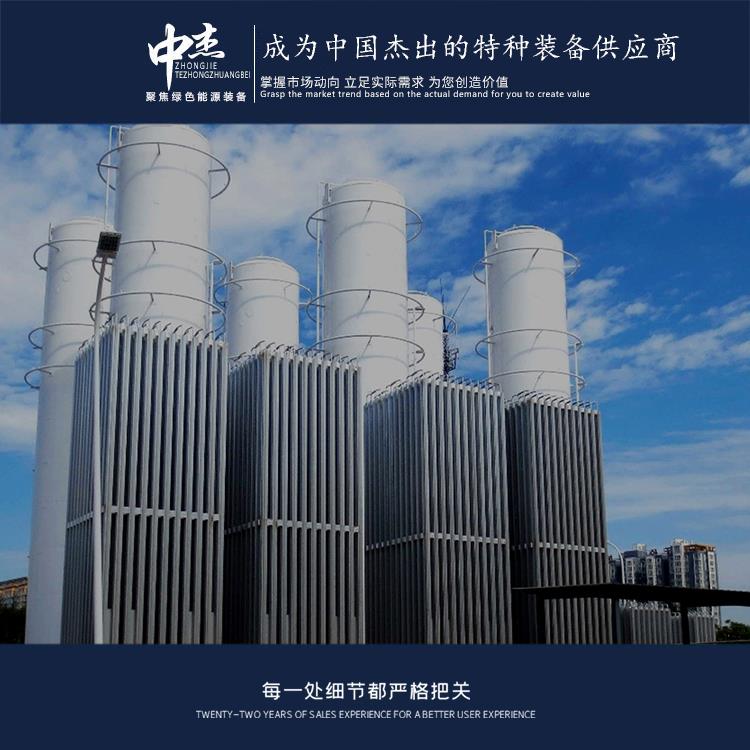

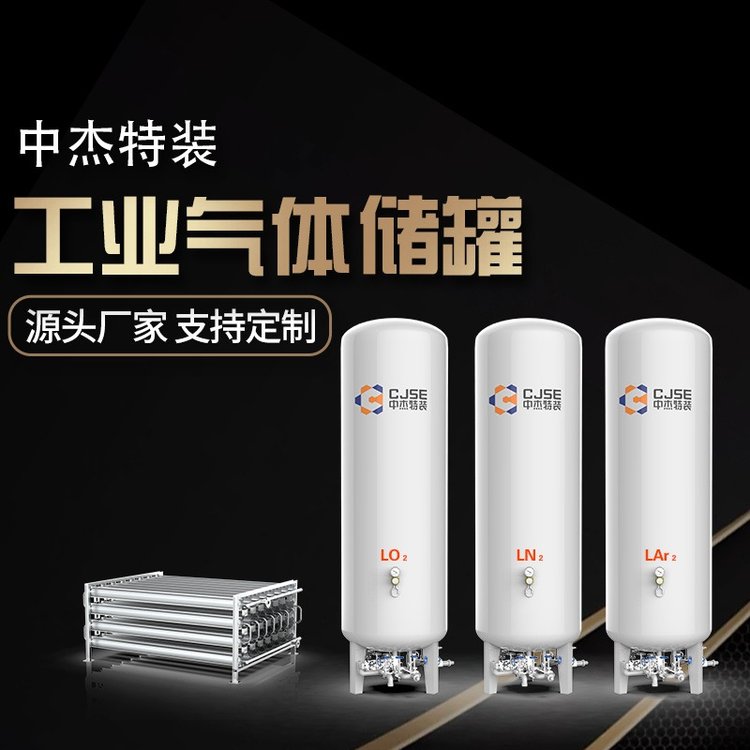
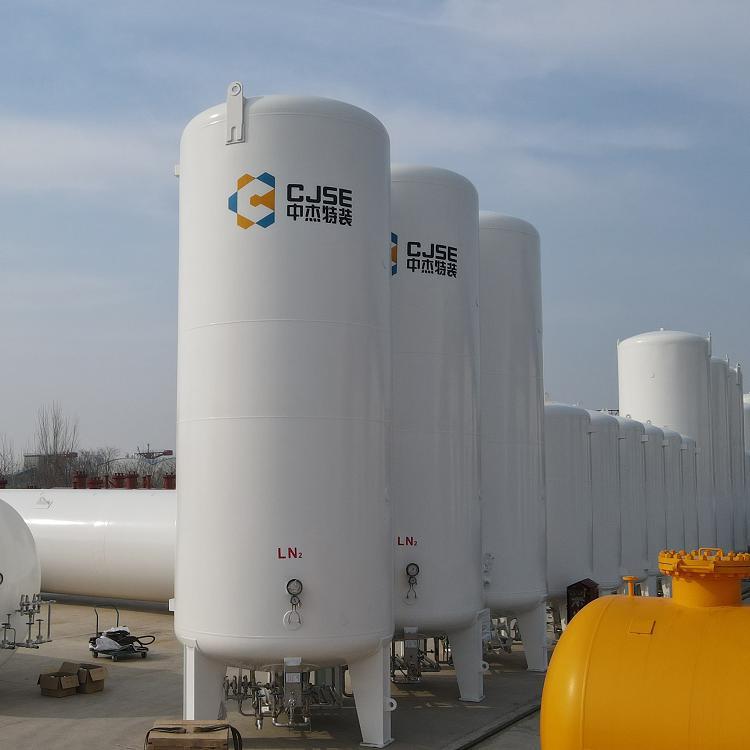


















Shandong Zhongjie Special Equipment's main products include: fuel (gas) boilers, organic heat carrier boilers, biomass boilers, waste heat boilers, and other boiler products; vacuum insulation deep cooling pressure vessels such as LNG tanks, oxygen/nitrogen/argon tanks, CO2 tanks; pressure vessel products such as denitrification engineering equipment, heat storage and energy storage equipment, complete chemical equipment sets; central air conditioning and ventilation equipment such as ground (water) source heat pumps, air source units, water-cooled screw units, and air-cooled modular units. Planned products include large-scale energy centers, LNG transport vehicles, LNG tank containers, and other green energy equipment.
清洁低温液体储罐的过程需要谨慎操作,以确保安全性和有效性。以下是一般的清洁步骤: 安全准备:在清洁液体储罐之前,确保储罐内的液体已经完全排空,并且储罐的压力已经释放。确保所有相关的安全设备和阀门处于关闭状态。 防护措施:低温液体储罐通常存储着冷的液体,如液氮或液氧。在进行清洁操作时,必须佩戴适当的个人防护装备,如绝缘手套、、防护服等,以防止冷或其他伤害。 清洁剂选择:选择适合清洁低温液体储罐的清洁剂。清洁剂应具备良好的腐蚀性能和低温适应性。可以咨询清洁剂供应商或储罐制造商以获取建议。 清洁过程:将清洁剂注入储罐中,使用适当的工具(如喷洒器、刷子等)进行清洁。根据储罐的尺寸和污染程度,可以选择手动清洁或使用清洗设备。 冲洗和排放:清洁完成后,使用清水或其他适当的冲洗剂进行冲洗,以确保清洁剂和污物。冲洗完成后,将废水和废液排放到合适的处理系统中,遵循环境保护的相关规定。 检查和验证:清洁完成后,进行储罐的检查和验证,确保储罐内部干净、无残留物,并符合相关的安全和卫生要求。 需要注意的是,清洁低温液体储罐的具体步骤和要求可能会因不同的储罐设计和使用场景而有所差异。在进行清洁操作时,应遵循相关的安全操作规程和标准,确保操作的安全性和有效性。好咨询工程师或储罐制造商以获取具体的清洁指导。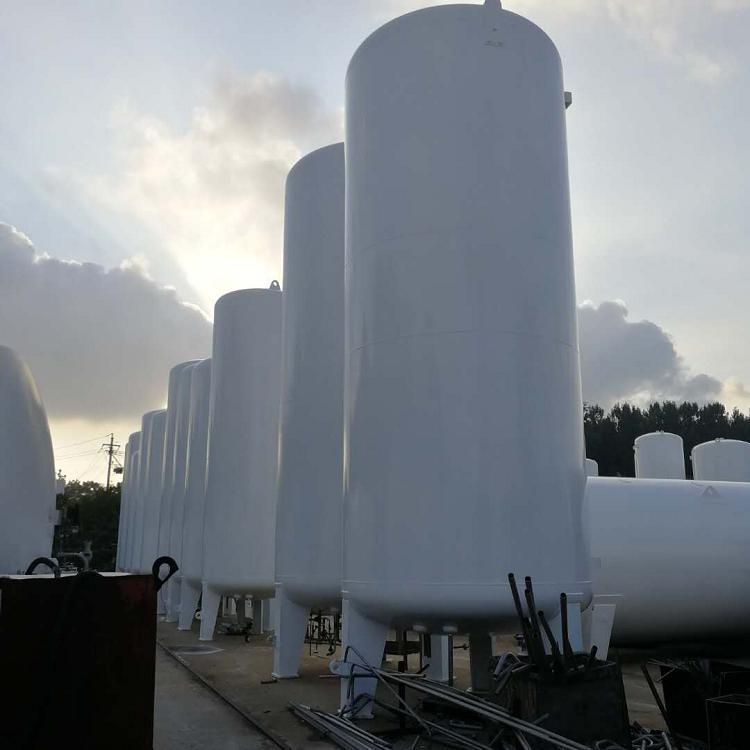
Carbon dioxide tank level gauges are devices used for measuring and monitoring the liquid level of CO2 within the tank. Depending on different working principles and application needs, common types of CO2 tank level gauges include the following:
- Buoy Level Gauge: Utilizes the buoyancy of a float to reflect the level's high or low, measuring the level through a mechanical device or electrical signal sensor connected to the float.
- Pressure Level Gauge: Measures the level by utilizing the relationship between liquid pressure and level. It calculates the level height by measuring the pressure changes on a pressure sensor.
- Ultrasonic Level Gauge: Measures the level using the propagation time of ultrasonic waves. An ultrasonic transmitter emits waves, and when the beam encounters the liquid surface, part of the beam is reflected back. The level height is calculated by measuring the reflection time.
- Capillary Level Gauge: Uses the capillary principle to measure the level. By inserting a thin tube into the liquid, the liquid rises within the tube, and the level height is calculated based on the rise.
- Level Gauge: Measures the level by reflecting waves. The transmitter emits waves, and when the beam hits the liquid surface, part of the beam is reflected back. The level height is calculated by measuring the reflection time.
These level gauges can be applied to CO2 tanks based on specific requirements and tank design. When selecting and installing level gauges, consider factors such as liquid properties, working environment, and precision requirements, ensuring they match the tank's safe operation and monitoring system.
Before using a CO2 storage tank, the following preparations must be made:
Safety Inspection: Conduct a safety check of the tank before use to ensure there are no obvious damages, corrosion, or leaks. Inspect the tank's exterior, valves, and connecting pipes to ensure they are intact and undamaged.
Tank Cleaning: Ensure the tank is clean both internally and externally. Remove any debris, dirt, and residues to ensure no substances may affect the quality or safety of the CO2.
Connecting Pipes: Check the connections between the tank and related pipes to ensure they are securely fastened and sealed. Verify the valve and pipe's on/off status to ensure they are in the correct position.
Pressure Check: Inspect the tank's pressure to ensure it is within the safe range. If necessary, use a pressure gauge or other pressure detection equipment for the check.
Ventilation and Safety Measures: Ensure adequate ventilation around the tank to prevent CO2 accumulation. During operation, follow relevant safety operating procedures and measures, such as wearing personal protective equipment and avoiding open flames.
Tank Labeling: Label the tank with relevant information, such as the type of gas stored, pressure rating, and capacity. This aids operators in correctly identifying and handling the tank.
Note that these preparations may vary depending on the specific type of tank and usage scenario. Before using a CO2 storage tank, it is recommended to refer to the relevant safety operation manuals and guidelines to ensure safe and correct operation.
Carbon dioxide storage tanks, categorized by design and application, come in various types and structures:
Vertical Tanks: Commonly used for carbon dioxide storage, vertical tanks have a cylindrical shape and are placed upright. These tanks typically have large capacities, suitable for large-scale storage and supply.
Horizontal Tanks: Another common type, horizontal tanks come in rectangular or cylindrical shapes and are placed horizontally. They are often used for smaller-scale storage and supply, ideal for limited spaces.
Spherical Tanks: A specialized type, spherical tanks have a spherical shape. They offer high strength and pressure-bearing capacity, ideal for high-pressure carbon dioxide storage and transport.
Vertical Tanks: Smaller in capacity, these tanks are cylindrical and placed upright. They are usually used for small-scale storage and supply, such as commercial and residential use.
Underground Tanks: A unique structure where the carbon dioxide tank is buried underground. These tanks save space, reduce visual impact, and provide safety and environmental protection.
These tanks are usually constructed from pressure-resistant materials (like carbon steel or stainless steel) and feature insulating properties, along with accessories such as safety valves, pressure gauges, and level indicators. The interior often includes baffles or partitions to separate different liquids or gases. Additionally, they are equipped with safety systems, such as pressure maintenance systems, leak detection systems, and fire detection systems.
Zhongjie Special Equipment adheres to the great vision of "realizing employees' dreams, creating customer value, and striving for the prosperity and strength of our motherland," focusing solely on the development of green energy equipment. We dedicate products and services with high cost-performance to society!
WeChat Official Account

Scan to follow Official Account



















