


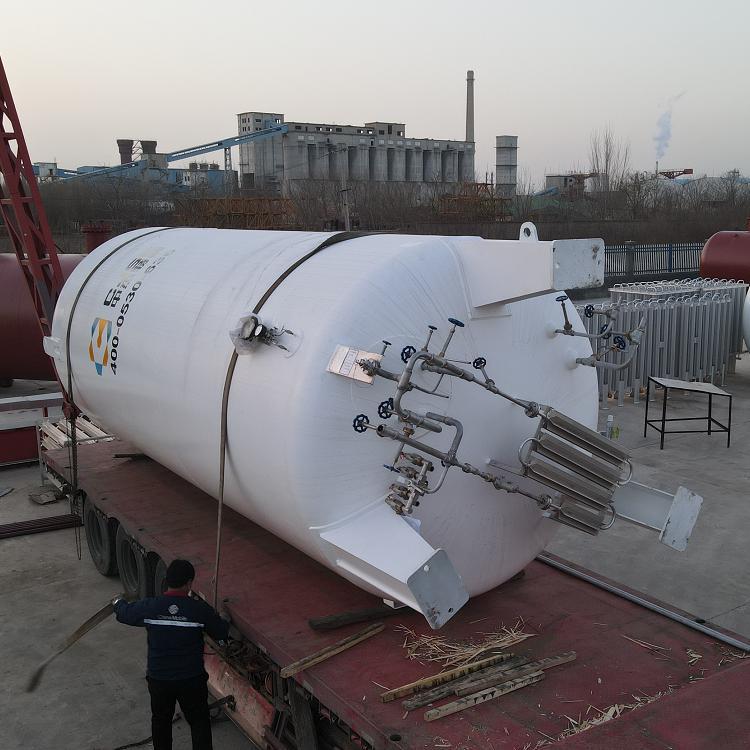

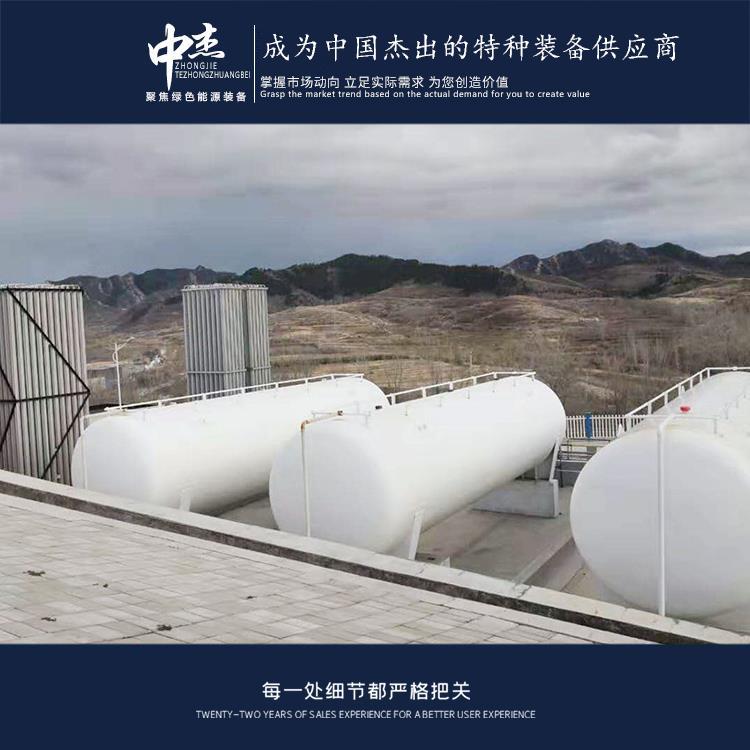
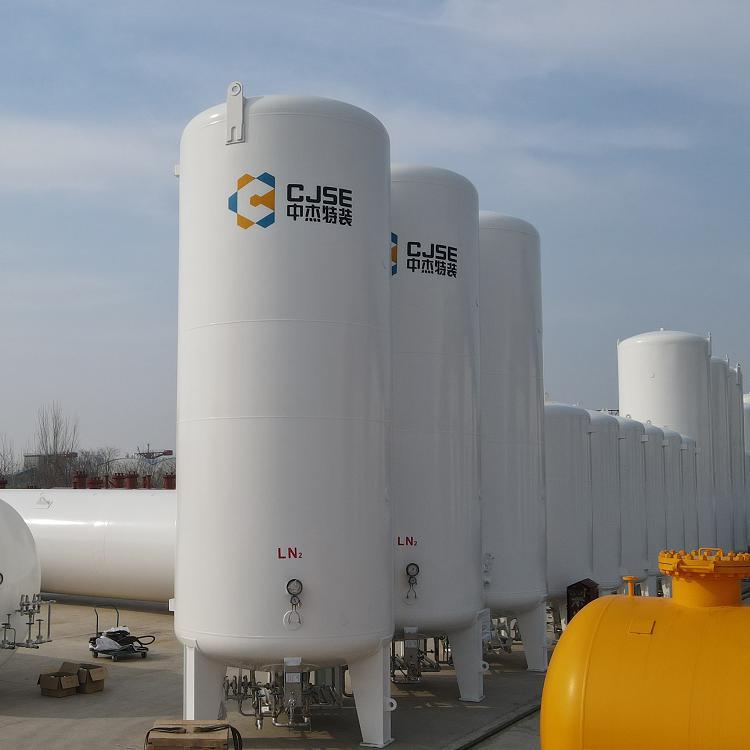


















Shandong Zhongjie Special Equipment (formerly Heze Boiler Factory Co., Ltd.) was established in 2001, located at No. 2218 Jinnan Road, Development Zone, Heze City, with a registered capital of 50 million yuan and total assets of 500 million yuan. The company has 7 business centers: boiler, deep-freezing containers, pressure vessels, central air conditioning, engineering installation, international trade, and Internet of Things. It has three factory sites on Jinnan Road, East Changjiang Road, and Bohai Road, covering a total area of 200,000 square meters, with the main workshop spanning 83,000 square meters. It currently employs 710 people, including 247 engineers and technicians, and 82 intermediate-level technicians. In December 2016, it was recognized as a "High-tech Enterprise" by the Science and Technology Department. In June 2021, it was identified as a "Specialized and New Enterprise in Shandong Province" by the Ministry of Industry and Information Technology. In June 2022, it was recognized as a "Gazelle Enterprise in Shandong Province" and in August 2022, it was identified as a "Specialized and New Small Giant Enterprise" by the Ministry of Industry and Information Technology.
To prevent risks associated with liquid oxygen tanks, the following precautionary measures can be taken:
Safety Operations and Management: Establish and enforce stringent safety operations and management systems, including proper use of storage tanks, operational procedures, and safety training. Ensure operators possess the necessary safety awareness and skills, adhere to operational procedures, and minimize operational errors and the likelihood of accidents.
Regular inspections and maintenance: Conduct regular inspections and maintenance of the liquid oxygen tanks, including visual inspections, pressure tests, and leak detection, etc. Identify and address tank issues promptly to ensure safety and reliability.
Safety Devices and Protective Equipment: Tanks should be equipped with necessary safety devices, such as pressure relief valves, level alarms, etc., as well as protective equipment like fire barriers and explosion-proof devices. These devices and equipment can take timely measures in abnormal situations to ensure the safety of the tank.
Fire Prevention Measures: Liquid oxygen contains a high concentration of oxygen, which is prone to causing fires. Consequently, fire prevention measures such as firewalls and fire extinguishers should be set up around the storage tank to prevent the spread and expansion of fires.
Leakage Control and Emergency Response Plan: Establish a liquid oxygen tank leakage control and emergency response plan, including measures for leakage control, emergency response procedures, evacuation plans, etc. In the event of a leakage incident, we can take swift action to control the leakage and ensure personnel safety.
Training and Awareness Enhancement: Conduct regular safety training for operators of liquid oxygen tanks to enhance their safety awareness and emergency response capabilities. Strengthen safety
Liquid oxygen storage tanks may deform during use. The following are common deformation defects found in liquid oxygen storage tanks:
Elastic deformation: Liquid oxygen tanks may undergo elastic deformation when subjected to external pressure or temperature changes. This deformation is typically reversible, meaning the tank will return to its original shape after the external pressure is removed or the temperature returns to normal.
Plastic Deformation: When a liquid oxygen tank is subjected to significant external force or pressure, it may experience plastic deformation. This deformation is irreversible, and the tank cannot return to its original shape. Plastic deformation can cause changes in the tank's shape, such as dents or warping.
Hot Deformation: Liquid oxygen tanks may experience hot deformation when exposed to high temperatures or temperature changes. Hot deformation can lead to changes in the tank's shape, such as expansion or contraction.
Cold Deformation: Liquid oxygen storage tanks may experience cold deformation when subjected to low temperatures or temperature changes. Cold deformation can cause changes in the tank's shape, shrinkage, or cracking.
These deformation defects may affect the structural integrity and safety of the liquid oxygen storage tank. Therefore, regular inspections and assessments of the tank's deformation are crucial to ensure normal operation and safe use. If deformation defects are found, prompt repair or replacement measures should be taken to avoid further damage and safety risks.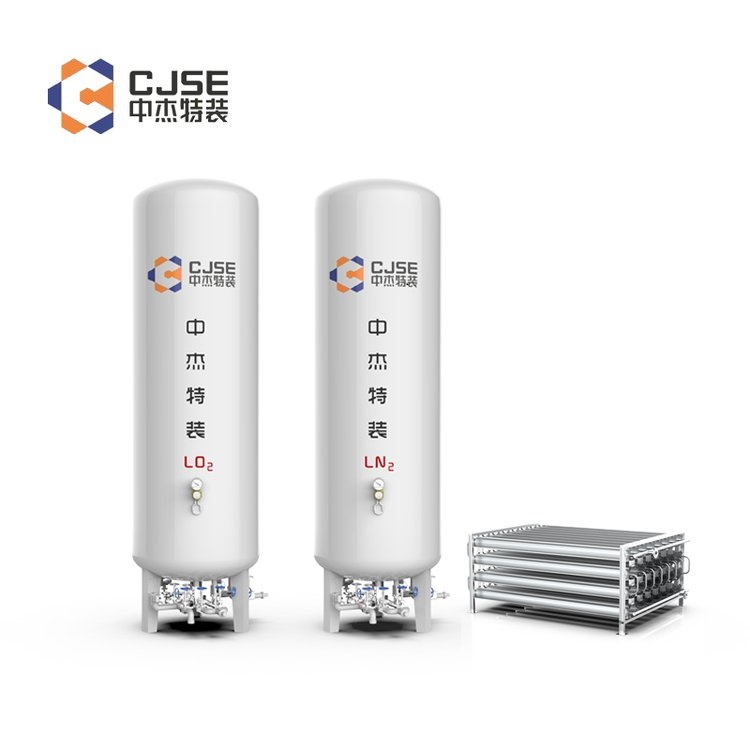
The advantages of using liquid nitrogen rapid freezing technology with liquid nitrogen storage tanks include:
Rapid Freezing Speed: With a temperature of approximately -196 degrees Celsius, liquid nitrogen can significantly lower the surface temperature of food quickly when used in a liquid nitrogen tank, achieving rapid freezing. Compared to traditional freezing methods, liquid nitrogen freezing can greatly reduce freezing time while preserving the quality and texture of the food.
Uniformly frozen effect: The rapid freezing technology with liquid nitrogen achieves quick and even freezing of food. Liquid nitrogen is喷射ed onto the surface of the food in a gaseous state, quickly absorbing heat and turning into a liquid, thereby ensuring even freezing of the food and avoiding crystallization and lumping during the freezing process.
Maintain Food Quality: Liquid nitrogen rapid freezing quickly chills food, reducing crystallization and agglomeration during the freezing process, thereby preserving the quality and texture of the food. During the rapid freezing process, liquid nitrogen rapidly lowers the surface temperature of the food, forming tiny frozen structures, effectively retaining the food's moisture and nutritional content.
Flexibility and Adaptability: The liquid nitrogen tank can be adjusted and controlled according to different types of food and freezing requirements. The injection speed and angle of liquid nitrogen can be adjusted based on the size, shape, and freezing needs of the food to achieve optimal freezing results.
Environmental Protection and Energy Saving: Liquid nitrogen rapid freezing technology is more energy and resource-efficient compared to traditional freezing methods. Liquid nitrogen evaporates quickly during the freezing process, causing environmental pollution and generating waste water and gas.
Be mindful that when using liquid nitrogen tanks for rapid freezing, it is crucial to adhere to the relevant safety operating procedures and guidelines. Ensure that operators are equipped with the necessary safety awareness and operational skills to prevent any accidental incidents. Additionally, consult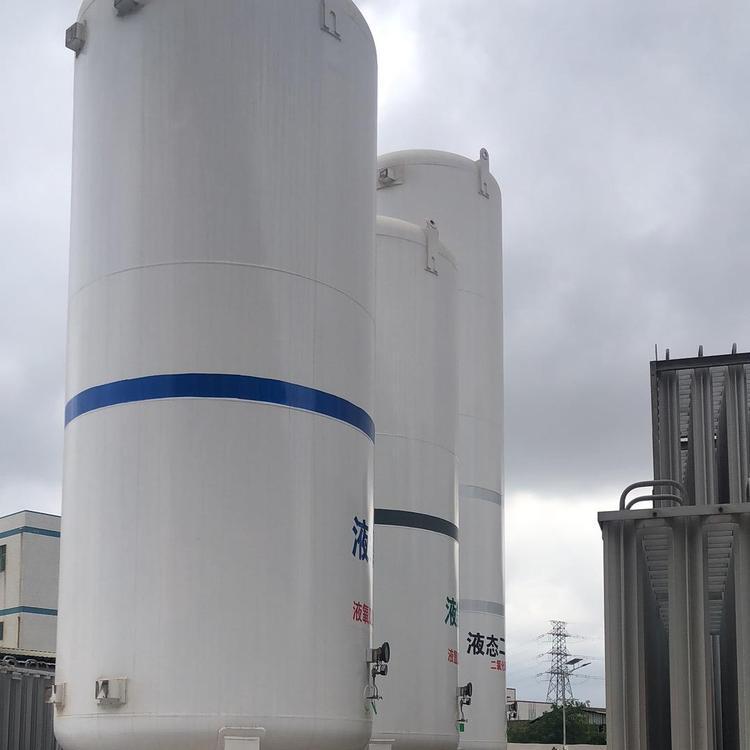
Prior to using the liquid oxygen storage tank, the following preparations must be made:
Safety Inspection: Ensure the tank and its surrounding environment are safe. Check for any damage, leaks, or other safety hazards on the tank. Make sure there are no flammable substances or other hazardous materials around the tank.
Tank Preparation: Inspect the tank's exterior, including the shell, welds, valves, and fittings. Ensure there are no visible damages or corrosion. Check that the insulation layer is intact and undamaged.
Liquid Oxygen Filling: Utilize liquid oxygen delivery equipment to fill the tank with liquid oxygen. Ensure that the flow rate and pressure of the liquid oxygen are maintained within a safe range during the filling process.
Pressure Control: Storage tanks should be equipped with pressure control devices to ensure the internal pressure of the tanks remains within a safe range. Inspect and adjust the pressure control devices to ensure they are functioning properly.
Valve Operation: Check that the tank valves and fittings are operating correctly. Ensure the valves open and close smoothly and reliably. Adjust the opening and closing status of the valves as needed.
Safety Equipment: Inspect the safety equipment around the storage tank, such as fire separation zones and alarm systems, to ensure they are functioning properly.
Operator Training: Ensure operators are proficient in the safe operation of liquid oxygen storage tanks.
Our company attaches great importance to technological innovation and R&D design. We have one municipal-level enterprise technology center in Heze City, equipped with testing facilities for non-destructive testing, physical and chemical testing, welding testing, hydrostatic testing, etc. We have over 600 types of equipment, including CNC machine tools, X-ray flaw detectors, digital ultrasonic flaw detectors, mechanical property testing machines, chemical analyzers, spectrometers, tensile testing machines, plasma welding machines, and more. The key products we have developed, such as temperature and pressure vessel welding, biomass boiler emission reduction, and waste heat utilization, have successively been selected for multiple Shandong Provincial Department of Industry and Information Technology science and technology innovation projects, Shandong Provincial key projects, and Heze City innovation and excellence projects. We have accumulated 27 authorized utility models, 16 authorized inventions, participated in drafting 2 standards, 2 industry standards, and registered 15 trademarks. Our technical team, in collaboration with Professor Yajiang Li of Shandong University, has developed deep cryogenic container processing technology using the international plasma arc + filler wire tungsten inert gas arc welding (PAW-GTAW) technology. This technology has been appraised as reaching international standards in the field of deep cryogenic container manufacturing at the provincial level. Choose Zhongjie Special Equipment, and let's create brilliance together!
WeChat Official Account

Scan to follow Official Account



















