


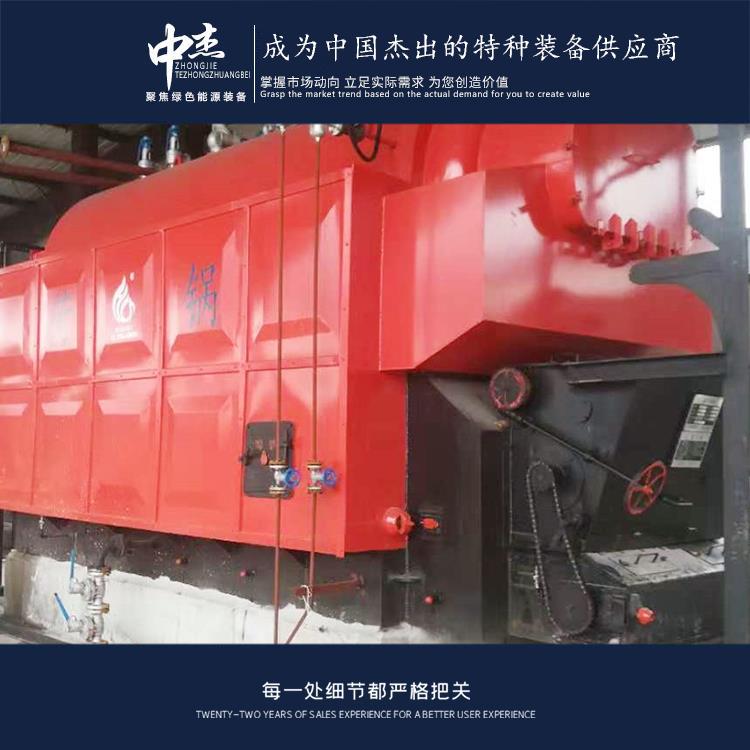

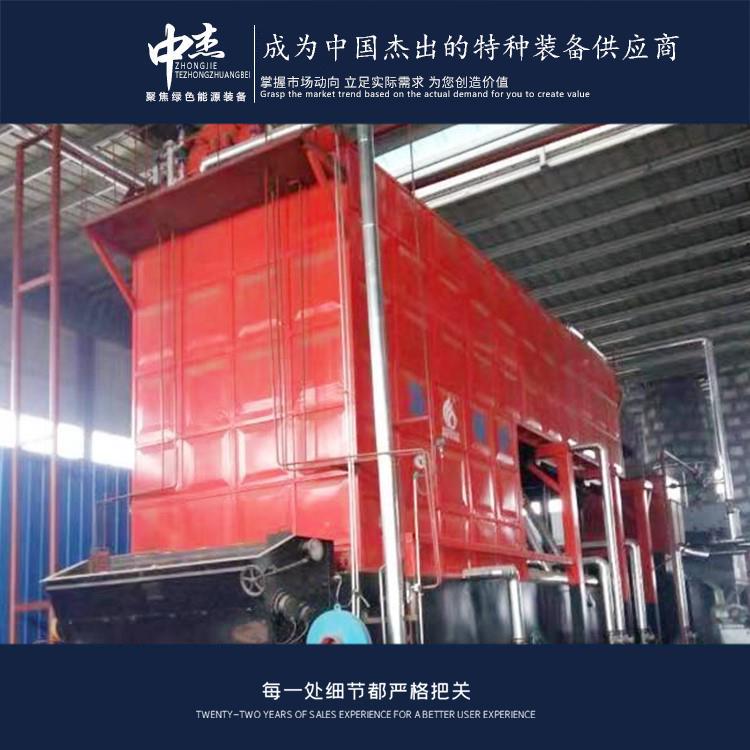
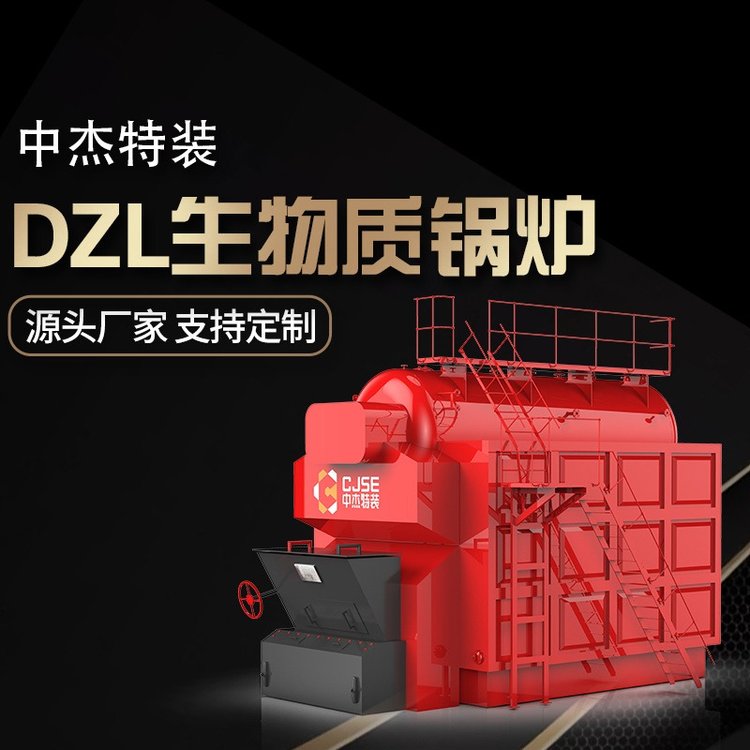


















Shandong Zhongjie Special Equipment (formerly Heze Boiler Factory Co., Ltd.) holds an A-grade boiler manufacturing license, an A2-grade pressure vessel manufacturing license, an A2-grade pressure vessel design license, a B-grade boiler installation license, and GB2/Class and GC2/Class pressure pipeline installation licenses, as well as a mechanical and electrical equipment installation contracting qualification. It is a member of the China Boiler and Water Treatment Association, the China Chemical Equipment Association, and the理事 member of the Shandong Equipment Manufacturing Association. The company has also passed the ISO9001 Quality Management System, ISO14001 Environmental Management System, OHSAS18001 Occupational Health and Safety Management System certifications, and the American ASME/U2 certification.
A biomass organic heat carrier boiler is a boiler equipment that utilizes biomass as fuel to transfer heat energy through an organic heat carrier. Compared to traditional steam boilers, biomass organic heat carrier boilers have the following performance advantages:
High Heat Efficiency: The biomass organic thermal carrier furnace uses organic thermal carriers as heat transfer mediums, offering high heat transfer efficiency. These carriers can achieve liquid phase heat transfer at low temperatures, resulting in minimal heat loss and enabling more efficient utilization of fuel's thermal energy, thereby enhancing heat efficiency.
Flexibility: The biomass organic heat carrier boiler is suitable for various biomass fuels, such as wood chips, straw, etc. With abundant biomass resources, different biomass fuels can be selected according to actual conditions, enhancing the fuel's substitutability and flexibility.
Environmental Friendliness: The biomass organic heat carrier boiler produces relatively little waste gas and slag during combustion, with low levels of pollutants emitted. The biomass fuel itself has low sulfur and low nitrogen characteristics. The slag produced after combustion can be reused as organic fertilizer or biomass fuel, reducing environmental pollution.
Safety: The biomass organic heat carrier boiler uses organic heat carriers as the heat transfer medium, featuring lower working pressure, thereby reducing safety risks during the boiler operation. Additionally, biomass fuel has a lower risk of explosion and fire during combustion compared to fossil fuels.
Renewability: Biomass organic heat carrier boilers use biomass as fuel, which is a renewable resource that can be continuously replenished through planting and cultivation. Compared to fossil fuels, the use of biomass fuel has a smaller environmental impact, promoting sustainable development.
Control methods for biomass boiler combustion systems can include the following aspects:
Fuel Supply Control: Regulate the supply quantity and speed of biomass fuel to ensure stable fuel supply. This can be achieved by adjusting the speed or on/off of the feeder.
Air Supply Control: Adjusts the air supply during the combustion process to ensure complete fuel combustion. This can be achieved by adjusting the fan's speed or by switching it on/off.
Combustion Temperature Control: Monitors the temperature within the combustion chamber and adjusts it according to the set values. The combustion temperature can be controlled by adjusting the air supply or fuel supply to the combustion chamber.
Combustion Process Monitoring: Monitor parameters during the combustion process, such as combustion temperature and pressure inside the combustion chamber, to real-time monitor the combustion status and adjust accordingly based on the monitoring results.
Oxygen Content Control: By monitoring the oxygen level within the combustion chamber and adjusting it to the set value, we ensure complete combustion of the fuel. This can be achieved by installing an oxygen sensor and regulating the air supply.
Ash Cleaning System Control: Monitors and controls the operation of ash cleaning equipment, promptly burning off the ash in the combustion chamber to ensure combustion efficiency and the normal operation of the system.
Above are some common control methods for biomass boiler combustion systems; specific control strategies and methods will vary depending on the type of boiler and system design.
The biomass boiler body is typically composed of the following components, each serving a specific function:
Furnace Chamber: The furnace chamber is the area where biomass fuel is burned, serving as the space for combustion and heat exchange. The fuel within the chamber releases thermal energy during combustion, while flue gases exchange heat with water through the furnace chamber.
Chimney Flue: The flue is a passage for the flow of flue gas, guiding the exhaust gases from the furnace to the chimney for排放. The flue gas within the flue exchanges heat with the boiler's water, transferring the heat from the flue gas to the water, thus improving thermal efficiency.
Drum: The drum is the main part that holds water and steam, where water is heated to convert into steam. The drum is equipped with a water level control device to regulate the water level, ensuring the safe operation of the boiler.
Grate: The grate is a device used to support and burn biomass fuel, functioning to evenly distribute the fuel within the furnace chamber and provide air supply to facilitate the combustion process.
Superheater: A superheater is a device that heats the saturated steam in a boiler to increase its temperature and pressure. It transfers heat from the flue gas to the steam through heat exchange between the two.
Condenser: A condenser is a device used to condense steam into water, releasing the heat from the steam. By exchanging heat with a cooling medium (such as cold water), a condenser converts the heat in the steam into thermal energy, enhancing thermal efficiency.
Chimney: A chimney is a conduit for releasing flue gases into the atmosphere, serving as an exhaust system.
Bioenergy boiler tube end coning refers to the process of reducing the diameter of the tube ends within a certain length range. This treatment enhances the tube's strength and rigidity, reduces stress concentration, and improves its vibration resistance and durability.
Specific methods for constricting include:
Cold shrink fitting: A mechanical process that reduces the diameter of the tube's end by cold working, forming a shrink fitting. This method is simple and easy to perform, suitable for general shrink fitting requirements.
Hot Shrink Ends: By heating the end of the pipe to soften it, it is then mechanically formed into a shrink end shape. This method allows for more complex shrink end shapes, but requires equipment and technology.
The benefits of a tapered design include:
Enhance the tube's strength and rigidity, reduce stress concentration in the tube, and lower the risk of deformation and rupture.
Enhance the tube's vibration resistance, reduce vibration and resonance phenomena during operation, and extend the tube's service life.
Reduce pipe leakage risks and enhance the sealing performance of the pipeline system.
Note that the reduction treatment must be tailored to the specific boiler design and operational requirements to ensure that the size and shape of the reduction meet the design specifications, and that the wall thickness at the reduction area is not less than the standard requirements, guaranteeing the safe and reliable operation of the pipe.
Our company attaches great importance to technological innovation and research and development. We have 1 municipal-level enterprise technology center in Heze City, equipped with non-destructive testing, physical and chemical testing, welding testing, hydrostatic testing, and other testing facilities. We have over 600 pieces of equipment, including CNC machine tools, X-ray flaw detectors, digital ultrasonic flaw detectors, mechanical property testing machines, chemical analyzers, spectrometers, tensile testing machines, plasma welding machines, and more. The key products we have developed, such as temperature and pressure vessel welding, biomass boiler emission reduction, and waste heat utilization, have successively been included in multiple Shandong Provincial Department of Industry and Information Technology science and technology innovation projects, Shandong Provincial key projects, and Heze City innovation and excellence projects. We have accumulated 27 authorized utility model patents, 16 authorized invention patents, participated in drafting 2 standards, 2 industry standards, and registered 15 trademarks. Our technical team, in collaboration with Professor Li Yajiang of Shandong University, has jointly developed deep cryogenic container processing technology using the international plasma arc + wire filling tungsten inert gas arc welding (PAW-GTAW) technology. After the provincial-level scientific and technological achievement evaluation, the technology level has reached the international standard in the field of deep cryogenic container manufacturing. Choose Zhongjie Special Equipment, and let's create brilliance together!
WeChat Official Account

Scan to follow Official Account



















