


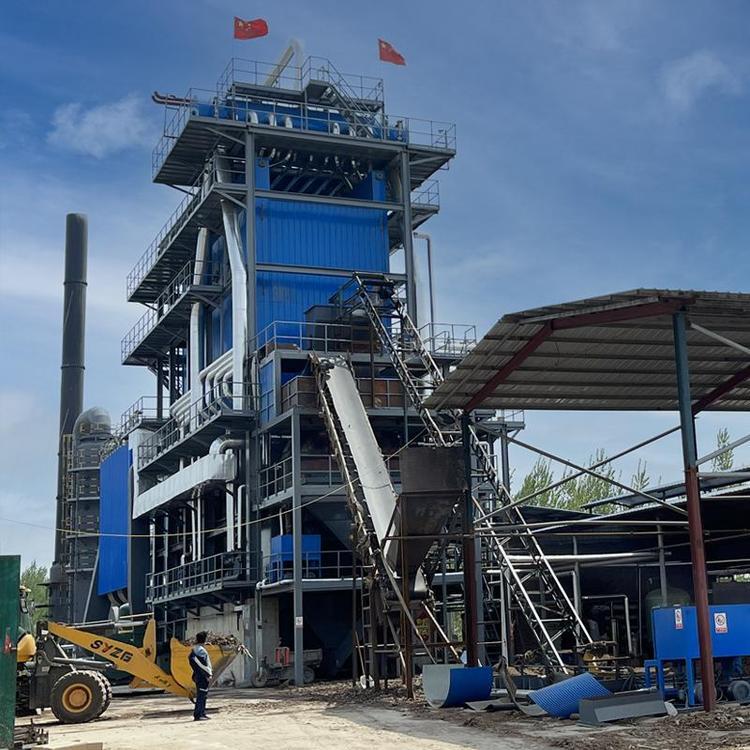

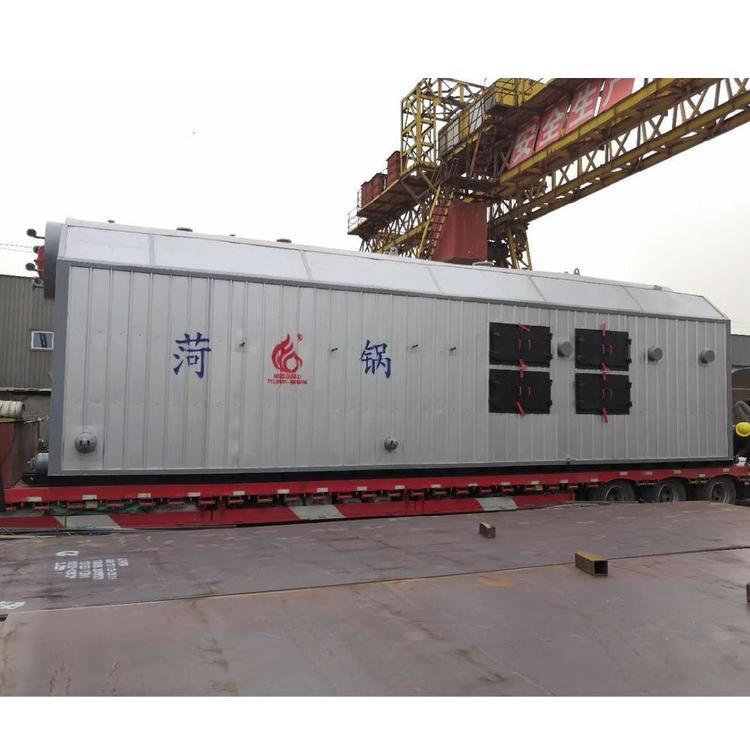


















Shandong Zhongjie Special Equipment Co., Ltd. specializes in: fuel (gas) boilers, organic heat carrier boilers, biomass boilers, waste heat recovery boilers, and other boiler products; vacuum insulation cryogenic pressure vessels such as LNG tanks, oxygen/nitrogen/argon tanks, and CO2 tanks; pressure vessel products including denitrification engineering equipment, heat storage and energy storage equipment, and complete chemical equipment; central air conditioning and ventilation equipment such as ground (water) source heat pumps, air source units, water-cooled screw units, and air-cooled modular units. Planned products include large-scale energy centers, LNG transport vehicles, LNG tank containers, and other green energy equipment.
Biomass boilers may experience issues with ash accumulation and slagging during prolonged operation. These problems can impact the boiler's combustion efficiency and safety. Here are methods for dealing with ash accumulation and slagging in biomass boilers:
Regular Cleaning: Regularly cleaning the ash and carbon deposits inside the boiler is crucial for preventing scale and slag buildup. A cleaning schedule can be established based on the boiler's usage, including cleaning the combustion chamber, flue, and heat exchanger, among other components. Appropriate tools and cleaning agents should be used during the cleaning process to ensure the removal of ash and carbon deposits.
Adjust combustion parameters: Properly adjusting the combustion parameters of biomass boilers can reduce the occurrence of ash accumulation and slagging. For instance, adjusting combustion temperature, oxygen supply, and combustion time to enhance combustion efficiency and minimize ash and slag production.
Additive Usage: During biomass combustion, special additives such as slag inhibitor and coking inhibitor can be added. These additives help reduce the formation of slag and carbon accumulation, enhancing the boiler's cleanliness and combustion efficiency. The use of additives should be based on specific conditions and manufacturer recommendations.
Regular inspections and maintenance: Regularly inspecting and maintaining all components of the biomass boiler, including burners, fans, flues, and heat exchangers, allows for the timely detection and resolution of ash buildup and coking issues. During the inspection, you can clear blocked components and repair damaged ones, ensuring the boiler operates smoothly.
Note that dealing with biomass boiler ash and scaling issues should be handled on a case-by-case basis. Consult with boiler maintenance personnel or manufacturers for more detailed and accurate advice. Additionally, regular cleaning and maintenance are key preventive measures against ash and scaling problems.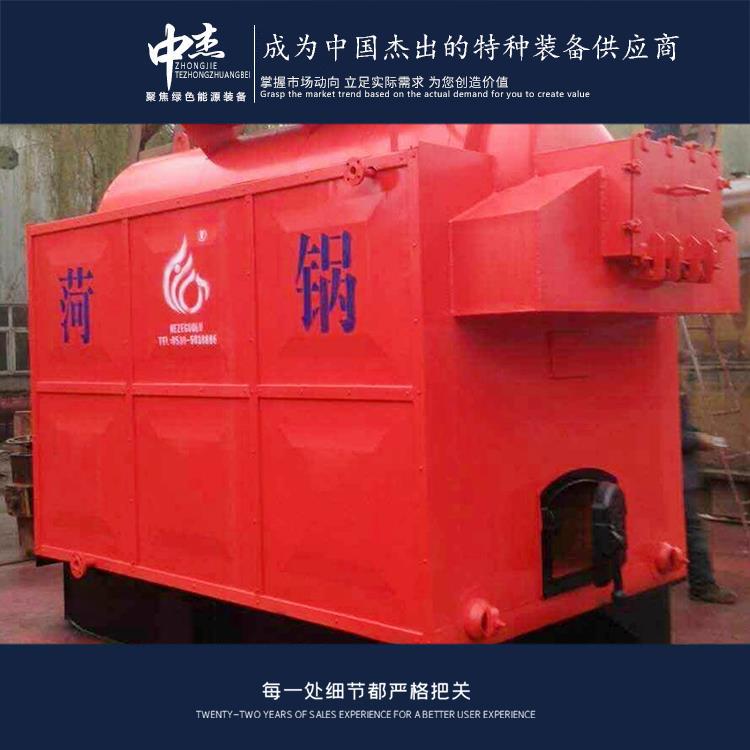
The internal structure of an automatic biomass boiler typically includes the following main components:
Combustion Chamber: The combustion chamber is the area inside a biomass boiler where combustion takes place. It typically consists of the burner, combustion chamber walls, top, and bottom. The combustion chamber provides the space and oxygen required for combustion, allowing biomass fuel to burn and generate heat energy.
Chimney System: The chimney system is designed to channel flue gases produced by combustion out of the combustion chamber. It includes flue pipes, chimneys, and flue gas purification equipment, etc. The design and layout of the chimney system can effectively enhance the efficiency of flue gas排放 and heat energy utilization.
Heat Exchangers: Heat exchangers are a critical component in biomass boilers, used to transfer thermal energy from the flue gas produced by combustion to water or other working substances. Common types of heat exchangers include water tube heat exchangers and flue tube heat exchangers. The design and material selection of heat exchangers are crucial for improving
As a renewable energy boiler, biomass boilers offer several advantages:
Environmental Protection & Energy Saving: Biomass boilers utilize biomass fuels such as wood chips, straw, and husks, which are renewable resources. Compared to traditional fossil fuels, these fuels emit less carbon and are more environmentally friendly. The combustion process of biomass boilers generates relatively fewer emissions, resulting in less environmental impact. Moreover, through optimized combustion and heat recovery, biomass boilers achieve high energy utilization efficiency, saving energy.
Diverse fuel options: Biomass boilers are suitable for various biomass fuels such as wood chips, straw, husks, etc., demonstrating strong fuel adaptability. This enables widespread application of biomass boilers in different regions and industries. Moreover, the supply of biomass fuel is relatively stable and unaffected by international oil price fluctuations and other factors.
Flexible operating mode: Biomass boilers can be adjusted according to actual needs.
Fully automatic biomass boiler uses a make-up water pump to maintain constant pressure, which is a common water supply method. The specific working principle is as follows:
Make-up Water Pump: The fully automatic biomass boiler is equipped with a make-up water pump, which is used to pump water from the water source (such as a water tank or municipal water supply) into the boiler's water supply system.
Pressure Regulation: The feed water pump operates on a constant pressure system, which involves setting up a pressure sensor or controller in the boiler water supply system to monitor the pressure. When the pressure in the water supply system falls below the set value, the feed water pump automatically starts, replenishing water into the system to increase the pressure.
Pressure Control: The supply pump will control operation based on the set pressure range. Once the system pressure reaches the set value, the supply pump will cease operation to prevent excessive pressure.
Automation Control: The water supply system of an automatic biomass boiler is typically equipped with an automated control system that can intelligently manage based on the boiler's operating status and requirements. For instance, when the boiler needs to replenish water, the control system will automatically activate the feedwater pump to ensure the stable operation of the water supply system.
By employing a pressure-maintenance method in the supply pump, the fully automatic biomass boiler achieves automated control of the water supply system and stable water supply, ensuring the normal operation and safety of the boiler. This method can be adjusted and optimized according to actual needs, enhancing water supply and energy utilization efficiency.
Zhongjie Special Equipment upholds the grand vision of "realizing employees' dreams, creating value for customers, and striving for the prosperity and strength of our motherland," and is dedicated to the development of the green energy equipment industry. We offer society high-quality products and services at competitive prices!
WeChat Official Account

Scan to follow Official Account



















