


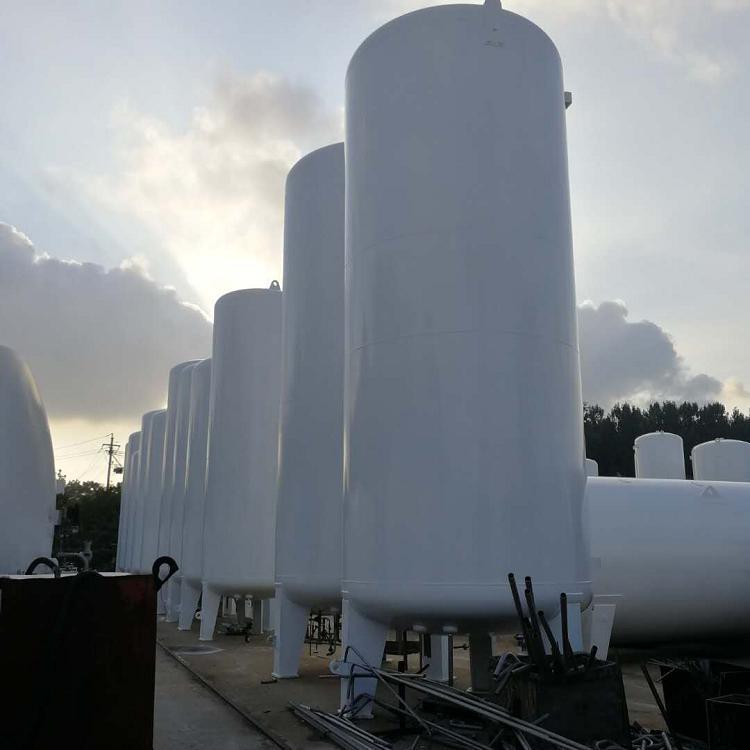

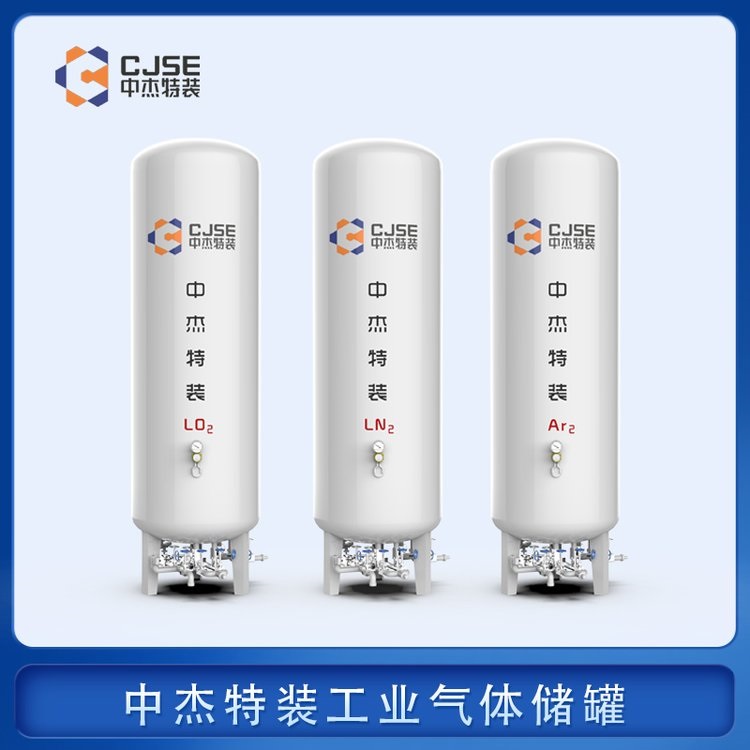
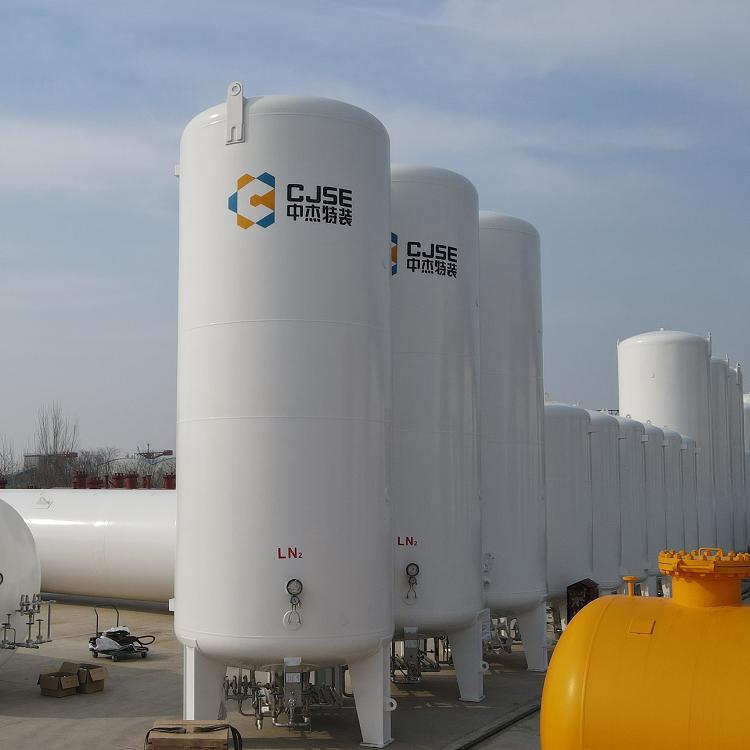


















Shandong Zhongjie Special Equipment's main products include: fuel (gas) boilers, organic heat carrier boilers, biomass boilers, waste heat recovery boilers, and other boiler products; vacuum insulated cryogenic pressure vessels such as LNG tanks, oxygen/nitrogen/argon tanks, CO2 tanks; pressure vessel products such as denitrification engineering equipment, heat storage and energy storage equipment, complete chemical equipment sets; central air conditioning and ventilation equipment such as ground (water) source heat pumps, air source units, water-cooled screw units, and air-cooled modules. Planned products include large-scale thermal energy centers, LNG transport vehicles, LNG tank containers, and other green energy equipment.
Liquid nitrogen storage tanks are equipment used for storing liquid nitrogen and are widely applied in the following fields:
1. Frozen Food and Refrigerated Logistics: Liquid nitrogen tanks are used in the frozen food and refrigerated logistics industry to freeze or refrigerate food and other perishable items, extending their shelf life and maintaining freshness. The low temperature of liquid nitrogen can rapidly freeze food, prevent bacterial growth, and prevent food spoilage.
2. Biomedical Research: Liquid nitrogen tanks are extensively used in the field to preserve biological samples, cells, tissues, and more. The low temperature of liquid nitrogen effectively preserves the integrity and viability of biological materials, used in fields such as medical research, biomedical engineering, and transplantation.
3. Laboratory Research: Liquid nitrogen tanks are utilized in scientific research and laboratories to provide liquid nitrogen as a coolant and freezing medium. The low temperature of liquid nitrogen can be used for cooling laboratory equipment, material research, superconducting electronics, and low-temperature physics.
4. Metal Processing and Welding: Liquid nitrogen tanks are employed in metal processing and welding for cooling and controlling the temperature of metals. Liquid nitrogen can rapidly cool metals, improve their hardness and strength, and reduce deformation and stress.
5. Gas Storage and Supply: Liquid nitrogen tanks are also used for storing and supplying nitrogen gas. Liquid nitrogen can be converted into gaseous nitrogen through evaporation, used in applications such as gas shielded welding, gas fire suppression systems, gas analysis, and laboratory gas supply.
In summary, liquid nitrogen storage tanks are widely used in fields such as frozen food, laboratory research, metal processing, and gas supply, providing storage and supply functions for liquid nitrogen at application sites.
Maintaining and caring for liquid nitrogen tanks is crucial for ensuring their safe operation and extending their lifespan. Here are the maintenance and care methods for liquid nitrogen tanks:
Regular Inspections: Conduct regular inspections of the liquid nitrogen tank's exterior and interior, including checking for leaks, corrosion, wear, or other damage. Pay special attention to inspecting the tank's interfaces, valves, and pipelines to ensure they are functioning properly.
Cleaning and Defrosting: Regularly clean the exterior surface of the liquid nitrogen tank to remove dust and dirt. If there is ice or frost inside the tank, defrosting is required to maintain the normal operation of the tank.
Level Monitoring: Regularly monitor the liquid nitrogen tank's level to ensure the stored quantity of liquid nitrogen remains within a safe range. In case of an abnormal level, adjustments or replenishment of liquid nitrogen are required promptly.
Inspection and Replacement of Parts: Regularly inspect and replace critical components of liquid nitrogen storage tanks, such as safety valves, pressure sensors, and temperature sensors. Ensure these components operate normally and accurately.
Inspect Insulation Layer: Regularly check the liquid nitrogen tank's insulation layer to ensure its integrity and insulating performance. If damage or aging of the insulation layer is found, it must be repaired or replaced promptly.
Regular Calibration: Regularly calibrate the gauges and sensors of liquid nitrogen tanks to ensure accuracy and reliability. Calibration should be conducted in accordance with relevant standards and regulations.
Safety Training and Operating Procedures: Conduct regular safety training for liquid nitrogen tanks to ensure operators are familiar with the safe operating procedures and emergency response measures.
Note that maintenance of liquid nitrogen tanks should be performed by trained and authorized personnel. Adhere to relevant safety regulations and operating guidelines to ensure the safety and effectiveness of maintenance work.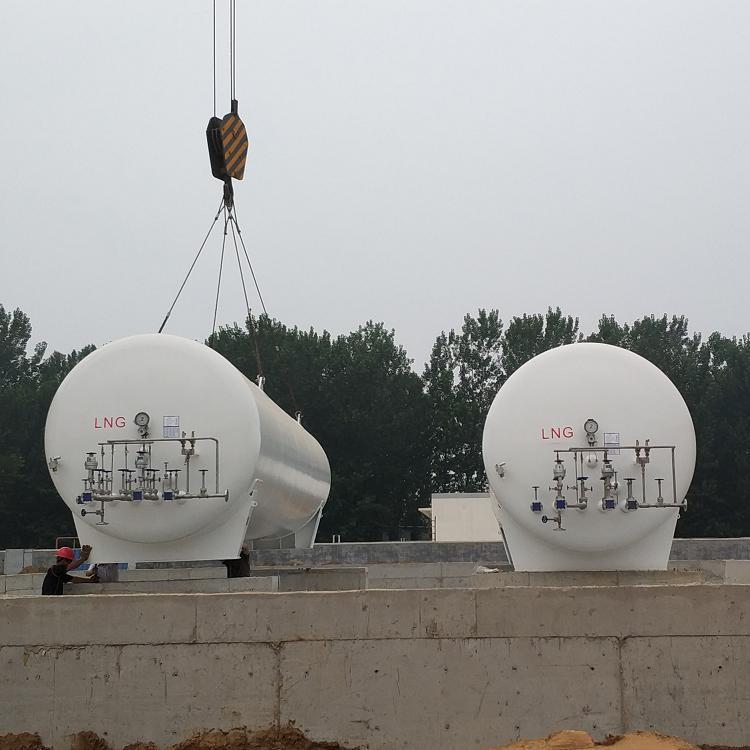
The manufacturing process for the heads and cylinders of low-temperature storage tanks typically includes the following steps:
Material Preparation: Select appropriate materials, such as low-temperature alloy steel or stainless steel, based on design requirements and specifications. Inspect and receive the materials to ensure their quality meets the standards.
Sheet cutting: Sheets are cut according to design dimensions and shapes. Common cutting methods include flame cutting, plasma cutting, or laser cutting, etc.
Bending and Forming: Cut板材are bent and formed to create shapes for caps and cylinders. Common forming methods include cold bending, hot bending, or hydraulic forming, etc.
Welding: Welds the formed plates to create the structural components of the head and cylinder. Common welding methods include manual arc welding, gas shielded welding, or laser welding, etc.
Weld Seam Treatment: Process the weld seams after welding, such as sanding, polishing, or applying anti-corrosion coatings, to enhance the quality and appearance of the welds.
Inspection and Acceptance: Conduct inspections and acceptance of the finished headers and cylinders to ensure their quality and compliance with design specifications. Common inspection methods include ultrasonic testing, X-ray inspection, or liquid penetrant testing, etc.
Reinforcement and Support: As required, processing and installation of reinforcement and support on the heads and cylinders to enhance structural strength and stability.
Surface Treatment: The heads and cylinders are treated for surface finish, such as applying corrosion-resistant coatings, hot-dip galvanizing, or polishing, to enhance their corrosion resistance and appearance quality.
It's important to note that the manufacturing process of low-temperature storage tanks must comply with relevant standards and regulations to ensure the quality and safety of the production process. During production, strict adherence to the relevant safety operating procedures and the implementation of necessary protective measures are required to ensure the safety of the operators.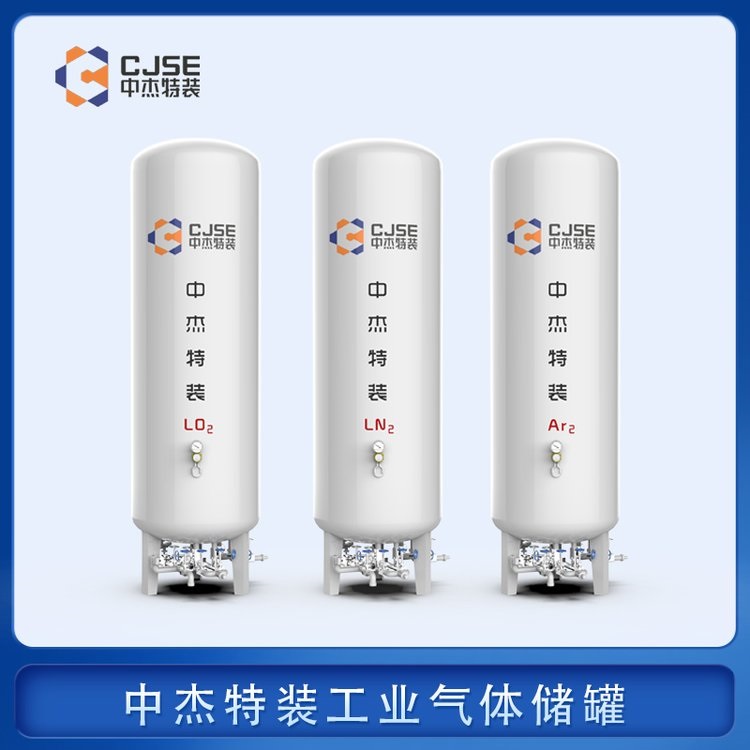
To ensure the quality of liquid oxygen storage tanks, the following measures can be taken:
选择可靠的供应商:选择有资质和经验的储罐制造商或供应商,确保其具备良好的声誉和可靠的质量管理体系。
Comply strictly with relevant standards and regulations: The design, manufacturing, and installation of liquid oxygen storage tanks should adhere to the relevant standards and regulations, such as standards, industry standards, or.
Quality Control and Inspection: Rigorous quality control and inspection are conducted throughout the manufacturing process, including raw material inspection, process monitoring, and finished product testing. Ensure that the materials, welding, and sealing of the storage tanks meet the required standards.
A robust quality management system: Establish and implement a comprehensive quality management system, including quality control plans, quality inspection records, and quality training, to ensure each stage meets quality standards.
Regular maintenance and inspection: Conduct regular maintenance and inspections on liquid oxygen tanks, including cleaning, coating protection, and anti-corrosion treatment, to extend the lifespan of the tanks and maintain their optimal operational condition.
Safety Operations and Management: Establish and implement safety operations and management systems, including proper use of storage tanks, operational procedures, and safety training, to ensure the safety and reliability of the tanks during use.
Routine Inspections and Assessments: Regularly inspect and assess the liquid oxygen storage tanks, including visual checks, pressure tests, leakage detection, and as needed, non-destructive testing and material analysis, to ensure the tank's quality and safety.
By implementing these measures, the quality, reliability, and safety of the liquid oxygen tanks can be effectively ensured, meeting usage requirements and standards.
Our company places great importance on technological innovation and research and development, boasting 1 city-level enterprise technology center in Heze City. We have established testing facilities for non-destructive testing, physical and chemical testing, welding testing, hydrostatic testing, etc., and are equipped with over 600 pieces of various instruments and equipment, including CNC machine tools, X-ray flaw detectors, digital ultrasonic flaw detectors, mechanical property testing machines, chemical analyzers, spectrometers, tensile testing machines, plasma welding machines, and more. The key products and technologies we have developed, such as welding of temperature and pressure vessels, emissions reduction in biomass boilers, and waste heat utilization, have successively been shortlisted for multiple Shandong Provincial Department of Industry and Information Technology Science and Technology Innovation Projects, Shandong Provincial Key Projects, and Heze City Innovation and Excellence Projects, etc. We have accumulated a total of 27 authorized utility model patents, 16 authorized invention patents, participated in drafting 2 standards, 2 industry standards, and registered 15 trademarks. The technical team of our company, in collaboration with Professor Yajiang Li of Shandong University, has jointly developed deep cryogenic container processing technology, utilizing the international plasma arc + wire filling tungsten inert gas arc (PAW-GTAW) welding technology. After being appraised as a provincial-level scientific and technological achievement, our technology level in the field of deep cryogenic container manufacturing has reached an international standard. Choose Zhongjie Special Equipment, and let's create brilliance together!
WeChat Official Account

Scan to follow Official Account



















