


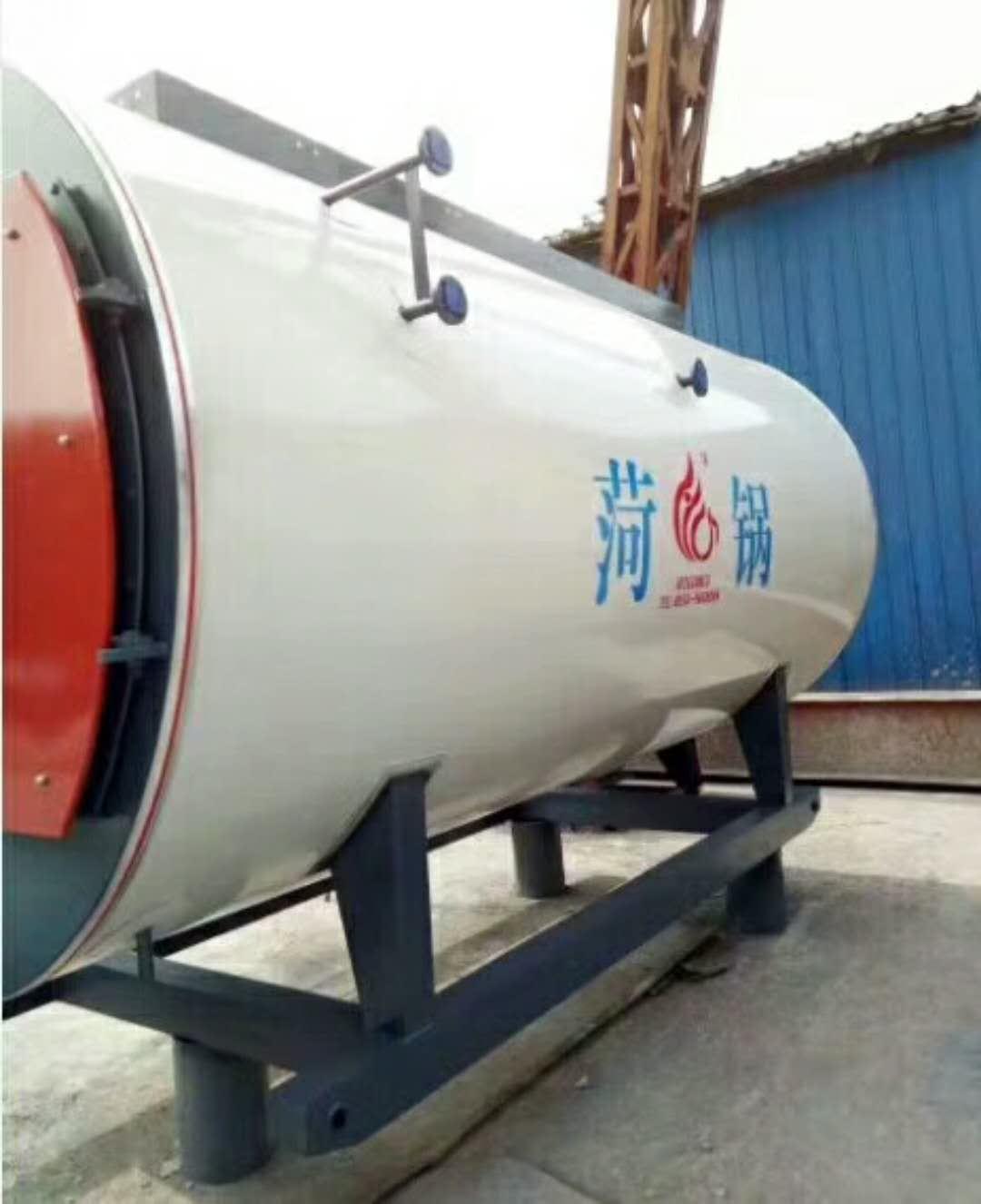

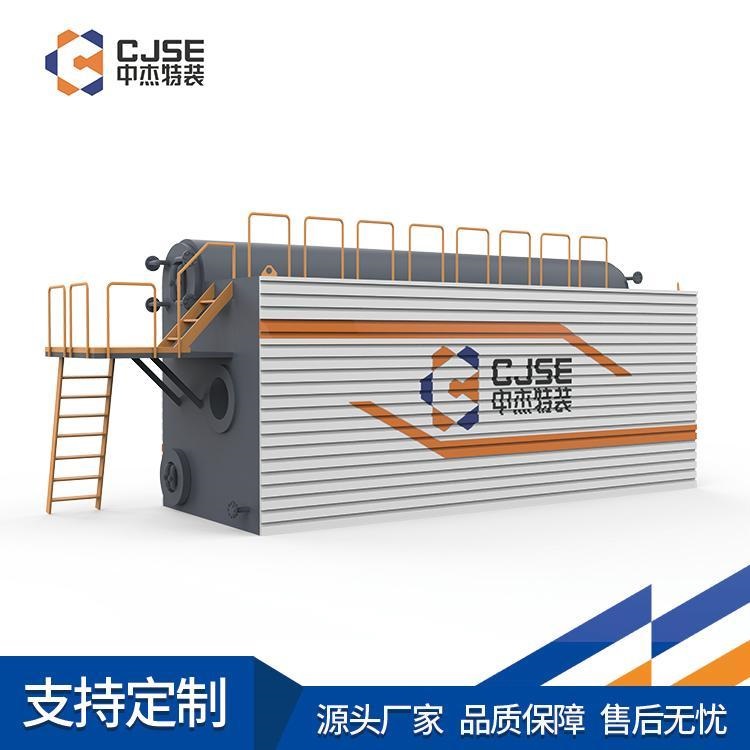
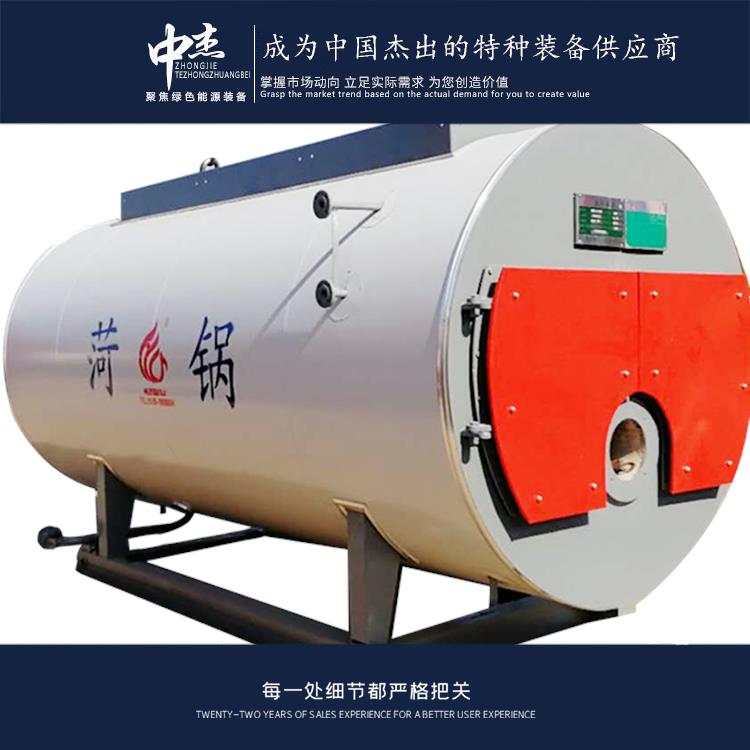


















Shandong Zhongjie Special Equipment Co., Ltd. (formerly Heze Boiler Factory Co., Ltd.) was established in 2001, located at No. 2218 Jinan Road, Economic and Technological Development Zone, Heze City. With a registered capital of 50 million yuan and total assets of 500 million yuan, the company operates 7 business centers: boilers, deep-freeze containers, pressure vessels, central air conditioning, engineering installation, international trade, and Internet of Things. It has three manufacturing sites on Jinan Road, East Yangtze Road, and Bohai Road, covering a total area of 200,000 square meters, with the main workshop spanning 83,000 square meters. Currently, there are 710 employees, including 247 engineering and technical personnel and 82 middle-level technicians. In December 2016, it was recognized as a "High-tech Enterprise" by the Science and Technology Department. In June 2021, it was identified as a "Specialized and New Enterprise of Shandong Province" by the Department of Industry and Information Technology. In June 2022, it was recognized as a "Gazelle Enterprise of Shandong Province," and in August 2022, it was identified as a "Specialized and New Small Giant Enterprise" by the Ministry of Industry and Information Technology.
Possible reasons for uneven heat distribution in steam boilers may include the following aspects:
- Uneven combustion: During the combustion process, uneven mixing of fuel and air, or an unreasonably designed and adjusted burner, can lead to uneven combustion. This results in some areas producing more heat while others produce less.
- Pipe blockage: The presence of blockages or scale in the steam boiler's transmission pipes can cause uneven heat transfer. Blockages or scale hinder steam flow, limiting heat transfer in some areas while allowing better heat transfer in others.
- Heat exchanger issues: If the heat exchanger in the steam boiler has scaling, corrosion, or blockages, it can lead to uneven heat transfer. These issues affect the heat conduction efficiency of the heat exchanger, impacting heat transfer in certain areas.
- Water level problems: Inaccurate or unstable water level control in the steam boiler can lead to uneven steam generation. Both high and low water levels can affect steam production and distribution, causing uneven heat distribution.
- Boiler load changes: Changes in the boiler load can also result in uneven heat distribution. Sudden increases or decreases in load may prevent the boiler from adjusting heat production and distribution in time, leading to uneven heat distribution.
To address the issue of uneven heat distribution in steam boilers, regular inspection and maintenance of the boiler equipment are necessary to ensure normal operation of combustion and heat exchange processes. Additionally, adjusting burners and control systems, maintaining stable water levels, cleaning pipes and heat exchangers, and improving efficiency are essential.
A thermal oil furnace is a device that uses thermal oil as a heat medium, transferring heat energy produced by combustion or electric heating to the equipment or process that requires heating. The working principle of a thermal oil furnace involves heating the thermal oil to a certain temperature and then circulating it through a pump to the heated equipment or process, transferring the heat energy to the heated object. The thermal oil exchanges heat with the heated object in the heat exchanger, raising the object's temperature while cooling down the thermal oil, which then returns to the furnace for reheating. The heat transfer process in a thermal oil furnace primarily relies on the thermal conductivity of the oil. Thermal oil has high thermal conductivity, enabling rapid transfer of heat energy to the heated object for effective heating. Additionally, it boasts high thermal stability, allowing stable operation at high temperatures without decomposition or oxidation. A thermal oil furnace typically consists of the furnace body, combustion system, flue gas system, heat exchanger, circulating pump, and control system. The furnace body is the main part of the thermal oil furnace, used to contain the thermal oil and the combustion system. The combustion system is responsible for burning fuel to produce heat energy and heat the thermal oil. The flue gas system is used to exhaust the combustion byproducts. The heat exchanger is the equipment where the thermal oil exchanges heat with the heated object. The circulating pump is responsible for circulating the thermal oil back to the furnace for reheating. The control system monitors and controls the operation of the thermal oil furnace to ensure safe and stable operation. Thermal oil furnaces offer high temperature control accuracy, fast heating speed, low energy consumption, and easy operation, and are widely used in industries such as chemicals, textiles, food processing, papermaking, and in some special heating processes.
In the combustion chamber of a thermal oil furnace, adjusting the air door during low flame conditions is crucial. Here are some common knowledge and precautions:
The function of the air door: The air door is a key component in the combustion chamber that controls the supply of combustion air. By adjusting the opening of the air door, the flow of combustion air can be controlled, thereby affecting the oxygen supply and combustion effect during the burning process.
Adjustment during low flame conditions: In low flame conditions, the burner needs to maintain stable combustion to ensure combustion efficiency and heat output. In this case, the opening of the air door should be adjusted appropriately to maintain a suitable supply of combustion air. Generally, the opening of the air door is relatively smaller during low flame to maintain an appropriate oxygen supply, avoiding incomplete combustion or instability.
Ratio of combustion air to fuel: In low flame conditions, it is necessary to ensure that the ratio of combustion air to fuel is appropriate. Too much combustion air can lead to incomplete combustion and energy waste, while too little can cause instability and the production of harmful gases. By adjusting the opening of the air door, the ratio of combustion air to fuel can be controlled to achieve a stable combustion effect.
Burner adjustment and optimization: During the installation and adjustment of the combustion chamber of a thermal oil furnace, appropriate adjustment and optimization are required. Through actual operation and monitoring, the opening of the air door and other parameters should be adjusted to achieve the best combustion effect and energy efficiency performance. This requires...
To reduce the heat loss of a gas boiler, the following measures can be taken:
1. Enhance insulation: Insulate the outer shell and pipes of the gas boiler to minimize heat loss. Use insulating materials like rock wool and glass wool to wrap the boiler and pipes.
2. Install a heat recovery system: Place a heat recovery device in the flue of the gas boiler to utilize the excess heat in the flue gases for energy recovery. This improves thermal efficiency and reduces heat loss.
3. Control the combustion process: Properly control the combustion process to ensure complete, stable, and efficient combustion. Adjust the parameters of the burner, such as air flow and gas supply, to enhance combustion efficiency and reduce heat loss.
4. Clean the heat exchanger: Regularly clean the heat exchanger of the gas boiler to remove dirt and sediment on the surface. This maintains the heat exchange efficiency and reduces heat loss.
5. Control the exhaust gas temperature: Reasonably control the exhaust gas temperature of the gas boiler to avoid excessive temperature that leads to significant heat loss. This can be achieved by adjusting the burner parameters and designing the flue.
6. Regular inspection and maintenance: Conduct regular inspections and maintenance on the gas boiler to ensure proper operation and work. This includes checking the combustion system, water level control, safety valves, and timely repairing or replacing damaged parts.
7. Utilize waste heat rationally: Use the excess heat generated by the gas boiler for other processes requiring heat, such as water heating and heating. By utilizing waste heat, reduce energy waste and improve energy utilization efficiency.
8. Through these measures, heat loss of the gas boiler can be effectively reduced, enhancing energy utilization efficiency and reducing energy consumption.
Chongjie Special Equipment adheres to the grand vision of "realizing employees' dreams, creating customer value, and striving for the prosperity and strength of our motherland," devoting itself to the development of green energy equipment. We offer the society products and services with high cost-performance!
WeChat Official Account

Scan to follow Official Account



















