


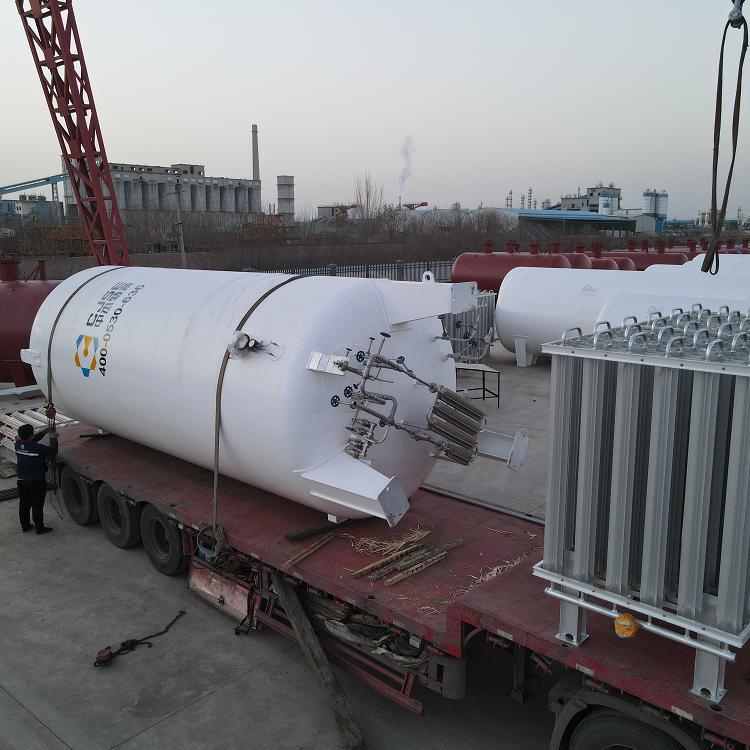

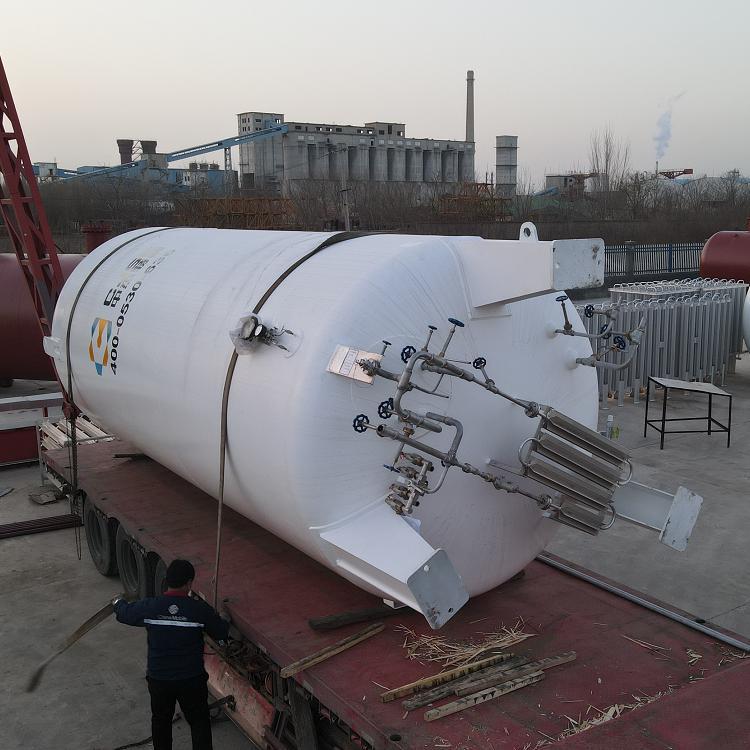
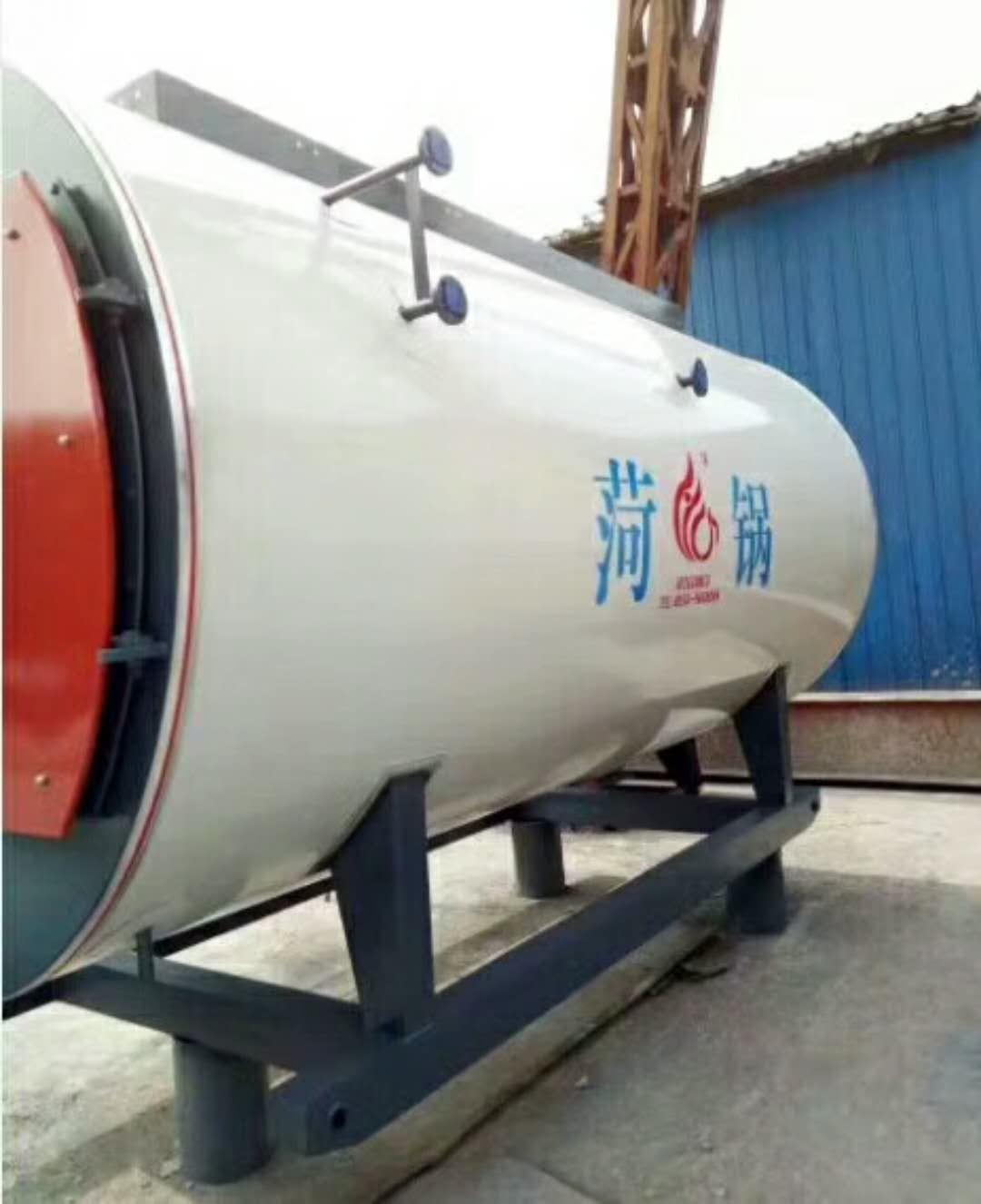


















Shandong Zhongjie Special Equipment (formerly Heze Boiler Factory Co., Ltd.) holds an A-grade boiler manufacturing license, an A2-grade pressure vessel manufacturing license, an A2-grade pressure vessel design license, a B-grade boiler installation license, and GB2/Class, GC2/Class pressure pipeline installation licenses, as well as a mechanical and electrical equipment installation contracting qualification. It is a member of the China Boiler and Water Treatment Association, the China Chemical Equipment Association, and the理事 unit of the Shandong Equipment Manufacturing Association. The company has also passed the ISO9001 Quality Management System, ISO14001 Environmental Management System, OHSAS18001 Occupational Health and Safety Management System certifications, and the American ASME/U2 certification.
The liquid nitrogen storage tank's filling process generally includes the following steps:
Preparation: Ensure the storage tank and filling equipment are in good condition with no damage or leaks. Check that the insulation layer of the tank is intact and undamaged.
Safety Inspection: Check the tank and its surrounding environment for safety. Ensure there are no flammable materials or other hazardous items around the tank.
Connect equipment: Link the filling equipment to the storage tank. Ensure the connection is securely fastened and leak-free.
Prepare Liquid Nitrogen: Ready for liquid nitrogen supply, ensuring the quality and purity meet the requirements.
Open valves: Follow the operation instructions of the filling equipment to gradually open the corresponding valves, allowing liquid nitrogen to flow from the supply source into the storage tank.
Regulate Flow: Adjust the flow control valve of the filling equipment as needed to control the inflow speed of liquid nitrogen. Ensure the flow rate is moderate, avoiding too fast or too slow.
Monitor Liquid Level: Real-time monitoring of the liquid nitrogen level in the storage tank through a level gauge or other level monitoring devices. Ensure the level is maintained within a safe range.
Discontinue Filling: Close the valve of the filling equipment once the liquid nitrogen is filled in the tank or reaches the desired level, halting the inflow of liquid nitrogen.
Disconnect: Disconnect the filling equipment from the storage tank, ensuring there are no leaks at the connection point.
Safety Inspection: Conduct a recheck of the tank and its surrounding environment to ensure there are no leaks or other safety hazards.
Please note that this is for general reference only; the actual filling process may vary depending on the specific type of tank and filling equipment. When performing the filling operation for liquid nitrogen tanks, please adhere to the relevant operational specifications and safety requirements, and ensure that the operators have received the necessary safety training and skills.
In the welding process of low-temperature liquid storage tanks, controlling the occurrence of welding cracks is crucial. The following are some methods and measures to control welding cracks:
Appropriate Welding Process: Select the appropriate welding process and parameters to minimize welding heat input and thermal stress. Employ low heat input welding methods, such as pulsed welding, laser welding, etc., to reduce the temperature gradient and residual stress in the heat-affected zone.
Preheating and Post Heat Treatment: Perform appropriate preheating before welding to enhance material toughness and reduce thermal stress. After welding, conduct a suitable post heat treatment, such as annealing or stress-relief heat treatment, to minimize residual stress and improve weld toughness.
Select appropriate welding materials: Choose welding materials with good toughness and crack resistance to minimize the occurrence of welding cracks. Select the appropriate welding material based on the storage tank's operating conditions and requirements, such as low-alloy steel, stainless steel, etc.
Control Welding Process: Regulate parameters and operations during the welding process to minimize the risk of welding cracks. Pay attention to factors such as welding speed, current, voltage, and welding sequence to avoid overheating or rapid welding, reducing the accumulation of thermal and residual stresses.
Non-destructive Inspection & Assessment: Conduct non-destructive testing on weld seams, such as ultrasonic testing, X-ray testing, etc., after welding to evaluate the quality of the weld and the presence of cracks. Detect and repair weld cracks promptly to ensure the integrity and safety of the焊接 joints.
It's important to note that controlling welding cracks is a complex process that requires a comprehensive consideration of factors such as materials, welding techniques, and operations. When welding low-temperature liquid storage tanks, it's advisable to consult with a welding engineer or relevant institutions for guidance to ensure welding quality and tank safety.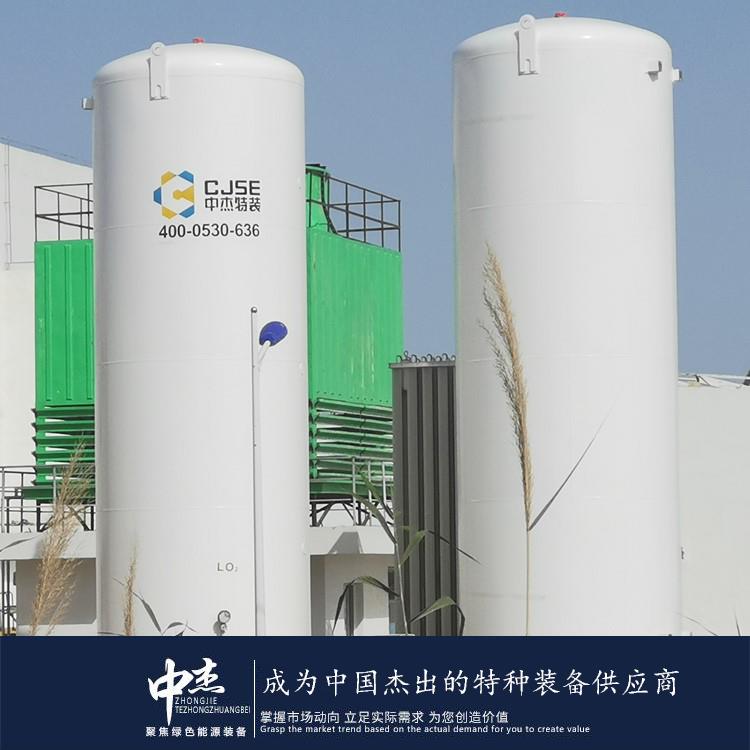
Low-temperature industrial gas filling stations are equipment used to fill liquid low-temperature industrial gases (such as liquid oxygen, liquid nitrogen, liquid argon, etc.) into gas storage tanks. Here are the basic facts about low-temperature industrial gas filling stations:
Storage Tank Type: Low-temperature industrial gas storage tanks typically use double-walled vacuum-insulated storage tanks, with the inner wall for storing liquid gas and the outer wall for insulation to reduce heat transfer and evaporation losses of the liquid gas.
Filling Equipment: Low-temperature industrial gas storage tank filling stations include liquid-gas filling pumps, filling pipelines, flowmeters, pressure sensors, and other equipment. The liquid-gas filling pumps are used to extract liquid gas from storage tanks or gas containers and fill it into the target storage tank.
Filling Process: The operational procedure at the filling station typically includes the following steps: Preparations (checking equipment, preparing filling medium), Equipment Connection (connecting filling pumps, pipelines, etc.), Equipment Activation (starting the filling pump, adjusting flow and pressure), Filling Operation (filling liquid gases into the target storage tank), Monitoring and Control (monitoring parameters such as pressure and flow during the filling process to ensure safety and quality), and Completion of Operation (shutting down equipment, cleaning the work area).
Safety Measures: Strict adherence to relevant safety operating procedures and standards is required during the operation of low-temperature industrial gas storage tank filling stations. Operators must undergo training to understand the properties and safety precautions of liquefied gases. Additionally, filling stations should be equipped with safety equipment such as pressure sensors and safety valves to ensure safety during the filling process.
Quality Control: Quality control is mandatory at the filling station during the filling process, which includes monitoring parameters such as the flow, pressure, and temperature of the filling medium to ensure accuracy and quality of the filling.
It should be noted that the operation of low-temperature industrial gas storage tank filling stations must be conducted by trained personnel and strictly adhere to the relevant operational procedures and safety measures. Additionally, the design and manufacturing of filling stations must comply with applicable standards and specifications to ensure the safety and reliability of the equipment.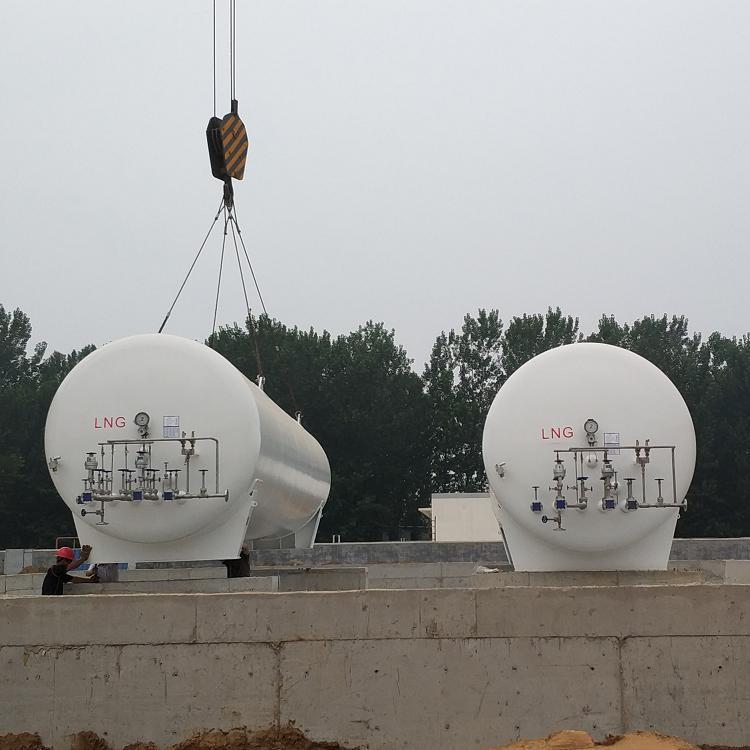
Low-temperature liquid oxygen storage tanks usually require some safety accessories to ensure safe operation and to address potential risks. The following are some common safety accessories for low-temperature liquid oxygen storage tanks:
Pressure Sensor: Used to monitor pressure changes within storage tanks. If the pressure exceeds the set range, it will trigger an alarm or automatically stop filling measures to prevent overpressure in the tank.
Safety valve: Used to automatically release gas when the pressure inside the storage tank exceeds the set value, preventing overpressure of the tank. The safety valve should be selected and installed according to the design pressure and capacity of the tank.
Pressure relief device: Used to release gas into a safe area when the pressure inside the storage tank is too high, thereby reducing the pressure on the tank. Pressure relief devices typically include relief valves, relief pipes, etc.
Level sensor: Used to monitor the level change of liquid oxygen in the storage tank to ensure an adequate supply of liquid oxygen inside and to prevent overfilling.
Temperature Sensor: Used to monitor temperature changes within storage tanks to ensure the temperature of liquid oxygen inside remains within a safe range.
Fire Detectors and Fire Suppression Systems: Designed to monitor fire risks around storage tanks and activate fire suppression systems as needed to prevent the spread of fire to other areas.
Zhongjie Special Equipment upholds the grand vision of "realizing employees' dreams, creating value for customers, and striving for the prosperity and strength of our motherland," and is dedicated to the development of the green energy equipment industry. We offer society products and services with high performance and affordability!
WeChat Official Account

Scan to follow Official Account



















