


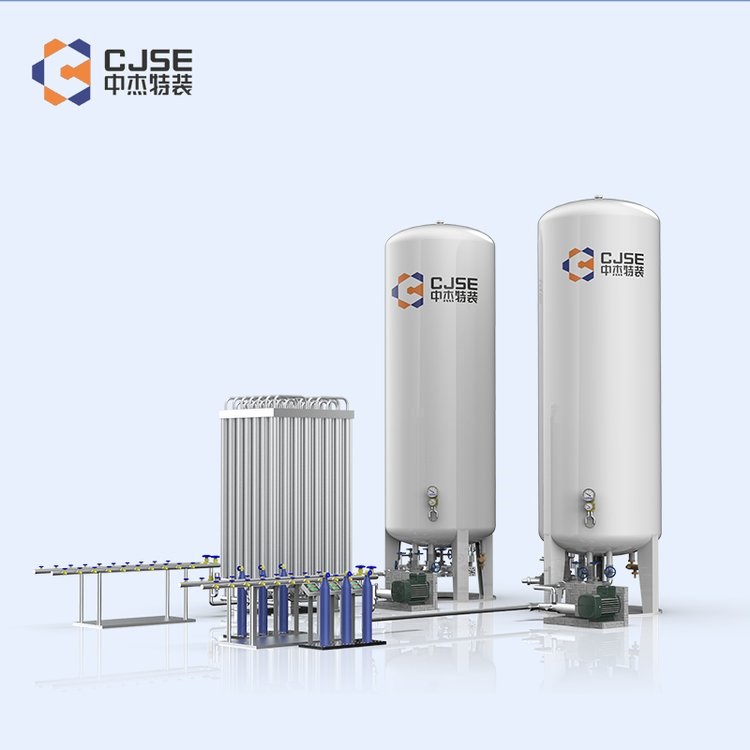

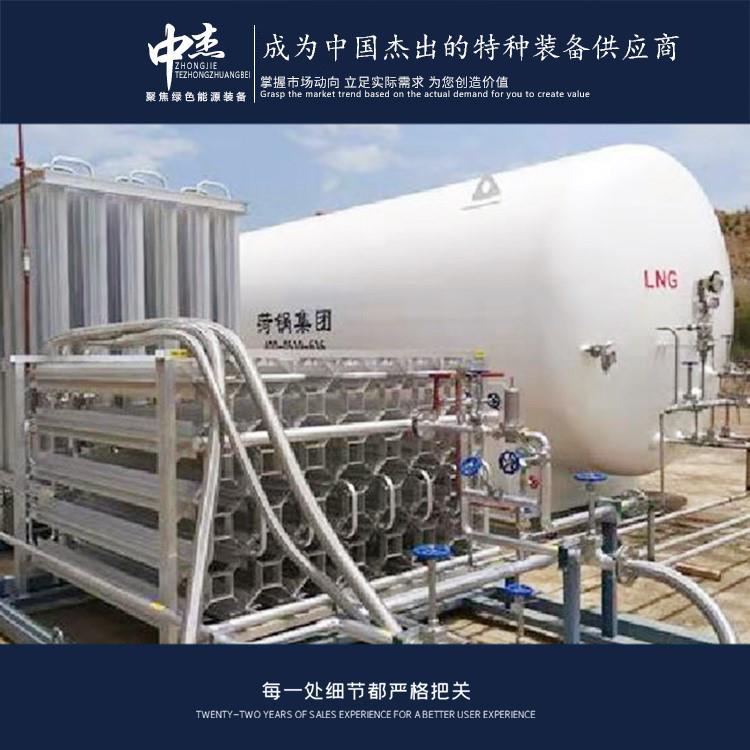
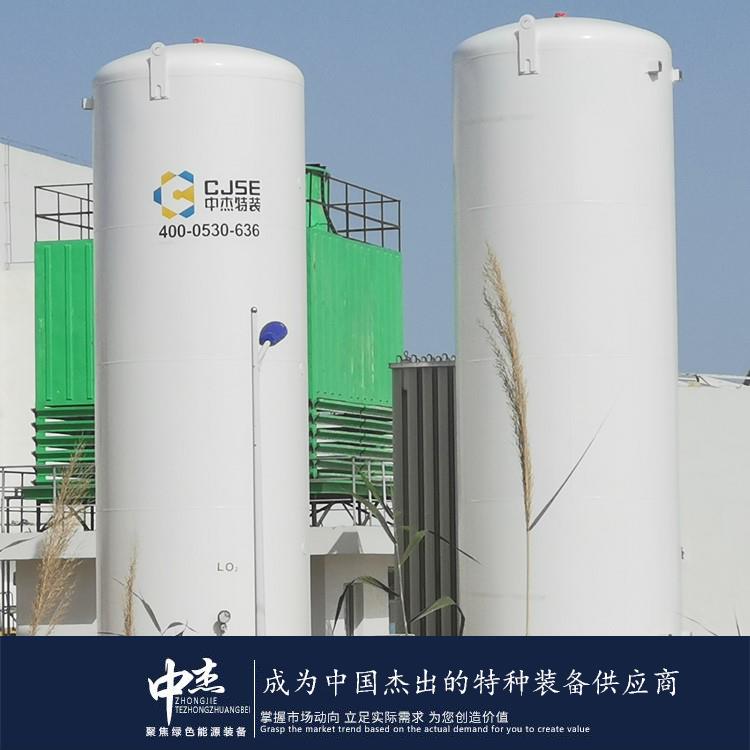


















Shandong Zhongjie Special Equipment's main products include: fuel (gas) boilers, organic heat carrier boilers, biomass boilers, waste heat boilers, and other boiler products; vacuum insulation cryogenic pressure vessels such as LNG tanks, oxygen/nitrogen/argon tanks, CO2 tanks; pressure vessel products such as denitration engineering equipment, heat storage and energy storage equipment, and complete chemical equipment; central air conditioning and ventilation equipment such as ground (water) source heat pumps, air source units, water-cooled screw units, and air-cooled modular units. Planned products include large-scale energy centers, LNG transport vehicles, LNG tank containers, and other green energy equipment.
Standard specifications for liquid oxygen storage tanks may vary by region. Here are examples of some common standards:
US Standards: The American National Standards Institute (ANSI) and the American Petroleum Institute (API) have issued a series of standards for liquid oxygen storage tanks, such as ANSI/API Standard 2510 "Design and Construction of Liquid Oxygen Storage Tanks" and ANSI/API Standard 2510A "Supplementary to the Design and Construction of Liquid Oxygen Storage Tanks."
European Standards: The European Committee for Standardization (CEN) has issued a series of standards for liquid oxygen storage tanks, including EN 13458 "Liquid Oxygen Storage Tanks. Design and Construction" and EN 14015 "Vertical Welded Steel Fixed Storage Tanks. Design and Construction."
Chinese Standards: The Standardization Administration of the People's Republic of China (SAC) has issued a series of standards for liquid oxygen storage tanks, such as GB/T 18442 "Design Code for Liquid Oxygen Storage Tanks" and GB/T 18443 "Construction and Acceptance Code for Liquid Oxygen Storage Tanks."
These standards typically cover requirements for the design, manufacturing, installation, operation, maintenance, and inspection of liquid oxygen storage tanks. They encompass provisions for the tank's structure, materials, safety valves, insulation, leak control, fire protection measures, and safety distances to ensure the safety and reliability of the storage tanks.
When designing, manufacturing, and using liquid oxygen storage tanks, it is essential to adhere to applicable standards and regulations and collaborate with local regulatory authorities and personnel to ensure compliance with relevant safety requirements and regulations.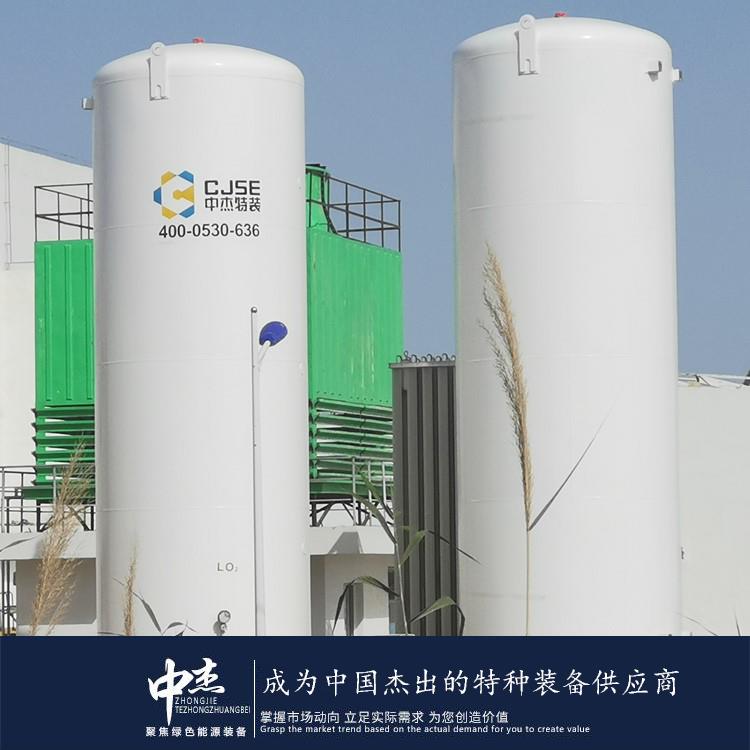
The stable pressure design for a 15 cubic meter liquid argon tank requires consideration of the following aspects:
Tank Pressure: Determine the design pressure of the tank to meet the storage and supply requirements for liquid argon. Establish an appropriate design pressure range based on the properties and usage conditions of liquid argon.
Stabilization System: Select an appropriate stabilization system to maintain stable pressure within the storage tank. The stabilization system typically includes components such as pressure regulators, pressure sensors, and control valves, which are used to monitor and adjust the pressure inside the tank.
Pressure Sensor: Install a pressure sensor for real-time monitoring of pressure changes within the tank. The sensor transmits pressure signals to the voltage stabilization system to adjust the control valve's opening promptly, ensuring the pressure inside the tank remains stable.
Control Valve: Select an appropriate control valve for regulating the gas flow and pressure inside the storage tank. The control valve should have excellent regulating performance and stability to ensure the pressure within the tank stays within the set range.
Safety Valve: Install a safety valve to automatically release gas when the pressure inside the storage tank exceeds the set value, preventing overpressure. The safety valve should be selected and installed based on the design pressure and capacity of the storage tank.
Voltage Regulation System Control: Configure an appropriate control system for monitoring and regulating the operation of the voltage regulation system. The control system can enable automatic adjustment and alarm functions to ensure stable and safe pressure within the storage tank.
Be mindful that the design of the voltage stabilization should be tailored to the specific engineering requirements and operational conditions of the liquid argon storage tank, adhering to relevant local laws, regulations, and standards. When designing and installing the voltage stabilization system, it is advisable to consult with experienced engineers or relevant institutions for guidance to ensure the reliability and safety of the system.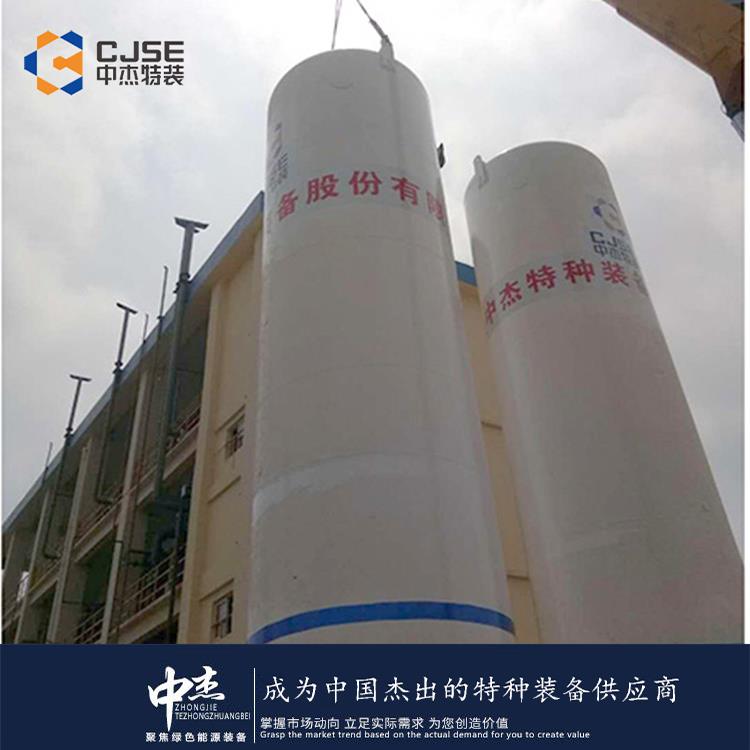
During the operation of low-temperature storage tanks, it is indeed necessary to avoid wrinkling. Wrinkling refers to the occurrence of creases or deformation in the tank wall, which can lead to a decrease in the structural strength of the tank, even causing leaks or ruptures.
Below are some precautions to avoid tank squeezing in low-temperature storage:
Tank Design: Select an appropriate tank design to ensure it can withstand the pressure and weight of low-temperature liquids. The tank's wall thickness, support structure, etc., should comply with relevant standards and regulations.
Material Selection: Choose materials suitable for low-temperature environments, featuring sufficient strength and低温 resistance. Common materials include low-temperature steel, stainless steel, etc.
Insulation Layer for Storage Tanks: The design and construction of the insulation layer must meet the requirements to ensure effective reduction of heat conduction and temperature fluctuations. The material and thickness of the insulation layer should be selected based on the specific circumstances.
Tank Operation: During the liquid loading and unloading process of the tank, avoid rapid or excessive fluid flow to minimize impact and stress concentration on the tank walls.
Tank Maintenance: Regularly inspect and maintain the structure and insulation of the tank to ensure its integrity. Any abnormalities or damages should be repaired or replaced promptly.
Temperature Control: During the operation of low-temperature liquid storage tanks, it is essential to strictly control the temperature difference between the inside and outside of the tank to avoid excessive temperature changes and thermal stress.
In summary, preventing crimping in low-temperature storage tanks hinges on proper design, material selection, insulation installation and maintenance, as well as strictly controlling temperature variations. Regular inspections and maintenance are also crucial for ensuring the safe operation of the tanks.
The liquid oxygen tank possesses the following characteristics:
High Purity: The liquid oxygen storage tank contains high-purity liquid oxygen, typically exceeding 99.5% purity. This makes the liquid oxygen storage tank crucial in applications requiring high-purity oxygen, such as medical, industrial, and research fields.
Low Temperature: As the boiling point of liquid oxygen is -183°C, the liquid oxygen storage tank must have excellent thermal insulation properties to maintain its low temperature. The tank is typically designed with a double or multi-layer structure, filled with insulating material in between to reduce heat transfer and evaporation of the liquid oxygen.
High Pressure: Liquid oxygen tanks typically need to withstand high pressure to maintain their liquid state. The design and material selection of the tank must consider the pressure requirements of liquid oxygen to ensure the tank's safety and reliability.
Flammability: Liquid oxygen is highly flammable and can support combustion. Therefore, fire prevention measures must be implemented in the design and use of liquid oxygen storage tanks to ensure there are no ignition sources nearby and that appropriate fire extinguishing equipment is available.
High Density: Liquid oxygen has a higher density, allowing liquid oxygen tanks to store more oxygen compared to gas oxygen. This gives liquid oxygen tanks an advantage in applications requiring large oxygen supplies, such as in the field.
Corrosiveness: Liquid oxygen possesses some degree of腐蚀性.
Shandong Zhongjie Special Equipment, welcome customers to our factory for business discussions.
WeChat Official Account

Scan to follow Official Account



















