


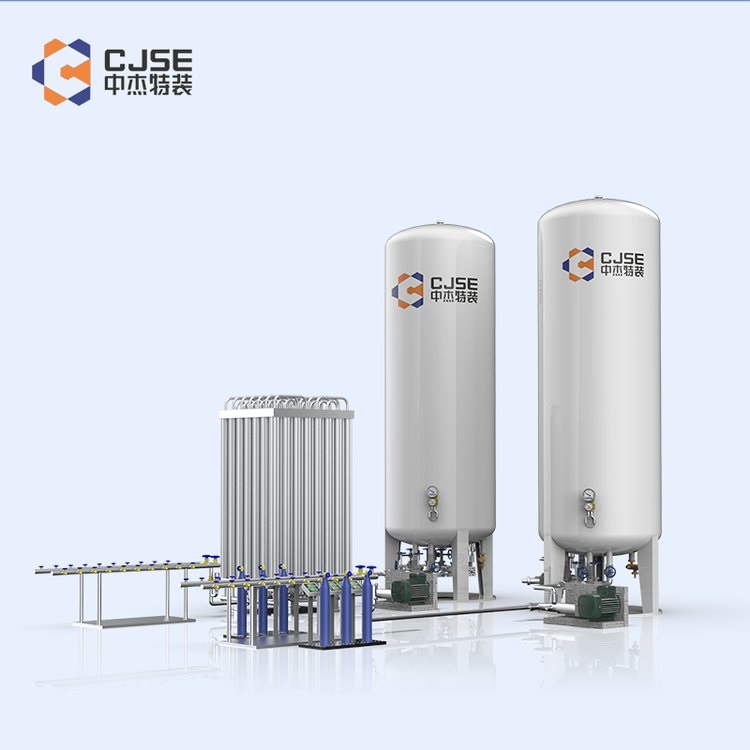

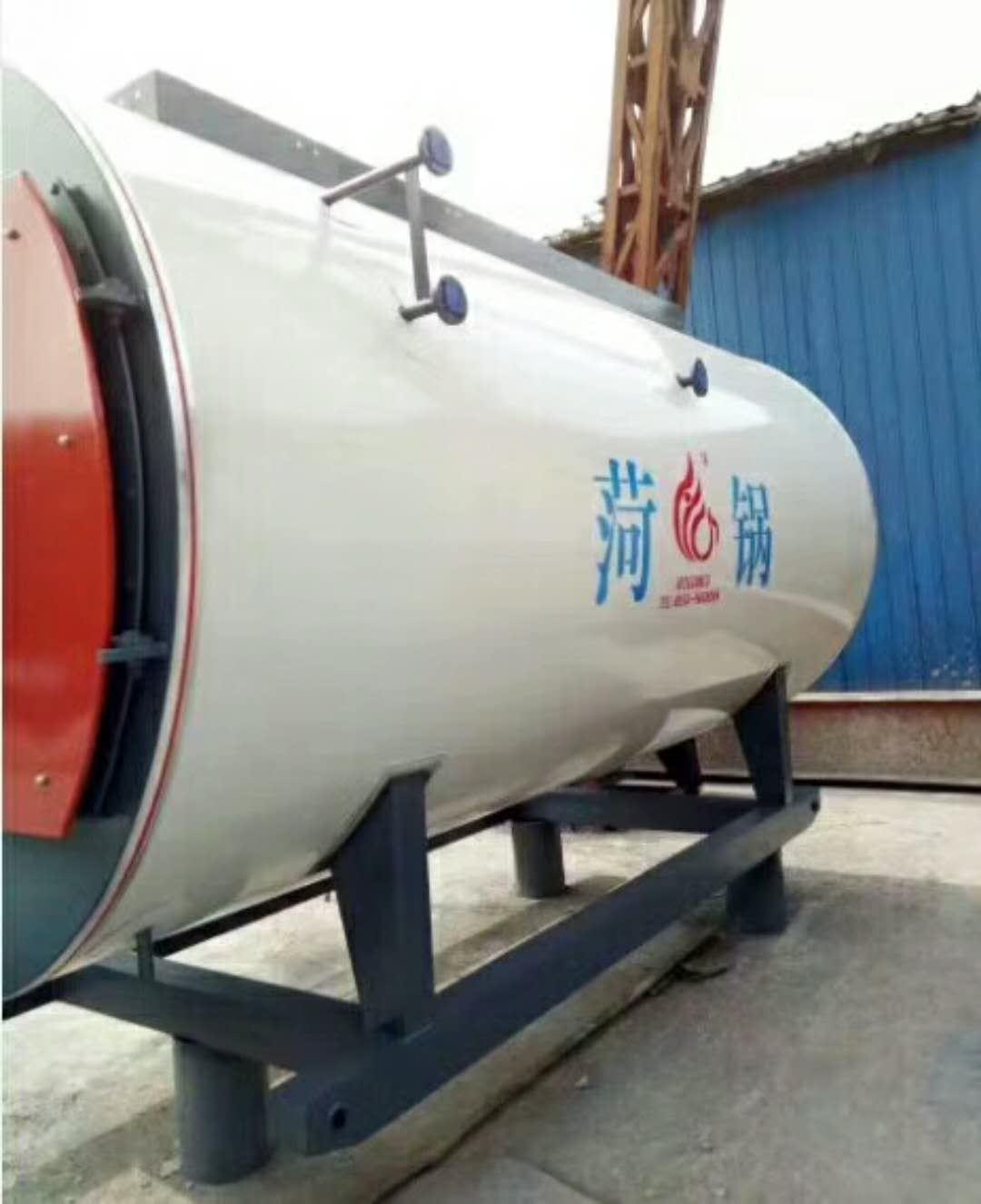
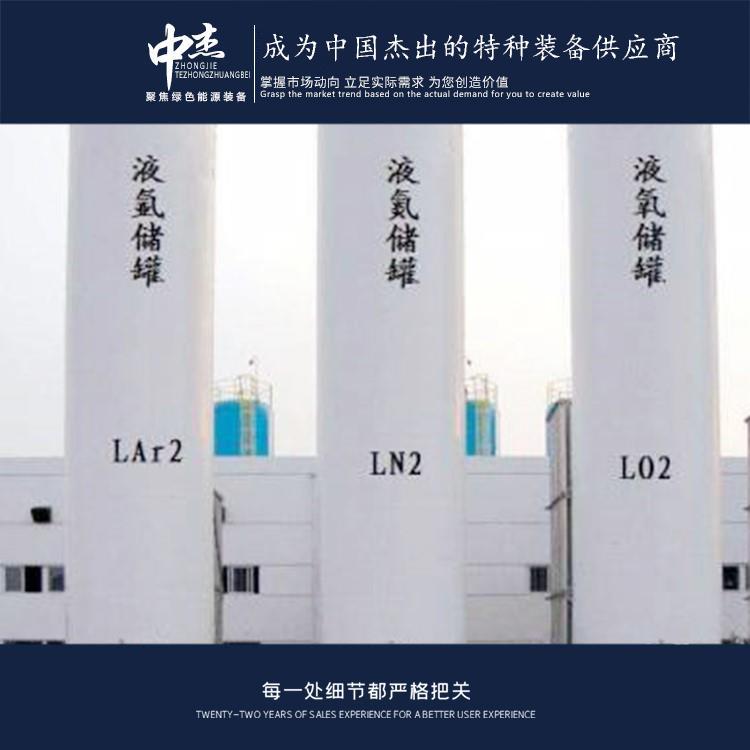


















Shandong Zhongjie Special Equipment's main products include: fuel (gas) boilers, organic heat carrier boilers, biomass boilers, waste heat boilers, and other boiler products; vacuum insulation cryogenic pressure vessels such as LNG tanks, oxygen/nitrogen/argon tanks, and CO2 tanks; pressure vessel products such as denitrification engineering equipment, heat storage and energy storage equipment, and complete chemical equipment; central air conditioning and ventilation equipment such as ground (water) source heat pumps, air source units, water-cooled screw units, and air-cooled modular units. Planned products include large-scale energy centers, LNG transport vehicles, LNG tank containers, and other green energy equipment.
Additionally, the use of liquid carbon dioxide tanks must adhere to specific industry standards and regulations based on the particular industry and application scenario. For instance, when using liquid carbon dioxide tanks in the food and beverage industry, compliance with food safety and hygiene standards is required. It is important to note that different regions may have varying standards and regulations applicable to the use of liquid carbon dioxide tanks. Therefore, operations and usage should be conducted in accordance with local laws and standards.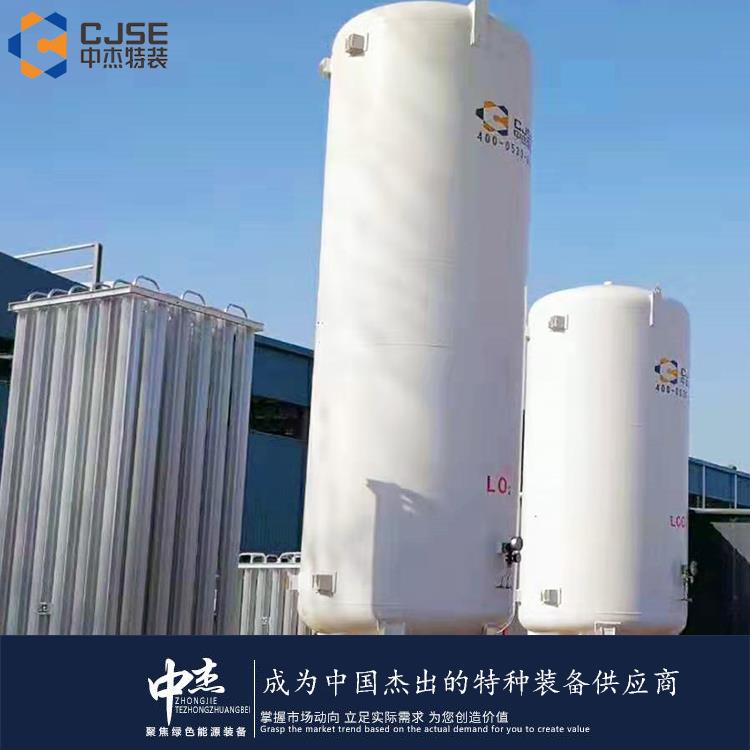
When using carbon dioxide tanks, the following safety procedures must be adhered to ensure safety:
Tank Operator Training: All operators must receive training to understand the characteristics, operational requirements, and safety measures of carbon dioxide tanks. Training should include safe tank operation, leak handling, emergency procedures, etc.
Safety Operating Procedures: Establish and comply with relevant safety operating procedures, including tank startup, shutdown, inspection, and maintenance. Operators should operate according to the procedures to ensure safe tank operation.
Leak Handling: Develop a leak handling program, including leak detection, emergency shutdown, and isolation of the leak source. Operators should be familiar with the leak handling procedures and able to respond quickly and correctly to leak incidents.
Fire Prevention Measures: Carbon dioxide is flammable, so fire prevention measures must be taken when using it. Smoking, open flames, or flammable materials are prohibited near the tank. Ensure that fire protection facilities around the tank are in good condition and fire drills are conducted regularly.
Waste Gas Emission: Properly discharge waste gases generated during the use of carbon dioxide tanks to avoid accumulation of carbon dioxide in enclosed spaces, which can lead to asphyxiation and safety risks. Ensure that the waste gas emission system is unobstructed and functioning properly.
Regular Inspections and Maintenance: Regularly inspect the tank's appearance, seals, valves, and pipe connections. Promptly repair or replace any abnormalities or damage. Also, regularly check and maintain the safety valve, pressure sensors, and other accessories.
Emergency Response Plan: Develop and implement an emergency response plan, including procedures for leak incidents, evacuation, and first aid measures. Operators should be familiar with the emergency response plan and conduct drills regularly.
Monitoring and Alarm Systems: Install and maintain monitoring and alarm systems for the tank.
Standard parameters for carbon dioxide tanks can vary depending on design and application requirements. Here are some common standard parameters:
- Tank Capacity: The capacity of carbon dioxide tanks is typically expressed in kiloliters (L) or cubic meters (m), with common capacity ranges ranging from a few thousand to tens of thousands of liters.
- Working Pressure: The working pressure of carbon dioxide tanks is usually around 20 to 25 MPa at normal temperatures, with specific pressure determined by application needs and design standards.
- Design Temperature: The design temperature of carbon dioxide tanks is usually in the low-temperature range, generally between -40℃ and -60℃, to accommodate the liquefaction and storage requirements of carbon dioxide.
- Material: Carbon dioxide tanks are commonly made from high-strength steel or alloy materials to withstand stress and loads under high-pressure and low-temperature environments.
- Insulation: The tank interior is equipped with insulation to reduce heat conduction and liquid evaporation. The insulation is typically a multi-layer structure, including thermal insulation material and an external protective layer.
- Safety Valves and Pressure Relief Devices: The tank is equipped with safety valves and pressure relief devices to control internal pressure and prevent overpressure and explosions.
- Level Monitoring and Control: The tank is fitted with level monitoring equipment to monitor the liquid level inside. Timely monitoring and control of the level ensure that the liquid stored in the tank remains within a safe range.
It should be noted that specific standard parameters for carbon dioxide tanks may vary due to different design standards, application requirements, and manufacturers. When selecting and using carbon dioxide tanks, it is important to consider these factors.
Urea synthesis from carbon dioxide is a significant chemical reaction with several applications:
- Urea Production: Urea is a vital nitrogen fertilizer and chemical, widely used in both agricultural and industrial sectors. Carbon dioxide-based urea synthesis is one of the commonly used methods for producing urea. In this process, carbon dioxide reacts under high temperature and pressure to form urea. This method utilizes carbon dioxide resources, reducing dependence on fossil fuels used in traditional urea production methods.
- Urea Fuel: Urea can serve as a urea fuel for internal combustion engines and combustion equipment. By heating and decomposing urea, it releases energy that reacts with oxygen in the air to produce combustion heat. This combustion process only produces water vapor and nitrogen as byproducts, minimizing environmental pollution.
- Chemical Synthesis: Urea is an essential raw material for the synthesis of many chemicals. Carbon dioxide-based urea synthesis provides a sustainable supply of urea for the chemical industry, used to synthesize other chemicals like plastics, resins, coatings, etc.
- Energy Storage: Urea can also act as an energy storage medium. By synthesizing urea from carbon dioxide, energy can be stored in the form of chemical bonds. When energy is needed, urea can be decomposed to release energy, which then reacts with oxygen in the air to produce combustion heat and release the stored energy.
The development of carbon dioxide-based urea synthesis technology aims to reduce dependence on fossil fuels used in traditional urea production methods, lower greenhouse gas emissions, and promote the development of sustainable agriculture and the chemical industry. However, this technology is still in continuous development and research, requiring further technological breakthroughs and practical validation for large-scale application.
Zhongjie Special Equipment upholds the grand vision of "realizing employees' dreams, creating value for customers, and striving for the prosperity and strength of our motherland," and is dedicated to the development of the green energy equipment industry. We commit to society with products and services that offer high performance at competitive prices!
WeChat Official Account

Scan to follow Official Account



















