


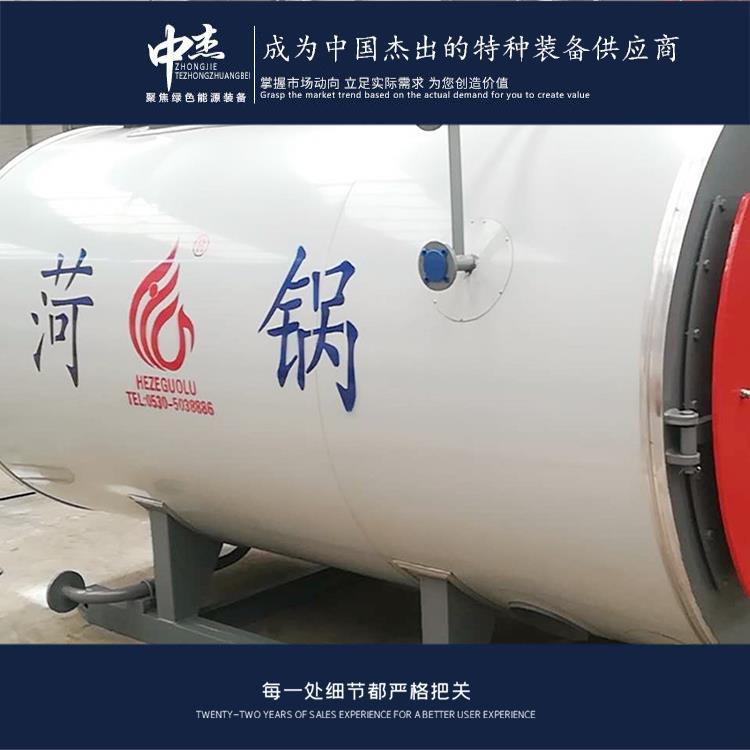

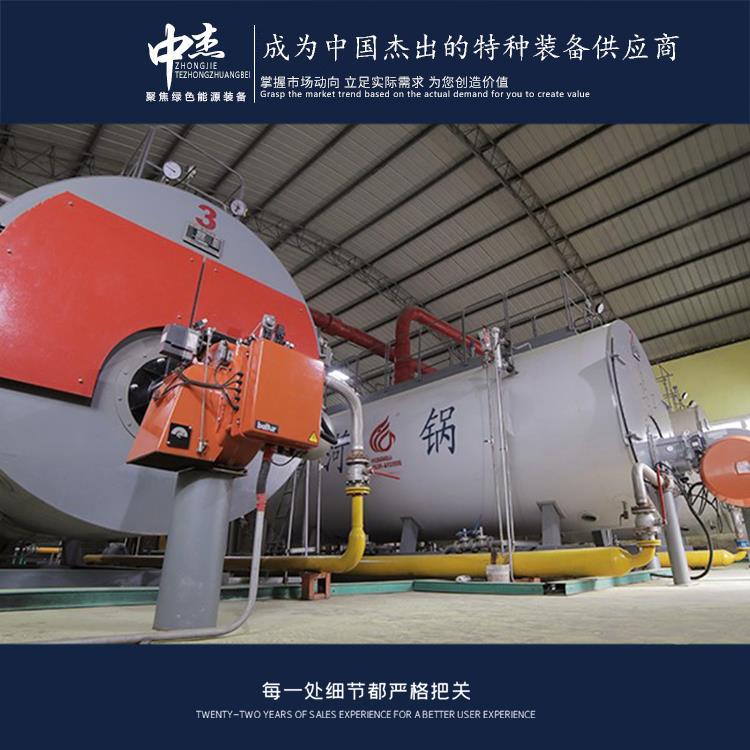
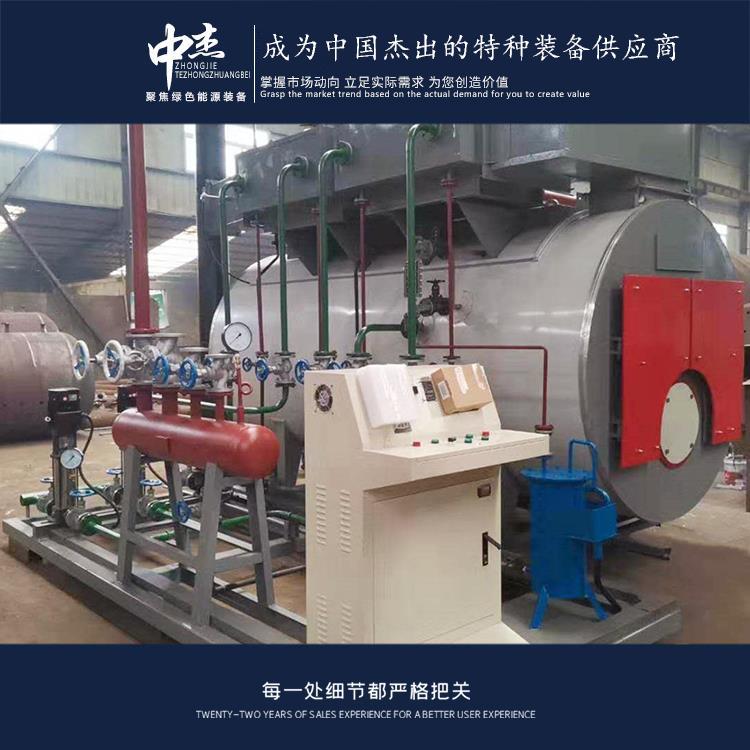


















Shandong Zhongjie Special Equipment (formerly Heze Boiler Factory Co., Ltd.) was established in 2001, located at No. 2218 Jinnan Road, Development Zone, Heze City. With a registered capital of 50 million yuan and total assets of 500 million yuan, the company has 7 business centers: boiler, deep-freeze vessel, pressure vessel, central air conditioning, engineering installation, international trade, and Internet of Things. It has three manufacturing sites on Jinnan Road, East Changjiang Road, and Bohai Road, covering a total of 200,000 square meters. The main workshop spans 83,000 square meters. Currently, there are 710 employees, including 247 engineering and technical staff and 82 intermediate-level technical personnel. In December 2016, it was recognized as a "High-tech Enterprise" by the Science and Technology Department. In June 2021, it was identified as a "Specialized and New Enterprise in Shandong Province" by the Ministry of Industry and Information Technology. In June 2022, it was recognized as a "Gazelle Enterprise in Shandong Province." In August 2022, it was identified as a "Specialized and New Small Giant Enterprise" by the Ministry of Industry and Information Technology.
WNS Low-Nitrogen Condensing Hot Water Boilers offer the following advantages:
- Low Nitrogen Emissions: The WNS Low-Nitrogen Condensing Hot Water Boiler employs low-nitrogen combustion technology, optimizing the combustion process and burner design to significantly reduce nitrogen oxide (NOx) emissions. This aids in reducing environmental pollution.
- High Thermal Efficiency: Utilizing condensing technology, the WNS Low-Nitrogen Condensing Hot Water Boiler recovers heat from flue gases, enhancing thermal energy utilization efficiency. The thermal efficiency typically exceeds 90%, surpassing that of traditional hot water boilers. This contributes to energy savings and reduced operating costs.
- Safety and Reliability: The control systems and safety devices used in the WNS Low-Nitrogen Condensing Hot Water Boiler offer excellent safety performance. It is equipped with multiple safety features including overheat protection, overpressure protection, and water level protection, capable of automatically monitoring and controlling the boiler's operation to ensure safe operation.
- Versatility: The WNS Low-Nitrogen Condensing Hot Water Boiler is suitable for various applications such as industrial, commercial, and residential settings. It can accommodate different thermal load requirements, demonstrating strong flexibility. Additionally, it can be integrated with other systems like solar hot water systems and ground-source heat pump systems to further enhance energy efficiency.
- Easy Operation and Maintenance: The WNS Low-Nitrogen Condensing Hot Water Boiler is easy to operate and maintain.
Steam boiler blowdown devices mainly include the following types:
- Blowdown Valve: Typically installed on steam boilers, the blowdown valve is used to discharge wastewater and impurities from the boiler. Located at the bottom or side of the boiler, opening the valve allows for the removal of wastewater to maintain the cleanliness of the boiler's interior.
- Blowdown Pump: For large steam boilers or situations requiring long-distance wastewater discharge, a blowdown pump may be used. The pump can extract wastewater from the boiler and transport it through pipes to designated discharge points.
- Automatic Blowdown System: Some steam boilers are equipped with automatic blowdown systems. These systems can automatically discharge wastewater from the boiler based on set time intervals or wastewater concentrations, enhancing the efficiency and accuracy of blowdown.
- Wastewater Treatment Equipment: In certain cases, steam boilers may require wastewater treatment equipment. These devices process the discharged wastewater, removing impurities and pollutants to meet environmental protection requirements.
It is important to note that the selection and use of steam boiler blowdown devices should be determined according to the specific type, scale, and operating environment of the boiler. When using blowdown devices, follow relevant operational procedures and safety requirements to ensure a safe and effective blowdown process.
Yes, durable thermal oil boilers typically have a longer service life. Here are some reasons:
- Material Quality: Thermal oil boilers are made with high-quality materials, such as heat-resistant and corrosion-resistant steel and alloy materials. These materials can withstand high temperatures and pressures, offering good durability and corrosion resistance, thereby extending the boiler's lifespan.
- Design and Manufacturing Process: Long-lasting thermal oil boilers usually employ advanced design and manufacturing techniques. Reasonable structural design and precise manufacturing processes reduce stress concentration and thermal stress, enhancing the boiler's stability and durability.
- Regular Maintenance and Care: Regular maintenance and care of thermal oil boilers are crucial for extending their service life. Regularly cleaning and inspecting the internal pipes, flues, and burners, and promptly replacing worn-out parts, can minimize malfunctions and damage, and extend the boiler's life.
- Proper Operation and Management: Correct operation and management are also vital factors in ensuring the longevity of thermal oil boilers. Operators should follow the operation manual and procedures, avoid overloading and improper operations, to ensure the boiler operates safely and stably.
- It's important to note that even durable thermal oil boilers require regular inspections and maintenance to ensure proper operation and extend their service life. Additionally, the lifespan of the boiler is affected by factors such as the operating environment, load conditions, and operating methods. Therefore, proper use and maintenance are key to ensuring the longevity of thermal oil boilers.
If a gas boiler gas leak is detected, the following measures must be taken immediately to handle the situation:
1. Immediately shut off the gas supply: First, quickly close the gas supply valve to cut off the gas supply. This prevents further leakage and reduces safety risks.
2. Ventilate the area: Open windows and doors to ensure proper indoor air circulation and expel any remaining gas. This helps lower the indoor gas concentration, reducing the risk of explosion and poisoning.
3. Avoid open flames and electrical appliances: In the event of a gas leak, avoid using open flames and electrical equipment to prevent fires or electric sparks that could trigger an explosion.
4. Do not operate electrical switches: Refrain from operating electrical switches, including lights, TVs, computers, etc., to prevent sparks that could cause an accident.
5. Contact the gas company or personnel: Promptly contact the local gas company or personnel to report the gas leak and request their inspection and repair.
6. Do not use a phone or make calls: In case of suspected gas leaks, do not use a phone or make calls to avoid static electricity that could cause an explosion.
7. Keep away from the leak area: Stay as far away from the leak area as possible to ensure your safety. Avoid approaching the gas boiler and the leak point to prevent injury.
Remember, dealing with a gas boiler gas leak is a dangerous task that requires caution. It is best handled by professionals to ensure safety.
Zhongjie Special Equipment adheres to the grand vision of "realizing employees' dreams, creating value for customers, and striving for the prosperity and strength of our motherland," and is dedicated to the development of the green energy equipment industry. We offer society high-quality products and services at competitive prices!
WeChat Official Account

Scan to follow Official Account



















