


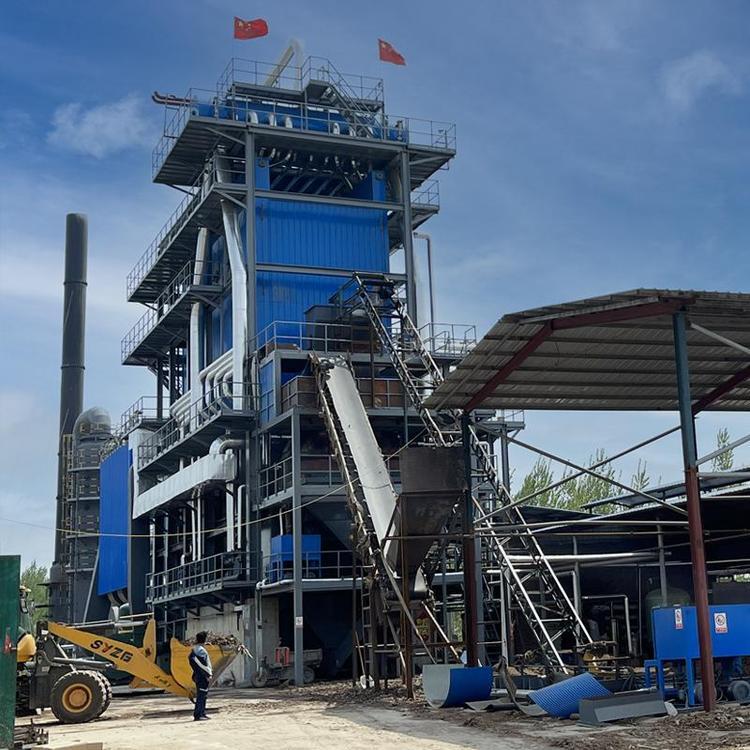

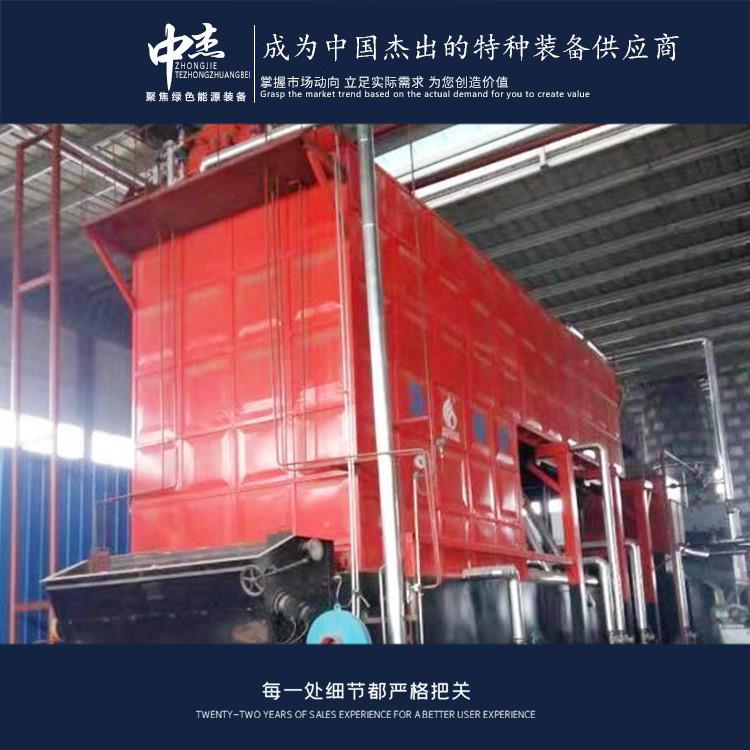
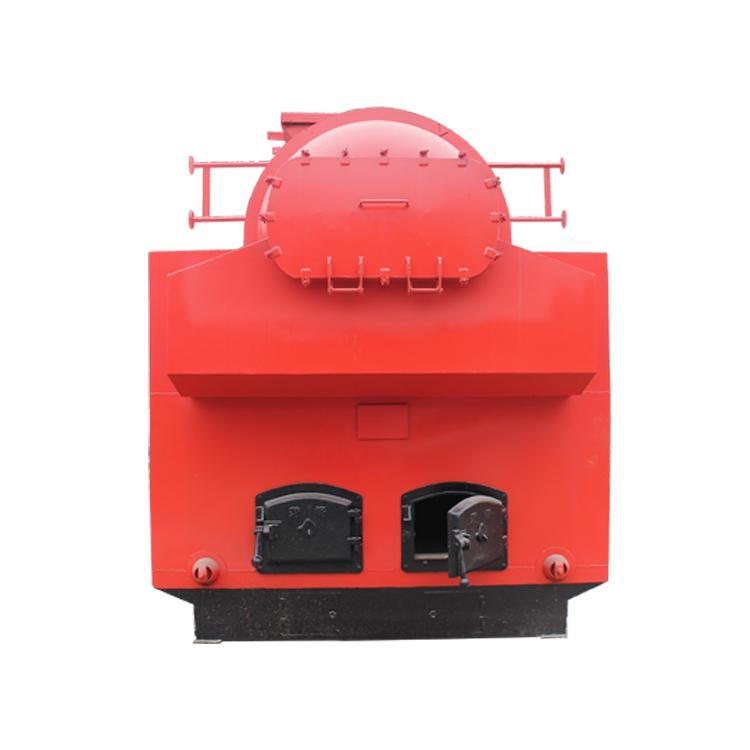


















Shandong Zhongjie Special Equipment Co., Ltd. (formerly Heze Boiler Factory Co., Ltd.) was established in 2001, located at No. 2218 Jinnan Road, Development Zone, Heze City. With a registered capital of 50 million yuan and total assets of 500 million yuan, the company has 7 business centers: boilers, deep-freeze containers, pressure vessels, central air conditioning, engineering installation, international trade, and Internet of Things. It has three factory sites on Jinnan Road, East Changjiang Road, and Bohai Road, covering a total area of 200,000 square meters, with the main workshop spanning 83,000 square meters. The company currently employs 710 staff, including 247 engineers and technicians, and 82 intermediate-level technicians. In December 2016, it was recognized as a "High-tech Enterprise" by the Science and Technology Department. In June 2021, it was identified as a "Specialized and New Enterprise of Shandong Province" by the Ministry of Industry and Information Technology. In June 2022, it was recognized as a "Gazelle Enterprise of Shandong Province," and in August 2022, it was identified as a "Specialized and New Small Giant Enterprise" by the Ministry of Industry and Information Technology.
Utilizing biomass boilers is of significant importance for energy conservation and emission reduction:
Reducing Carbon Emissions: Fuel for biomass boilers comes from organic matter such as plants, animals, and microorganisms. The carbon dioxide released during combustion can be absorbed by plants, creating a cycle. Compared to traditional fossil fuels, biomass fuel has a lower carbon emission rate, effectively reducing greenhouse gas emissions, which is significant in combating climate change.
Reduce Energy Consumption: Biomass boilers equipped with combustion technology and heat recovery systems can enhance energy utilization efficiency and minimize waste. By conserving energy, energy costs can be reduced and the benefits of energy use can be improved.
Reduce dependence on fossil fuels: Biomass, as a local renewable energy source, can diminish reliance on imported fossil fuels and enhance energy security. In regions with scarce resources, the use of biomass boilers can provide a reliable energy supply and reduce dependence on external energy sources.
Promoting Agricultural and Forestry Development: Fuel for biomass boilers primarily comes from agricultural residues like straw and wood, as well as other forestry by-products, fostering the sustainable development of agriculture and forestry. By effectively utilizing agricultural and forestry waste, resource waste can be reduced and the comprehensive benefits of the agriculture and forestry industries can be enhanced.
Promote Environmental Protection: Biomass boilers produce relatively low emissions and ash during combustion, minimizing environmental impact. Moreover, the use of biomass boilers helps reduce the exploitation and destruction of natural resources, safeguarding ecological environments.
In summary, utilizing biomass boilers is of great significance for energy conservation and emission reduction.
Biomass fuel boilers may encounter the following issues during use:
Fuel quality inconsistency: The quality of biomass fuel is affected by factors such as raw material source, processing methods, and storage conditions, leading to inconsistent fuel quality. Inconsistent fuel quality may impact combustion efficiency and the stable operation of boilers.
Ash disposal issue: Biomass fuel produces a large amount of ash during combustion, including waste, ash content, and unburned materials. The handling and disposal of ash may lead to environmental pollution and disposal costs.
High-Temperature Corrosion: Ash and elements like chlorine in biomass fuels are prone to cause corrosion at high temperatures, damaging the metal components of boilers. Appropriate measures need to be taken to protect and treat against high-temperature corrosion issues.
Low combustion efficiency: The combustion characteristics of biomass fuel differ from traditional fossil fuels, potentially leading to lower combustion efficiency. It is necessary to optimize the combustion system and control strategies to enhance combustion efficiency and reduce energy waste.
Gases emitted from combustion: The combustion of biomass fuel produces certain gas emissions, including carbon dioxide, nitrogen oxides, and particulate matter, among others. These emissions have an impact on the environment and air quality, and corresponding control measures are necessary.
Transportation and Storage Costs: The transportation and storage costs for biomass fuels are high, particularly for areas far from the source of supply. This may increase the operational costs of biomass fuel boilers.
In summary, biomass fuel boilers face issues such as inconsistent fuel quality, ash and slag disposal, and high temperatures.
To reduce the emissions of nitrogen oxides (NOx) from biomass boilers, the following measures can be taken:
Combustion Control Optimization: By optimizing the combustion process, controlling the combustion temperature and oxygen supply, and reducing NOx emissions. Adjustments can be made to the burner's structure and parameters to make the combustion more thorough and even, minimizing the formation of local high-temperature areas.
Combustion Chamber Design Enhancement: Improved combustion chamber design for biomass boilers, increasing mixing and delay time within the chamber to ensure more thorough fuel and air mixture, thereby reducing NOx emissions.
SNCR Technology: Selective Non-Catalytic Reduction (SNCR) technology involves adding a reductant, such as urea, during the combustion process, which reacts with NOx to convert it into nitrogen and water. This technique can effectively reduce NOx emissions, but requires system design and adjustments based on specific conditions.
SCR Technology: Selective Catalytic Reduction (SCR) technology is a NOx control method that involves adding a catalyst to flue gas, such as, to react with NOx and convert it into nitrogen and water. SCR technology can achieve high NOx removal efficiency, but requires significant investment and operating costs.
Flue Gas Recirculation (FGR): Flue gas recirculation technology recycles a portion of the flue gas back into the combustion process, reducing combustion temperature and minimizing NOx formation. This technique can control NOx by adjusting the recirculation ratio.
Regular maintenance and cleaning: Regular maintenance for biomass boilers
Control methods for biomass boiler combustion systems can include the following aspects:
Fuel Supply Control: Regulate the quantity and speed of biomass fuel supply to ensure stable fuel provision. This can be achieved by adjusting the speed of the feeder or the opening degree of the feeding valve.
Air Supply Control: Regulate the air supply during the combustion process to ensure complete fuel combustion. Air supply can be controlled by adjusting the speed of the fan or the opening of the air gate.
Combustion Temperature Control: Monitor and control the furnace temperature during the combustion process to maintain the combustion temperature within an appropriate range. This can be achieved by adjusting the combustion air flow, fuel supply, and fuel distribution.
Combustion Process Monitoring: By installing temperature, pressure, and oxygen content sensors, etc., we monitor parameters such as temperature, pressure, and oxygen content in real-time during the combustion process, promptly identifying and adjusting any anomalies.
Flue Gas Emission Control: Monitor and control the emission of pollutants in flue gas to ensure environmental friendliness in the combustion process. This can be achieved by installing flue gas analyzers and emission control devices, adjusting combustion parameters and flue gas treatment equipment to reduce pollutant emissions.
Automated Control System: Utilizes an automated control system for comprehensive control and monitoring of the biomass boiler combustion system. Through PLC controllers, touchscreens, and other equipment, it achieves automatic adjustment of parameters and monitoring of operational status, enhancing the stability and efficiency of the combustion system.
In summary, through proper fuel supply, air supply, combustion temperature control, as well as monitoring and automated control of the combustion process, the stable operation of a biomass boiler combustion system can be achieved.
Zhongjie Special Equipment adheres to the great vision of "realizing employees' dreams, creating customer value, and striving for the prosperity and strength of our motherland," focusing solely on the development of green energy equipment. We dedicate products and services with high cost-performance to the society!
WeChat Official Account

Scan to follow Official Account



















