


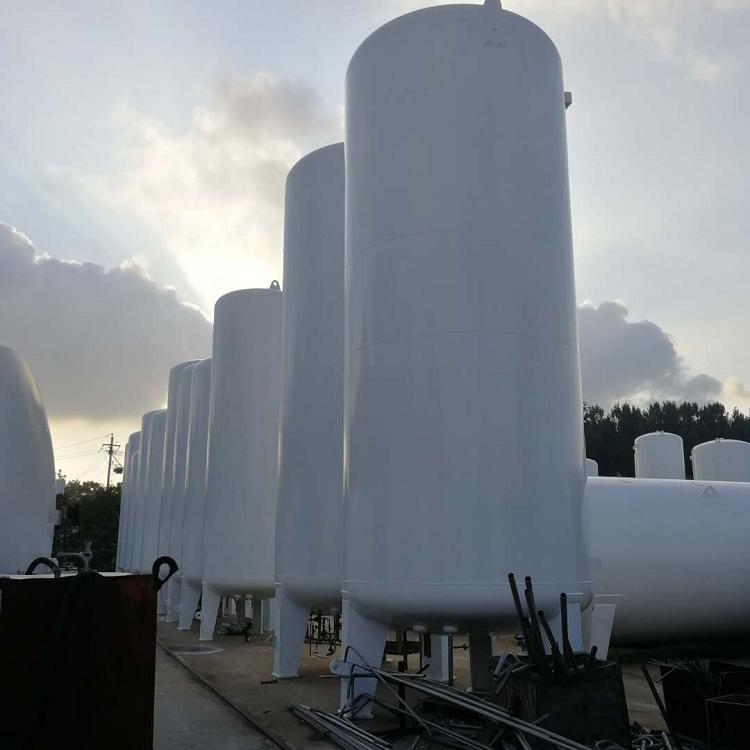


















Shandong Zhongjie Special Equipment (formerly Heze Boiler Factory Co., Ltd.) holds an A-grade boiler manufacturing license, an A2-grade pressure vessel manufacturing license, an A2-grade pressure vessel design license, a B-grade boiler installation license, and GB2/Class, GC2/Class pressure pipeline installation licenses, as well as a mechanical and electrical equipment installation contracting qualification. It is a member of the China Boiler and Water Treatment Association, the China Chemical Equipment Association, and a council member of the Shandong Equipment Manufacturing Association. The company has also passed certifications for the ISO9001 Quality Management System, ISO14001 Environmental Management System, OHSAS18001 Occupational Health and Safety Management System, and the American ASME/U2 certification.
Oxygen storage tanks and liquid oxygen storage tanks are equipment used for storing oxygen, but they have some differences: Storage Form: Oxygen storage tanks are typically used for storing gaseous oxygen, whereas liquid oxygen storage tanks are for storing liquid oxygen. Oxygen is in a gaseous state at room temperature, but it is cooled to a liquid state at low temperatures for better storage and use. Storage Pressure: Oxygen storage tanks usually store high-pressure oxygen, with pressures generally around 200-300 bar. Liquid oxygen storage tanks store liquid oxygen at lower pressures, typically around 2-5 bar. Storage Capacity: Oxygen storage tanks generally have smaller capacities, suitable for personal or small-scale use. Liquid oxygen storage tanks have larger capacities, suitable for industrial or large-scale use. Storage Method: Oxygen storage tanks store oxygen in a gaseous form, via compressed gas storage. Liquid oxygen storage tanks store oxygen in a liquid form, by cooling it to temperatures below its boiling point to convert it to a liquid. Safety Requirements: Due to the highly oxidizing nature of liquid oxygen, liquid oxygen storage tanks require stricter safety standards in design and use. Liquid oxygen storage tanks usually need to have good thermal insulation protection, leak control, and fire prevention measures to ensure safe operation. It should be noted that the specific design and specifications of oxygen and liquid oxygen storage tanks may vary depending on different regions and application sites. When using these tanks, follow applicable regulations, standards, and safety guidelines, and cooperate with local regulatory bodies and personnel to ensure the safety and reliability of the tanks.
When storing liquid nitrogen in low-temperature storage tanks, please note the following:
Protective Gear: When operating low-temperature storage tanks, appropriate protective gear must be worn, including gloves, protective clothing, and non-slip shoes. This gear helps protect the skin from the low temperatures of liquid nitrogen and other hazards.
Avoid direct contact: Liquid nitrogen is extremely cold and can cause chilling. Therefore, avoid direct contact with liquid nitrogen, especially with the skin. Use tools or equipment for handling to prevent direct hand contact with liquid nitrogen.
Ventilation Requirements: In the operational area of low-temperature storage tanks, adequate ventilation must be ensured to expel gases produced by the evaporation of liquid nitrogen. Maintain air circulation to avoid excessive oxygen concentration and reduce the risk of fire and explosion.
Prevent Leaks: Regularly inspect low-temperature storage tanks for leaks and equip with leak detection and alarm systems. In case of a leak, take immediate action to control and repair it. Avoid harm to personnel and the environment due to the leakage of liquid nitrogen.
Fire Prevention Measures: Liquid nitrogen has a low boiling and freezing point, which can easily cause fires. Measures such as setting up fire barriers around low-temperature storage tanks and using fire-resistant coatings are taken to prevent fires from occurring and spreading.
Electrostatic Protection: Electrostatic buildup in low-temperature storage tanks may cause sparks, increasing the risk of fire. Measures should be
Liquid Argon Storage Tanks are specialized equipment designed for storing liquid argon, featuring the following parameters, functions, and characteristics:
Parameters:
Tank Capacity: The capacity of liquid argon tanks can be customized to meet requirements, with various sizes available, such as 500L, 1000L, 2000L, and so on.
Working Pressure: The working pressure of liquid argon tanks is typically atmospheric or slightly above atmospheric pressure.
Storage Temperature: The storage temperature for liquid argon tanks is typically -196 degrees Celsius, which is the boiling point of argon, maintaining its liquid state.
Function:
Store Liquid Argon: Liquid argon tanks are primarily used for storing liquid argon, maintaining its liquid state at low temperatures for supply and use.
Insulation: The liquid argon storage tank utilizes insulation materials and structural design to minimize heat conduction and retention, maintaining the low-temperature state of liquid argon.
Safety Control: The liquid argon storage tank is equipped with safety devices such as pressure relief valves and level alarms to ensure safe operation and use.
Features:
High Purity Supply: Liquid argon tanks offer high-purity liquid argon supply to meet application needs, such as cryogenic storage, gas-shield welding, semiconductor manufacturing, etc.
Long-term Storage: Liquid argon tanks are designed for long-term storage of liquid argon, extending their service life. By controlling the tank's internal temperature and the performance of the insulation layer, the evaporation and oxidation of liquid argon are slowed down.
Multi-domain Applications: Liquid argon storage tanks are widely used in various fields, including industry and scientific research, such as cryogenic and semiconductor manufacturing.
Environmental Protection and Energy Saving: Liquid argon storage tanks effectively store and utilize liquid argon, reducing energy waste and environmental pollution.
In summary, liquid argon storage tanks are designed for storing liquid argon, thermal insulation, and safety.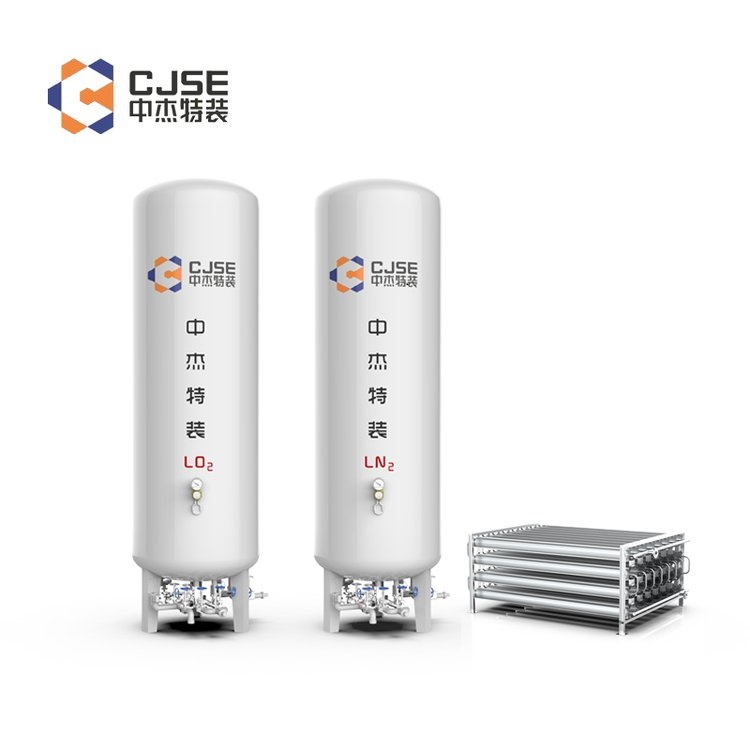
The medical oxygen steel cylinder filling plant, in addition to the liquid oxygen storage tank, includes the following components:
Oxygen Compressor: Oxygen compressors are used to compress gaseous oxygen into high-pressure oxygen. These compressors are typically made with special materials and designs to ensure safe handling and compression of oxygen.
Oxygen Purification System: The oxygen purification system is designed to remove impurities and contaminants from oxygen, ensuring the purity and quality of the supplied oxygen. The system typically includes filters, adsorbents, and molecular sieves.
Oxygen Storage Systems: In addition to liquid oxygen tanks, the oxygen filling area may also include a gaseous oxygen storage system, designed for temporary storage and supply of gaseous oxygen. The gaseous oxygen storage system typically includes high-pressure oxygen cylinders or gas storage tanks.
Filling Equipment: Filling equipment is used to transfer oxygen from liquid oxygen storage tanks or gas oxygen storage systems into medical oxygen steel cylinders. The filling equipment typically includes filling machines, filling pipelines, and filling control systems.
Oxygen Quality Monitoring System: The oxygen quality monitoring system is used to monitor the quality and purity of oxygen being filled. Quality checks and surveillance of the filled oxygen are conducted through an oxygen analyzer or other detection equipment.
Safety Facilities: The filling plant should be equipped with corresponding safety facilities, such as fire alarm systems, oxygen leak detection systems, and ventilation systems, to ensure the safety and protective measures during the filling process.
It is important to note that the design and equipment configuration of a medical oxygen cylinder filling facility must comply with relevant regulations, standards, and specifications. During the filling process, strict adherence to operational procedures and safety requirements is essential to ensure the safe supply of oxygen.
Shandong Zhongjie Special Equipment, welcome customers to visit our factory for business talks.
WeChat Official Account

Scan to follow Official Account



















