


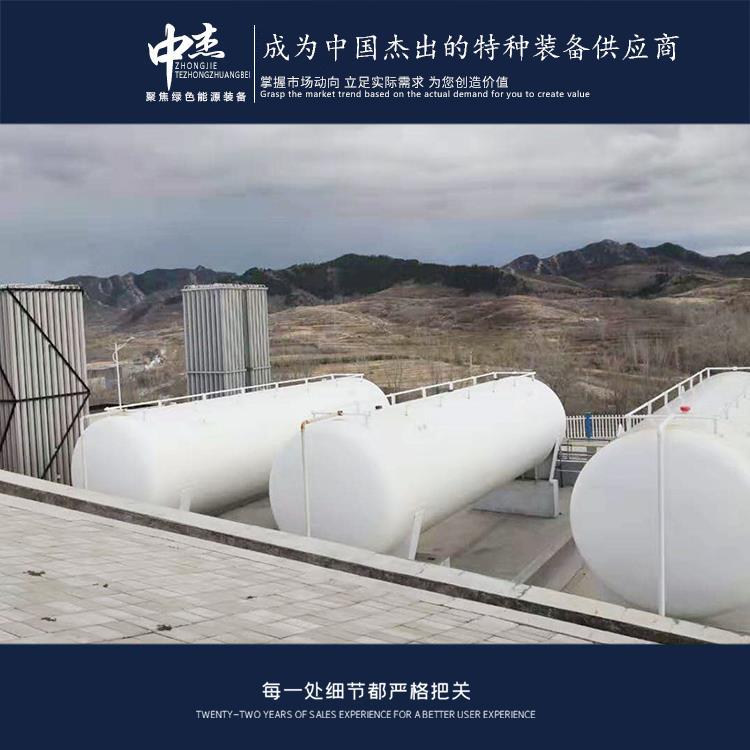



















Shandong Zhongjie Special Equipment Co., Ltd. (formerly Heze Boiler Factory Co., Ltd.) was established in 2001 and is located at No. 2218 Jinnan Road, Economic Development Zone, Heze City. With a registered capital of 50 million yuan and total assets of 500 million yuan, the company has seven business centers: boilers, deep-freezing containers, pressure vessels, central air conditioning, engineering installation, international trade, and the Internet of Things. It operates three factory areas on Jinnan Road, East Changjiang Road, and Bohai Road, covering a total area of 200,000 square meters, with the main workshop spanning 83,000 square meters. The company currently employs 710 staff, including 247 engineers and technicians and 82 middle-level technical personnel. Recognized as a "High-Tech Enterprise" by the Science and Technology Department in December 2016, as a "Shandong Specialized, New, and Unique Enterprise" by the Ministry of Industry and Information Technology in June 2021, as a "Shandong Gazelle Enterprise" in June 2022, and as a "Specialized, New, and Unique Small Giant Enterprise" by the Ministry of Industry and Information Technology in August 2022.
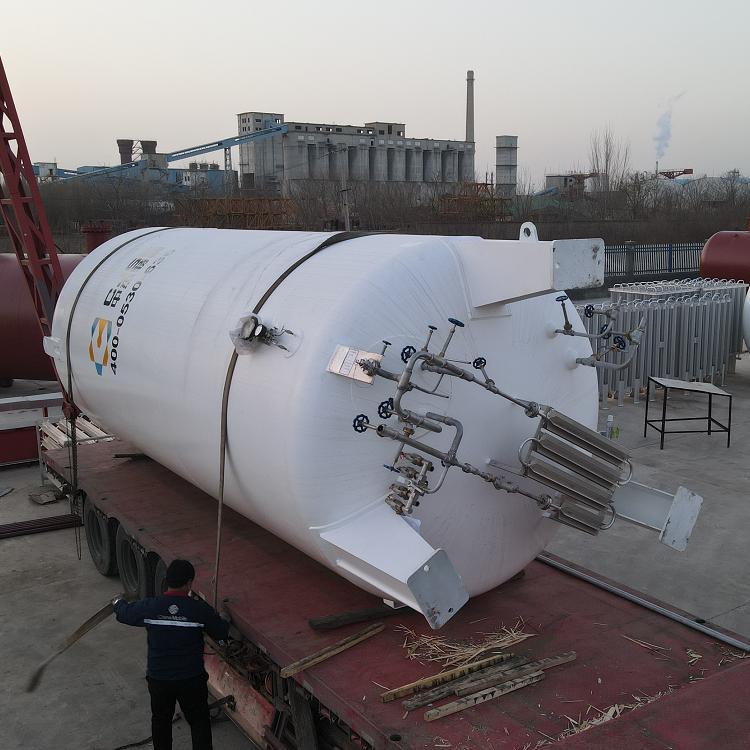
A hydrostatic test of a liquid nitrogen storage tank is a common method used to inspect the tank's sealing and pressure resistance. Below are the general steps for the hydrostatic test of a liquid nitrogen storage tank:
Preparation: Ensure the tank's interior is clean and all gases and liquids are emptied from the tank. Check that the tank's sealing and safety devices are functioning properly.
Fill water: Fill the tank with water to ensure the water level is above the low water mark. Pump or other appropriate methods may be used for filling.
Apply Pressure: Gradually increase the water pressure using a pressure pump or other pressure source until the predetermined test pressure is reached. The test pressure is typically 1.1 times the design working pressure of the tank.
Pressure maintenance: After reaching the test pressure, maintain it for a period of time (usually 30 minutes to 1 hour) and observe for any abnormal conditions such as leaks or deformation in the tank.
Pressure Relief: Gradually release pressure to drain water from the tank until the tank is completely empty.
Inspection and Evaluation: Check for leaks, deformation, or other damage on the surface and interior of the tank. Evaluate the test results to ensure the tank meets design requirements and safety standards.
需要注意的是,液氮储罐水压试验需要由人员进行操作,并遵循相关的安全操作规程。在进行测试前,应仔细阅读和遵守储罐制造商提供的操作指南和安全注意事项。
The reasons for not leaving liquid oxygen tanks idle for extended periods are mainly as follows:
Evaporation loss of liquid oxygen: Liquid oxygen has a low boiling point, and prolonged storage without use will cause it to continually evaporate, resulting in a loss of liquid oxygen within the storage tank. The evaporation rate of liquid oxygen is relatively fast, with daily evaporation amounts potentially reaching several percent of the tank's capacity. Prolonged storage without use can lead to waste of liquid oxygen.
Safety Risk: Liquid oxygen is a strong oxidizer with high flammability and explosive properties. Prolonged empty storage of liquid oxygen tanks increases the opportunity for contact between the liquid oxygen and the surrounding environment, thereby increasing the risk of accidental fires and explosions.
Risk of Tank Damage: Long-term empty storage of liquid oxygen tanks can lead to internal oxidation reactions, accelerating tank corrosion and damage. Tank damage can affect its sealing performance and structural integrity, increasing the risk of leaks and safety accidents.
Therefore, to ensure the safe storage and effective utilization of liquid oxygen, the liquid oxygen storage tank should be regularly maintained and serviced to avoid long-term disuse. When the tank is not in use, appropriate measures should be taken, such as sealing the tank and reducing evaporation of liquid oxygen, to minimize losses and safety risks.
Tanks are specialized storage equipment that requires regular inspections and maintenance to ensure safe operation. Here are common inspection methods for tanks:
Visual Inspection: Regularly inspect the exterior of the storage tank, including checking for leaks, corrosion, deformation, cracks, and other issues. Pay special attention to ensure the integrity of the tank's interfaces, welds, and valves.
Pressure Test: Conduct pressure tests to evaluate the tank's sealing and pressure resistance capabilities. Use a pressure gauge or pressure sensor to perform pressure tests on the tank to ensure it can withstand the designed pressure.
Ultrasonic Testing: Ultrasonic testing can be used to detect corrosion and cracks in storage tank walls. By scanning the tank with an ultrasonic probe instrument, potential defects and issues are identified.
Magnetic Particle Inspection: This method is used to detect cracks and weld quality in tank walls. By applying magnetic particles to the tank surface and then using a magnetic particle inspection device to observe for particle aggregation, it can determine if there are any cracks or weld issues.
Environmental Monitoring: Regularly monitor the environment around storage tanks, including checking gas concentrations and temperatures, to ensure the safety of the surrounding environment.
Note that tank inspections should be conducted by a certified inspection agency or qualified inspectors. The frequency and methods of inspection should be determined based on the tank's usage, size, and relevant regulatory requirements. Regular inspections and maintenance can help identify potential issues early on, ensuring the safe operation of the tank.
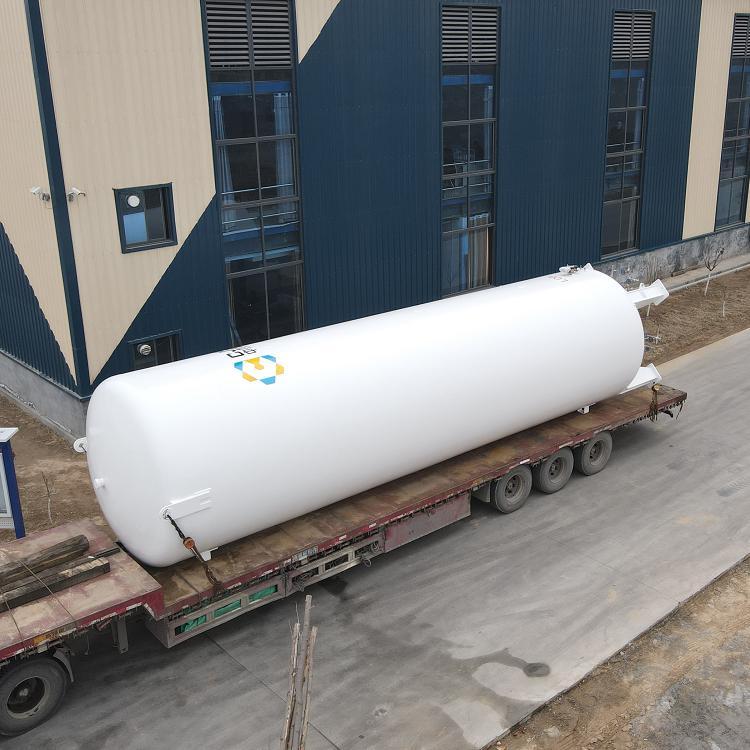
Low-temperature liquid storage tanks feature the following characteristics and usage advantages:
Feature:
Low-Temperature Storage: Low-temperature liquid storage tanks can store low-temperature liquids (such as liquid nitrogen, liquid oxygen, etc.) at low temperatures, maintaining their liquid state. Liquid storage significantly increases storage density and saves space.
Insulation: The low-temperature liquid storage tanks are equipped with special insulation materials and structural design, effectively reducing heat conduction and loss, maintaining a stable temperature for the low-temperature liquid. This helps to minimize energy loss and liquid evaporation.
Safety: Low-temperature liquid storage tanks feature excellent safety performance. The tanks are made with special materials and structural design, capable of withstanding low temperatures and high pressures. Additionally, the tanks are equipped with safety devices such as pressure relief valves and liquid level alarms, ensuring safe operation and use.
Utilization Advantages:
High Purity Supply: Low-temperature liquid storage tanks can provide high-purity liquid substances. Through refrigeration and purification processes, high-purity liquid gases can be obtained to meet application requirements in industries such as industrial and scientific research.
Long-term Storage: Low-temperature liquid storage tanks are designed for long-term storage of low-temperature liquids, extending their service life. By controlling the temperature inside the tank and the performance of the insulation layer, the evaporation and oxidation of the liquid can be slowed down, maintaining its stability and purity.
Versatile Applications: Low-temperature liquid storage tanks are widely used in fields such as industry, scientific research, and more. They can be used for storing liquid oxygen to provide oxygen supply; in the industrial sector, they are suitable for storing liquefied natural gas (LNG) and other process gases like liquid nitrogen; in scientific research, they can store low-temperature experimental samples.
Environmental Protection and Energy Saving: Low-temperature liquid storage tanks enable effective storage and utilization of low-temperature liquids, reducing energy waste and environmental pollution. Storage of liquid substances
Zhong Jie Special Equipment upholds the great vision of "realizing employees' dreams, creating value for customers, and striving for the prosperity and strength of our motherland," and is dedicated to the development of the green energy equipment industry. We offer products and services with high performance and cost-effectiveness to contribute to society!
WeChat Official Account

Scan to follow Official Account



















