


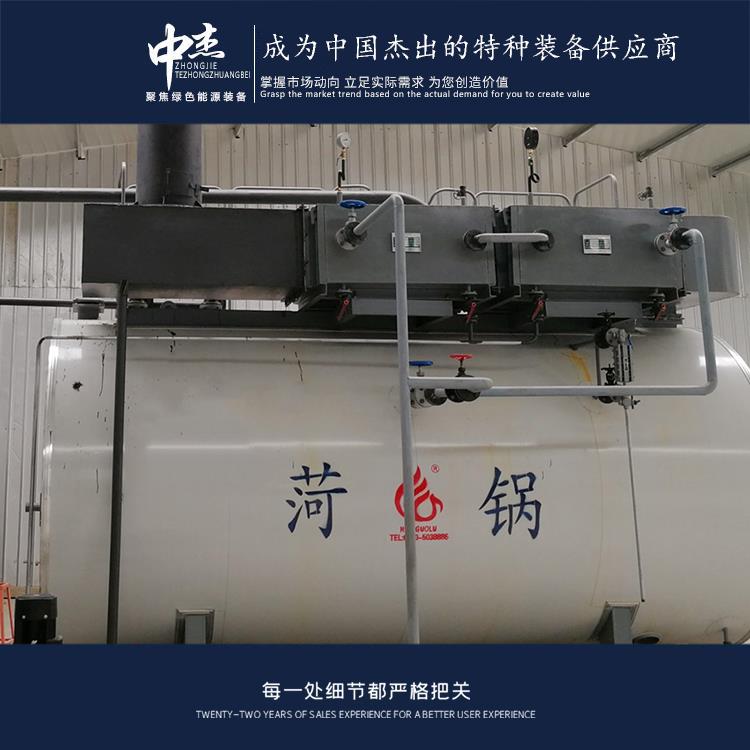

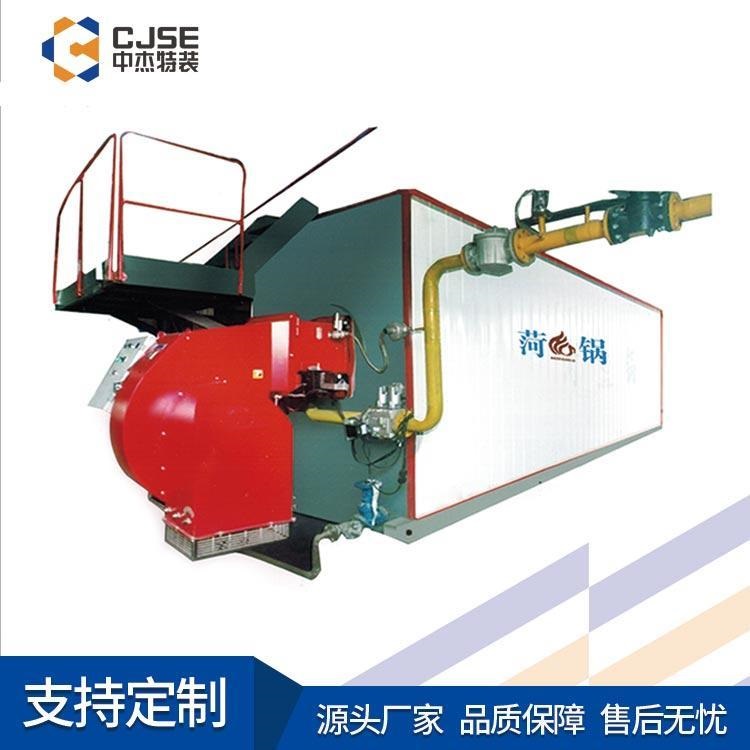
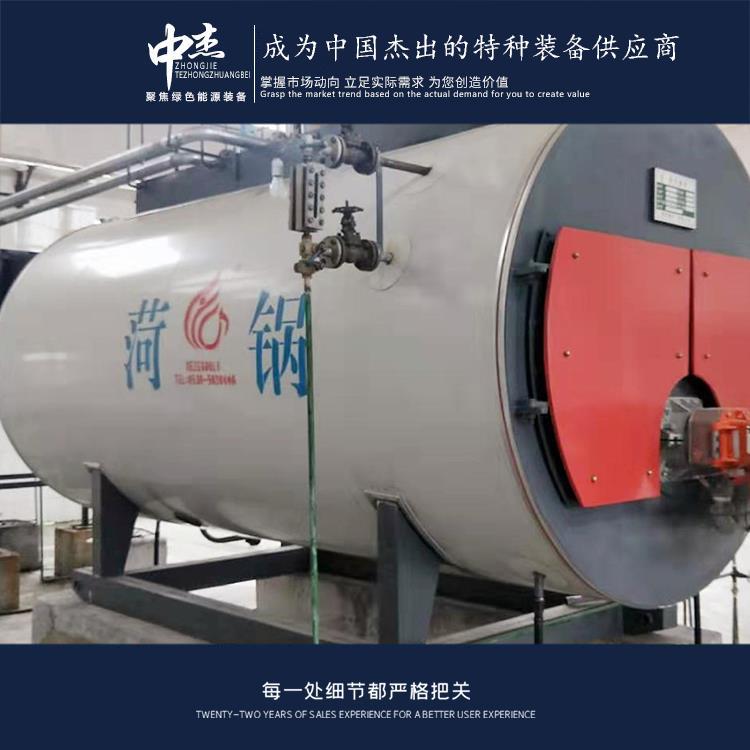


















Shandong Zhongjie Special Equipment specializes in: fuel (gas) boilers, organic heat carrier boilers, biomass boilers, waste heat recovery boilers, and other boiler products; vacuum insulation cryogenic pressure vessels such as LNG tanks, oxygen/nitrogen/argon tanks, and CO2 tanks; pressure vessel products including denitrification engineering equipment, heat storage and energy storage equipment, and complete chemical equipment sets; central air conditioning and ventilation equipment such as ground (water) source heat pumps, air source units, water-cooled screw units, and air-cooled modular units. Planned products include large-scale energy centers, LNG transport vehicles, LNG tank containers, and other green energy equipment.
Industrial boiler thermal deaeration is a commonly used deaeration method, characterized by:
- Deaeration: Thermal deaeration releases dissolved oxygen from the boiler water by heating it, utilizing heat to liberate the oxygen. As the water temperature rises during the thermal deaeration process, the solubility of oxygen decreases, allowing for effective removal of oxygen from the water.
- No Chemicals Required: Unlike other deaeration methods, thermal deaeration does not require chemicals, thus avoiding environmental pollution and equipment corrosion caused by chemicals. It also reduces operational costs and complexity.
- Automated Control: Thermal deaeration can be achieved through an automated control system, which adjusts the water temperature and flow rate based on the boiler's operating status and water quality to achieve optimal deaeration results.
- Wide Application Range: Thermal deaeration is suitable for various types of industrial boilers, including coal-fired, gas-fired, and oil-fired boilers. Whether it's a small or large boiler, thermal deaeration can be used for deaeration treatment.
- Improved Boiler Efficiency: Removing dissolved oxygen from the water reduces corrosion and oxidation reactions within the boiler, extending its lifespan. Additionally, reducing oxygen presence can enhance the boiler's thermal efficiency and lower energy consumption.
- Note: While thermal deaeration effectively removes oxygen from the water, it may not address other water quality issues such as hardness and alkalinity. Therefore, in practical applications, it's necessary to consider the characteristics of water quality and the requirements of the boiler to select an appropriate deaeration method.
The inspection of heat-conducting oil boiler tube plates is crucial for ensuring the safe operation of the boiler and preventing potential issues. Below are the general steps for inspecting heat-conducting oil boiler tube plates:
Visual Inspection: Conduct a visual inspection to check for any visible corrosion, cracks, deformation, or other anomalies on the tube plate surface. Pay special attention to inspecting the welds and joints for cracks or leaks.
Cleaning the Tube Plate: Clean the tube plate surface thoroughly to remove dirt and deposits, facilitating a proper inspection.
Ultrasound Testing: Use ultrasound testing equipment to inspect the tube plates for any possible cracks or other defects. Ultrasound testing helps determine the integrity and reliability of the tube plates.
Pressure Testing: Perform a pressure test to verify the sealing and pressure resistance of the tube plates. Gradually increase the pressure during the test, observe for any leakage, and ensure the tube plates can withstand the design pressure.
Tube Plate Thickness Measurement: Use an ultrasonic thickness gauge to measure the thickness of the tube plates to ensure they meet design requirements. Pay particular attention to the corrosion status, ensuring it remains within safe limits.
Weld Inspection: Inspect the welds on the tube plates to ensure the quality meets relevant standards and specifications. Check for the integrity of the welds, the quality of the welding, and whether the welding process meets requirements.
Documentation and Reporting: Document and report the inspection results for the tube plates, including any issues found, corrective measures, and recommendations. These records and reports serve as references for future maintenance and management.
It is important to note that the inspection of heat-conducting oil boiler tube plates should be conducted by qualified personnel and performed strictly according to relevant standards and specifications. If any issues or anomalies are detected, appropriate repair and maintenance measures should be taken promptly to ensure the safe operation of the boiler.
Excessive exhaust gas temperature in a thermal oil boiler may be due to several reasons: Incomplete combustion: If the fuel is not fully combusted during the boiler's combustion process, it leads to a high concentration of unburned fuel and harmful substances in the flue gas, raising the exhaust gas temperature. Possible causes include insufficient fuel supply, improper adjustment of the burner, and burner wear. Excessive air: Excess air can lower the combustion temperature, making the heat in the flue gas insufficient to reduce the flue gas temperature to a reasonable level. Reasons for excessive air may include improper burner adjustment and overly open air doors. Flue blockage: Accumulated ash, slag, or other impurities in the flue can obstruct flue gas flow, increasing the residence time of the flue gas and raising the exhaust gas temperature. Abnormal thermal oil flow: Abnormal thermal oil flow, either too high or too low, can lead to uneven heat transfer, increasing the flue gas temperature. Overheating of the boiler: Improper temperature control in the thermal oil boiler can cause overheating, raising the exhaust gas temperature. Design issues of the boiler: Design problems such as a small flue or poor flue gas flow may also cause the exhaust gas temperature to be too high. To address the issue of excessive exhaust gas temperature, a comprehensive inspection and analysis of the thermal oil boiler is required. Solutions may include adjusting burner parameters, cleaning the flue, checking thermal oil flow and temperature control. In severe cases, boiler system modifications or repairs may be necessary. Additionally, regular maintenance and inspections are crucial preventive measures against excessive exhaust gas temperature.
WNS Low-Nitrogen Condensing Hot Water Boilers offer the following advantages:
- Low Nitrogen Emissions: Utilizing low-nitrogen combustion technology, these boilers significantly reduce NOx emissions by optimizing the combustion process and burner design. This aids in reducing environmental pollution.
- High Thermal Efficiency: Equipped with condensing technology, these boilers enhance energy utilization by recovering heat from flue gases. The thermal efficiency typically exceeds 90%, higher than traditional hot water boilers, contributing to energy savings and lower operating costs.
- Safety and Reliability: The control systems and safety devices employed in these boilers ensure excellent safety performance. They are equipped with multiple safety features such as overheat protection, overpressure protection, and water level protection, which automatically monitor and control the boiler's operation for safe operation.
- Versatility: Suitable for various applications including industrial, commercial, and residential settings, these boilers can adapt to different thermal load requirements, offering strong flexibility. They can also be integrated with other systems like solar hot water systems and ground source heat pump systems to further improve energy efficiency.
- Easy Operation and Maintenance: The operation and maintenance of WNS Low-Nitrogen Condensing Hot Water Boilers are straightforward.
Zhong Jie Special Equipment upholds the grand vision of "realizing employees' dreams, creating value for customers, and striving for the prosperity and strength of our motherland," and is dedicated to the development of the green energy equipment industry. We commit to society with high-quality, cost-effective products and services!
WeChat Official Account

Scan to follow Official Account



















