





















Shandong Zhongjie Special Equipment (formerly Heze Boiler Factory Co., Ltd.) holds an A-grade boiler manufacturing license, an A2-grade pressure vessel manufacturing license, an A2-grade pressure vessel design license, a B-grade boiler installation license, and GB2/GB3-grade pressure pipeline installation licenses, as well as a mechanical and electrical equipment installation contracting qualification. It is a member of the China Boiler and Water Treatment Association, the China Chemical Equipment Association, and a council member of the Shandong Equipment Manufacturing Association. The company has also passed certifications for the ISO9001 Quality Management System, ISO14001 Environmental Management System, OHSAS18001 Occupational Health and Safety Management System, and the American ASME/U2 certification.
The hot water boiler features the following main characteristics:
Energy-saving: The combustion technology and heat exchanger design of the hot water boiler enable high energy conversion and utilization, enhancing energy efficiency and reducing energy consumption and operational costs.
Environmental Emission Reduction: The hot water boiler utilizes advanced combustion technology and flue gas purification equipment during the combustion process, effectively controlling and reducing emissions of pollutants, thereby protecting the environment and human health.
Safety and Reliability: The hot water boiler is equipped with comprehensive safety protection devices and control systems, capable of real-time monitoring and control of the boiler's operational status, ensuring safe and reliable operation of the boiler and preventing accidents.
Smart Temperature Control: The temperature control system and intelligent control devices equipped with the hot water boiler enable temperature control and energy consumption management, enhancing system stability and comfort.
Multi-energy supply: Hot water boilers can accommodate various energy sources such as gas, oil, biomass, and solar energy, achieving diversified energy use and sustainable development.
Flexible Installation: The hot water boiler features flexible installation methods and structural design, allowing for customization and setup to meet various site conditions and requirements, catering to both architectural and industrial needs.
Stable: The heat exchanger and combustion system of the hot water boiler can quickly reach the set temperature and maintain a stable supply of hot water, meeting the user's demand for hot water.
Easy Maintenance: The maintenance and upkeep of hot water boilers are relatively straightforward, with a clear equipment structure that makes cleaning and repairs easy, reducing downtime and maintenance costs.
These features make the hot water boiler an ideal equipment for supplying hot water, widely used in residential areas, industrial plants, commercial buildings, and other locations, providing users with eco-friendly, safe, and comfortable hot water supply.
Biomass boilers offer several advantages:
Renewable Energy: Fuel for biomass boilers comes from organic matter such as plants, animals, and microorganisms, making it a renewable energy source. Compared to traditional fossil fuels, biomass fuel has lower carbon emissions and environmental impact, helping to reduce greenhouse gas emissions and is more environmentally friendly.
Diverse fuel sources: Biomass fuel sources are widely available, including wood, straw, waste crops, food scraps, and municipal solid waste. This diversity in fuel sources provides flexibility and adaptability to biomass boilers, allowing them to utilize waste and by-products from plants and animals.
Environmental Friendliness: The carbon dioxide emitted during the combustion process of biomass boilers can be absorbed by plants, forming a cycle and reducing air pollution. Additionally, the emissions and ash produced during the combustion process of biomass boilers are relatively low, resulting in minimal environmental impact.
Energy Security: As a native renewable energy source, biomass can reduce dependence on imported energy and enhance energy security. In areas with scarce resources, the use of biomass boilers can provide a reliable energy supply.
Economic viability: Biomass fuels are relatively cost-effective, helping to reduce energy costs. Furthermore, the technology and equipment for biomass boilers are continuously evolving and maturing, making them more economically competitive.
Waste Utilization: Biomass boilers can utilize agricultural and forestry by-products such as crop straw and wood waste, effectively utilizing waste resources and reducing resource waste.
In summary, biomass boilers offer advantages such as renewable energy, diverse fuel sources, environmental friendliness, energy security, cost-effectiveness, and waste utilization, making them a sustainable energy option.
Biofuel boiler furnace soot blowing refers to the process of cleaning the combustion area within the furnace using a soot blowing device. The purpose of soot blowing is to remove ash and slag within the furnace, maintain the unobstructed flow of the combustion area, enhance combustion efficiency, and ensure the stability of the boiler's operation.
The furnace ash blowing operation is generally divided into two methods: mechanical ash blowing and pulse ash blowing.
Mechanical Ash Blowing: Mechanical ash blowing is the process of cleaning the combustion area within the furnace chamber using mechanical devices, such as rotary ash blowers, chain-type ash blowers, and so on. The mechanical ash blower rotates or moves periodically to remove ash and slag from the combustion area.
Pulse Cleaning: Pulse cleaning involves using high-pressure gas or compressed air to jet a stream of air into the combustion area within the furnace, creating shock and vibration to remove ash and slag. Pulse cleaning is characterized by its effective and rapid cleaning performance.
The impact of ash blowing in the furnace on biomass boilers is mainly reflected in the following aspects:
Clean combustion area: The furnace ash blowing can burn the slag and accumulated ash in the combustion area, keeping the combustion area unobstructed, which is conducive to the complete combustion of fuel and improves the combustion efficiency.
Reduce smoke resistance: Furnace blowing ash can burn the slag and accumulated ash in the combustion area, reducing the resistance in the smoke passage, which is conducive to the smooth exhaust of smoke, and improves the heat exchange efficiency of the boiler.
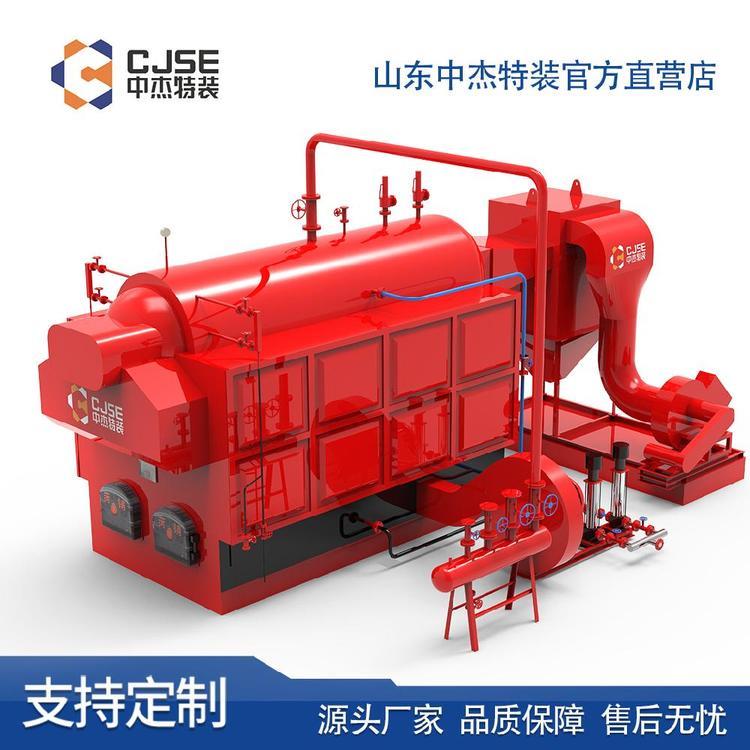
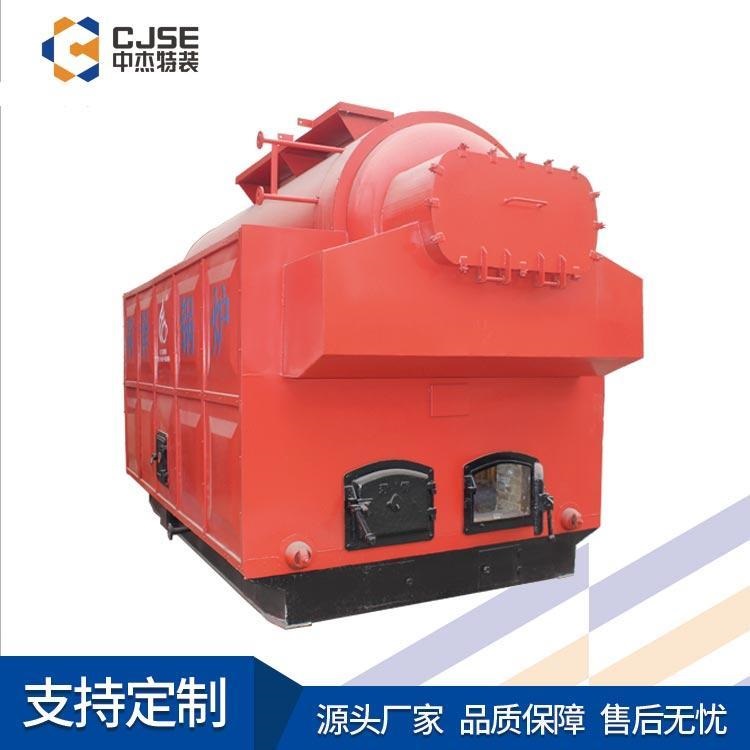
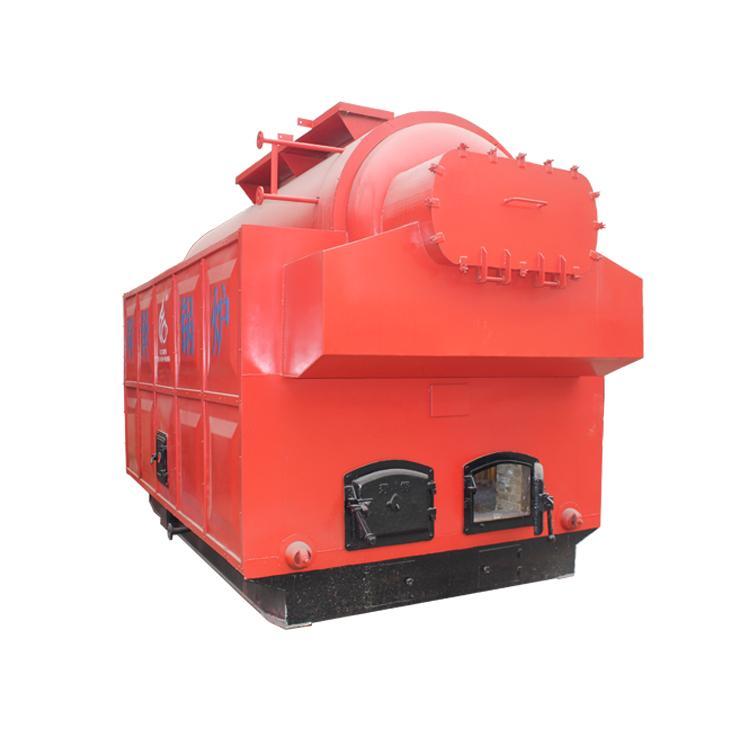
The DZH steam boiler is a manually-fired solid fuel boiler with the following technical features:
Burning Method: The DZH steam boiler employs a manual combustion method, where operators manually feed fuel and adjust the combustion process. This method is relatively simple and offers flexible operation, making it suitable for some small and medium-sized applications.
Multiple Fuel Adaptability: The DZH steam boiler boasts strong fuel adaptability, capable of burning solid fuels such as wood chips and straw. This feature allows the DZH steam boiler to be widely used in various regions and under different fuel resource conditions.
Furnace Structure: The DZH steam boiler features a double-chamber furnace structure, with a partition between the combustion chambers. This design enhances the temperature and combustion efficiency of the chambers, thereby improving thermal efficiency.
Flue Channels: The flue channels of the DZH steam boiler feature a helical flue pipe design, which increases the contact area between flue gas and water, enhancing heat exchange efficiency. Additionally, a flue gas inversion chamber is installed within the flue channel, allowing the flue gas to circulate multiple times within the furnace, extending its residence time and improving combustion efficiency.
Safety Protection: The DZH steam boiler is equipped with various safety devices such as pressure controllers, water level controllers, and overheat protectors, ensuring the safe operation of the boiler.
Compact Structure: The DZH steam boiler features a compact design, occupying minimal floor space, making it ideal for installation in areas with limited space.
In summary, the DZH steam boiler boasts strong fuel adaptability, flexible operation, and high thermal efficiency, making it suitable for various small and medium-sized solid fuel steam demand scenarios.
Zhongjie Special Equipment adheres to the great vision of "realizing employees' dreams, creating value for customers, and striving for the prosperity and strength of our motherland," focusing on the development of green energy equipment. We dedicate high-value products and services to society!
WeChat Official Account

Scan to follow Official Account



















