


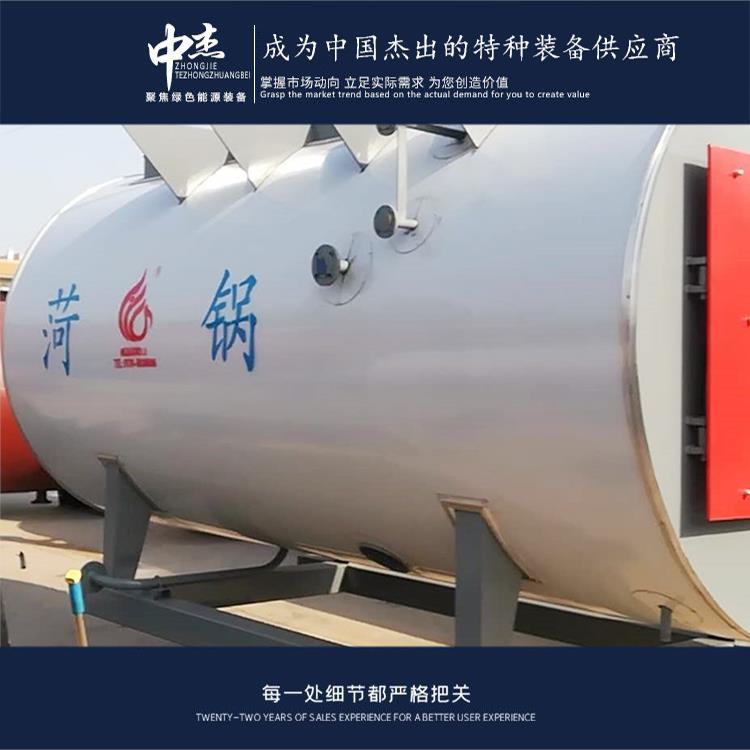

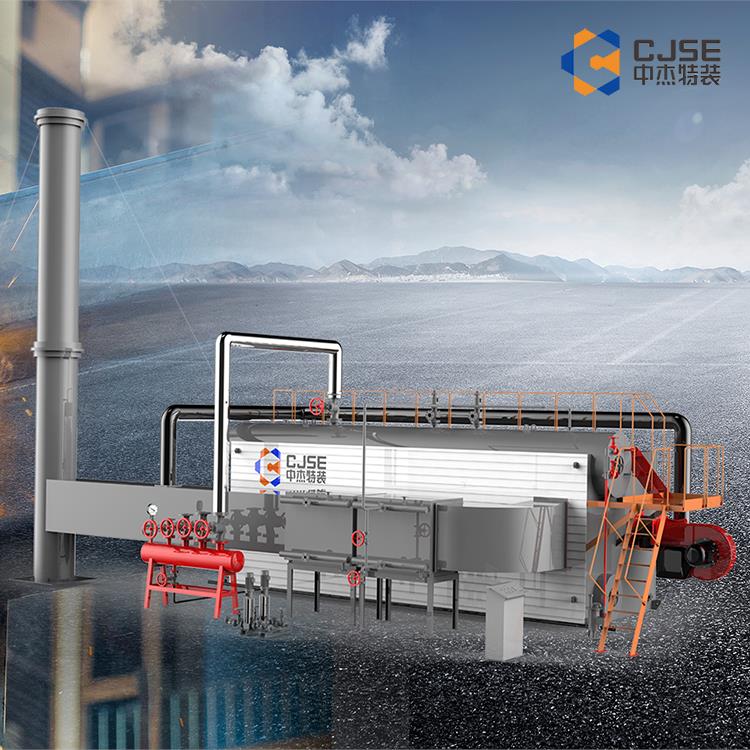
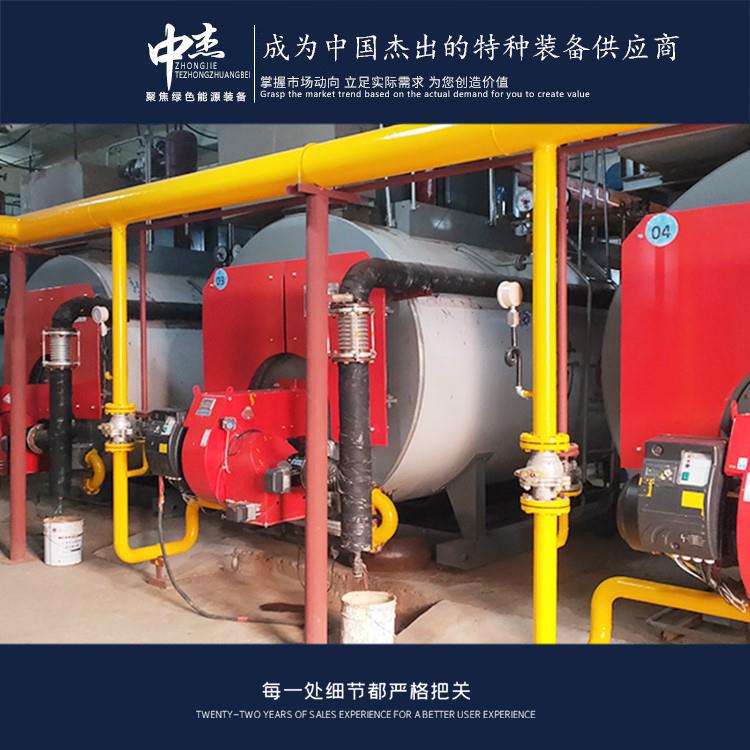


















Shandong Zhongjie Special Equipment specializes in: fuel (gas) boilers, organic heat carrier boilers, biomass boilers, waste heat recovery boilers, and other boiler products; vacuum insulated cryogenic pressure vessels such as LNG tanks, oxygen/nitrogen/argon tanks, and CO2 tanks; pressure vessel products including denitrification engineering equipment, heat storage and energy storage equipment, and complete chemical equipment sets; central air conditioning and HVAC equipment such as ground (water) source heat pumps, air source units, water-cooled screw units, and air-cooled modular units. Planned products include large-scale energy centers, LNG transport vehicles, LNG tank containers, and other green energy equipment.
Safety requirements for steam boiler valves mainly include the following aspects: Valve Selection: Choose the appropriate type and specification of valves for steam boilers. Valves should comply with relevant standards and specifications, and possess characteristics such as high-temperature resistance, pressure resistance, and corrosion resistance. Valve Installation: Valves should be installed correctly in the corresponding position of the steam boiler. During installation, ensure the connection is firm, the seal is reliable, and prevent leakage and loosening. Valve Operation: The operation of valves should be convenient, flexible, and able to accurately control steam flow and pressure. The handle or device should indicate the opening and closing direction of the valve, as well as the corresponding operation method. Valve Sealing: The sealing performance of valves is crucial. Valves should have good sealing properties to prevent steam leakage and energy loss. The sealing surface should be flat, smooth, and able to withstand high temperatures and wear. Valve Maintenance: Regularly inspect and maintain valves to ensure their normal operation and safety performance. This includes cleaning the valves, checking the sealing surfaces, lubricating moving parts, and promptly repairing or replacing damaged components. Safety Valve: Safety valves must be installed on steam boilers to protect the safe operation of the boiler. Safety valves should comply with relevant standards and specifications and be able to open automatically and release overpressure steam when exceeding the set pressure, to prevent boiler explosion. Valve Identification: Valves should be marked with their type, specification, working pressure, and flow rate information. This helps operators correctly identify and operate valves, avoiding incorrect operations and accidents. It should be noted that the above safety requirements are general guidelines, and specific safety requirements should be determined based on the type, scale, and operating environment of the steam boiler. When using valves, follow relevant laws, regulations, and safety operation procedures to ensure the safe and effective operation of valves.
Industrial boilers, during their long-term operation, can accumulate scale and sediments, affecting heat exchange efficiency and the normal operation of the boiler. Here are some effective descaling methods:
1. Mechanical Cleaning: Utilizes cleaning equipment and tools to wash away scale and sediments within the boiler using high-pressure water or mechanical brushes. This method is suitable for lighter scale and sediment buildup.
2. Chemical Cleaning: Uses chemical cleaning agents to dissolve scale and sediments through chemical reactions. Select an appropriate cleaning agent based on the composition and nature of the scale, and follow the instructions provided. Chemical cleaning requires safe operation to avoid damage to equipment and the environment.
3. Acid Cleaning: A common descaling method for hard-to-dissolve scale and sediments. Commonly used acid cleaners include various types, and the appropriate cleaner and concentration should be selected based on the specific situation. Acid cleaning requires safe operation to prevent harm to equipment and personnel.
4. Alkaline Cleaning: A descaling method for specific types of scale, suitable for alkaline scale. Commonly used alkaline cleaners include various types, and the appropriate cleaner and concentration should be selected based on the specific situation. Alkaline cleaning requires safe operation to prevent harm to equipment and personnel.
5. Physical Descaling: Physical descaling methods include ultrasonic cleaning and electro-dissolution. Ultrasonic cleaning uses the vibration effect of ultrasound to shake the scale into pieces. Electro-dissolution utilizes the principle of electrolysis to dissolve scale through the action of electricity. These physical descaling methods are suitable for special situations and specific types of scale.
When selecting a descaling method, it is necessary to consider the specific conditions of the boiler.
A condensing gas steam boiler is an energy-saving boiler equipment with the following working principle and features:
Working Principle:
Steam Generation: The condensing gas steam boiler produces high-temperature flue gas by burning gas. The flue gas exchanges heat with the water pipes inside the boiler, heating the water into steam.
Steam Condensation: After steam generation, the steam enters the condenser where it exchanges heat with the condensing medium (usually cold water or recycled water), releasing heat from the steam and condensing it back into water.
Flue Gas Reuse: The flue gas after condensation still contains a certain amount of heat, which can be recovered and utilized by a flue gas reuse device to improve the boiler's thermal efficiency.
Features:
Energy-saving: By utilizing the principle of steam condensation, the condensing gas steam boiler maximizes the heat from the steam, enhancing the efficiency of heat utilization and saving energy consumption.
Low Emissions: Due to the recovery of most of the heat during the flue gas condensation process, the flue gas temperature is lower, resulting in lower emissions of pollutants and less environmental impact.
Compact Structure: The condensing gas steam boiler usually features a compact design, occupying less space, making it suitable for places with limited space.
Rapid Start-up: The condensing gas steam boiler has the characteristics of rapid start-up and shutdown, allowing for flexible adjustment and operation according to actual needs.
Wide Application Range: The condensing gas steam boiler is suitable for heating and steam needs in industrial production processes, such as power plants, chemical factories, and textile factories.
It is important to note that proper maintenance and regular cleaning of the condenser and flue gas reuse device are required during the operation of the condensing gas steam boiler to ensure its normal and efficient operation.
Yes, thermal oil boilers typically come with some self-protection features to ensure safe operation and extend their service life. Here are some common self-protection functions: Overheat Protection: Thermal oil boilers are equipped with overheat protection devices that automatically shut off the burner's gas supply when the thermal oil temperature exceeds the set safe range, preventing overheating of the thermal oil and avoiding equipment damage and safety accidents. Overpressure Protection: Thermal oil boilers also have overpressure protection devices that automatically shut off the burner's gas supply when the thermal oil pressure exceeds the set safe range, preventing the system from exploding or leaking. Burner Automatic Control: The burners of thermal oil boilers are usually equipped with automatic control systems that can automatically adjust the gas supply and combustion effect based on the set operating parameters, maintaining a stable combustion state and avoiding incomplete combustion or excessive combustion. Temperature Control and Adjustment: Thermal oil boilers are typically equipped with temperature control and adjustment devices that can automatically regulate the circulation and heating of the thermal oil based on the set operating temperature, maintaining a stable working temperature and avoiding excessive or low temperatures. Water Level Protection: For some thermal oil boilers, especially water tube boilers, water level protection devices are also provided to monitor the water level of the thermal oil and water. When the water level is abnormal, the protection device automatically shuts off the burner's gas supply to prevent dry burning and thermal oil leakage. It is important to note that although thermal oil boilers have self-protection features, they still require regular inspections and maintenance to ensure the normal operation and reliability of these protection devices. Additionally, operators need to understand and master the working principles and operation methods of these self-protection functions to ensure safe operation.
Shandong Zhongjie Special Equipment, welcome customers to visit our factory for business talks.
WeChat Official Account

Scan to follow Official Account



















