


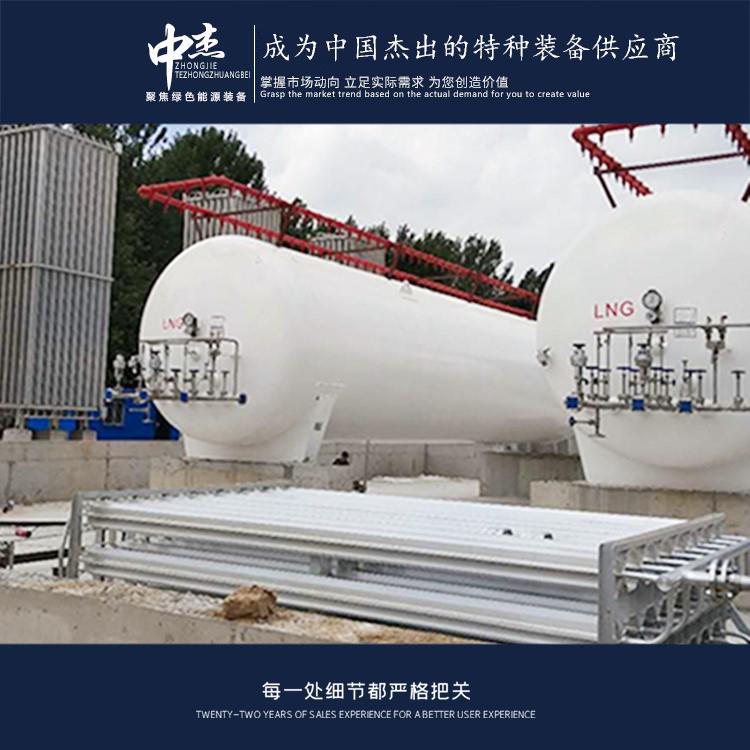

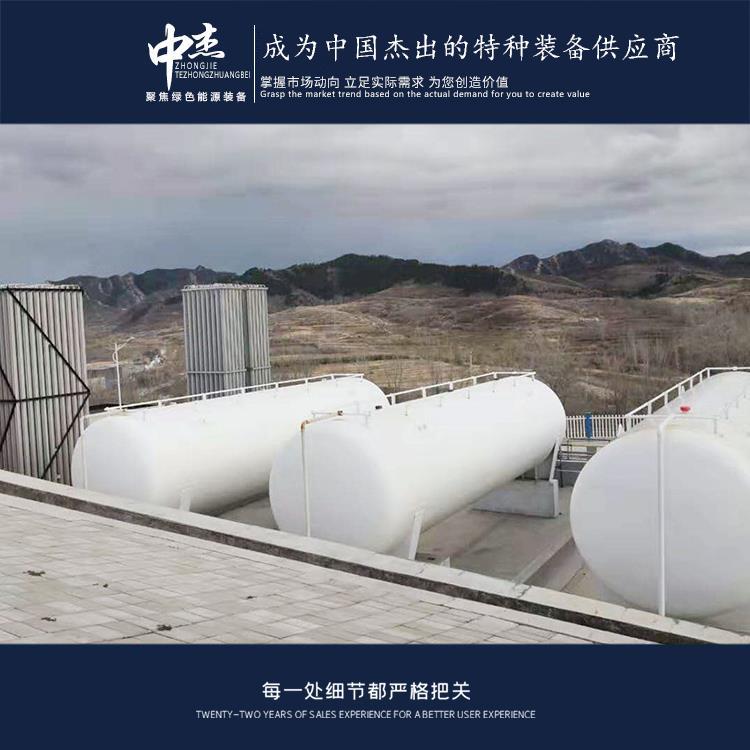
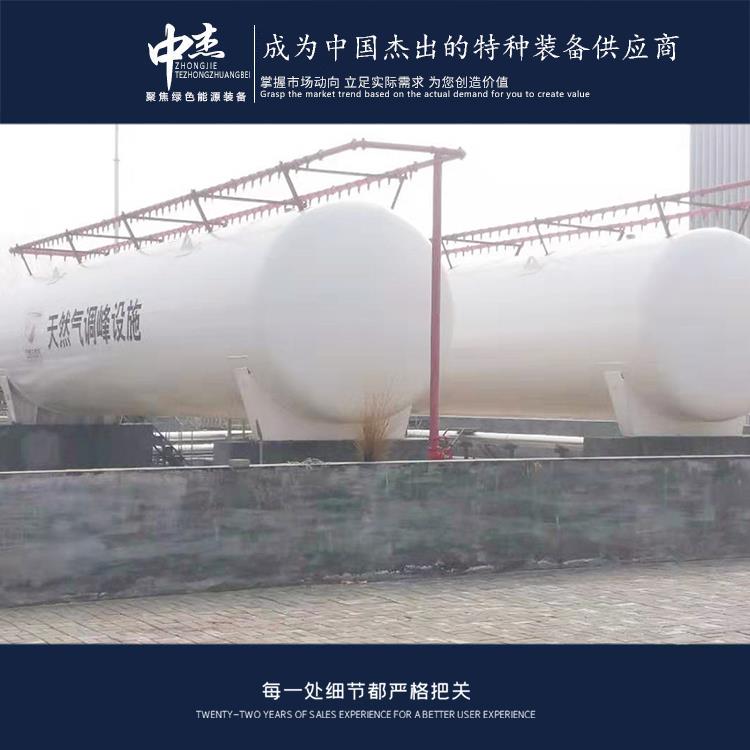


















Shandong Zhongjie Special Equipment (formerly Heze Boiler Factory Co., Ltd.) holds an A-grade boiler manufacturing license, an A2-grade pressure vessel manufacturing license, an A2-grade pressure vessel design license, a B-grade boiler installation license, and GB2/Class and GC2/Class pressure pipeline installation licenses, as well as a qualification for electromechanical equipment installation contracting. It is a member of the China Boiler and Water Treatment Association, the China Chemical Equipment Association, and the理事 unit of the Shandong Equipment Manufacturing Association. The company has also passed the ISO9001 Quality Management System, ISO14001 Environmental Management System, OHSAS18001 Occupational Health and Safety Management System certifications, and the American ASME/U2 certification.
Liquid Argon Storage Tank is a specialized equipment designed for storing liquid argon, featuring the following parameters, functions, and characteristics:
Parameters:
Tank Capacity: The capacity of liquid argon tanks can be customized to meet requirements, with various sizes available such as 500L, 1000L, 2000L, etc.
Work Pressure: The working pressure of liquid argon tanks is typically atmospheric or slightly above atmospheric pressure.
Storage Temperature: Liquid argon tanks are typically stored at -196 degrees Celsius, which is the boiling point of argon, maintaining its liquid state.
Feature:
Liquid Argon Storage: Liquid argon tanks are primarily used for storing liquid argon, maintaining its liquid state at low temperatures for supply and use.
Insulation: The liquid argon storage tank employs advanced insulation materials and structural design to minimize heat conduction and retention, maintaining the low-temperature state of liquid argon.
Safety Control: The liquid argon storage tank is equipped with safety devices such as pressure relief valves and level alarms to ensure safe operation and use.
Features:
High Purity Supply: Liquid argon tanks offer high purity liquid argon supply to meet application needs, such as cryogenic storage, gas shielded welding, semiconductor manufacturing, etc.
Long-Term Storage: Liquid argon tanks can store liquid argon for extended periods, thereby extending its service life. By controlling the temperature inside the tank and the performance of the insulation layer, the evaporation and oxidation of liquid argon are slowed down.
Versatile Applications: Liquid argon storage tanks are widely used in various fields such as industry and scientific research, including cryogenics and semiconductor manufacturing.
Environmental Protection and Energy Saving: Liquid argon storage tanks enable efficient storage and utilization of liquid argon, reducing energy waste and environmental pollution.
In summary, liquid argon tanks are designed for storing liquid argon, thermal insulation, and safety.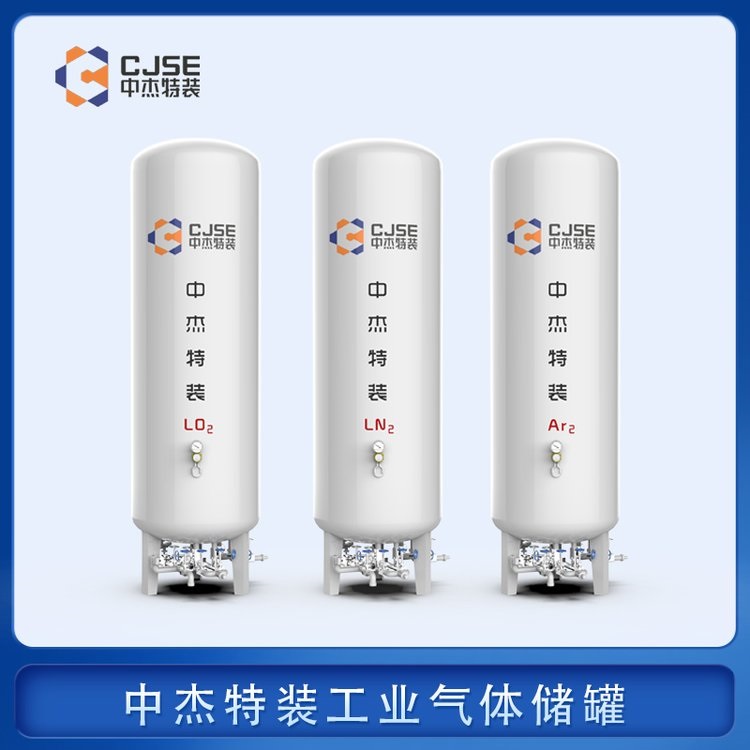
Liquid Argon Storage Tanks are equipment used for storing and transporting liquid argon, featuring the following characteristics:
Low-temperature retention performance: The liquid argon tank utilizes special insulation materials and structural design to effectively maintain the low-temperature state of liquid argon. The tank is internally equipped with an insulation layer, reducing heat conduction and loss, ensuring long-term storage of liquid argon.
High-sealing performance: The liquid argon tank boasts excellent sealing capabilities, effectively preventing leakage and evaporation of liquid argon. The tank's valves, fittings, and seals, etc., are designed and manufactured with precision, ensuring reliable sealing performance.
High strength and corrosion resistance: The liquid argon tank is made of high-strength materials, capable of withstanding the high pressure and low temperature of liquid argon. Both the internal and external surfaces of the tank have been specially treated, offering excellent corrosion resistance to withstand the corrosion and oxidation of liquid argon.
Safety Performance: The liquid argon storage tank is equipped with multiple safety protection measures, including safety valves, pressure sensors, and level monitoring devices. These devices monitor and control the tank's pressure, temperature, and level, ensuring the tank operates within a safe range.
Reliability and Stability: The liquid argon tank has undergone rigorous design, manufacturing, and testing, offering excellent reliability and stability. The tank can store and transport liquid argon consistently over extended periods, ensuring the quality and performance of the liquid argon remain unaffected.
Easy to operate and maintain: The liquid argon tank is relatively simple to operate and maintain, equipped with valves and fittings that are easy to use. The maintenance tasks mainly include regular inspections, cleaning, and repairs, which can extend the service life of the tank.
The performance characteristics of liquid argon storage tanks make them crucial for the storage and transportation of liquid argon, widely used in scientific research, industry, and other fields. When using liquid argon storage tanks, strict adherence to operational specifications and safety requirements is essential to ensure safe usage.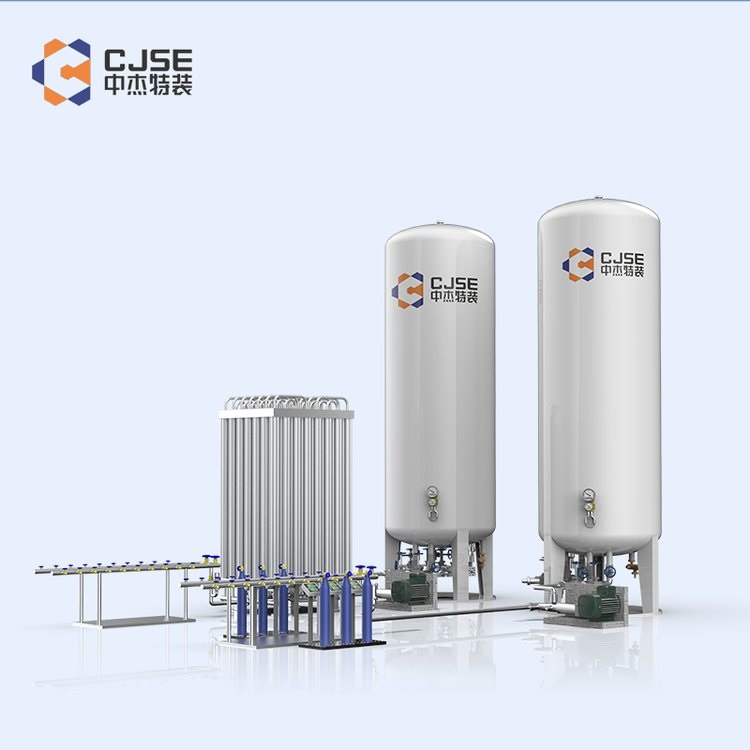
Material control for low-temperature liquid storage tanks is a critical aspect in ensuring safety and reliability. The following are some common material control measures:
Material Selection: Choose materials suitable for low-temperature environments, such as low-temperature alloy steel, stainless steel, etc. These materials exhibit excellent low-temperature resistance and crack resistance, maintaining strength and toughness under low-temperature conditions.
Material Quality Control: Ensure the selected materials meet relevant standards and specifications. Conduct chemical composition analysis, mechanical property tests, and impact tests on the materials to ensure their performance meets design requirements.
Welding Material Selection: Choose welding materials suitable for low-temperature environments, such as low-temperature welding rods or welding wires. The welding materials should match the storage tank material, offering good welding properties and crack resistance.
Welding Process Control: Monitor welding process parameters such as welding current, voltage, and speed to ensure the quality and reliability of weld joints. Employ low heat input welding methods like pulsed welding and laser welding to minimize temperature gradients and residual stresses in the heat-affected zone.
Corrosion Protection Measures: Apply corrosion-resistant treatments to the internal and external metal surfaces of the storage tank to extend its service life. Options include corrosion-resistant coatings and paints to safeguard the tank's metal structure from corrosion.
Material Performance Monitoring: Regularly monitor the performance of storage tank materials, such as mechanical property tests,
Proper maintenance and precautions for liquid nitrogen tanks are crucial. Here are some key points:
Maintenance:
Regular Inspections: Conduct regular inspections of the liquid nitrogen tank's exterior, valves, pipes, and other components to ensure they are intact and undamaged. Pay special attention to check for leaks, corrosion, or any other forms of damage.
Clean Storage Tanks: Regularly clean liquid nitrogen storage tanks to remove internal dirt and sediments. Use appropriate cleaning agents and tools, following the cleaning procedures and safety operational guidelines.
Liquid Nitrogen Refill: Refill liquid nitrogen on a regular basis as needed. Ensure that the storage tank maintains an adequate supply of liquid nitrogen to meet usage requirements.
Maintain Pressure: Regularly check the liquid nitrogen tank's pressure to ensure it stays within the safe range. Conduct pressure tests and adjustments as necessary.
Corrosion Prevention: Based on the material of the storage tank and its operating environment, appropriate corrosion prevention measures are taken to extend the service life of the tank. For instance, applying corrosion-resistant coatings and conducting regular corrosion prevention treatments.
Cautionary Notes:
Safe Operation: When using liquid nitrogen tanks, strict adherence to safety operating procedures and standards is mandatory. Operators must be trained, knowledgeable about the properties and safety requirements of liquid nitrogen, and familiar with the tank equipment and operational procedures.
Safety Precautions: When using liquid nitrogen tanks, it is essential to take necessary protective measures, such as wearing protective gloves and suits. Avoid direct contact with liquid nitrogen to prevent cold burns.
Leak Control: Regularly inspect the liquid nitrogen storage tank for leaks and equip with leak detectors and alarm systems. In case of a leak, immediate measures should be taken to control the leak and carry out repairs.
Ventilation Requirements: In enclosed spaces where liquid nitrogen tanks are in use, adequate ventilation must be ensured.
Our company attaches great importance to technological innovation and R&D design, boasting one city-level enterprise technology center in Heze City. We have established testing facilities for non-destructive testing, physical and chemical testing, welding testing, hydrostatic testing, etc., and are equipped with over 600 pieces of various equipment such as CNC machine tools, X-ray flaw detectors, digital ultrasonic flaw detectors, mechanical property testing machines, chemical analyzers, spectrometers, tensile testing machines, and plasma welding machines. The key products and technologies we have developed, such as welding of temperature and pressure vessels, biomass boiler emission reduction, and waste heat utilization, have successively been selected for multiple Shandong Provincial Department of Industry and Information Technology science and technology projects, Shandong Provincial key projects, and Heze City innovative and excellent projects. We have accumulated a total of 27 authorized utility models, 16 authorized inventions, participated in drafting 2 standards, 2 industry standards, and registered 15 trademarks. The technical team of our company, in collaboration with Professor Yajiang Li from Shandong University, has jointly developed deep cryogenic container processing technology, which adopts the internationally recognized plasma arc + wire filling tungsten inert gas arc welding (PAW-GTAW) technology. After being appraised as a provincial-level scientific and technological achievement, the technology level has reached an international standard in the field of deep cryogenic container manufacturing. Choose Zhongjieteqiang, and let's create brilliance together!
WeChat Official Account

Scan to follow Official Account



















