


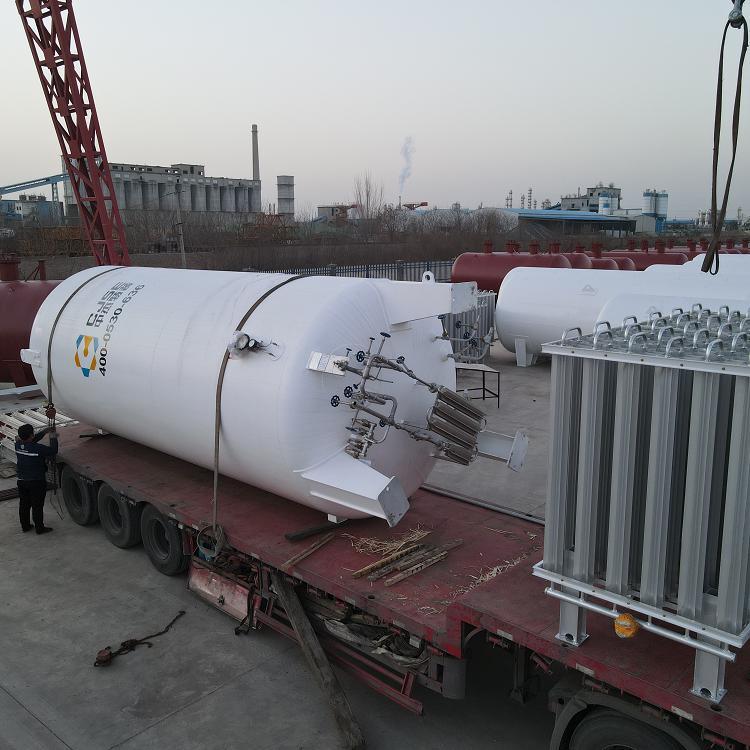

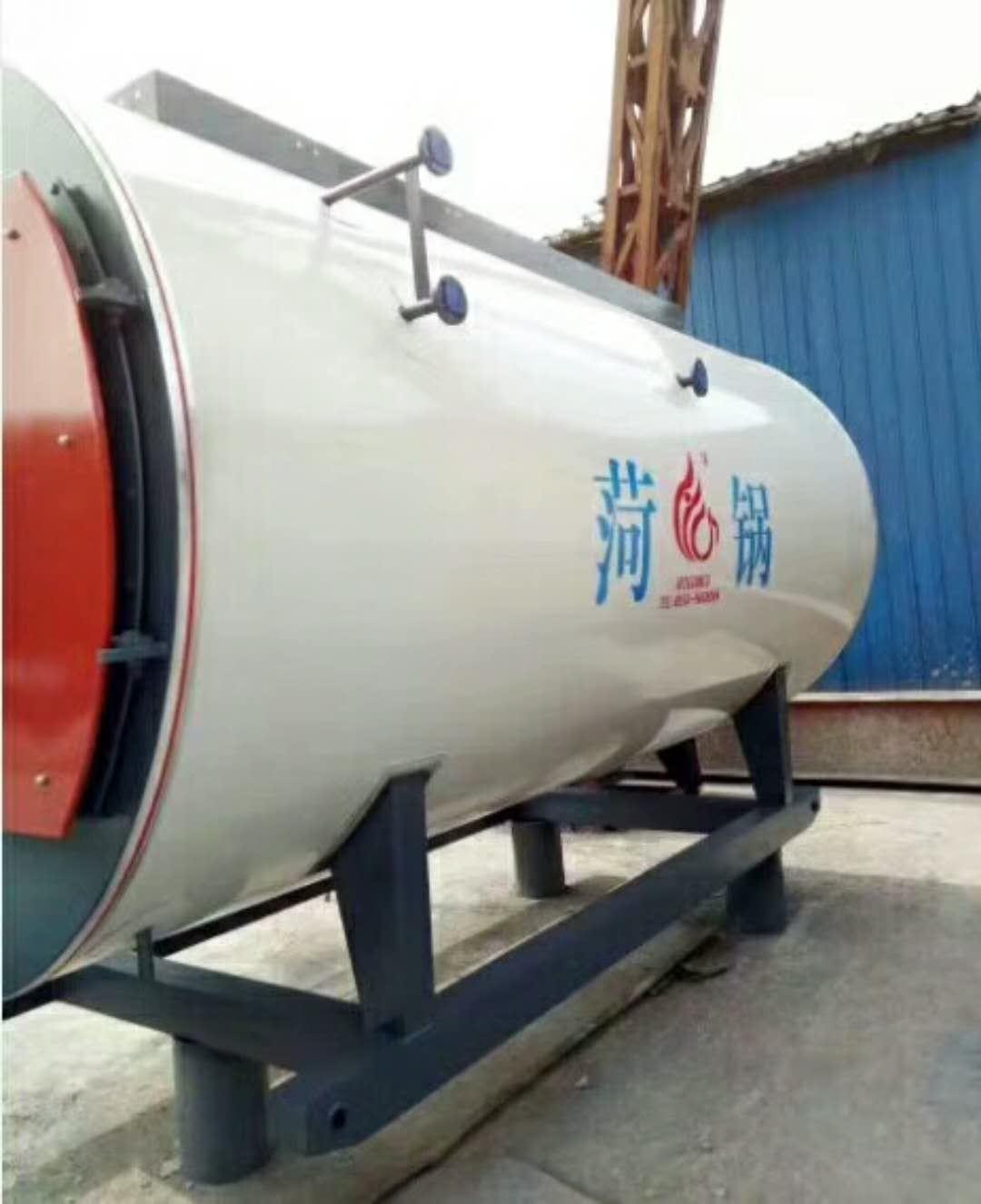
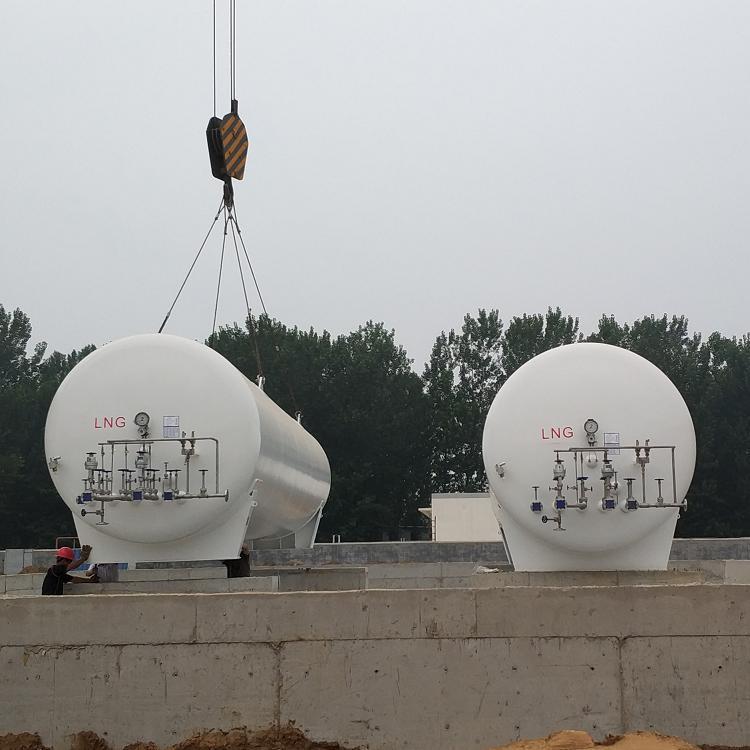


















Shandong Zhongjie Special Equipment specializes in: fuel (gas) boilers, organic heat carrier boilers, biomass boilers, waste heat recovery boilers, and other boiler products; vacuum insulation cryogenic pressure vessels such as LNG tanks, oxygen/nitrogen/argon tanks, and CO2 tanks; pressure vessel products including denitrification engineering equipment, heat storage and energy storage equipment, and complete chemical equipment sets; central air conditioning and ventilation equipment such as ground (water) source heat pumps, air source units, water-cooled screw units, and air-cooled modular units. Planned products include large-scale energy centers, LNG transport vehicles, LNG tank containers, and other green energy equipment.
Leakage issues in CO2 storage tanks may be caused by the following factors: Material Corrosion: CO2 has some corrosive properties, and prolonged contact can lead to corrosion of the tank material. Corrosion can damage the tank's surface protective layer, causing it to lose its seal and lead to leakage. Welding Defects: There may be welding defects at the tank's welded joints, such as crack in the welds or blow holes. These defects can reduce the strength of the焊接 area, causing leakage. Design Defects: Inadequate design or defects in the tank may also lead to leakage. For example, poorly designed interface connections or unreasonable structural designs can all cause leakage problems in the tank. Overpressure: If the internal pressure of the tank exceeds its capacity, it may cause deformation or cracking of the tank, leading to leakage. Temperature Fluctuations: During temperature changes, due to thermal expansion and contraction, CO2 storage tanks may deform or experience stress concentration, causing leakage. Operation Errors: Incorrect operation and maintenance may also lead to tank leakage. For instance, over-tightening valves or improper maintenance measures can all contribute to a decrease in the tank's sealing performance. External Damage: External forces such as impacts, scratches, or corrosion on the tank can cause surface damage or corrosion, leading to leakage. To avoid leakage issues in CO2 storage tanks, it is important to select suitable materials, employ reasonable design and manufacturing processes, and conduct regular inspections and maintenance. Additionally, operators should receive training and adhere to operational procedures to ensure the safe operation of the tanks.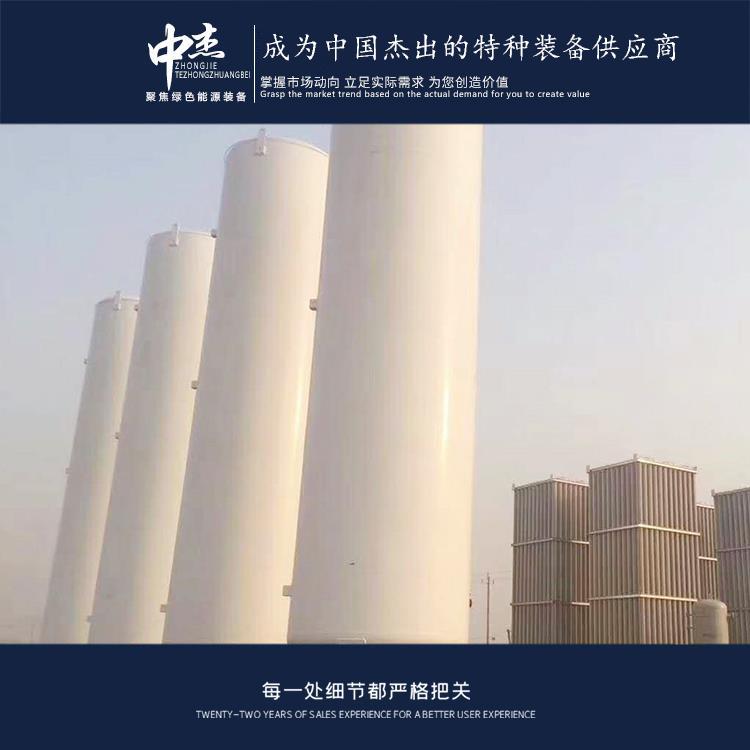
If a leak in the CO2 storage tank is detected, the following handling methods should be taken promptly:
Confirm the leak location: First, determine the exact location of the leak, which can be done through hearing, observation, or using gas detection equipment.
Emergency response: If a leak is found, immediate emergency measures should be taken to ensure personnel safety. Evacuate personnel to a safe area and notify relevant personnel and emergency agencies.
Cut off the gas source: As soon as possible, shut off the CO2 supply source by closing valves or cutting off power to stop the supply of CO2.
Locate the leak: In a safe environment, use gas detection equipment or visual inspection to find the exact location of the leak. Apply soap solution or other leak detection agents to potential leak areas and observe for bubble formation.
Seal the leaks: Once the leak location is confirmed, temporary sealing measures can be taken, such as using tape, sealant, or other reliable sealing materials for temporary repairs. Ensure that the sealing measures are secure and can effectively prevent gas leakage.
Repair and maintenance: In a safe environment, further repair and maintenance work can be carried out. Depending on the specific nature of the leak, it may be necessary to replace seals, repair or replace valves, etc. Repair and maintenance work should be performed by personnel.
Inspection and testing: After repairs and maintenance, leak detection and testing should be conducted to ensure that the leaks have been fully repaired and the tank's safety performance has returned to normal.
It is important to handle CO2 storage tank leak issues with caution and follow relevant safety regulations and procedures. If you do not possess the necessary knowledge and skills, contact a professional for assistance.
To maintain the stability of CO2 storage tanks, attention should be given to the following details:
- Foundation Design: The tank's foundation design must comply with relevant standards and regulations, ensuring adequate strength and stability. The foundation should consider the tank's weight, pressure, and geological conditions to ensure the tank is securely placed on the foundation.
- Lining and Fastening Devices: Appropriate linings, such as rubber pads or steel plates, should be placed between the tank and the foundation to reduce friction and vibration. Additionally, use fastening devices like bolts or welding to secure the tank to the foundation, preventing movement and tilting.
- Site Leveling: The site where the tank is installed should be kept level, without any significant slopes or unevenness. If the site is uneven, adjustments and corrections should be made to ensure the tank's stability.
- Seismic Measures: In areas prone to earthquakes, additional seismic measures are required, such as installing seismic supports and enhancing the tank's seismic resistance to improve stability.
- Regular Inspections: Conduct regular inspections of the tank's fastening devices and connection points to ensure they are intact. If loose, worn, or damaged conditions are found, repairs or replacements should be made promptly.
- Load Distribution: Uniformly distribute loads above the tank, such as platforms or pipelines, to balance the weight distribution of the tank and reduce the impact of uneven loads on stability.
- Safety Distance: The tank should maintain a sufficient safety distance from other equipment, buildings, and fire sources to prevent accidental collisions or fires from affecting the tank's stability.
It should be noted that the installation of CO2...
Carbon dioxide storage tank debugging typically includes the following steps and contents:
1. Tank Installation Inspection: Check if the tank's installation location, foundation, and supporting structure meet design requirements, ensuring the tank's stability and safety.
2. Pipe Connection Inspection: Verify the tank's connections to inlet and outlet pipes are secure, and that valves and pipes can be properly opened and closed, ensuring the integrity and normal operation of the pipeline system.
3. Tank Cleaning and Emptying: Clean and empty the tank prior to debugging to ensure no impurities or residues are inside, as well as no other gases or liquids.
4. Tank Pressure Testing: Conduct pressure tests on the tank, including static pressure tests and leak tests. Static pressure testing involves increasing pressure to check the tank's sealing and pressure resistance. Leak testing checks for any leaks in the tank and pipeline system.
5. Control System Debugging: Calibrate and adjust the tank's control system, including pressure, temperature, and level sensors, to ensure accuracy and reliability of the control system.
6. Safety System Testing: Test the tank's safety system, including functional tests of safety valves, pressure gauges, and level indicators, to ensure normal operation and response of the safety system.
7. Operating Parameter Adjustment: Adjust the tank's operating parameters, such as pressure, temperature, and level, based on actual requirements and process specifications, to meet process requirements and ensure safe operation.
8. Record and Reporting: Record and organize data, test results, and operational records during debugging, and generate a debugging report for future reference and management.
The above are general steps and contents of carbon dioxide storage tank debugging. Specific debugging procedures may vary according to the tank's design requirements and application scenarios. During debugging, strict adherence to relevant safety operating procedures and standards is required to ensure the safety and effectiveness of the debugging process.
Our company attaches great importance to technological innovation and R&D design. We have one municipal enterprise technology center in Heze City, equipped with testing facilities for non-destructive testing, physical and chemical testing, welding testing, hydrostatic testing, etc. We have over 600 types of equipment, including CNC machine tools, X-ray flaw detectors, digital ultrasonic flaw detectors, mechanical property testing machines, chemical analyzers, spectrometers, tensile testing machines, plasma welding machines, and more. The key products and technologies we have developed, such as welding for temperature and pressure vessels, biomass boiler emission reduction, and waste heat utilization, have successively been selected for multiple Shandong Provincial Department of Industry and Information Technology science and technology innovation projects, Shandong Provincial key projects, and Heze City innovation and excellence projects. We have accumulated a total of 27 authorized utility models, 16 authorized inventions, participated in drafting 2 standards, 2 industry standards, and registered 15 trademarks. The technical team of our company, in collaboration with Professor Li Yajiang of Shandong University, has developed deep cryogenic container processing technology using the international plasma arc + filler wire tungsten inert gas arc welding (PAW-GTAW) technology. After being appraised as a provincial-level scientific and technological achievement, our technology level has reached an international standard in the field of deep cryogenic container manufacturing. Choose Zhongjie Special Equipment, and let's create brilliance together!
WeChat Official Account

Scan to follow Official Account



















