


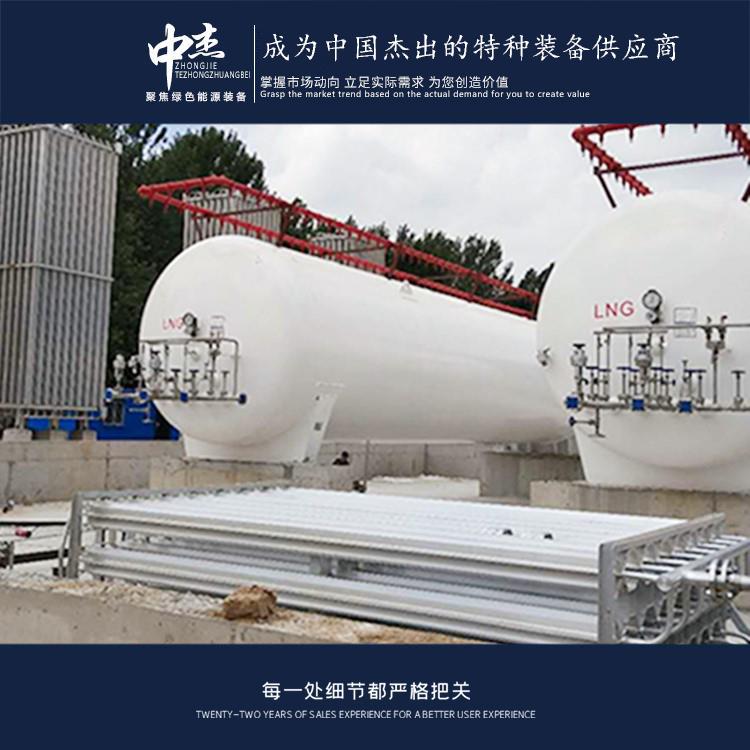

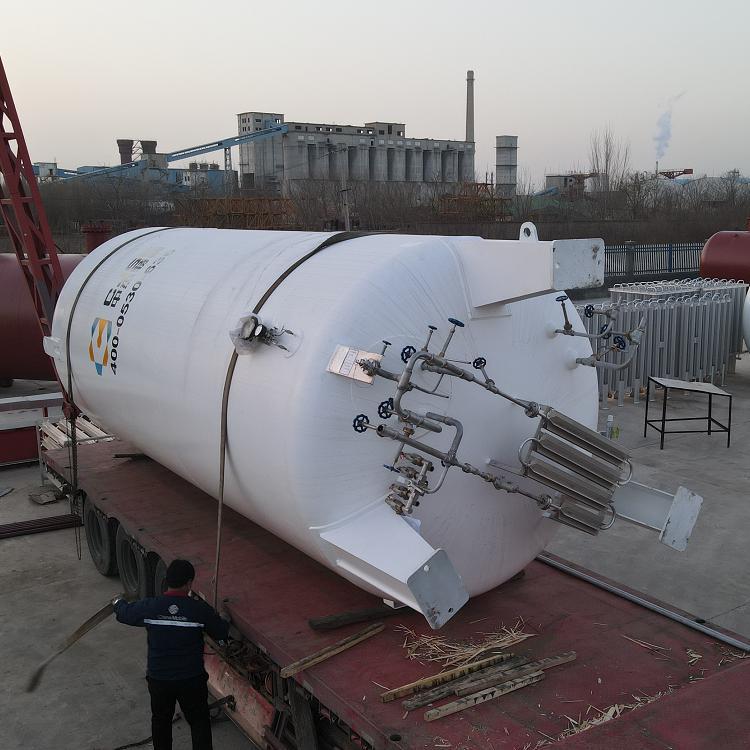


















Shandong Zhongjie Special Equipment (formerly Heze Boiler Factory Co., Ltd.) holds an A-grade boiler manufacturing license, an A2-grade pressure vessel manufacturing license, an A2-grade pressure vessel design license, a B-grade boiler installation license, and GB2/Class, GC2/Class pressure pipeline installation licenses, as well as a mechanical and electrical equipment installation contracting qualification. It is a member of the China Boiler and Water Treatment Association, the China Chemical Equipment Association, and the Council Member of the Shandong Equipment Manufacturing Association. The company has also passed certifications for the ISO9001 Quality Management System, ISO14001 Environmental Management System, OHSAS18001 Occupational Health and Safety Management System, and the American ASME/U2 certification.
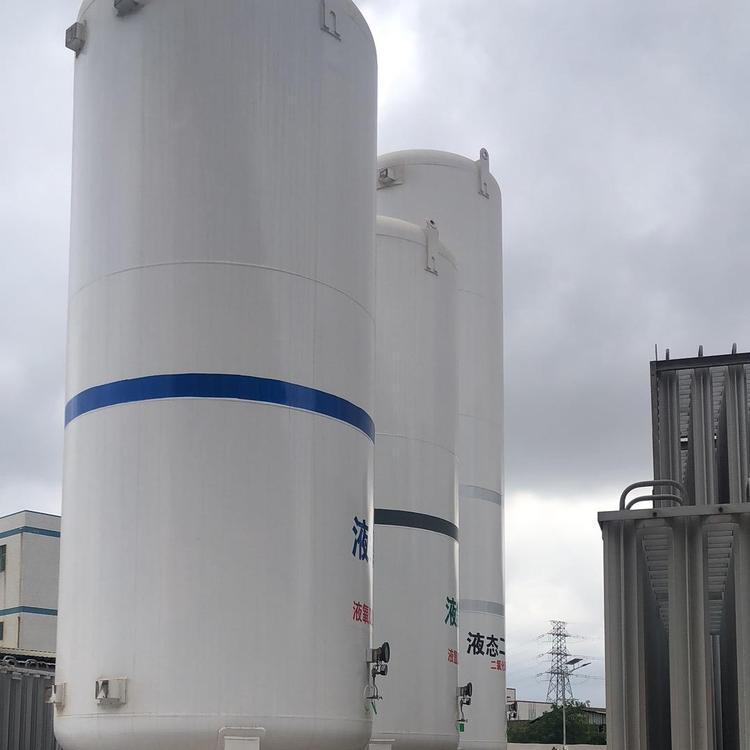
Carbon dioxide storage tanks come in various sizes and configurations, tailored to specific application and capacity requirements. Here are some common dimensions and structures of carbon dioxide storage tanks:
- Dimensions: The size of carbon dioxide storage tanks can range from small to large, varying with capacity. Common sizes include several thousand to tens of thousands of liters.
- Structure: Typically, these tanks feature a double-walled design, with the inner wall for storing liquid carbon dioxide and the outer wall for insulation. The inner wall is usually made of stainless steel or aluminum alloy, offering excellent corrosion resistance.
- Insulation: To maintain the low temperature of the liquid carbon dioxide, the outer wall is often insulated to reduce heat transfer and maintain low temperatures. Insulation can be in multi-layered structures, such as polyester foam or glass wool.
- Pressure Relief Devices: Carbon dioxide storage tanks usually come with pressure relief devices, like safety valves, to control internal pressure. The set pressure of these devices should meet relevant requirements and be inspected and maintained regularly.
- Connecting Pipes: The connection between the tank and pipes is usually made using appropriate methods, such as flange or threaded connections. The connecting pipes must comply with relevant standards and regulations to ensure a secure and leak-proof connection.
- Support Structure: Large carbon dioxide storage tanks often require a support structure to bear their weight. This can be in the form of steel or concrete structures, ensuring stability and safety.
Note that the specific dimensions and structures of carbon dioxide storage tanks may vary depending on different applications and requirements. When selecting and using carbon dioxide storage tanks, considerations should be made based on the specific needs.
To maintain the stability of carbon dioxide storage tanks, attention should be given to the following details:
- Foundation Design: The foundation design of the tank must comply with relevant standards and regulations, ensuring adequate strength and stability. The foundation should consider the tank's weight, pressure, and geological conditions to ensure the tank is securely placed on the foundation.
- Padding and Fastening Devices: Appropriate padding, such as rubber pads or steel plates, should be placed between the tank and the foundation to reduce friction and vibration. Additionally, use fastening devices like bolts or welding to secure the tank to the foundation, preventing movement and tilting.
- Site Leveling: The site for installing the tank should be kept level, without any significant tilting or unevenness. If the site is uneven, adjustments and corrections should be made to ensure the tank's stability.
- Seismic Measures: In regions prone to earthquakes, additional seismic measures are required, such as installing seismic supports and enhancing the tank's seismic resistance, to improve stability.
- Regular Inspections: Regularly inspect the tank's fastening devices and connection points to ensure they are intact. Any signs of loosening, wear, or damage should be addressed promptly with repairs or replacements.
- Load Distribution: Uniformly distribute loads above the tank, such as platforms or pipelines, to balance the weight distribution and reduce the impact of uneven loads on stability.
- Safety Distance: The tank should maintain sufficient safety distances from other equipment, buildings, and fire sources to prevent accidental collisions or fires from affecting stability.
It is important to note that the installation of carbon dioxide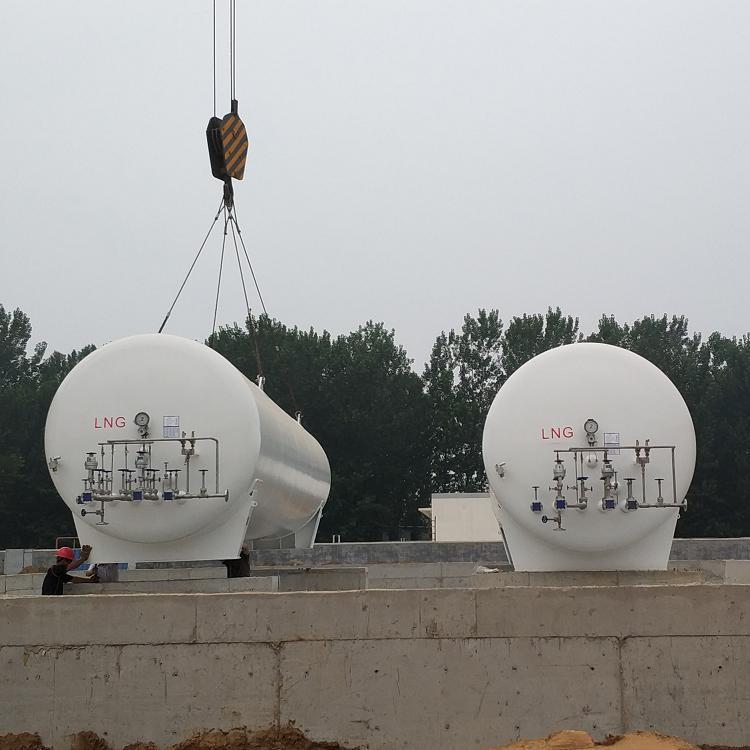
Knowledge about Low Temperature Carbon Dioxide Storage Vessels 1, Structure of Low Temperature Carbon Dioxide Storage Vessels: Typically, low temperature carbon dioxide storage vessels are constructed with a double-cylinder design, where the inner cylinder is made of 6MnDR alloy steel and the outer cylinder is made of Q245R or Q345R pressure vessel steel plate. The piping is made from austenitic stainless steel, and the insulation space is filled with high vacuum pearlite sand or layered with insulation material. The vessels are equipped with operational valves for easy access, as well as pressure gauges and level indicators for monitoring internal pressure and liquid levels.
2, Key Features of Low Temperature Carbon Dioxide Storage Vessels: (1) The storage vessels are fitted with connectors for filling truck-mounted tanks, enabling fluid supply to vaporizers, trucks, and pumps. (2) Both the inner and outer cylinders of the storage vessels are equipped with safety devices to ensure safe operation. (3) The insulation material of the low temperature carbon dioxide storage vessels has been specially treated to provide a longer vacuum lifespan. Additionally, the vessels are equipped with vacuum gauges for measuring the vacuum level of the insulation space as needed.
3, Transportation of Low Temperature Carbon Dioxide Storage Vessels: (1) During road transportation, the storage vessels should be securely fastened to the vehicle, and moderate speeds should be maintained. Collision with other objects is prohibited. (2) After arrival, the unloading personnel should work together with the equipment supervisor to formulate a scientific and reasonable unloading plan.
4, Installation of Low Temperature Carbon Dioxide Storage Vessels: (1) Upon arrival at the installation site, the storage vessel can be positioned once installation conditions are met. During the installation process, collisions and impacts should be avoided, and particular attention should be paid to the explosion-proof equipment of the outer cylinder and the vacuum valve, which must not be touched. (2) The inner cylinder system of the storage vessel should be subjected to a gas-tightness test using nitrogen up to working pressure. After verifying that valves, pipes, flanges, etc., are leak-free, the installation is complete. (3) The installation dimensions are as per the supply documents. When considering filling or emptying the storage vessel with liquid using a truck, the vehicle's travel corridor should be taken into account.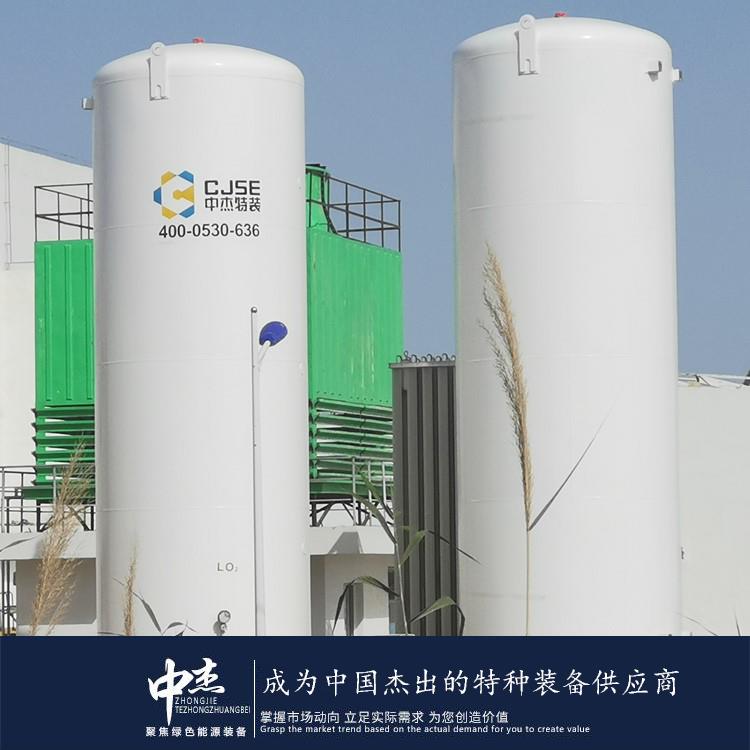
A carbon dioxide storage tank is a device used for storing carbon dioxide gas. It is typically made of high-strength materials with sealing capabilities to prevent the leakage of stored carbon dioxide gas. The design and capacity of the tank can be adjusted as needed to accommodate various applications. Carbon dioxide storage tanks are widely used in various fields, including industrial production and food processing. In the industrial sector, these tanks are commonly used to store and supply carbon dioxide gas for processes such as welding, gas shielding, and fire extinguishing. In the food processing industry, they are used to produce carbonated beverages and frozen foods. In the medical field, carbon dioxide storage tanks can be used to manufacture medical gases like breathing gases and anesthetic gases. The development and manufacturing of carbon dioxide storage tanks involve multiple manufacturers and technologies. Different companies may employ different design and manufacturing processes to meet the needs of various users. Additionally, relevant safety standards and regulations must be adhered to ensure the safe operation and use of the tanks.
Our company attaches great importance to technological innovation and R&D, boasting 1 municipal enterprise technology center in Heze City. We have established testing facilities for non-destructive testing, physical and chemical testing, welding testing, hydrostatic testing, etc. We are equipped with over 600 pieces of equipment including CNC machine tools, X-ray flaw detectors, digital ultrasonic flaw detectors, mechanical property testing machines, chemical analyzers, spectrometers, tensile testing machines, plasma welding machines, and more. The key products and technologies we have developed, such as welding for temperature and pressure vessels, emissions reduction for biomass boilers, and waste heat utilization, have successively been included in multiple Shandong Provincial Department of Industry and Information Technology science and technology projects, Shandong key projects, and Heze City innovative excellence projects. We have cumulatively obtained 27 authorized utility models, 16 authorized inventions, participated in drafting 2 standards, 2 industry standards, and registered 15 trademarks. Our technical team, in collaboration with Professor Yajiang Li of Shandong University, has developed deep cryogenic container processing technology using the international plasma arc + filled wire tungsten inert gas arc welding (PAW-GTAW) technique. The provincial scientific and technological achievement identification confirms that our technology level in deep cryogenic container manufacturing has reached international standards. Choose Zhongjie Special Equipment, and let's create brilliance together!
WeChat Official Account

Scan to follow Official Account



















