


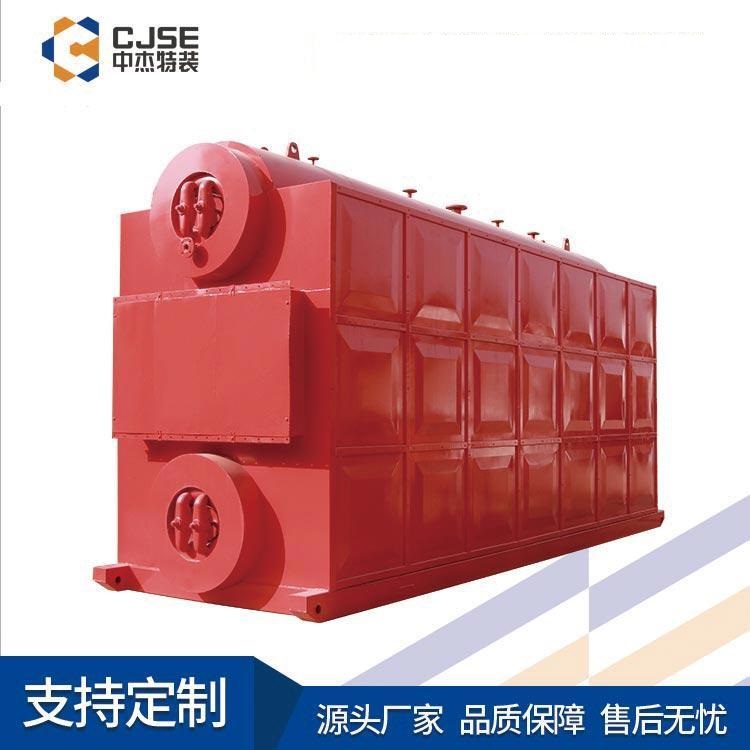


















Shandong Zhongjie Special Equipment (formerly Heze Boiler Factory Co., Ltd.) holds an A-grade boiler manufacturing license, A2-grade pressure vessel manufacturing license, A2-grade pressure vessel design license, B-grade boiler installation, and GB2/Class, GC2/Class pressure pipeline installation licenses, as well as equipment and machinery installation contracting qualifications. It is a member of the China Boiler and Water Treatment Association, the China Chemical Equipment Association, and the council member of the Shandong Equipment Manufacturing Association. The company has also passed certifications for ISO9001 Quality Management System, ISO14001 Environmental Management System, OHSAS18001 Occupational Health and Safety Management System, and the American ASME/U2 certification.
Biomass hot water boilers can meet environmental regulations under certain conditions. They utilize renewable biomass fuels such as wood chips, straw, and waste materials, emitting less CO2 during combustion compared to traditional fossil fuels, thus having a smaller environmental impact.
However, to ensure that biomass hot water boilers comply with environmental regulations, the following conditions must be met:
High combustion efficiency: The biomass hot water boiler should be equipped with a combustion system and heat exchanger to ensure complete combustion of the fuel and efficient utilization of thermal energy, reducing fuel waste and emissions.
Smoke Purification Equipment: Biomass hot water boilers should be equipped with effective smoke purification equipment, such as bag dust collectors and desulfurization devices, capable of efficiently capturing and purifying particulate matter and pollutants in the flue gas, reducing air pollution.
Compliant Emissions: The flue gas emissions of biomass hot water boilers must comply with local environmental protection regulations and standards, including the emission limits for pollutants such as particulate matter and nitrogen oxides.
Regular Maintenance: Biomass hot water boilers require regular maintenance to keep the equipment in good condition and ensure stable combustion efficiency and emission performance.
Fuel selection and supply: Choose appropriate biomass fuel and ensure its source is legal and sustainable. Avoid using waste containing harmful substances as fuel to prevent impact on the environment and human health.
It's important to note that while biomass hot water boilers are relatively eco-friendly, they still require evaluation and monitoring based on specific circumstances to ensure compliance with environmental regulations. Additionally, environmental regulations may vary by region, and users should adhere to local environmental laws and standards.
Yes, biomass hot water boilers hold significant meaning for energy conservation and emission reduction. Here are some related meanings and advantages:
Energy-saving: Biomass hot water boilers burn renewable biomass fuel, offering higher energy utilization efficiency compared to traditional coal boilers. The heat generated during the combustion of biomass fuel can be more fully utilized, reducing energy waste, and achieving energy-saving effects.
Reduced emissions: Biomass hot water boilers produce relatively lower levels of pollutants during the combustion process, such as carbon dioxide, nitrogen oxides, and particulates. Compared to coal-fired boilers, biomass hot water boilers can significantly reduce greenhouse gas emissions and the release of air pollutants, which is of great importance for improving atmospheric environmental quality.
Sustainability: Biomass fuel is a renewable resource that can be cultivated and recycled in a regenerative cycle. Its sustainability, compared to finite coal resources, can meet long-term energy demands.
Supporting Rural Development: The use of biomass hot water boilers can promote the comprehensive utilization of agricultural and forestry waste, such as crop straw and wood shavings in rural areas. This not only reduces the open burning of crop straw, reducing environmental pollution, but also provides an additional income source for farmers, fostering rural economic development.
In summary, the energy-saving and emission-reduction significance of biomass hot water boilers is significant. Not only do they reduce energy consumption and pollutant emissions, but they also promote sustainable development and the prosperity of rural economies.
The air regulating door of biomass hot water boilers can be improved in terms of the following structural aspects to enhance its performance:
Material Selection: The construction of the wind control door should be made of materials that can withstand high temperatures and corrosion, such as stainless steel or heat-resistant alloys. This ensures the long-term stable operation of the wind control door under high-temperature and corrosive environments.
Structural Design: The design of the air door should be rational, including the arrangement and connection methods of components such as the door panels, bearings, and transmission devices. The door panels should have good sealing performance, capable of effectively controlling the flow of combustion air. The transmission device should be flexible and reliable, easy to operate and adjust.
Airflow Regulation: The design of the air damper should enable airflow regulation. It can adopt adjustable blade angles or opening designs, controlling the air flow of combustion by changing the blade position or angle. Additionally, consider installing airflow regulation devices, such as an airflow meter or a pressure sensor, for real-time monitoring and adjustment of the combustion air flow.
Temperature Control: For biomass hot water boilers, consider installing a temperature sensor near the air control valve to monitor the combustion chamber temperature in real-time. Connected to the air control valve's control system, the valve opening can be automatically adjusted based on temperature changes to maintain stable temperature within the combustion chamber.
Safety Protection: The design of the air control door should incorporate safety measures, such as installing overload protection devices or limit switches, to prevent excessive opening or closing of the door, which could lead to unstable combustion or other safety issues.
Through the above structural improvements, the performance and reliability of the biomass hot water boiler's air regulating door can be enhanced, achieving better combustion air adjustment, and improving the boiler's thermal efficiency and stability.
Adjusting the combustion of biomass boilers can be carried out through the following steps:
Establish Combustion Parameters: Determine appropriate combustion parameters based on the design of the biomass boiler and the characteristics of the fuel, including combustion temperature, oxygen supply, and fuel supply rate.
Adjust combustion temperature: Adjust the combustion temperature based on the fuel characteristics and combustion requirements. Excessive combustion temperature may lead to overburning of fuel and energy waste, while too low combustion temperature may result in incomplete combustion and increased emissions.
Control Oxygen Supply: Adjust the oxygen supply based on the oxygen content during the combustion process. Excessive oxygen supply may lead to incomplete fuel combustion and energy waste, while insufficient oxygen supply may result in incomplete combustion and increased emissions.
Adjust fuel supply rate: Adjust the fuel supply rate based on thermal load and fuel characteristics. Excessive fuel supply rate may lead to overburning and energy waste, while a low fuel supply rate may result in incomplete combustion and insufficient heating.
Monitoring and Adjustment: By monitoring critical parameters during the combustion process, such as combustion temperature, oxygen content, flue gas composition, etc., adjust combustion parameters in a timely manner to ensure the stability of the combustion process.
Be mindful that adjusting the combustion of biomass boilers requires consideration of the specific kettle
Our company attaches great importance to technological innovation and research and development. We possess 1 city-level enterprise technology center in Heze City, with testing facilities for non-destructive testing, physical and chemical testing, welding testing, hydrostatic testing, etc. We are equipped with over 600 pieces of various equipment such as CNC machine tools, X-ray flaw detectors, digital ultrasonic flaw detectors, mechanical property testing machines, chemical analyzers, spectrometers, tensile testing machines, plasma welding machines, and more. The key products and technologies we have developed, such as welding of temperature-pressure vessels, emission reduction of biomass boilers, and waste heat utilization, have successively been shortlisted for multiple Shandong Provincial Department of Industry and Information Technology science and technology projects, Shandong key projects, and Heze City innovative and excellent projects. We have cumulatively obtained 27 authorized utility model patents, 16 authorized invention patents, participated in drafting 2 standards, 2 industry standards, and registered 15 trademarks. Our technical team, in collaboration with Professor Li Yajiang of Shandong University, has developed deep cryogenic container processing technology using the internationally recognized plasma arc + filled wire tungsten inert gas arc welding (PAW-GTAW) technology. The provincial-level scientific and technological achievement appraisal has determined that the technology level has reached an international standard in the field of deep cryogenic container manufacturing. Choose Zhongjietech for customization, and let's create brilliance together!
WeChat Official Account

Scan to follow Official Account



















