


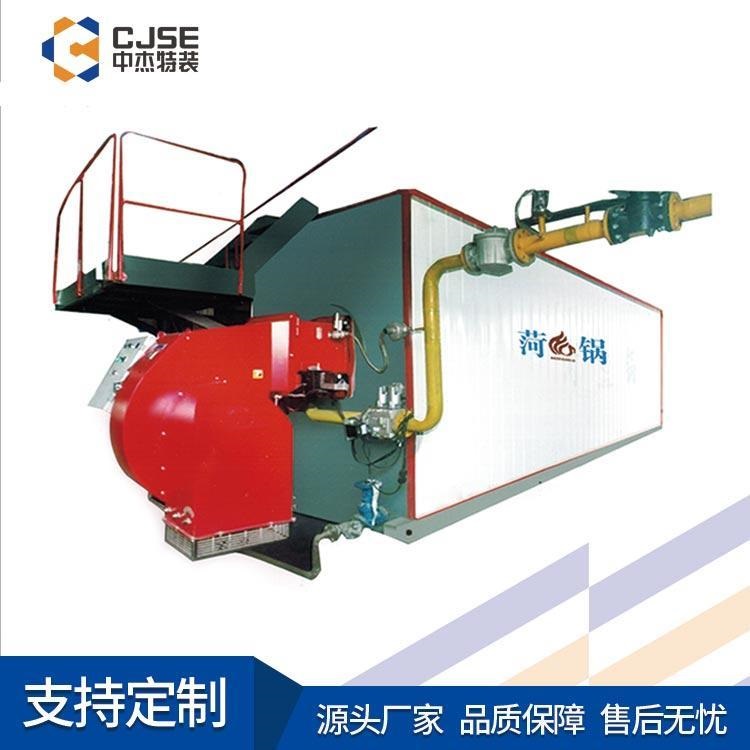

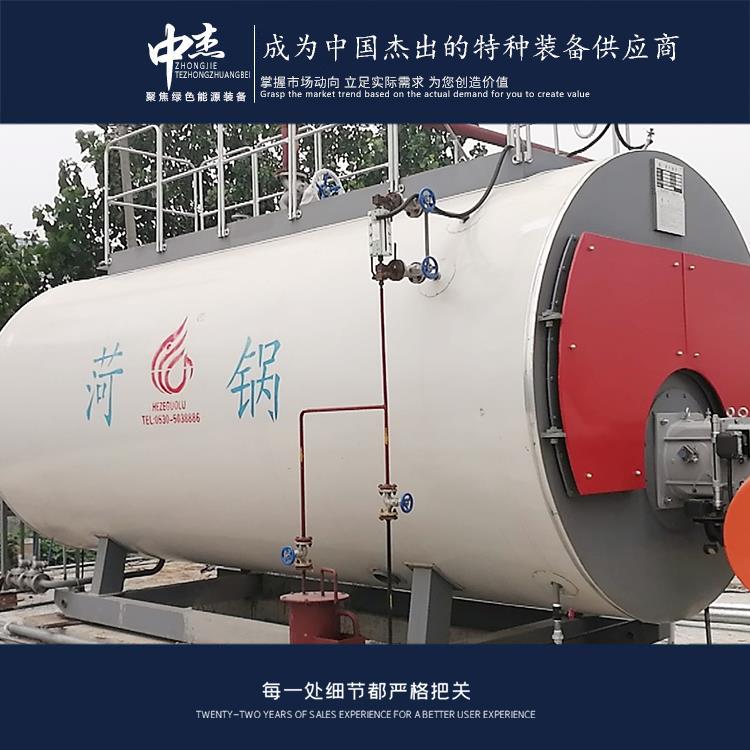
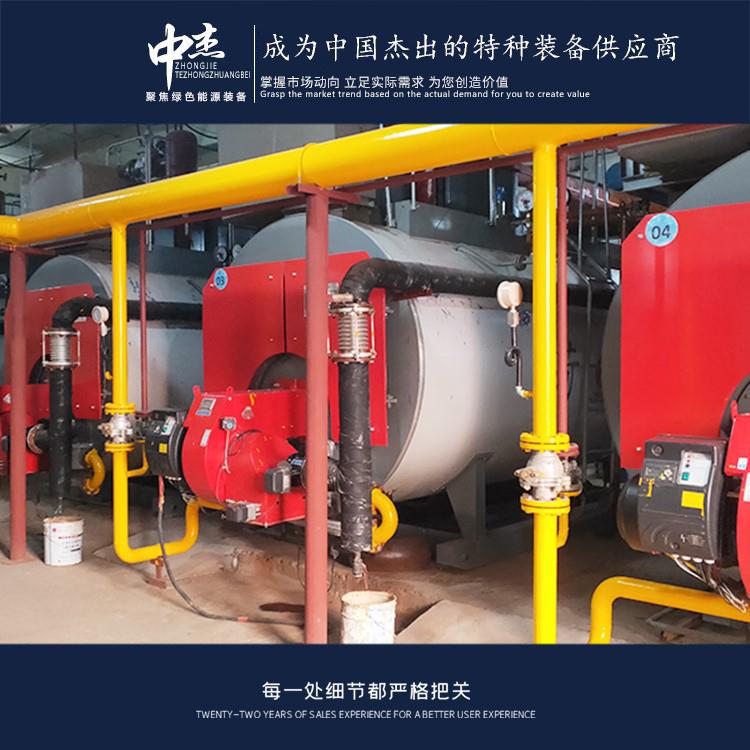


















Shandong Zhongjie Special Equipment (formerly Heze Boiler Factory Co., Ltd.) holds an A-grade boiler manufacturing license, A2-grade pressure vessel manufacturing license, A2-grade pressure vessel design license, B-grade boiler installation license, GB2 and GC2 pressure pipeline installation licenses, and electromechanical equipment installation contracting qualifications. It is a member of the China Boiler and Water Treatment Association, the China Chemical Equipment Association, and the Council Member of the Shandong Equipment Manufacturing Association. The company has also passed ISO9001 Quality Management System, ISO14001 Environmental Management System, OHSAS18001 Occupational Health and Safety Management System certifications, and the American ASME/U2 certification.
Based on the provided information, I cannot accurately determine the heating area for a 40-ton gas-fired hot water boiler or the gas pressure for an atmospheric pressure gas boiler. The determination of these parameters requires considering multiple factors, including the boiler's design specifications, the type and quality of the gas, and the heating system requirements. The heating area is typically calculated based on the size of the building or industrial production facility that needs heating, along with the heat load calculations. Common methods for calculating heat load include considering the building's floor area, the climate conditions of the region, and the required indoor temperatures. The gas pressure depends on the type of gas and the design of the gas supply system. Different types of gas (such as natural gas, etc.) have different pressure requirements for supply. The gas pressure also needs to take into account factors like the gas pipeline's length, diameter, and material. Therefore, to accurately determine the heating area for the 40-ton gas-fired hot water boiler and the gas pressure for the atmospheric pressure gas boiler, it is recommended to consult the boiler manufacturer or engineer, who can calculate and design based on the specific situation.
During the operation of a thermal oil furnace, several important points should be noted:
- Temperature Control: During the operation of the thermal oil furnace, close attention and control of the thermal oil temperature are required. Ensure the temperature remains within a safe range to avoid decomposition of the oil at high temperatures or condensation and scaling at low temperatures. Regularly inspect and calibrate the temperature sensors to ensure accurate temperature readings.
- Pressure Control: During the operation of the thermal oil furnace, maintaining an appropriate working pressure is crucial. Excessive pressure can lead to equipment damage or leaks, while insufficient pressure can result in reduced heat transfer efficiency. Regularly inspect and maintain the pressure gauge and safety valve to ensure accurate and safe pressure control.
- Oil Quality and Cleanliness: The quality and cleanliness of the thermal oil are vital for the normal operation of the furnace. Regularly inspect and replace the thermal oil to ensure it meets quality and performance requirements. Regularly clean and maintain heat exchangers, burners, and flues to prevent the accumulation of dust and dirt, which can affect heat transfer efficiency.
- Regular Maintenance and Inspection: Regular maintenance and inspections of the thermal oil furnace are necessary to ensure proper operation and extend its lifespan. Regularly inspect and clean burners, flues, and heat exchangers, check and replace seals and valves, inspect and calibrate safety devices, to ensure the equipment's safety and reliability.
- Safe Operation: Strict adherence to operational procedures and safety protocols is required during the operation of the thermal oil furnace. Operators must possess relevant skills and knowledge.
When designing a fuel-gas boiler room, the following points should be taken into consideration:
Safety Considerations: Ensure the design of the boiler room complies with relevant safety standards and regulations. Address fire risks by installing appropriate firewalls, fire doors, and isolation facilities. Ensure proper ventilation in the boiler room, along with suitable ventilation equipment and flue systems to expel harmful gases produced by combustion.
Space and Layout: Plan the space and layout of the boiler room based on the number and size of the boilers. Ensure there is adequate space for operation, maintenance, and cleaning. Arrange the placement of boilers, fuel storage equipment, flue systems, and piping in a manner that facilitates operation and maintenance.
Fuel Supply and Storage: Consider the requirements for fuel supply and storage. Ensure the safety and reliability of fuel supply pipelines and equipment to prevent leaks and contamination. Plan the capacity and location of fuel storage equipment to ensure an adequate fuel supply and compliance with safety requirements.
Emission and Exhaust Gas Treatment: Address the emissions and treatment of exhaust gases produced by combustion. Install suitable flue systems and exhaust gas treatment equipment to minimize the environmental impact of emissions. Ensure the design and layout of the flue system are reasonable and can effectively expel smoke and exhaust gases.
Control and Monitoring Systems: Design appropriate control and monitoring systems to ensure the safety and operation of the boiler. This includes monitoring and control equipment for parameters such as temperature, pressure, and flow, as well as alarm and automatic shutdown devices. Ensure operators can promptly understand the boiler's operating status and take necessary actions.
The inspection contents and requirements for gas-fired boilers typically include the following aspects:
Safety valve and pressure gauge: Check the installation and fixation of the safety valve and pressure gauge to ensure proper operation and accurate pressure display.
Combustion system: Inspect the operating status of the burner, including ignition, combustion, and combustion stability. Check the connections of the gas supply pipeline and valves to ensure no leaks.
Flue and heat exchanger: Examine the cleanliness of the flue and heat exchanger, as well as any accumulated dust and dirt, to ensure heat exchange efficiency and smoke emissions meet requirements.
Water level control system: Check the operation of the water level controller and gauge to ensure accurate and reliable water level control, preventing excessive or insufficient water levels.
Gas supply system: Inspect the installation and connections of the gas supply pipeline and valves to ensure normal gas supply and no leaks.
Electrical system: Check the wiring and connections of the electrical system, including power supply, controllers, and sensors, to ensure normal operation of electrical equipment and avoid electrical faults.
Safety devices: Verify the operating status of safety devices, including safety valves, pressure switches, and temperature controllers, to ensure proper operation and ensure safe boiler operation.
Records and documents: Review the boiler's operating, maintenance, and inspection records to ensure complete and accurate documentation.
The inspection of gas-fired boilers should be carried out by an institution or personnel with the relevant qualifications, following relevant laws, regulations, and standards. The frequency and specific requirements for inspections can be determined based on the boiler's usage and local regulations. Timely inspections and maintenance can ensure safe and efficient operation of gas-fired boilers.
Our company attaches great importance to technological innovation and R&D design. We have one municipal-level enterprise technology center in Heze City, equipped with testing facilities for non-destructive testing, physical and chemical testing, welding testing, hydrostatic testing, etc. We have over 600 various instruments and equipment, including CNC machine tools, X-ray flaw detectors, digital ultrasonic flaw detectors, mechanical property testing machines, chemical analyzers, spectrometers, tensile testing machines, plasma welding machines, and more. The key products and technologies we have developed, such as temperature and pressure vessel welding, biomass boiler emission reduction, and waste heat utilization, have successively been included in multiple Shandong Provincial Department of Industry and Information Technology science and technology innovation projects, Shandong Provincial key projects, and Heze City innovation and excellence projects. We have accumulated a total of 27 authorized utility models, 16 authorized inventions, participated in drafting 2 standards, 2 industry standards, and registered 15 trademarks. The technical team of our company, in collaboration with Professor Yajiang Li from Shandong University, has developed deep cryogenic container processing technology using the international plasma arc + filler wire tungsten inert gas arc welding (PAW-GTAW) technology. After being appraised as a provincial-level scientific and technological achievement, our technology level has reached an international standard in the field of deep cryogenic container manufacturing.
Choose ZJET Customized Solutions, let's create brilliance together!
WeChat Official Account

Scan to follow Official Account



















