



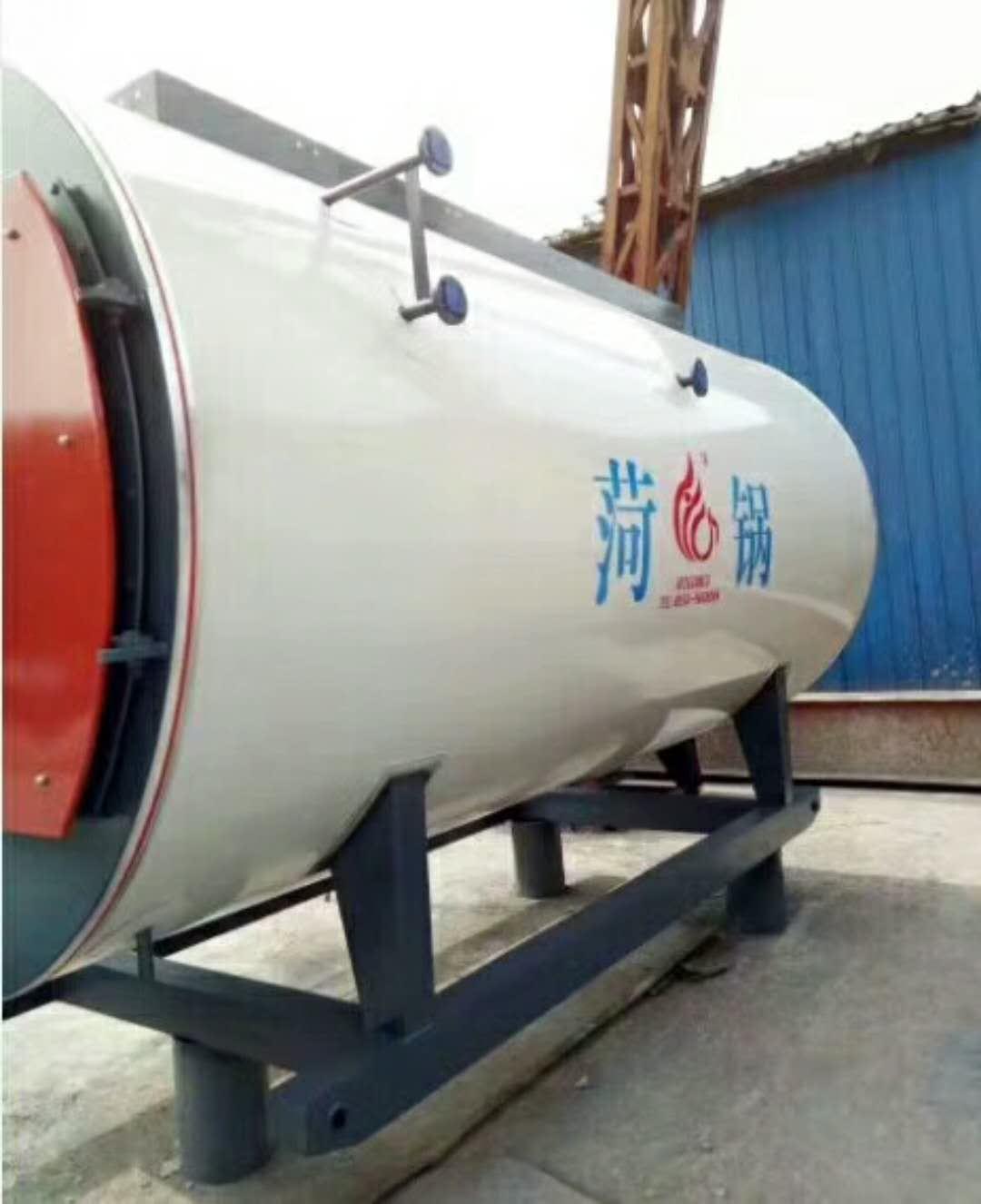


















Shandong Zhongjie Special Equipment Co., Ltd. (formerly Heze Boiler Factory Co., Ltd.) was established in 2001 and is located at No. 2218 Jinnan Road, Economic Development Zone, Heze City. With a registered capital of 50 million yuan and total assets of 500 million yuan, the company operates 7 business centers: boiler manufacturing, deep-freeze vessels, pressure vessels, central air conditioning, engineering installation, international trade, and the Internet of Things. It has three manufacturing sites on Jinnan Road, East Yangtze Road, and Bohai Road, covering a total of 200,000 square meters. The main workshop spans 83,000 square meters, with 710 employees, including 247 engineering technicians and 82 middle-level technical personnel. Recognized as a "High-Tech Enterprise" by the Science and Technology Department in December 2016, a "Shandong Specialized and New Enterprise" by the Industrial and Information Technology Department in June 2021, a "Shandong Deer Enterprise" in June 2022, and a "Specialized and New Small Giant Enterprise" by the Ministry of Industry and Information Technology in August 2022.
The manufacturing process for the heads and cylinders of low-temperature storage tanks typically includes the following steps:
Material Preparation: Select suitable materials, such as low-temperature alloy steel or stainless steel, based on design requirements and specifications. Inspect and verify the materials to ensure quality meets standards.
Sheet cutting: Cut sheets according to design dimensions and shapes. Common cutting methods include flame cutting, plasma cutting, or laser cutting, etc.
Bending and forming: Cut sheets are bent and formed into shapes for heads and cylinders. Common forming methods include cold bending, hot bending, or hydraulic forming, etc.
Welding: The formed sheets are welded together to form the structure of the head and cylinder. Common welding methods include manual arc welding, gas shielded welding, or laser welding, etc.
Weld Seam Treatment: Process the weld seams after welding, such as sanding, polishing, or applying anti-corrosion coatings, to enhance the quality and appearance of the welds.
Inspection and Acceptance: Inspect and accept the finished heads and cylinders to ensure their quality and compliance with design specifications. Common inspection methods include ultrasonic testing, radiographic testing, or liquid penetrant testing, etc.
Reinforcement and Support: Process and install reinforcement and support on the flanges and cylinders as required to enhance the structural strength and stability.
Surface Treatment: The heads and cylinders undergo surface treatment, such as applying anti-corrosion coatings, hot-dip galvanizing, or polishing, to enhance their corrosion resistance and aesthetic quality.
It is important to note that the manufacturing process of low-temperature storage tanks must comply with relevant standards and regulations to ensure the quality and safety of the production. During the manufacturing process, strict adherence to safety operating procedures and the implementation of necessary protective measures are required to ensure the safety of the operators.
The medical oxygen steel cylinder refilling plant, in addition to the liquid oxygen storage tank, includes the following sections:
Oxygen Compressor: Oxygen compressors are used to compress gaseous oxygen into high-pressure oxygen. These compressors are typically made with special materials and designs to ensure safe handling and compression of oxygen.
Oxygen Purification System: The oxygen purification system is used to remove impurities and contaminants from oxygen to ensure the purity and quality of the supplied oxygen. The purification system typically includes filters, adsorbents, and molecular sieves, etc.
Oxygen Storage System: In addition to liquid oxygen tanks, the oxygen filling area may also include a gaseous oxygen storage system for temporary storage and supply of gaseous oxygen. The gaseous oxygen storage system typically includes high-pressure oxygen cylinders or gas storage tanks.
Filling Equipment: Filling equipment is used to fill oxygen from liquid oxygen storage tanks or gaseous oxygen storage systems into medical oxygen steel cylinders. The filling equipment typically includes filling machines, filling pipelines, and filling control systems, etc.
Oxygen Quality Monitoring System: The oxygen quality monitoring system is used to monitor the quality and purity of oxygen being filled. Quality testing and monitoring of the filled oxygen are conducted through an oxygen analyzer or other detection equipment.
Safety Facilities: The filling area should be equipped with corresponding safety facilities, such as fire alarm systems, oxygen leak detection systems, and ventilation systems, to ensure the safety and protective measures during the filling process.
It is important to note that the design and equipment configuration of the medical oxygen cylinder filling area must comply with relevant regulations, standards, and specifications. During the filling process, strict adherence to operational procedures and safety requirements is essential to ensure the safe supply of oxygen.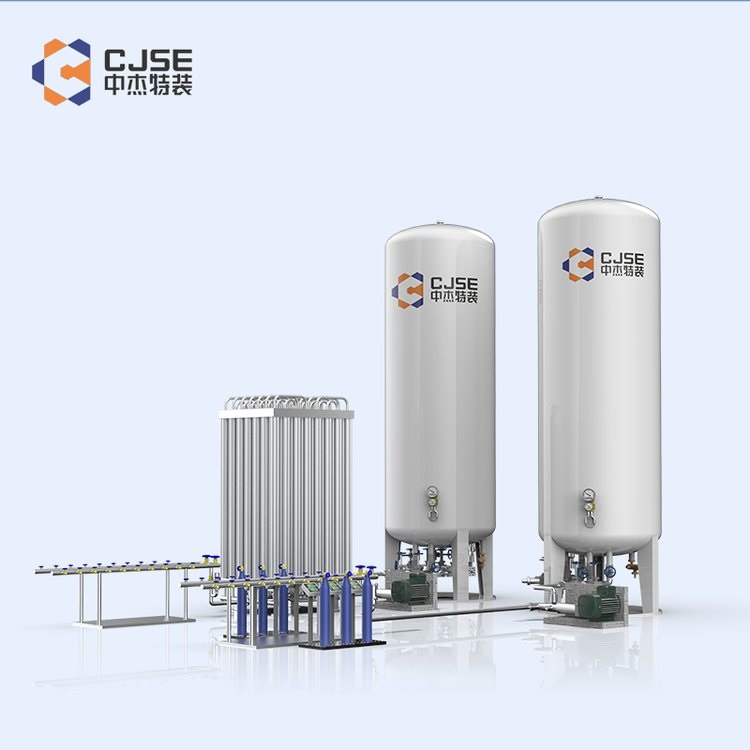
Proper management regulations for the use of low-temperature liquid storage tanks encompass the following aspects:
Tank Selection and Installation: Choose a suitable low-temperature liquid storage tank and ensure it complies with relevant standards and regulations. Installation of the tank should be carried out by personnel and operated according to the manufacturer's instructions and requirements, ensuring the tank's stability and safety.
Safety Operating Procedures: Establish and implement safety operating procedures for liquid storage tanks, including start-up, shutdown, filling, and venting processes. Operators should receive training to understand the characteristics, safety precautions, and emergency response measures for liquid storage tanks.
Safety Equipment and Protective Measures: Tanks should be equipped with necessary safety devices, such as pressure sensors, safety valves, leak detectors, etc., to monitor and control the pressure and temperature of the tank. At the same time, operators should wear appropriate personal protective equipment, such as insulated gloves and protective suits, to ensure their safety.
Regular inspections and maintenance: Regularly inspect and maintain low-temperature liquid storage tanks, including checking the tank's appearance, sealing, and corrosion prevention measures. In case of any issues, address them promptly by repairing or replacing the tank to ensure its proper operation and safety.
Waste Management: Abandoned low-temperature liquid storage tanks should be disposed of in accordance with relevant environmental protection regulations. The remaining liquids in the abandoned tanks should be properly handled to prevent environmental pollution.
Tank Record and Tracking: Establish a tank usage record, including filling dates, filling quantities, usage status, etc. Additionally, it is recommended to set up a tank tracking system for monitoring and managing the usage and maintenance of the tanks.
Above are some common management regulations for low-temperature liquid storage tanks. Specific regulations may vary by industry and region. When using low-temperature liquid storage tanks, relevant laws and standards should be adhered to, and appropriate management measures should be established based on actual conditions.
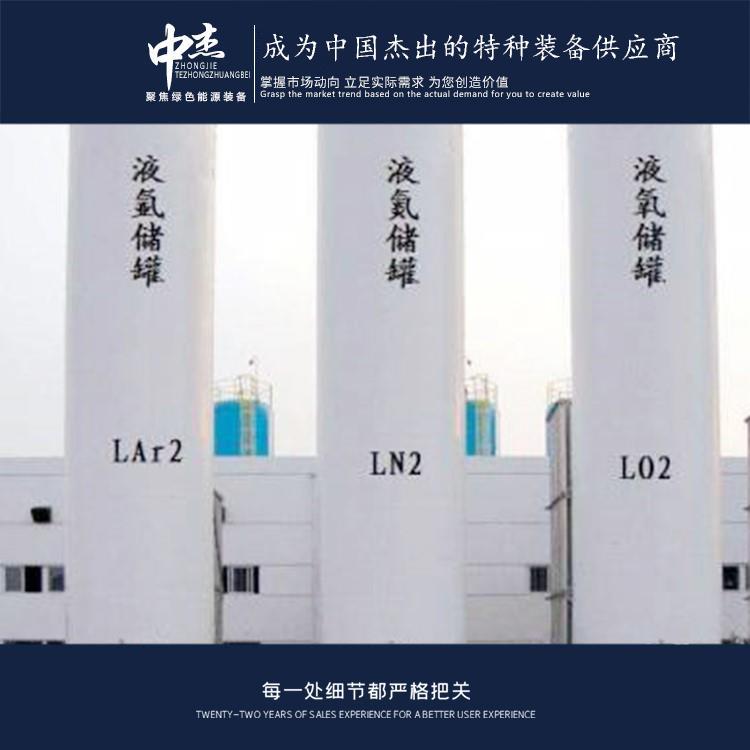
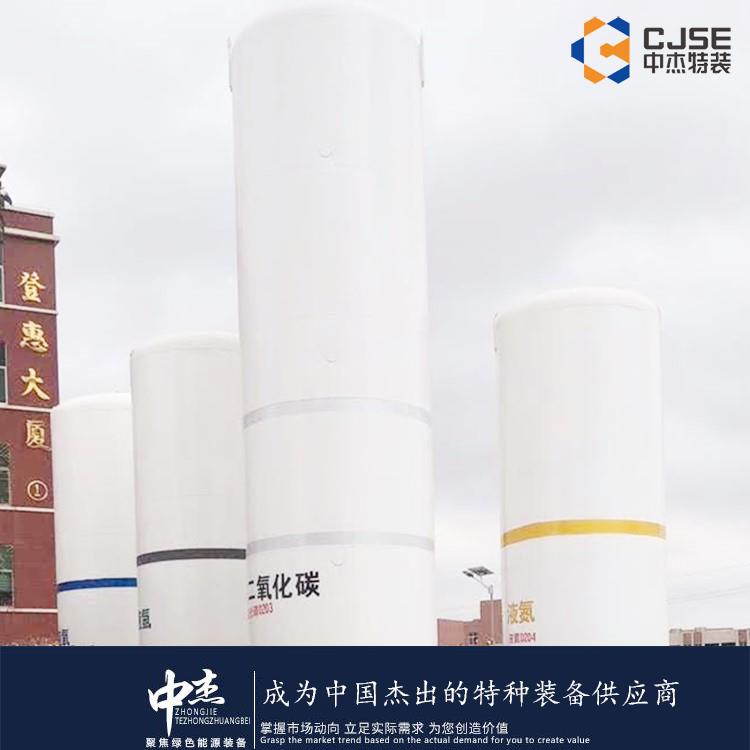
The dimensions and structures of liquid oxygen storage tanks can vary according to specific requirements and applications. Below are common dimensions and structures of liquid oxygen storage tanks:
Dimensions: The size of liquid oxygen tanks is typically determined by the storage or transport capacity of liquid oxygen. Common capacities range from a few thousand liters to several hundred thousand liters.
Structure: The structure of the liquid oxygen storage tank mainly includes the inner shell, outer shell, insulation layer, and supporting structure, etc.
Inner Shell: The inner shell of a liquid oxygen tank is the section designed for storing liquid oxygen, typically made from materials like stainless steel or aluminum alloy, which offer excellent corrosion resistance and sealing properties.
Shell: The shell of a liquid oxygen tank is the external structure that protects the inner liner, typically made of carbon steel or stainless steel, and possesses adequate strength and corrosion resistance.
Insulation Layer: The insulation layer of liquid oxygen storage tanks is used to reduce heat conduction and loss, maintaining the low temperature of liquid oxygen. Common insulation materials include polyethylene foam, glass fiber, and aerogel, etc.
Support Structure: The support structure of the liquid oxygen tank is used to support and secure the inner shell and outer shell of the tank. The support structure is typically made of steel, providing sufficient strength and stability.
The dimensions and structural design of liquid oxygen tanks must consider the properties of liquid oxygen, storage or transportation requirements, and safety standards. When using liquid oxygen tanks, strict adherence to relevant operational specifications and safety requirements is necessary to ensure safe usage.
Our company attaches great importance to technological innovation and research and development. We have one municipal-level enterprise technology center in Heze City, equipped with testing facilities for non-destructive testing, physical and chemical testing, welding testing, hydrostatic testing, and more. We possess over 600 various instruments and equipment, including CNC machine tools, X-ray flaw detectors, digital ultrasonic flaw detectors, mechanical property testing machines, chemical analyzers, spectrometers, tensile testing machines, plasma welding machines, and more. The key products and technologies we have developed, such as temperature and pressure vessel welding, biomass boiler emission reduction, and waste heat utilization, have successively been selected for multiple Shandong Provincial Department of Industry and Information Technology science and technology innovation projects, Shandong Provincial key projects, and Heze City innovative and excellent projects. We have accumulated a total of 27 authorized utility models, 16 authorized inventions, participated in drafting 2 standards, 2 industry standards, and registered 15 trademarks. Our technical team, in collaboration with Professor Li Yajiang of Shandong University, has developed deep cryogenic container processing technology using the international plasma arc + filler wire tungsten inert gas arc welding (PAW-GTAW) technology. After being appraised as a provincial-level scientific and technological achievement, our technology level has reached an international standard in the field of deep cryogenic container manufacturing. Choose Zhongjie Special Equipment, and let's create brilliance together!
WeChat Official Account

Scan to follow Official Account



















