


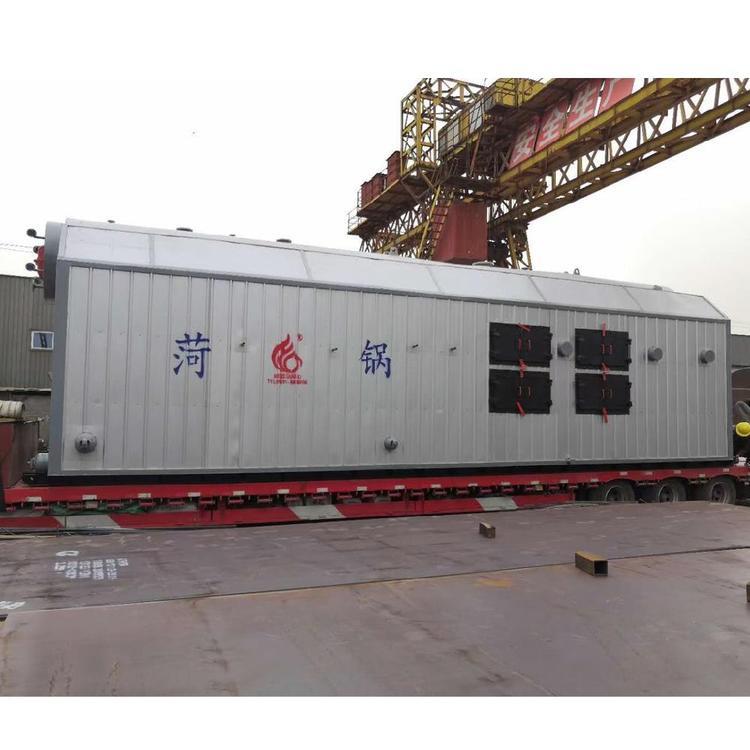

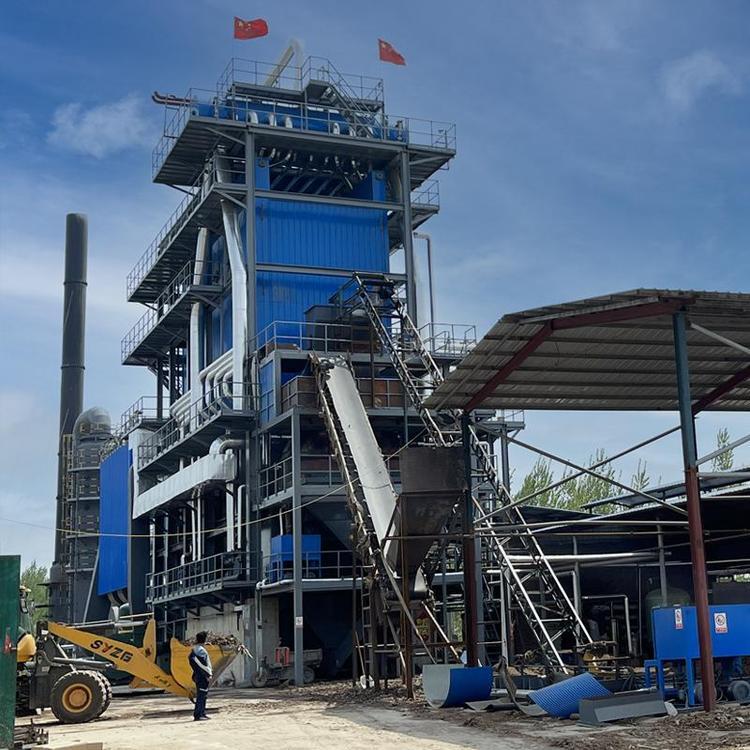
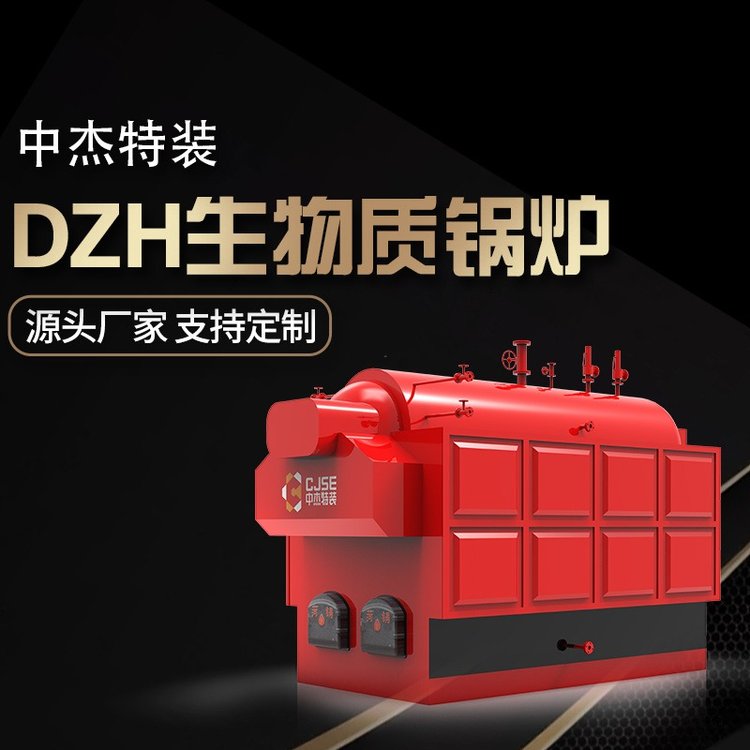


















Shandong Zhongjie Special Equipment (formerly Heze Boiler Factory Co., Ltd.) holds an A-grade boiler manufacturing license, an A2-grade pressure vessel manufacturing license, an A2-grade pressure vessel design license, a B-grade boiler installation license, and GB2/Class and GC2/Class pressure pipeline installation licenses, as well as a mechanical and electrical equipment installation contracting qualification. It is a member of the China Boiler and Water Treatment Association, the China Chemical Equipment Association, and the council member of the Shandong Equipment Manufacturing Association. The company has also passed the ISO9001 Quality Management System, ISO14001 Environmental Management System, OHSAS18001 Occupational Health and Safety Management System certifications, and the American ASME/U2 certification.
Biomass boiler pellets are a common form of biomass fuel, also known as biomass pellets or wood pellets. They are small granular fuels produced by processing biomass raw materials (such as wood chips, straw, wheat straw, fruit shells, etc.) through processes like crushing, drying, and pressing.
Biomass boiler pellet fuel features the following characteristics:
High Energy Density: Biomass pellet fuel boasts a high energy density, allowing for more energy to be stored in a relatively smaller volume, making it convenient for transportation and storage.
Easier to Burn: Biomass pellet fuel has regular shapes and uniform sizes, ensuring a stable combustion process, easy control of combustion parameters, and improved combustion efficiency.
Low humidity and low ash content: Biomass pellet fuel is dried and processed, with low humidity and relatively low ash content, reducing water evaporation and ash production during combustion, which is beneficial for improving combustion efficiency and reducing pollutant emissions.
Renewable and Eco-friendly: Biomass pellets are a renewable energy source that can be recycled through regenerative processes. The carbon dioxide released during combustion can be absorbed by biomass, forming a cycle with minimal environmental impact.
Broad combustion adaptability: Biomass pellet fuel is suitable for biomass boilers and boasts strong combustion adaptability. Different types and specifications of pellet fuel can be selected based on actual conditions to meet the needs of various boilers.
Biomass pellet fuel is widely used in biomass boilers, representing a clean and renewable energy source that is crucial for reducing carbon emissions and protecting the environment.
The utilization of waste heat from biomass boilers is a crucial method for enhancing energy efficiency and reducing energy consumption and emissions. Below are some common applications and analyses of waste heat recovery technologies in biomass boilers:
Economic Air Preheater: The flue gas produced by biomass boiler combustion contains a large amount of heat energy. The economic air preheater can recover and utilize the excess heat in the flue gas, preheat the air entering the boiler, and improve combustion efficiency. Through heat recovery, fuel consumption can be reduced and flue gas emissions can be minimized.
Economizer: An economizer is a device used to recover waste heat from flue gas, transferring the heat from the flue gas to the boiler feed water to increase its temperature and reduce fuel consumption. The application of an economizer can effectively lower the flue gas temperature from the boiler, enhancing thermal efficiency.
Waste Heat Boiler from Biomass Boiler Flue Gas: This is a device that utilizes the waste heat from the flue gas of biomass boilers to generate steam or hot water. By converting the waste heat in the flue gas into usable thermal energy, it achieves the reuse of energy and improves the energy utilization efficiency.
Direct烟气Utilization: The excess heat from biomass boiler flue gas can be directly used for heating or drying processes, reducing the demand for other energy sources. For instance, the flue gas is transported through chimneys or pipelines to the location requiring heating, directly utilizing the thermal energy of the flue gas.
Flue Gas Waste Heat Recovery System: The flue gas waste heat recovery system recovers and utilizes the waste heat from biomass boiler flue gases, providing it for use by other equipment or systems such as air conditioning, heating, and hot water. This allows for comprehensive energy utilization and improves overall energy efficiency.
Fully automatic biomass boiler systems commonly use a make-up pump pressure control method for water supply. The specific working principle is as follows:
Supplementary Water Pump: The fully automatic biomass boiler is equipped with a supplementary water pump, which is used to pump water from the water source (such as a water tank or municipal water supply) into the boiler's water supply system.
Pressure Regulation: The feed water pump adopts a constant pressure method, which involves installing a pressure sensor or controller in the boiler water supply system to monitor the pressure. When the pressure of the water supply system falls below the set value, the feed water pump will automatically activate, replenishing water into the system to increase the pressure.
Pressure Control: The feed pump will control the pressure within the set range. When the system pressure reaches the set value, the feed pump will stop operating to prevent excessive pressure.
Automation Control: The water supply system of an automatic biomass boiler is typically equipped with an automated control system that can intelligently manage according to the boiler's operational status and requirements. For instance, when the boiler needs to replenish water, the control system automatically activates the feedwater pump to ensure the stable operation of the water supply system.
By utilizing a constant-pressure supply pump, the fully automatic biomass boiler can achieve automated control of the water supply system and stable water supply, ensuring the normal operation and safety of the boiler. This method can be adjusted and optimized according to actual needs, enhancing water supply and energy utilization efficiency.
Reducing emissions of nitrogen oxides (NOx) from biomass boilers can be achieved through the following measures:
Combustion Control Technology: Utilizes advanced combustion control technologies, such as low nitrogen combustion techniques. By optimizing the combustion process, controlling the combustion temperature and oxygen concentration, and reducing the formation of nitrogen oxides. Methods such as staged combustion and optimized combustion chamber design can be employed to lower combustion temperatures and extend combustion times, further reducing nitrogen oxide formation.
SNCR Technology: Selective Non-Catalytic Reduction (SNCR) technology involves injecting reductants, such as urea solution, into the combustion process to react with nitrogen oxides, converting them into nitrogen and water. This technique can reduce the formation and emission of nitrogen oxides during combustion.
SCR Technology: Selective Catalytic Reduction (SCR) technology is a nitrogen oxide control method. It converts nitrogen oxides into nitrogen and water by injecting urea solution into flue gas and acting through a catalyst. SCR technology achieves nitrogen oxide removal at lower temperatures and is suitable for large biomass boilers.
Flue Gas Recirculation (FGR): The FGR technology recycles a portion of flue gas back into the boiler combustion chamber, reducing combustion temperature and oxygen concentration, and minimizing the formation of nitrogen oxides. This technique can control nitrogen oxide emissions by adjusting the recirculation ratio.
Fuel Selection and Pretreatment: Choosing low nitrogen fuels, such as low nitrogen biomass fuel, can reduce the formation of nitrogen oxides. Additionally, for biomass fuels with high nitrogen content, pretreatment measures like drying and gasification can be taken to lower the formation of nitrogen oxides during combustion.
Regular maintenance and cleaning: Regularly maintain and clean biomass boilers to ensure the cleanliness and proper operation of components such as burners and heat exchangers. Cleaning the combustion chamber and heat exchangers can reduce the accumulation of dirt, improve thermal conductivity efficiency, and lower nitrogen oxide emissions.
By implementing the aforementioned measures comprehensively, nitrogen oxide emissions from biomass boilers can be effectively reduced, achieving both environmental protection and energy-saving objectives. The specific measures to be chosen should be based on the characteristics of the boiler, its operating conditions, and emission requirements.
Our company highly values technological innovation and R&D design. We have one city-level enterprise technology center in Heze City, equipped with testing facilities for non-destructive testing, physical and chemical testing, welding testing, hydrostatic testing, and more. We possess over 600 types of equipment, including CNC machine tools, X-ray flaw detectors, digital ultrasonic flaw detectors, mechanical property testing machines, chemical analyzers, spectrometers, tensile testing machines, plasma welding machines, and others. The key products we have developed, such as welding technology for temperature and pressure vessels, emissions reduction in biomass boilers, and waste heat utilization, have successively been selected for multiple Shandong Provincial Department of Industry and Information Technology scientific and technological innovation projects, Shandong Provincial key projects, and Heze City innovative and excellent projects. We have cumulatively obtained 27 authorized utility model patents, 16 authorized invention patents, participated in drafting 2 standards, 2 industry standards, and registered 15 trademarks. Our technical team, in collaboration with Professor Yajiang Li from Shandong University, has jointly developed deep cryogenic container processing technology using the internationally recognized plasma arc + filler wire tungsten inert gas arc welding (PAW-GTAW) technology. After provincial-level scientific and technological achievement evaluation, our technology level in deep cryogenic container manufacturing has reached an international standard. Choose Zhongjie Special Equipment, and let's create brilliance together!
WeChat Official Account

Scan to follow Official Account



















