


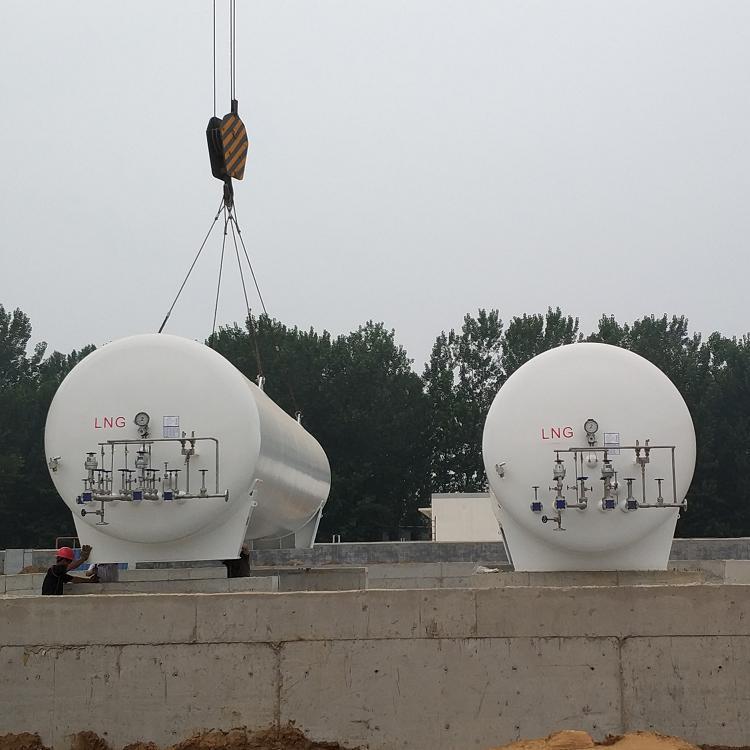


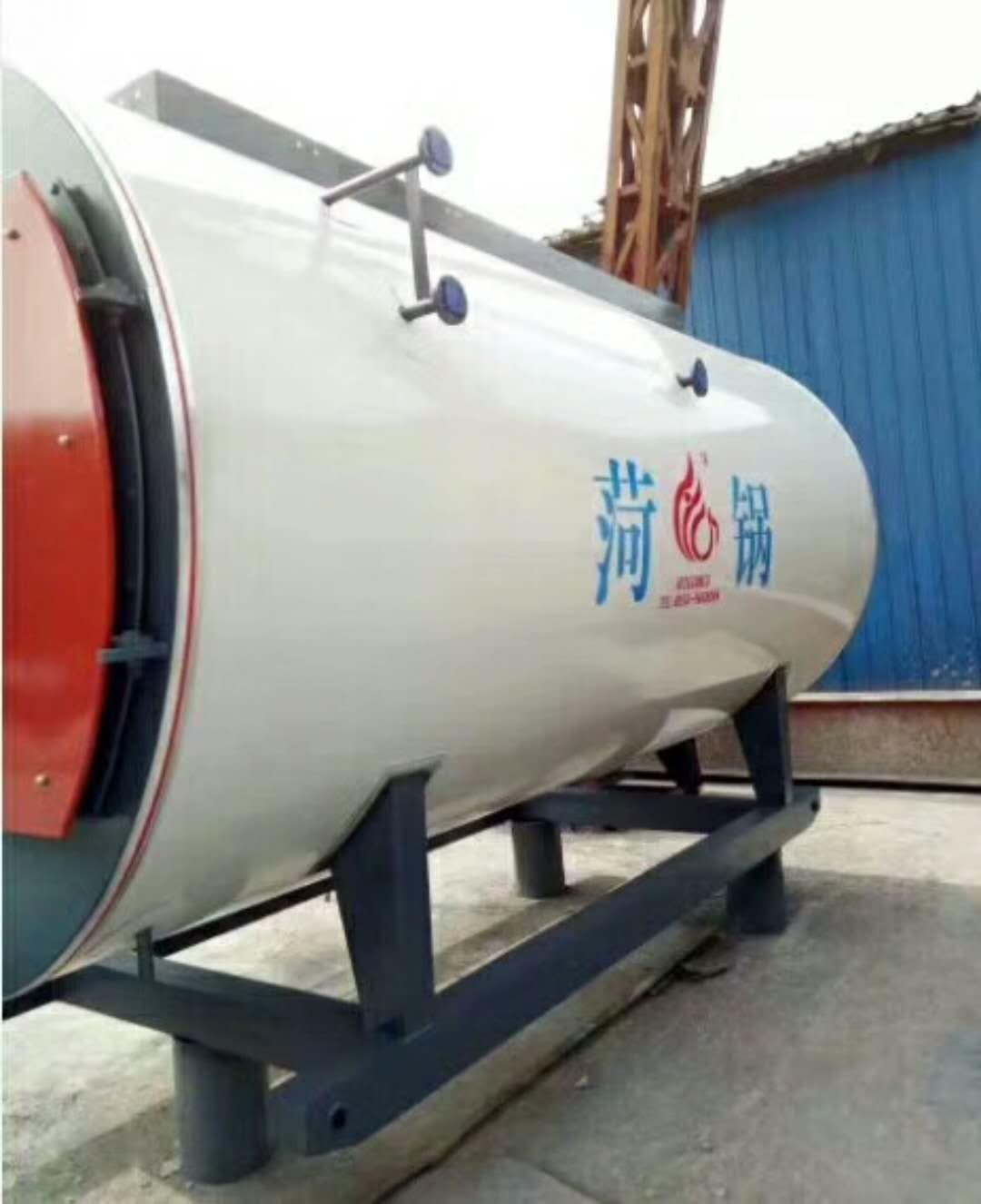


















Shandong Zhongjie Special Equipment (formerly Heze Boiler Factory Co., Ltd.) holds an A-grade boiler manufacturing license, an A2-grade pressure vessel manufacturing license, an A2-grade pressure vessel design license, a B-grade boiler installation license, and GB2/Class and GC2/Class pressure pipeline installation licenses, as well as a mechanical and electrical equipment installation contracting qualification. It is a member of the China Boiler and Water Treatment Association, the China Chemical Equipment Association, and a director unit of the Shandong Equipment Manufacturing Association. The company has also passed certifications for the ISO9001 Quality Management System, ISO14001 Environmental Management System, OHSAS18001 Occupational Health and Safety Management System, and the American ASME/U2 certification.
The application of strain-hardening in austenitic stainless steel on low-temperature pressure vessels is a common method, which can enhance the material's strength and durability. Below are some details regarding the application of strain-hardening in austenitic stainless steel on low-temperature pressure vessels:
Principle of Strain Hardening: Strain hardening is achieved by introducing plastic deformation into the material, which alters the crystal structure and thereby increases the material's strength. In Austenitic stainless steel, strain can be introduced through methods such as cold working (e.g., cold rolling, cold drawing) or heat treatment (e.g., solution treatment and cold deformation), leading to dislocations and grain boundary sliding in the crystal structure, thereby enhancing the material's strength.
Low Temperature Application Advantages: Austenitic stainless steel exhibits excellent corrosion resistance and low-temperature toughness in cold environments. Strain hardening can further enhance the strength and durability of austenitic stainless steel, enabling it to perform in low-temperature pressure vessels. Under low-temperature conditions, strain hardening effectively resists plastic deformation and fracture, improving the material's tensile strength and impact resistance.
Application Cases: Strain-hardened austenitic stainless steel is widely used in low-temperature pressure vessels. For instance, in liquid nitrogen, liquid oxygen, and liquid argon tanks, etc., strain-hardened austenitic stainless steel is commonly employed as structural material. These vessels must withstand high pressure and impact loads at low temperatures; strain-hardening enhances the material's strength and durability, ensuring safe operation of the containers.
It is important to note that strain hardening of austenitic stainless steel should be conducted under appropriate temperatures and deformation conditions to avoid excessive deformation and material embrittlement. When designing and manufacturing low-temperature pressure vessels, it is necessary to rationally select and apply the strain hardening of austenitic stainless steel based on specific engineering requirements and material characteristics.
Carbon dioxide storage tanks and liquid oxygen storage tanks are containers used for storing different gases; they have some differences in physical properties:
Physical State: Carbon dioxide is a gas at room temperature and pressure, and it needs to be at low temperatures and high pressures to become a liquid. Liquid oxygen is a liquid at room temperature, and it needs to be at low temperatures to solidify.
Boiling and freezing points: The boiling point of carbon dioxide is -78.5°C, and its freezing point is -56.6°C. The boiling point of liquid oxygen is -183°C, and its freezing point is -218.8°C. The boiling and freezing points of liquid oxygen are significantly lower than those of carbon dioxide.
Density: Liquid oxygen has a higher density, approximately 1.14 grams per cubic centimeter. Carbon dioxide has a lower density, about 0.00198 grams per cubic centimeter. The density of liquid oxygen is about 570 times that of carbon dioxide.
Pressure: Liquid oxygen has a higher pressure, typically ranging from tens to hundreds of MPa (Megapascals). Carbon dioxide has a lower pressure, usually within a few MPa (Megapascals).
Safety: Liquid oxygen has a high oxygen content, which is prone to cause fires and explosions. Carbon dioxide also poses asphyxiation and suffocation risks at certain concentrations.
Note that both carbon dioxide and liquid oxygen are highly flammable and explosive substances. Strict adherence to relevant safety operation procedures and standards, along with necessary safety measures, must be taken to ensure the safety and stability of storage tanks.
The cooling process and precautions for liquid argon cylinders are as follows:
Cooling Process Analysis:
Clean Vessel: Prior to cooling the liquid argon vessel, ensure the interior is clean and free of impurities and contaminants. Use an appropriate cleaner for washing and rinse thoroughly.
Drainage and Exhaust: Empty the gas inside the tank and expel it through the exhaust system to reduce the gas content within the tank.
Add Liquid Nitrogen: Inject liquid nitrogen into the tank, which can rapidly cool the air and walls inside the tank due to its low temperature, thereby reducing the tank's temperature.
Waiting for Cooling: Liquid nitrogen will gradually lower the temperature inside the container through the process of heat conduction until it reaches the required low temperature.
Cautionary Notes:
Safety Protection: Necessary safety precautions must be taken during the cooling process of liquid argon tanks. Liquid argon has low temperatures and high flammability, so operators should wear protective suits, gloves, and other personal protective equipment to ensure safe operation.
Fire Prevention Measures: Liquid argon is highly flammable; hence, during the cooling process of the liquid argon tank, it is essential to ensure there are no ignition sources in the surrounding environment and to have appropriate fire extinguishing equipment on hand.
Control Temperature: During the cooling process of the liquid argon cylinder, it is necessary to control the temperature of the cylinder to avoid overcooling or insufficient cooling. Temperature sensors and temperature control systems can be used to monitor and control the cylinder's temperature.
Insulation and Heat Retention: Liquid argon tanks are typically designed with double or multi-layer structures, filled with insulating material in the middle to reduce heat transfer and evaporation of liquid argon. Ensure the integrity and good insulation of the insulating layer.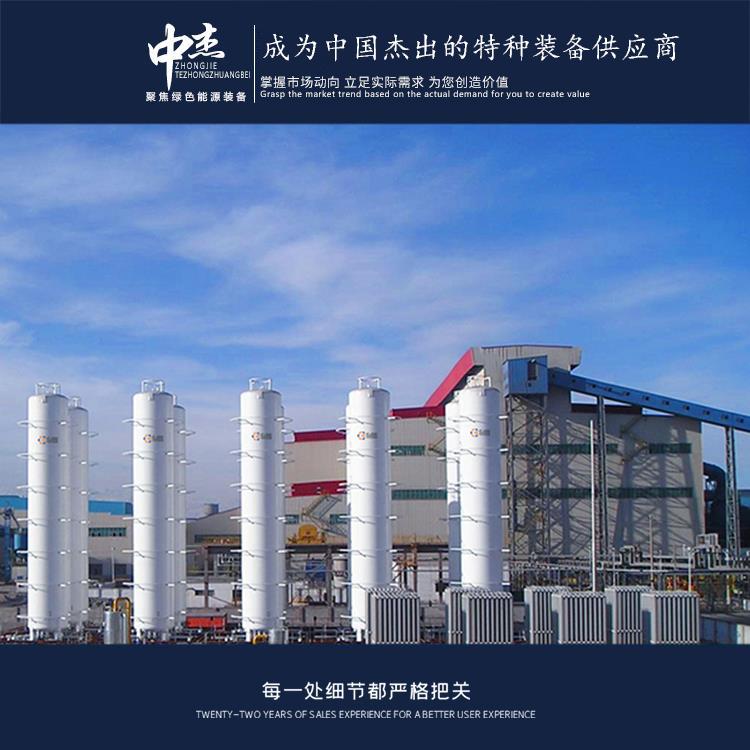
The liquid oxygen tank possesses the following characteristics:
High Purity: The liquid oxygen storage tank contains high-purity liquid oxygen, typically exceeding 99.5% purity. This makes the liquid oxygen storage tank essential for applications requiring high-purity oxygen, such as medical, industrial, and research fields.
Low Temperature: As the boiling point of liquid oxygen is -183°C, the liquid oxygen storage tank must have excellent insulation properties to maintain the low temperature state of the liquid oxygen. The tank is typically designed with a double or multi-layer structure, filled with insulating material in between to minimize heat transfer and evaporation of the liquid oxygen.
High Pressure: Liquid oxygen tanks typically need to withstand high pressure to maintain their liquid state. The design and material selection of the tank must consider the pressure requirements of liquid oxygen to ensure the tank's safety and reliability.
Flammability: Liquid oxygen is highly flammable and can support combustion. Therefore, fire prevention measures must be implemented during the design and operation of liquid oxygen storage tanks, ensuring no ignition sources are present around the tanks and appropriate fire extinguishing equipment is available.
High Density: With a higher density, liquid oxygen can store more oxygen compared to gaseous oxygen. This makes liquid oxygen storage tanks advantageous for applications requiring large oxygen supplies, such as in the field.
Corrosivity: Liquid oxygen possesses some degree of corrosiveness.
Zhong Jie Special Equipment upholds the grand vision of "realizing employees' dreams, creating value for customers, and striving for the prosperity and strength of our motherland," devoting itself to the development of green energy equipment. We dedicate high-value products and services to society!
WeChat Official Account

Scan to follow Official Account



















