


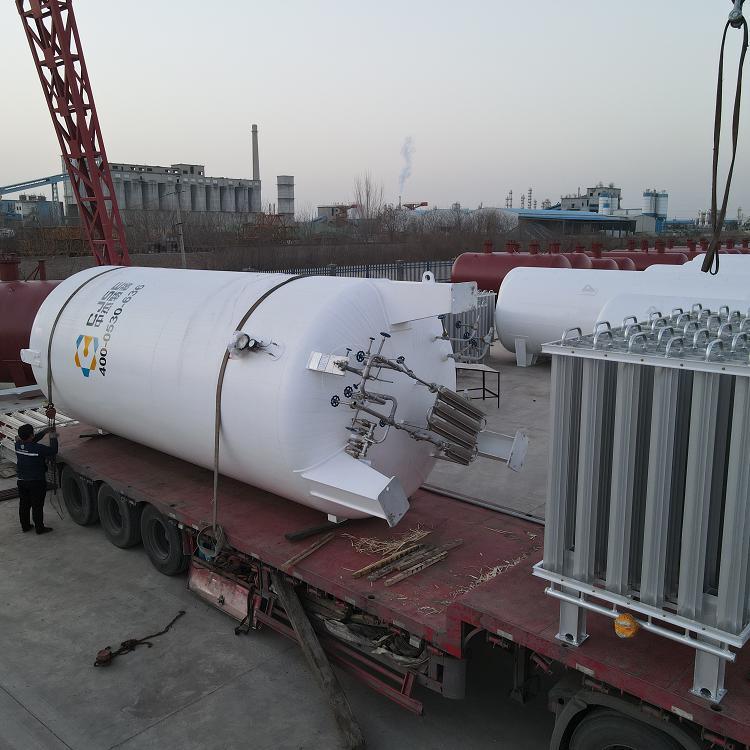


















Shandong Zhongjie Special Equipment (formerly Heze Boiler Factory Co., Ltd.) was established in 2001, located at No. 2218 Jinnan Road, Economic Development Zone, Heze City. With a registered capital of 50 million yuan and total assets of 500 million yuan, the company has seven business centers: boilers, deep-freezing vessels, pressure vessels, central air conditioning, engineering installation, international trade, and the Internet of Things. It has three manufacturing sites on Jinnan Road, East Yangtze Road, and Bohai Road, covering a total of 200,000 square meters, with the main workshop area being 83,000 square meters. It currently employs 710 people, including 247 engineers and technicians, and 82 middle-level technical personnel. In December 2016, it was recognized as a "High-tech Enterprise" by the Science and Technology Department. In June 2021, it was identified as a "Specialized and New Enterprise in Shandong Province" by the Industrial and Information Technology Department. In June 2022, it was recognized as a "Gazelle Enterprise in Shandong Province" by the department. In August 2022, it was identified as a "Specialized and New Small Giant Enterprise" by the Ministry of Industry and Information Technology.
Liquid oxygen storage tanks may deform during use. The following are common deformation defects in liquid oxygen storage tanks:
Elastic deformation: Liquid oxygen tanks may undergo elastic deformation when subjected to external pressure or temperature changes. This deformation is typically reversible, meaning the tank will return to its original shape upon the removal of external pressure or normalization of temperature.
Plastic Deformation: When a liquid oxygen tank is subjected to significant external force or pressure, it may experience plastic deformation. This deformation is irreversible, and the tank cannot return to its original shape. Plastic deformation can lead to changes in the tank's shape, such as dents or warping.
Hot Deformation: Liquid oxygen storage tanks may experience hot deformation when subjected to high temperatures or temperature changes. Hot deformation can cause the tank to change shape, expand, or contract.
Cold Deformation: Liquid oxygen tanks may experience cold deformation when subjected to low temperatures or temperature changes. Cold deformation can lead to changes in the tank's shape, shrinkage, or cracking.
These deformation defects may affect the structural integrity and safety of the liquid oxygen storage tank. Therefore, regular inspections and assessments of the tank's deformation are crucial to ensure its normal operation and safe use. If deformation defects are found, prompt repair or replacement measures should be taken to avoid further damage and safety risks.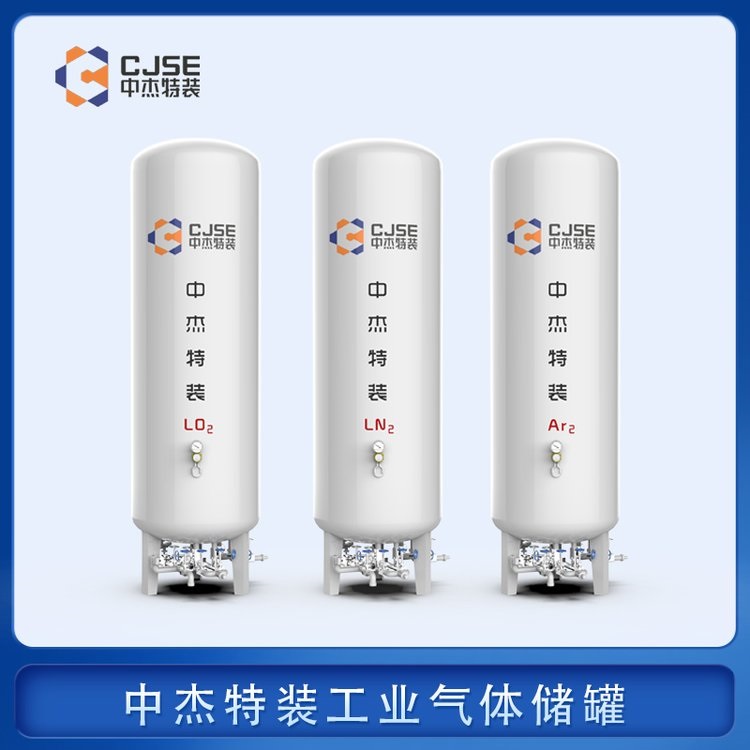
Routine inspection of liquid nitrogen storage tanks involves regular checks and maintenance to ensure safe operation and efficient use. Here is a common introduction to the inspection of liquid nitrogen storage tanks:
Appearance Inspection: Regularly inspect the exterior of the tank, including the body, insulation layer, valves, and pipelines, etc. Note any cracks, corrosion, wear, or other damage. Also, check if the insulation layer is intact, without any damage or detachment.
Level Check: Regularly inspect the liquid nitrogen tank's level to ensure it remains within the normal range. This can be done using level gauges or level scales and other equipment.
Pressure Check: Inspect the tank's pressure to ensure it is within the safe range. Pressure gauges or pressure sensors can be used for the inspection.
Leakage Inspection: Check for signs of liquid nitrogen leakage around the tank, such as evaporated mist, frosting, or freezing. If a leak is detected, take prompt action to repair it.
Valve and pipeline inspection: Check if the valves and pipelines of the storage tank are functioning properly without any gas leakage or blockages. Ensure the tightness and unobstructed flow of the valves and pipelines.
Safety Device Inspection: Inspect the safety devices of the storage tank, such as pressure relief valves, temperature sensors, and liquid level alarms, to ensure their proper operation.
Maintenance Records: Timely record the inspection results and maintenance records of the storage tank, including liquid level, pressure, insulation status, leakage conditions, etc. These records help monitor the tank's operational status and identify issues promptly.
Note that the inspection of liquid nitrogen tanks should comply with relevant safety regulations and operational guidelines. Liquid nitrogen is highly flammable at low temperatures, so operators must wear appropriate personal protective equipment and ensure there are no sources of fire in the operating environment. Regular inspections can help identify issues promptly and take corrective actions, ensuring the safe and efficient operation of the tank.
Liquid nitrogen tanks are equipment used for storing liquid nitrogen and are widely applied in the following fields: Frozen Food and Refrigerated Logistics: Liquid nitrogen tanks are used in the frozen food and refrigerated logistics industry to freeze or refrigerate food and other perishable items, extending their shelf life and maintaining freshness. The low temperature of liquid nitrogen can quickly freeze food, prevent bacterial growth, and prevent food spoilage. Biological Sample Storage: Liquid nitrogen tanks are extensively used in the field for freezing and preserving biological samples, cells, tissues, and more. The low temperature of liquid nitrogen effectively preserves the integrity and viability of biological materials, used in medical research, biomedical engineering, and transplantation fields. Laboratory Research: Liquid nitrogen tanks are utilized in scientific research and laboratories to provide liquid nitrogen as a coolant and freezing medium. The low temperature of liquid nitrogen can be used for cooling laboratory equipment, material research, superconducting electronics, and low-temperature physics. Metalworking and Welding: Liquid nitrogen tanks are used in metalworking and welding for cooling and controlling the temperature of metals. Liquid nitrogen can rapidly cool metals, improve the hardness and strength of metals, and reduce deformation and stress. Gas Storage and Supply: Liquid nitrogen tanks are also used for storing and supplying nitrogen gas. Liquid nitrogen can be converted into gaseous nitrogen through evaporation and is used in applications such as gas shielded welding, gas fire suppression systems, gas analysis, and laboratory gas supply. In summary, liquid nitrogen tanks are widely used in the fields of frozen food, laboratory research, metalworking, and gas supply, providing storage and supply functions for liquid nitrogen at application sites.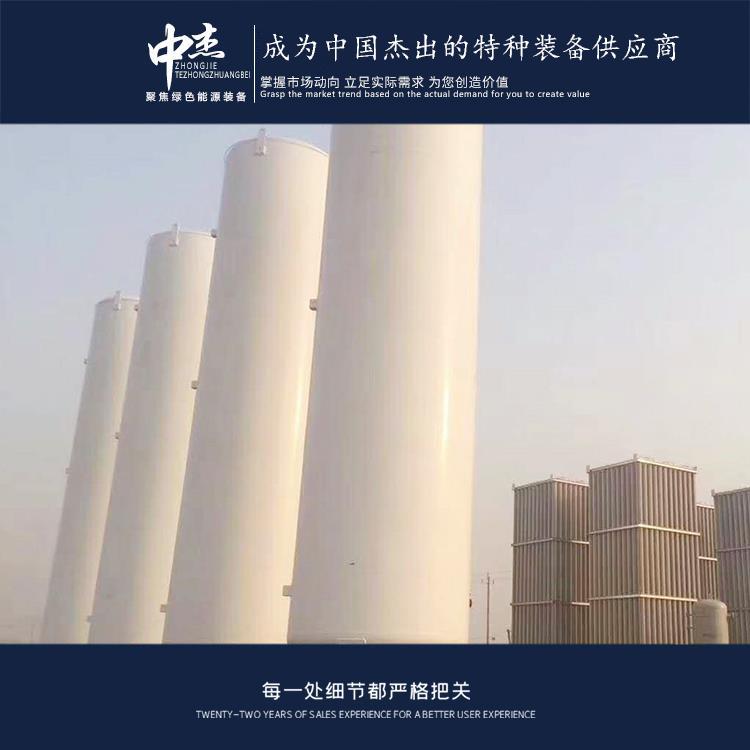
Liquid nitrogen storage tanks feature the following characteristics during the construction process:
Low-Temperature Construction: The construction of liquid nitrogen tanks must be carried out in low-temperature conditions, as the boiling point of liquid nitrogen is low, approximately -196 degrees Celsius. Construction personnel must take appropriate protective measures, such as wearing thermal protective clothing and gloves, to protect themselves from低温 injuries.
Welding Technology: A substantial amount of welding is required during the manufacturing process of liquid nitrogen tanks, including the connections of the tank walls, bottom plate, top plate, and welds. Welding technology is crucial for the quality and safety of the tanks, necessitating the use of appropriate welding methods and materials to ensure the strength and sealability of the welds.
Insulation Layer Construction: Liquid nitrogen storage tanks must have excellent insulation properties to minimize heat conduction and maintain the low-temperature state of liquid nitrogen. The construction of the insulation layer requires materials such as polyester foam and glass wool, ensuring the thickness and quality of the insulation layer.
Proper installation steps for liquid nitrogen tanks are as follows:
Site Preparation: Select an appropriate site for tank installation, ensuring it is level, sturdy, and has sufficient load-bearing capacity. The site should be located away from flammable, explosive materials, and other hazardous sources.
Foundation Construction: Construction of the foundation based on the tank's dimensions and weight, including excavation of the foundation pit and pouring of concrete foundation. The design and construction of the foundation should comply with relevant standards and specifications.
Tank Installation: Transport the tank to the site and perform vertical installation. Appropriate lifting equipment and safety measures must be used during the installation process to ensure the tank's stability and safety.
Pipe Connections: Connect the storage tank to the relevant pipeline system as required, including intake pipes, exhaust pipes, and liquid supply pipes, etc. Sealing and testing must be performed during the connection process to ensure the safety of the pipes.
Zhong Jie Special Equipment upholds the great vision of "realizing employees' dreams, creating value for customers, and striving for the prosperity and strength of our motherland," focusing solely on the development of green energy equipment. We dedicate products and services with high performance and affordability to the society!
WeChat Official Account

Scan to follow Official Account



















