


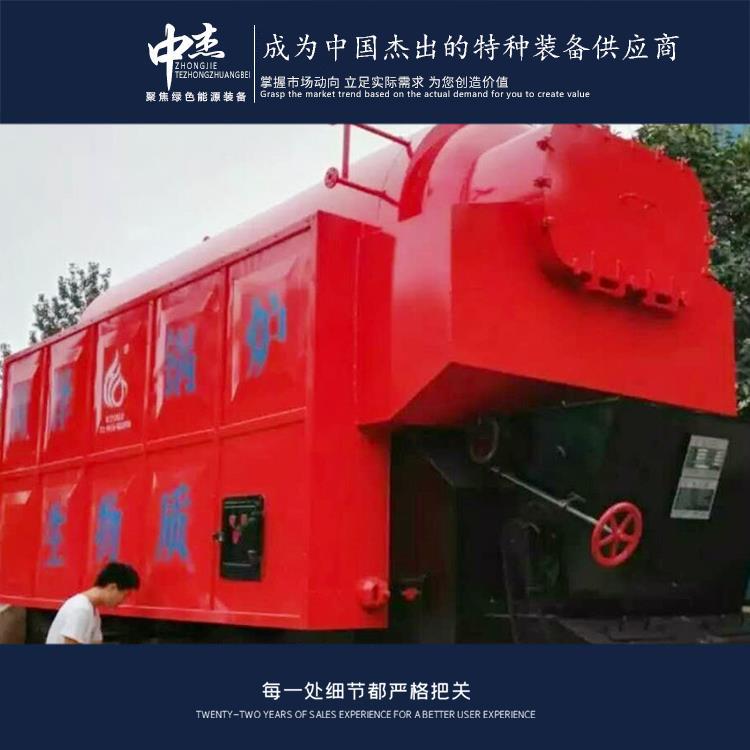


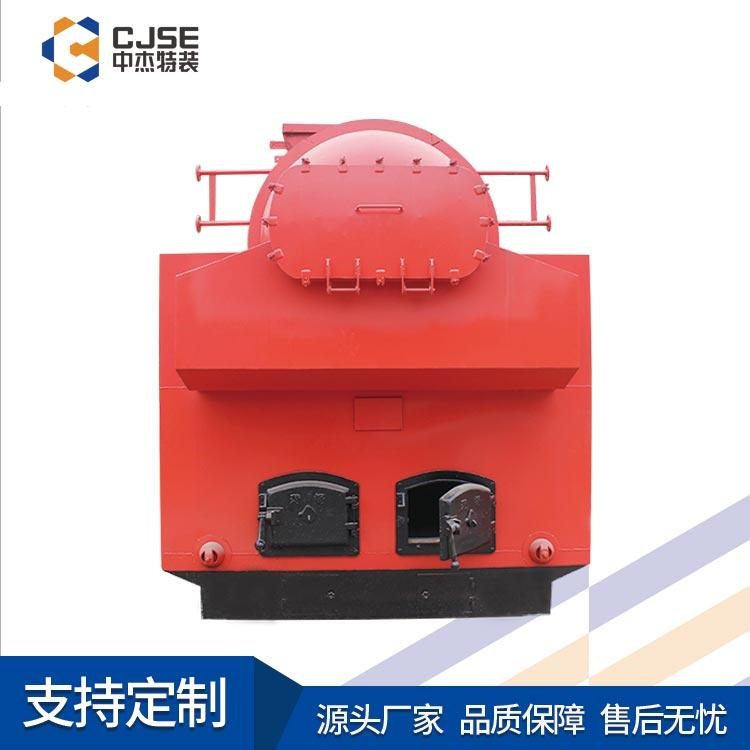


















Shandong Zhongjie Special Equipment Co., Ltd. (formerly Heze Boiler Factory Co., Ltd.) was established in 2001 and is located at No. 2218 Jinnan Road, Economic and Technological Development Zone, Heze City. With a registered capital of 50 million yuan and total assets of 500 million yuan, the company has seven business centers: boilers, deep-freeze containers, pressure vessels, central air conditioning, engineering installation, international trade, and Internet of Things. It operates three factories on Jinnan Road, East Changjiang Road, and Bohai Road, covering a total area of 200,000 square meters, with the main workshop spanning 83,000 square meters. The company currently employs 710 staff, including 247 engineers and technicians, and 82 intermediate-level technicians. In December 2016, it was recognized as a "High-Tech Enterprise" by the Science and Technology Department. In June 2021, it was named a "Specialized and New Enterprise in Shandong Province" by the Department of Industry and Information Technology. In June 2022, it was identified as a "Gazelle Enterprise in Shandong Province" and in August 2022, it was recognized as a "Specialized and New Small Giant Enterprise" by the Ministry of Industry and Information Technology.
The application methods for biomass boilers can be selected and adjusted according to specific application needs and scenarios. Here are some common application methods:
Heating Systems: Biomass boilers can be used in heating systems to provide hot water or steam for buildings, industrial plants, etc. Heat energy can be transmitted through pipelines to the areas requiring heating, meeting needs for heating and hot water.
Industrial Production: Biomass boilers can be used for heat supply in industrial production processes, such as food processing, pulp and papermaking, and chemical industries. The heat provided by biomass boilers meets the heating and steam requirements in industrial production.
Greenhouse Heating: Biomass boilers can be used in greenhouse heating systems to provide hot water or steam for greenhouses, maintaining the appropriate temperature and humidity inside, and promoting plant growth.
Rural Heating: Biomass boilers can be used in rural heating systems to provide heating and hot water for rural residents. They can meet the heating needs of rural areas through centralized or decentralized heating.
Hot Water Pump Drying: Biomass boilers can be used in hot water pump drying systems for drying wood, grain, and other materials. By providing hot water or steam, the drying process is accelerated, enhancing drying efficiency.
Biomass Power Generation: Biomass boilers can be integrated with power generation equipment for biomass power generation. By burning biomass fuel, steam is produced to drive the generator and generate electricity, achieving the utilization and conversion of energy.
Above are some common application methods for biomass boilers. According to specific needs and scenarios, suitable application methods can be chosen, and configurations and adjustments can be made in conjunction with related equipment and systems.
Biomass boilers offer several advantages:
Renewable Energy: The fuel used in biomass boilers comes from organic materials like plants, animals, and microorganisms, making it a renewable energy source. Compared to traditional fossil fuels, biomass fuel has lower carbon emissions and environmental impact, aiding in the reduction of greenhouse gas emissions and being more environmentally friendly.
Diverse fuel sources: Biomass fuel sources are extensive, including wood, straw, waste crops, food scraps, and municipal solid waste. This diversity in fuel sources allows biomass boilers to be flexible and adaptable, utilizing waste and by-products from plants and animals.
Environmental Friendliness: The carbon dioxide emitted during the combustion process of biomass boilers can be absorbed by plants, forming a cycle that reduces air pollution. Additionally, the emissions and ash produced by biomass boilers during combustion are relatively low, resulting in minimal environmental impact.
Energy Security: Biomass, as a native renewable energy source, can reduce dependence on imported energy and enhance energy security. In regions with scarce resources, the use of biomass boilers can provide a reliable energy supply.
Economic Efficiency: Biomass fuel is relatively cost-effective, helping to reduce energy costs. Moreover, the technology and equipment for biomass boilers are continuously evolving and maturing, making them more economically competitive.
Waste Utilization: Biomass boilers can make use of agricultural and forestry by-products such as crop straw, wood waste, effectively utilizing waste resources and reducing resource wastage.
In summary, biomass boilers offer numerous advantages such as renewable energy, diverse fuel sources, environmental friendliness, energy security, economic viability, and waste utilization, making them a sustainable energy option.
Reducing emissions of nitrogen oxides (NOx) from biomass boilers can be achieved through the following measures:
Combustion Control Technology: Utilizes advanced combustion control techniques, such as low nitrogen combustion technology. By optimizing the combustion process and regulating the temperature and oxygen concentration, the formation of nitrogen oxides is minimized. Methods like staged combustion and optimized combustion chamber design can be employed to reduce combustion temperatures and extend burn times, further decreasing nitrogen oxide emissions.
SNCR Technology: Selective Non-Catalytic Reduction (SNCR) technology involves injecting reductants, such as urea solution, into the combustion process to react with nitrogen oxides and convert them into nitrogen and water. This technique can reduce the formation and emission of nitrogen oxides during combustion.
SCR Technology: Selective Catalytic Reduction (SCR) technology is a nitrogen oxide control method. By injecting urea solution into flue gas and using a catalyst, nitrogen oxides are converted into nitrogen and water. SCR technology achieves nitrogen oxide removal at lower temperatures, suitable for large biomass boilers.
Flue Gas Recirculation (FGR): The Flue Gas Recirculation (FGR) technology recycles a portion of flue gas back into the boiler combustion chamber, reducing combustion temperature and oxygen concentration, and minimizing the formation of nitrogen oxides. This technique can control nitrogen oxide emissions by adjusting the recirculation ratio.
Fuel Selection and Pretreatment: Choosing low nitrogen fuels, such as low nitrogen biomass fuel, can reduce the formation of nitrogen oxides. Additionally, for biomass fuels with high nitrogen content, pretreatment measures like drying and gasification can be adopted to decrease the formation of nitrogen oxides during combustion.
Regular maintenance and cleaning: Regularly maintain and clean biomass boilers to ensure the cleanliness and proper operation of components such as burners and heat exchangers. Cleaning the combustion chamber and heat exchangers can reduce the accumulation of dirt, enhance heat transfer efficiency, and lower nitrogen oxide emissions.
By implementing the aforementioned measures comprehensively, nitrogen oxide emissions from biomass boilers can be effectively reduced, achieving both environmental protection and energy-saving goals. The specific measures to be chosen should be based on the characteristics of the boiler, its operating conditions, and emission requirements.
Fully automatic biomass boiler systems commonly use a make-up water pump to maintain constant pressure, which is a typical water supply method. The specific working principle is as follows:
Supplies Feed Pump: The fully automatic biomass boiler is equipped with a feed pump, designed to pump water from a water source (such as a water tank or tap water pipeline) into the boiler's water supply system.
Pressure Regulation: The feed water pump operates on a constant pressure system, which involves installing a pressure sensor or controller in the boiler water supply system to monitor the pressure. When the pressure in the water supply system falls below the set value, the feed water pump automatically starts, replenishing water to the system to increase the pressure.
Pressure Control: The feed pump will control the pressure within the set range. When the system pressure reaches the set value, the feed pump will cease operation to prevent excessive pressure.
Automation Control: The water supply system of fully automatic biomass boilers is typically equipped with an automated control system that can intelligently manage based on the boiler's operating status and requirements. For instance, when the boiler needs to replenish water, the control system will automatically activate the feedwater pump to ensure the stable operation of the water supply system.
By utilizing a constant pressure supply pump, the fully automatic biomass boiler can achieve automated control of the water supply system and stable water supply, ensuring the normal operation and safety of the boiler. This method can be adjusted and optimized according to actual needs, enhancing water supply and energy utilization efficiency.
Shandong Zhongjie Special Equipment, welcome clients to our factory for business discussions.
WeChat Official Account

Scan to follow Official Account



















