



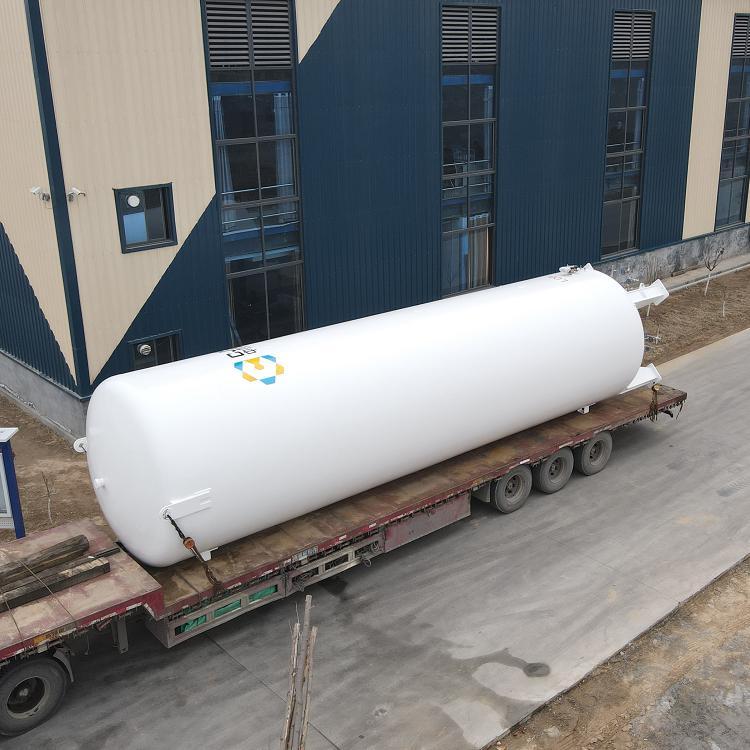
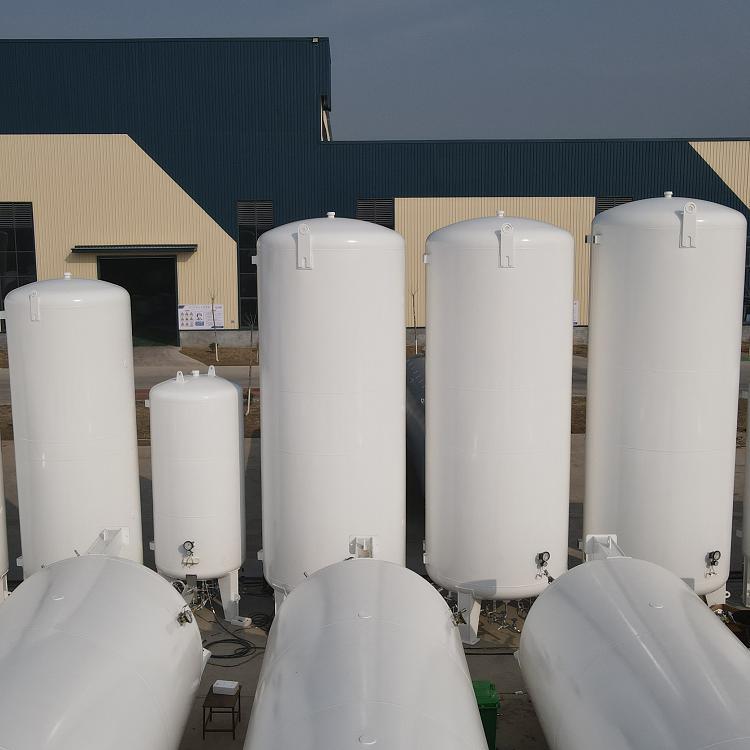


















Shandong Zhongjie Special Equipment (formerly Heze Boiler Factory Co., Ltd.) holds an A-grade boiler manufacturing license, A2-grade pressure vessel manufacturing license, A2-grade pressure vessel design license, B-grade boiler installation and GB2, GC2 class pressure pipeline installation licenses, as well as equipment and machinery installation contracting qualifications. It is a member of the China Boiler and Water Treatment Association, the China Chemical Equipment Association, and the council unit of the Shandong Equipment Manufacturing Association. The company has also passed the ISO9001 Quality Management System, ISO14001 Environmental Management System, OHSAS18001 Occupational Health and Safety Management System certifications, and the American ASME/U2 certification.
The installation of the safety valve on the liquid oxygen storage tank is a crucial component that ensures the tank can release pressure promptly in the event of overpressure, thereby protecting the tank and associated equipment. The following are the steps for installing the safety valve on the liquid oxygen storage tank:
Determine the rated pressure of the safety valve: Select an appropriate safety valve based on the design pressure and flow requirements of the liquid oxygen storage tank. Ensure that the rated pressure of the safety valve meets the tank's specifications and complies with relevant safety standards and regulations.
Valve Installation Location: Select a suitable location for installing the safety valve. Typically, the safety valve should be mounted on the top or side of the liquid oxygen tank to allow for timely pressure release in the event of overpressure.
Prepare installation interfaces: Prepare the corresponding interfaces based on the connection method of the safety valve. This may include welding interfaces, threaded interfaces, or flange interfaces, etc. Ensure the sealing and firmness of the connections.
Install the safety valve: Mount the safety valve onto the prepared interface. Follow the installation instructions for the safety valve to ensure proper connection and tightening.
Adjustment and Testing: After installation, adjust and test according to the safety valve requirements. Ensure the opening and closing pressures of the safety valve meet the design specifications, and conduct a leakage test to ensure sealing.
Connect discharge piping: The discharge piping of the safety valve should be properly connected to the outlet of the safety valve. The discharge piping should have sufficient diameter and flow capacity to ensure effective discharge of overpressure gas when the safety valve is activated.
Identification and Record Keeping: Label safety valves and discharge pipes with relevant information such as rated pressure, flow rate, and installation date. Additionally, document the installation details and test results of the safety valves for future reference and maintenance.
When installing the safety valve on the liquid oxygen storage tank, it is essential to follow the relevant safety regulations and operation guidelines. If you lack the necessary experience and knowledge, it is recommended to seek assistance and guidance from experts to ensure the correct installation and reliable operation of the safety valve.
The oxygen filling process for liquid oxygen tanks must adhere to specific operational procedures and safety measures. Below are the steps for filling a liquid oxygen tank:
Preparation: Ensure that the storage tanks and oxygen-filling equipment are in good working condition, check the tightness of the tanks and the proper functioning of the safety valves.
Connect equipment: Link the oxygenation equipment to the storage tank, ensuring the connection is sealed reliably.
Prepare liquid oxygen: Transfer liquid oxygen from the storage container to the oxygen storage tank of the oxygen-filling equipment. During the transfer, be cautious to avoid any leakage or contact with the liquid oxygen.
Oxygen Filling Operation: Open the valve of the oxygen filling equipment and fill liquid oxygen from the storage tank into the storage tank. During the filling process, control the filling speed and pressure to avoid excessive pressure and temperature increase in the storage tank.
Monitoring and Control: During the aeration process, the tank's pressure and temperature must be monitored to ensure they remain within safe limits. In case of any anomalies, aeration should be stopped immediately and appropriate actions taken.
Oxygen Filling Completed: Close the valve of the oxygen filling equipment and cease the filling operation once the tank reaches the required oxygen level or pressure.
Safety Handling: After oxygenation is complete, safety handling is required, including closing relevant valves and emptying any remaining liquid oxygen from the oxygenation equipment.
Note that liquid oxygen is highly oxidizing and flammable; the oxygen filling process must strictly adhere to relevant safety operational procedures and standards. Operators should receive training and strictly follow the operational procedures and safety measures to ensure the safety and reliability of the oxygen filling process.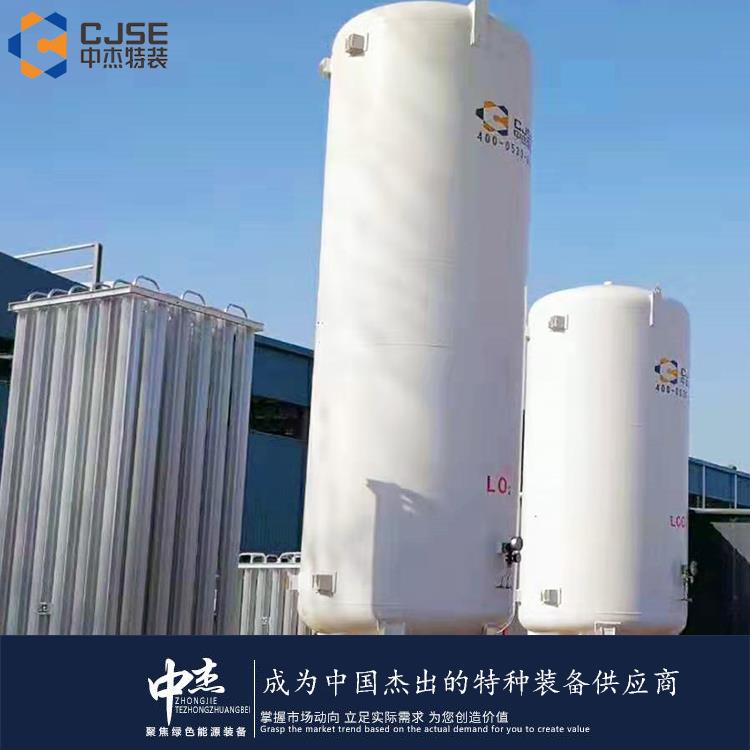
Oxygen storage tanks and liquid oxygen storage tanks are devices used for storing oxygen, but they have some distinctions: Storage Form: Oxygen storage tanks are typically used for storing gaseous oxygen, while liquid oxygen storage tanks are for storing liquid oxygen. Oxygen is in a gaseous state at room temperature but is cooled to a liquid state at low temperatures for more efficient storage and use. Storage Pressure: Oxygen storage tanks usually store high-pressure oxygen, with pressures around 200-300 bar. Liquid oxygen storage tanks store liquid oxygen at lower pressures, generally around 2-5 bar. Storage Capacity: Oxygen storage tanks usually have smaller capacities, suitable for personal or small-scale use. Liquid oxygen storage tanks have larger capacities, suitable for industrial or large-scale use. Storage Method: Oxygen storage tanks store oxygen in a gaseous form, via compressed gas storage. Liquid oxygen storage tanks store oxygen in a liquid form, converting it to a liquid by cooling it below its boiling point. Safety Requirements: Due to the high oxidizing nature of liquid oxygen, liquid oxygen storage tanks require stricter safety requirements in design and use. They typically need to have good thermal insulation, leak control, and fire prevention measures to ensure safe operation. It is important to note that the specific design and specifications of oxygen storage tanks and liquid oxygen storage tanks may vary depending on different regions and application sites. When using these tanks, it is necessary to follow applicable regulations, standards, and safety guidelines, and to cooperate with local regulatory authorities and personnel to ensure the safety and reliability of the tanks.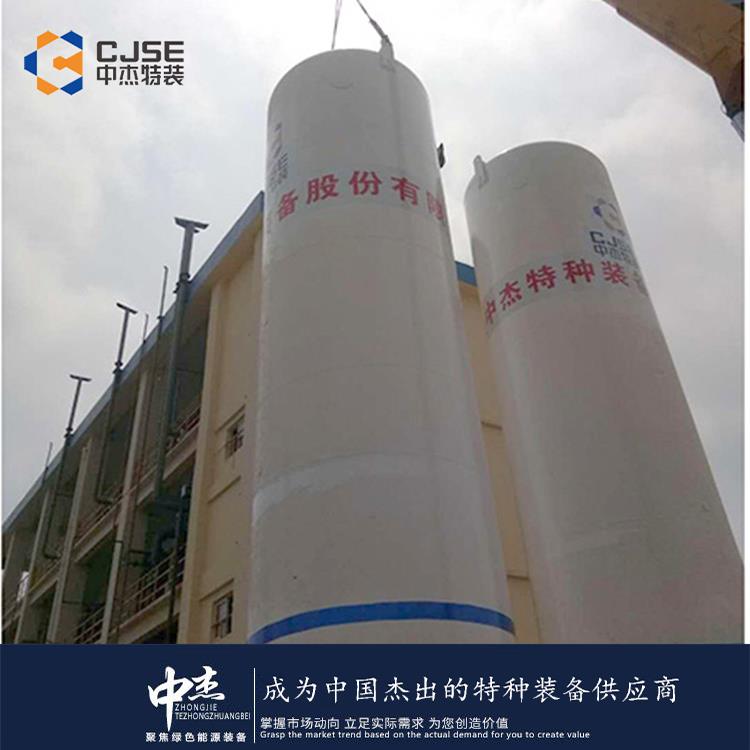
A water pressure test for liquid nitrogen storage tanks is a common testing method used to assess the tank's sealing and pressure resistance. The following are general steps for the water pressure test of liquid nitrogen storage tanks:
Preparation: Ensure the tank is clean inside and that the gas and liquid are drained from the tank. Check that the tank's sealing and safety devices are functioning properly.
Fill with water: Fill the interior of the tank with water, ensuring the water level is above the low water line. Use a pump or other appropriate methods for filling.
Apply Pressure: Gradually increase the water pressure using a pressure pump or other pressure source until the predetermined test pressure is reached. The test pressure is typically 1.1 times the design working pressure of the tank.
Pressure Maintenance: After reaching the test pressure, maintain it for a period (usually 30 minutes to 1 hour), and observe for any abnormal conditions such as leakage or deformation in the tank.
Pressure Relief: Gradually release pressure to drain water from the tank until it is completely empty.
Inspection and Evaluation: Check the tank's surface and interior for leaks, deformation, or other damage. Evaluate test results to ensure the tank meets design and safety standards.
需要注意的是,液氮储罐水压试验需要由人员进行操作,并遵循相关的安全操作规程。在进行测试前,应仔细阅读和遵守储罐制造商提供的操作指南和安全注意事项。
Our company attaches great importance to technological innovation and research and development. We have one municipal enterprise technology center in Heze City, equipped with testing facilities for non-destructive testing, physical and chemical testing, welding testing, hydrostatic testing, and more. We possess over 600 units of various equipment such as CNC machine tools, X-ray flaw detectors, digital ultrasonic flaw detectors, mechanical property testing machines, chemical analyzers, spectrometers, tensile testing machines, plasma welding machines, and others. Our key products and technologies, including temperature-pressure vessel welding, biomass boiler emission reduction, and waste heat recovery, have successively been selected for multiple Shandong Provincial Department of Industry and Information Technology science and technology projects, Shandong Provincial key projects, and Heze City innovative and excellent projects. We have累计 obtained 27 authorized utility models, 16 authorized inventions, participated in drafting 2 standards, 2 industry standards, and registered 15 trademarks. Our technical team, in collaboration with Professor Li Yajiang of Shandong University, has developed deep cryogenic container processing technology using the international plasma arc + filler wire argon arc welding (PAW-GTAW) technique, which has been appraised as internationally competitive at the provincial level. Choose Zhongjietech for a partnership that will create brilliance together!
WeChat Official Account

Scan to follow Official Account



















