


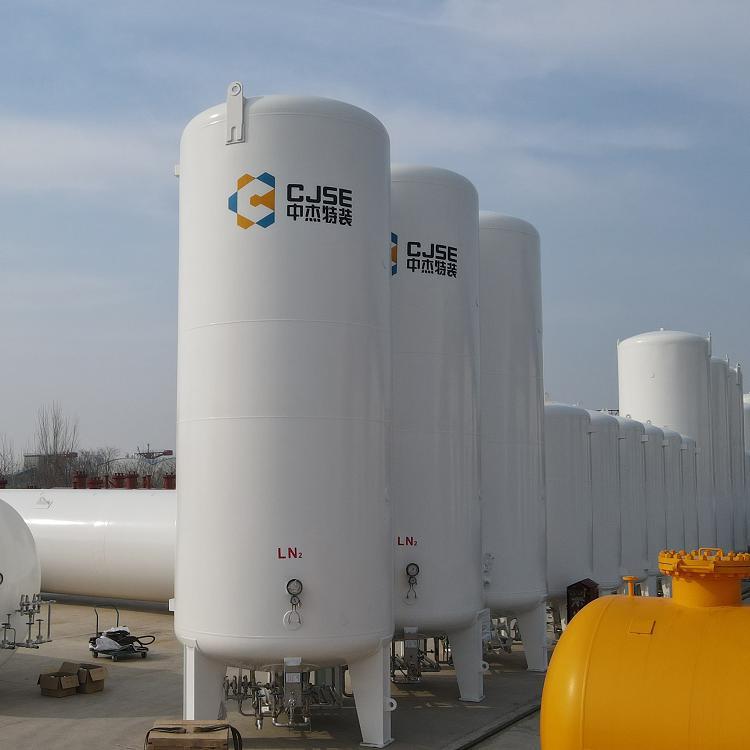

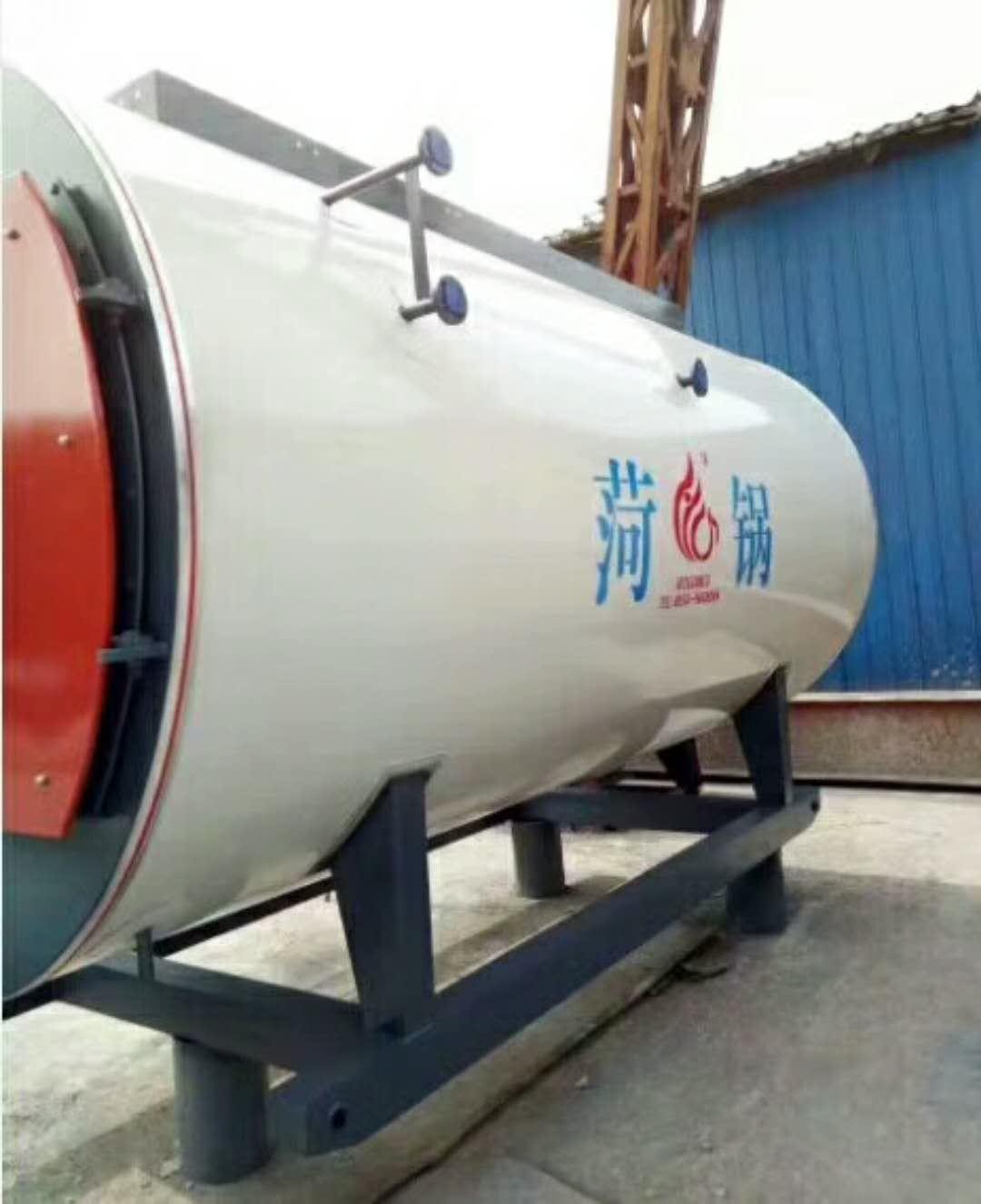


















Shandong Zhongjie Special Equipment's main products include: fuel (gas) boilers, organic heat carrier boilers, biomass boilers, waste heat recovery boilers, and other boiler products; vacuum insulation cryogenic pressure vessels such as LNG tanks, oxygen-nitrogenargon tanks, and CO2 tanks; pressure vessel products such as denitrification engineering equipment, heat storage equipment, and complete chemical equipment sets; central air conditioning and HVAC equipment such as ground (water) source heat pumps, air source units, water-cooled screw units, and air-cooled modular units. Planned products include large-scale energy centers, LNG transport vehicles, LNG tank containers, and other green energy equipment.
Liquid nitrogen storage tanks are used for storing and transporting liquid nitrogen. To ensure safe operation, here are some common operational protection procedures for liquid nitrogen storage tanks:
Tank Installation: Tanks should be installed on a solid and level foundation, away from fire sources and flammable materials. Good ventilation around the tank is essential to prevent gas accumulation. Maintain a safe distance from other equipment and buildings.
Liquid Nitrogen Filling: Use appropriate liquid nitrogen transfer equipment when filling to avoid direct contact with liquid nitrogen. Pay attention to controlling the flow and pressure of liquid nitrogen during the filling process to prevent over-filling and excessive pressure in the storage tank.
Tank Pressure Control: Tanks should be equipped with pressure control devices to ensure internal tank pressure remains within safe limits. Regularly inspect and maintain these devices to ensure proper functioning.
Leak Detection and Alarm Systems: Storage tanks should be equipped with leak detection and alarm systems to promptly detect and alert of any leaks. Regularly inspect and maintain the leak detection equipment to ensure proper functioning.
Fire and Explosion Prevention Measures: A fire-resistant isolation zone should be established around the storage tank, keeping it away from fire sources and flammable materials. The tank itself should implement fire and explosion prevention measures, such as fire-resistant coatings and explosion-proof devices, to prevent fires and explosions.
Regular Inspections and Maintenance: Conduct regular inspections of the tank's exterior, valves, and connections to ensure they are intact and undamaged. Regularly perform leak detection and pressure tests to ensure the tank's safety performance meets requirements.
Safety Training and Awareness Enhancement: Conduct safety training for operators to enhance their awareness and ability to handle liquid nitrogen tanks safely. Regularly hold safety training and drills to respond to emergencies.
Manage records and documents: Establish comprehensive management records and documentation, including tank usage, inspection logs, maintenance records, etc. Regularly review and update the management records to ensure safe management and maintenance of the tanks.
Note that the above are some common protection procedures, which may vary depending on the type of tank and application. When using liquid nitrogen tanks, operate according to relevant specifications and standards, and consult with experts to ensure safety and effectiveness.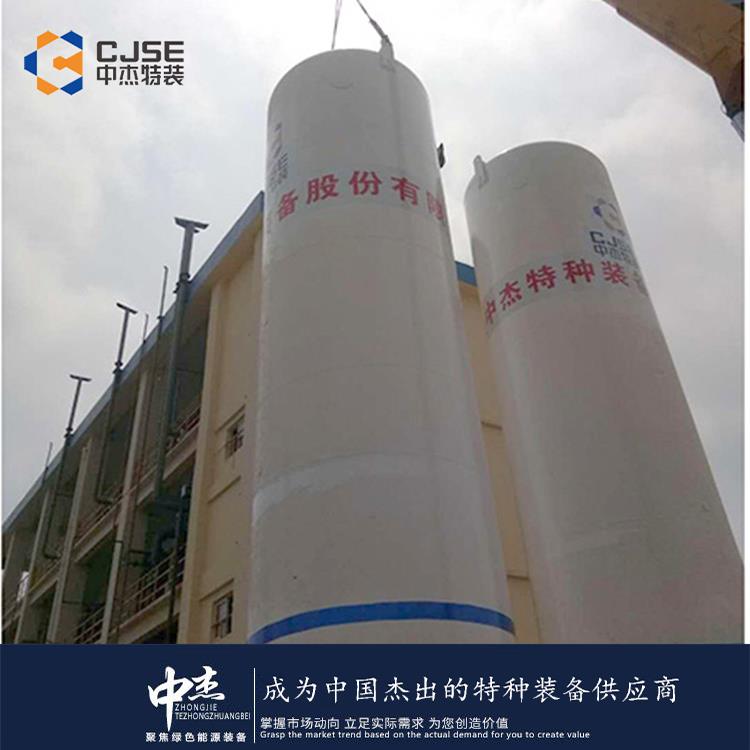
The safe placement of liquid oxygen tanks is a crucial measure to ensure they do not pose a danger to the surrounding environment and personnel during use. The following are the safety requirements for the placement of liquid oxygen tanks:
Safety Distance: Liquid oxygen storage tanks should maintain a certain distance from other buildings and equipment. This is to ensure effective control and minimize the impact on the surrounding environment in the event of a tank leak or fire.
Fire and explosion prevention measures: Liquid oxygen tanks should be placed in fire-resistant areas, away from open flames, high-temperature sources, and flammable materials. The surrounding area should be equipped with fire and explosion prevention facilities, such as fire extinguishers and foam sprinkler systems, to address potential fire risks.
Level placement: Liquid oxygen tanks should be placed on a solid, flat foundation to ensure stability. The bottom of the tank should make full contact with the ground to prevent the tank from tilting or rocking.
Ventilation Requirements: Liquid oxygen tanks should be placed in well-ventilated areas to ensure the normal circulation of gas emissions and oxygen supply. There should be no obstructions around the tank that hinder gas flow.
Labeling and Warnings: Oxygen liquid storage tanks should be clearly labeled with information such as the stored medium, capacity, and pressure. Warning signs and safety cautions should be posted in the surrounding area to alert personnel to the presence and potential hazards of the oxygen liquid tank.
Regular inspections and maintenance: Liquid oxygen tanks should be regularly inspected and maintained, including checking the tank's appearance, sealing, and corrosion prevention measures. Any issues found should be addressed promptly by repairing or replacing the tank to ensure proper operation and safety.
It's important to note that the safety requirements for the placement of liquid oxygen tanks may vary by region and industry. When positioning liquid oxygen tanks, adhere to relevant regulations, standards, and safety protocols, and establish appropriate safety measures based on the specific situation. If you're unfamiliar with or have questions about the safety placement requirements, it's advisable to consult with experts or relevant organizations.
Oxygen storage tanks and liquid oxygen storage tanks are equipment used for oxygen storage, but they have some differences: Storage Form: Oxygen storage tanks are typically used for storing gaseous oxygen, while liquid oxygen storage tanks are for storing liquid oxygen. Oxygen is in a gaseous state at room temperature, but it is cooled to a liquid state at low temperatures for more efficient storage and use. Storage Pressure: Oxygen storage tanks usually store high-pressure oxygen, with pressures around 200-300 bar. Liquid oxygen storage tanks store liquid oxygen at lower pressures, generally around 2-5 bar. Storage Capacity: Oxygen storage tanks usually have smaller capacities, suitable for personal or small-scale use. Liquid oxygen storage tanks have larger capacities, suitable for industrial or large-scale applications. Storage Method: Oxygen storage tanks store oxygen in a gaseous form, through compressed gas storage. Liquid oxygen storage tanks store oxygen in a liquid form, converting it to a liquid by cooling it to temperatures below its boiling point. Safety Requirements: Due to the highly oxidizing nature of liquid oxygen, liquid oxygen storage tanks require stricter safety requirements during design and use. Liquid oxygen storage tanks usually need to have good thermal insulation, leak control, and fire protection measures to ensure safe use. It is important to note that the specific design and specifications of oxygen storage tanks and liquid oxygen storage tanks may vary depending on different regions and application sites. When using these tanks, it is necessary to follow applicable regulations, standards, and safety guidelines, and cooperate with local regulatory agencies and personnel to ensure the safety and reliability of the tanks.
A liquid oxygen storage tank is a device used for storing liquid oxygen. Liquid oxygen is the liquid form of oxygen that is cooled below its boiling point and is commonly used in various fields such as medical, industrial production, and equipment. Liquid oxygen storage tanks are typically made of high-strength materials like stainless steel to ensure they can withstand the low temperatures and high pressures of liquid oxygen. The interior of the tank usually has an insulating layer to minimize evaporation of the liquid oxygen and maintain its低温 state. The design and manufacturing of liquid oxygen storage tanks must consider safety and reliability to prevent leaks and explosions. Strict operational procedures and safety standards must be followed when using liquid oxygen storage tanks to ensure the safety of personnel and equipment. The development and manufacturing of liquid oxygen storage tanks are carried out by engineers and technical teams, involving knowledge and technology from various fields such as materials science, mechanical engineering, and chemical engineering. Different manufacturers may employ different design and manufacturing methods to meet the needs and application scenarios of various users.
Our company attaches great importance to technological innovation and R&D design. We have one municipal-level enterprise technology center in Heze City, equipped with non-destructive testing, physical and chemical testing, welding testing, hydrostatic testing, and other testing facilities. We have over 600 types of equipment, including CNC machine tools, X-ray flaw detectors, digital ultrasonic flaw detectors, mechanical property testing machines, chemical analyzers, spectrometers, tensile testing machines, plasma welding machines, and more. The key products we have developed, such as temperature and pressure vessel welding, biomass boiler emission reduction, and waste heat utilization, have successively been included in multiple Shandong Provincial Department of Industry and Information Technology science and technology innovation projects, Shandong Provincial key projects, and Heze City innovation and excellence projects. We have cumulatively obtained 27 authorized utility models, 16 authorized inventions, participated in drafting 2 standards, 2 industry standards, and registered 15 trademarks. Our technical team, in collaboration with Professor Yajiang Li from Shandong University, has developed deep cryogenic container processing technology using the international plasma arc + wire filling tungsten inert gas arc welding (PAW-GTAW) technique. After provincial-level scientific and technological achievement evaluation, our technology level has reached an international standard in the field of deep cryogenic container manufacturing. Choose Zhongjie Special Equipment, and let's create brilliance together!
WeChat Official Account

Scan to follow Official Account



















