



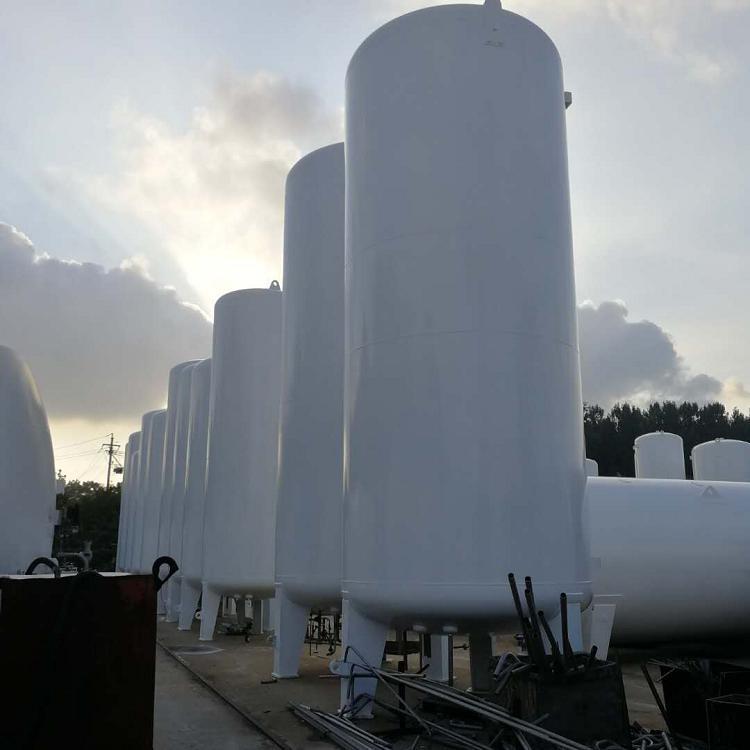
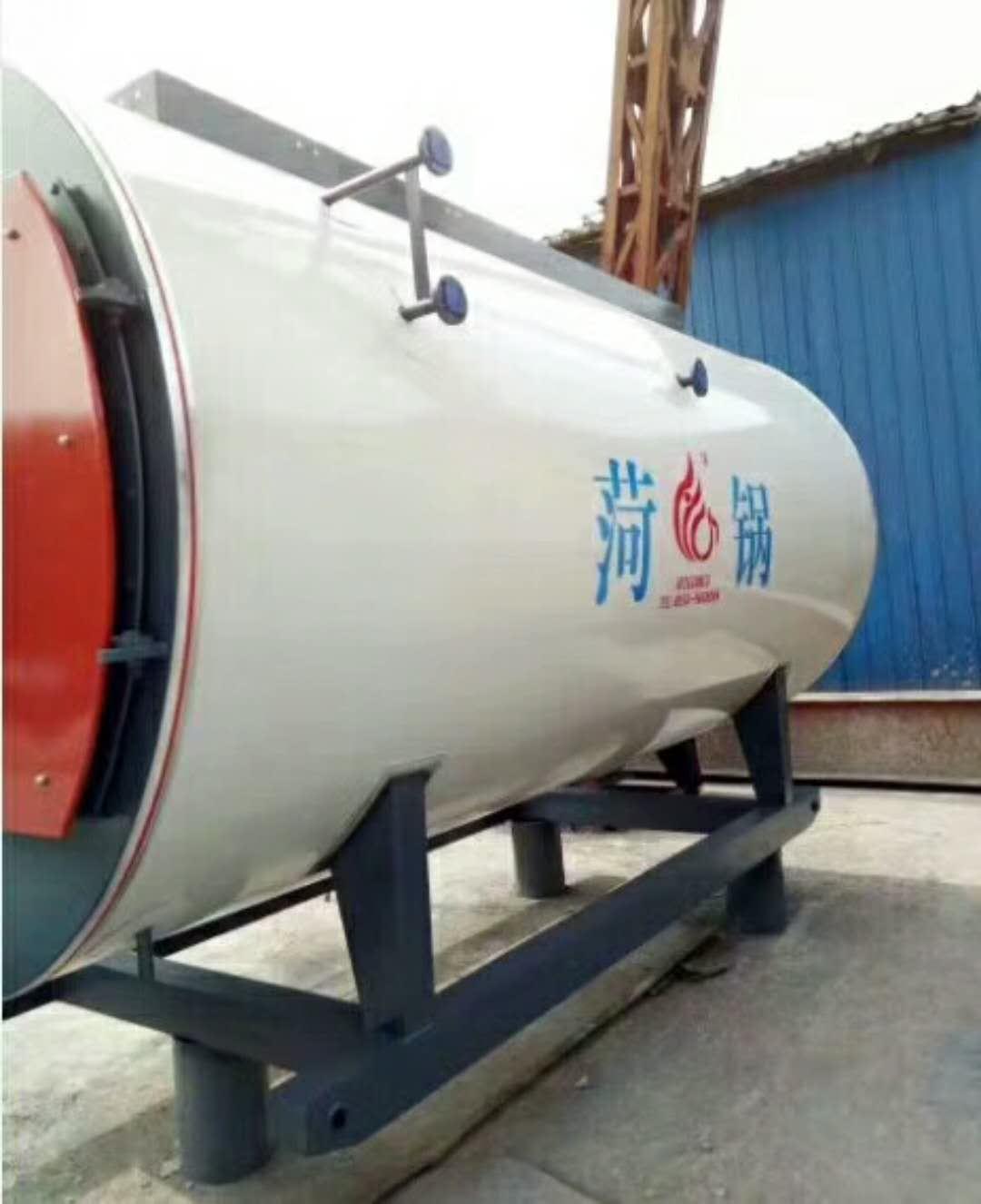


















Shandong Zhongjie Special Equipment's main products include: fuel (gas) boilers, organic heat carrier boilers, biomass boilers, waste heat boilers, and other boiler products; vacuum insulation cryogenic pressure vessels such as LNG tanks, oxygen/nitrogen/argon tanks, and CO2 tanks; pressure vessel products like denitrification engineering equipment, heat storage and energy storage equipment, and complete chemical equipment sets; central air conditioning and HVAC equipment such as ground (water) source heat pumps, air source units, water-cooled screw units, and air-cooled modular units. Planned products include large-scale energy centers, LNG transport vehicles, LNG tank containers, and other green energy equipment.
Low-temperature CO2 storage tanks are equipment used for storing and transporting low-temperature liquid CO2. Here are some key points about low-temperature CO2 storage tanks: Tank Structure: These tanks typically feature a double-walled design, with the inner wall for storing liquid CO2 and the outer wall for insulation. The interior is usually made of stainless steel or aluminum alloy, offering excellent corrosion resistance. Storage Temperature: The storage temperature for low-temperature CO2 tanks usually ranges from -40°C to -196°C, depending on specific application requirements. Temperature control is crucial for maintaining the stability and safety of the liquid CO2. Storage Capacity: The capacity of low-temperature CO2 storage tanks can be selected based on actual needs, ranging from a few thousand to tens of thousands of liters. The capacity choice should consider storage requirements, supply frequency, and spatial constraints. Safety Protection: Low-temperature CO2 storage tanks require safety protection devices such as pressure relief valves, pressure sensors, and temperature sensors to ensure internal pressure and temperature remain within safe limits. Transportation Methods: These tanks can be transported via road, rail, or ship. Proper insulation measures must be taken during transportation to maintain the low-temperature state of the liquid CO2 inside. Safe Operation: The operation of low-temperature CO2 storage tanks requires training and adherence to safety operating procedures. Operators should be familiar with the tank's characteristics and safety considerations to ensure safe and effective operation. Regular Inspections and Maintenance: Regular inspections and maintenance are necessary for low-temperature CO2 storage tanks, including visual inspections, valve and pipeline checks, and pressure relief device checks. Regular maintenance ensures the tank operates normally and safely. The above points cover some knowledge about low-temperature CO2 storage tanks. When using and operating these tanks, it is essential to follow relevant safety regulations and standards, and consult with experts to ensure safety and effectiveness.
Prior to using the CO2 storage tank, the following preparatory steps are required:
- Inspect the tank: Check for any damage, corrosion, or oil leakage on the tank's exterior, ensuring its structural integrity and safety.
- Check valves and pipes: Verify that the tank's inlets and outlets, along with pipe connections, are functioning normally, without leaks or loose fittings. Ensure valve operation is smooth and reliable.
- Inspect safety equipment: Confirm that safety components like relief valves, pressure sensors, and temperature sensors are operating correctly. Validate that their set parameters meet requirements.
- Examine the level measurement system: Check the accuracy and reliability of the level measurement system. Calibrate the level sensors to ensure precise level measurements.
- Inspect pressure relief devices: Verify that the tank's pressure relief devices (such as relief valves) are functioning properly. Confirm that the set pressure of the relief devices complies with specifications.
- Check gas quality: Ensure the CO2 gas in the tank meets quality standards, with no impurities or contaminants.
- Inspect fire protection equipment: Ensure that fire protection equipment around the tank is intact and that fire extinguishers, sprinkler systems, etc., are functioning correctly.
- Train operators: Operators should receive training on the characteristics, operation requirements, and safety measures of the CO2 storage tank. Training should include safe tank operation, leak handling, and emergency procedures.
- These preparatory steps ensure the CO2 storage tank is in good condition before use and guarantees safety and reliability of operations. Follow relevant safety operating procedures during preparation, and have qualified personnel perform the tasks.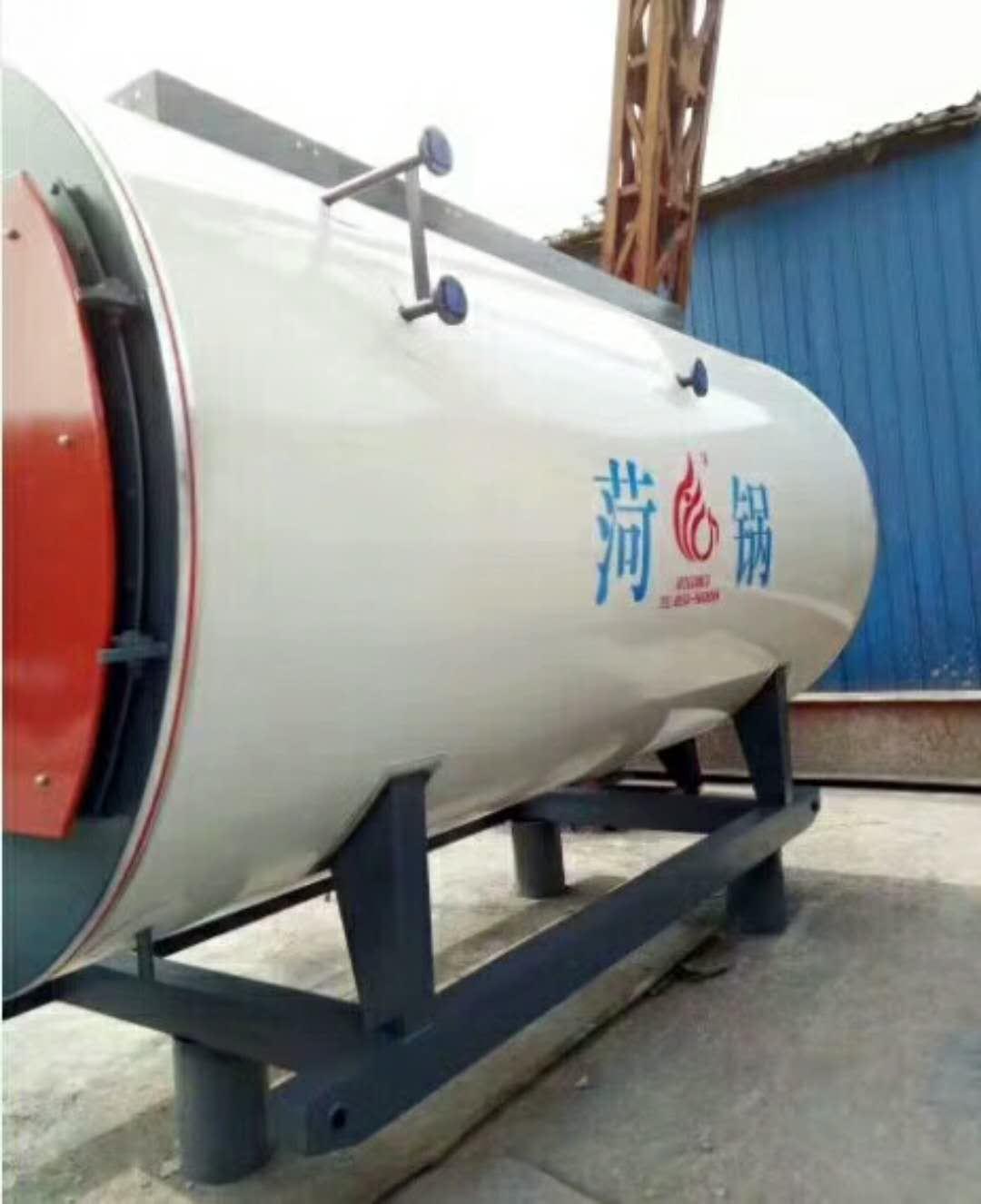
Low Temperature Carbon Dioxide Storage Tank Related Knowledge 1, Structure of Low Temperature Carbon Dioxide Storage Tank: The storage tank is typically a double-layered cylindrical structure, with the inner cylinder made of 6MnDR alloy steel and the outer cylinder of Q245R or Q345R pressure vessel steel plate. The piping is made of austenitic stainless steel, and the insulation layer is filled with high-vacuum sintered sand or wrapped with multiple layers for thermal insulation. The storage tank is equipped with valves for operation, arranged for ease of use, and includes a pressure gauge and level indicator for monitoring internal pressure and liquid level.
Low Temperature Carbon Dioxide Storage Tank 2, Key Features: (1) The tank is fitted with a liquid filling connection for tanker trucks, providing liquid to vaporizers, tankers, and pumps. (2) Both the inner and outer cylinders are equipped with safety devices to ensure safe operation. (3) The insulation material of the tank is specially treated to extend the vacuum life, and it is also equipped with a vacuum gauge for measuring the vacuum degree of the insulation layer as needed.
3, Transportation of Low Temperature Carbon Dioxide Storage Tank: (1) During road transportation, the tank should be securely attached to the vehicle, traveling at moderate speeds, and is prohibited from colliding with other objects. (2) After arrival, the unloading personnel should work with the equipment supervisor to develop a scientific and reasonable unloading plan.
4, Installation of Low Temperature Carbon Dioxide Storage Tank: (1) Upon arrival at the installation site, the tank can be positioned when installation conditions are met. During the installation process, collision and striking are prohibited, and special attention should be given to the explosion-proof equipment of the outer cylinder and the vacuum valve, which should not be touched. (2) Perform a gas-tightness test on the inner cylinder system of the tank using nitrogen to the working pressure, and after checking that valves, pipes, flanges, etc., have no leaks, the installation is complete. (3) The installation dimensions are as specified in the supply materials. When considering liquid filling and emptying with tanker trucks, the vehicle's travel path should be taken into account.
When planning CO2 storage tanks, the following requirements should be considered:
- Safety Distance: Tanks should maintain adequate safety distances from surrounding buildings, equipment, and personnel to prevent injuries and losses in case of accidental incidents. Specific safety distance requirements can be stipulated according to local regulations and standards.
- Tank Capacity: Determine the tank's capacity based on actual needs and usage. The choice of capacity should consider factors such as CO2 usage, storage cycle, and supply demand.
- Tank Layout: The layout should facilitate operation and maintenance while meeting safety and environmental protection requirements. There should be sufficient spacing between tanks for ease of operation and maintenance.
- Tank Material: Select appropriate materials for tank construction to ensure corrosion and pressure resistance. Common materials include carbon steel and stainless steel.
- Safety Equipment: Tanks should be equipped with necessary safety equipment, such as safety valves, pressure and temperature sensors, to ensure safe operation.
- Leak Protection: Measures should be taken to prevent CO2 leaks, such as sealed valves and leak detection systems. Corresponding leak handling measures and emergency response plans should also be in place.
- Environmental Impact Assessment: An environmental impact assessment should be conducted when planning tanks to evaluate their impact on the surrounding environment and implement corresponding measures for environmental protection.
- Regulations and Standards: Compliance with local regulations and standards, including building codes, safety specifications, and environmental protection requirements, is essential when planning tanks.
It is important to note that planning CO2 storage tanks should be carried out by engineers or relevant institutions to ensure compliance with safety and environmental protection requirements. Consulting with local authorities for advice and guidance is also necessary.
Our company places great emphasis on technological innovation and research and development, boasting one municipal-level enterprise technology center in Heze City. We have established testing facilities for non-destructive testing, physical and chemical testing, welding testing, hydrostatic testing, and more. We are equipped with over 600 pieces of various instruments and equipment, including CNC machine tools, X-ray flaw detectors, digital ultrasonic flaw detectors, mechanical property testing machines, chemical analyzers, spectrometers, tensile testing machines, plasma welding machines, and others. The key products and technologies we have developed, such as welding for temperature and pressure vessels, biomass boiler emission reduction, and waste heat utilization, have successively been selected for multiple Shandong Provincial Department of Industry and Information Technology science and technology innovation projects, key projects in Shandong Province, and Heze City innovation and excellence projects. We have accumulated a total of 27 authorized utility models, 16 authorized inventions, participated in drafting 2 standards, 2 industry standards, and registered 15 trademarks. Our technical team, in collaboration with Professor Yajiang Li of Shandong University, has developed deep cryogenic container processing technology using the international plasma arc + wire filling argon arc welding (PAW-GTAW) technology. After provincial-level scientific and technological achievement identification, the technology level has reached an international standard in the field of deep cryogenic container manufacturing. Choose Zhongjie Special Equipment, and let's create brilliance together!
WeChat Official Account

Scan to follow Official Account



















