


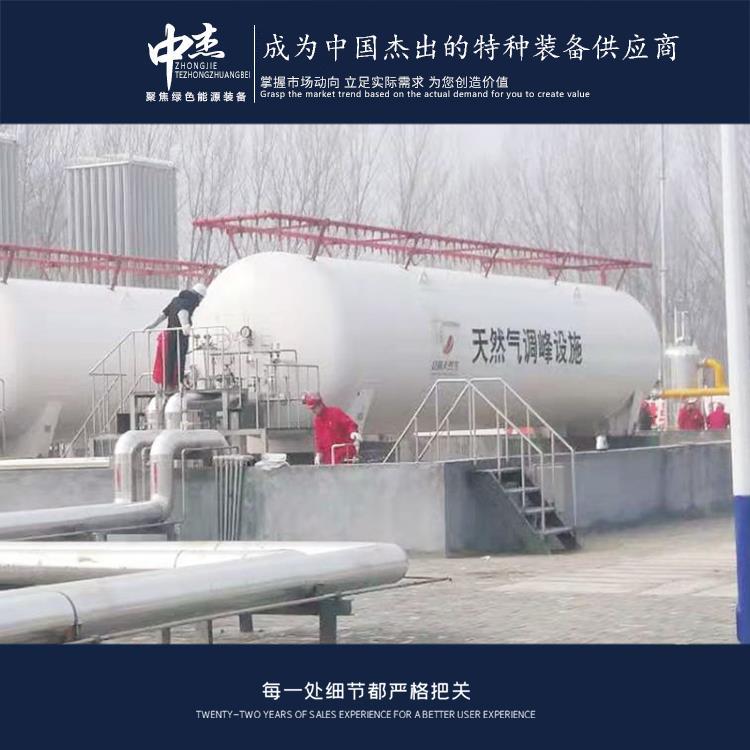

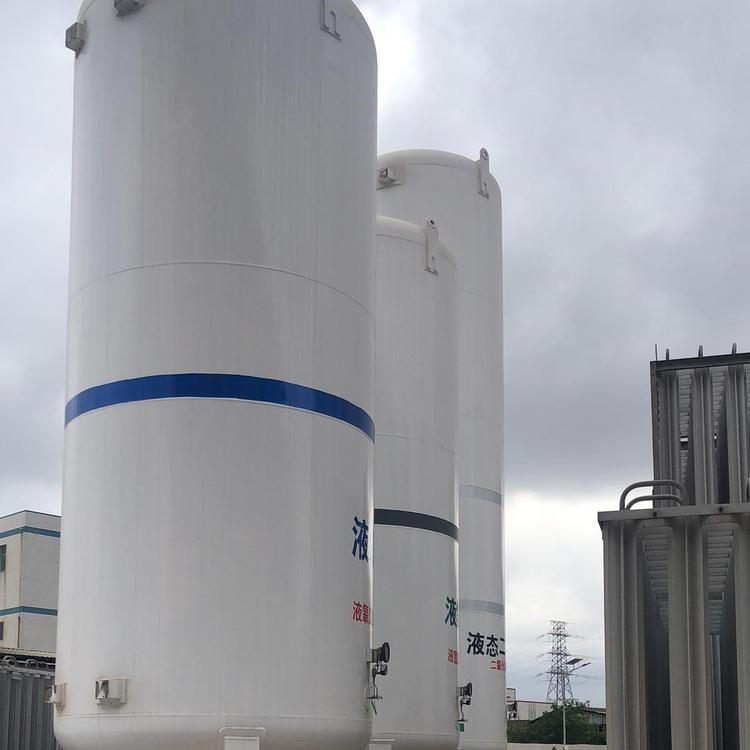
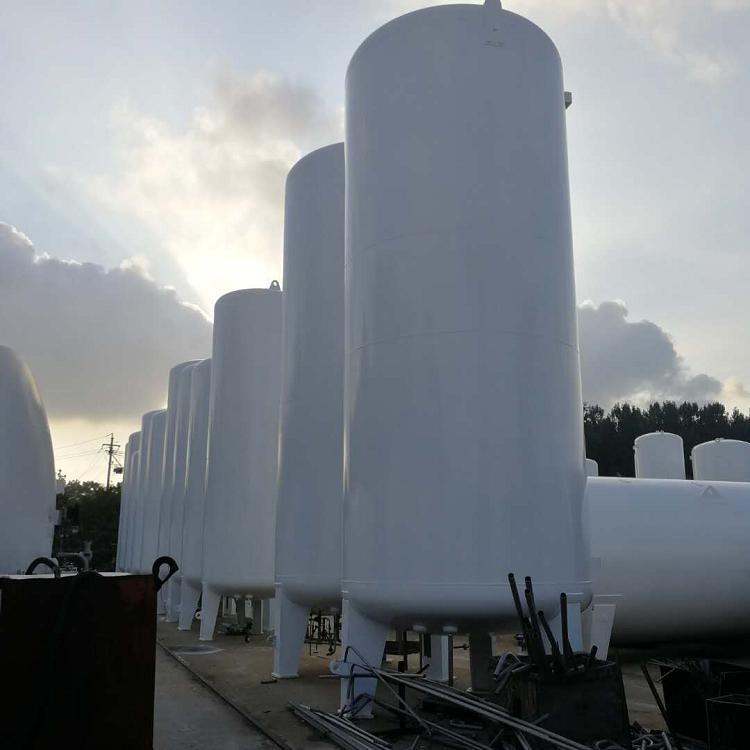


















Shandong Zhongjie Special Equipment (formerly Heze Boiler Factory Co., Ltd.) holds an A-grade boiler manufacturing license, an A2-grade pressure vessel manufacturing license, an A2-grade pressure vessel design license, a B-grade boiler installation license, and GB2/Class, GC2/Class pressure pipeline installation licenses, as well as a mechanical and electrical equipment installation contracting qualification. It is a member of the China Boiler and Water Treatment Association, the China Chemical Equipment Association, and the理事 member of the Shandong Equipment Manufacturing Association. The company has also passed the ISO9001 Quality Management System, ISO14001 Environmental Management System, OHSAS18001 Occupational Health and Safety Management System certifications, and the American ASME/U2 certification.
Water pressure testing of CO2 storage tanks is a common quality inspection method used to verify the tank's sealing and pressure resistance. Below are the general steps for conducting water pressure testing on CO2 storage tanks:
Preparation: Ensure the tank interior is clean and the tank is empty. Check the tank's valves, pipes, and connections to ensure they are sealed properly.
Filling with Water: Fill the tank with water, using tap water or another clean source. Ensure even water filling to avoid bubbles or dead spots.
Applying Pressure: Use a pressure pump or other pressure device to gradually increase the water pressure until reaching the predetermined test pressure. The test pressure is typically determined based on the tank's design requirements and relevant standards.
Maintaining Pressure: After reaching the test pressure, hold it for a period, usually 15-30 minutes. During this time, observe for any leakage and check if valves and connections are leaking.
Pressure Release: Release the water pressure inside the tank, ensuring a slow and even release to avoid sudden pressure release causing shock.
Inspection and Evaluation: After pressure release, inspect the tank's exterior and interior for any leakage. Evaluate the test results to ensure the tank's sealing and pressure resistance meet the requirements.
It is important to note that when conducting water pressure tests, follow relevant safety operating procedures and standards to ensure safety and reliability during the testing process. Depending on the tank's design and usage requirements, other types of tests can be conducted, such as gas pressure testing, ultrasonic testing, etc., to comprehensively assess the tank's quality and performance. Seek advice and guidance from consulting experts.
Carbon Dioxide Applications in the New Energy Field:
- Carbon Capture and Storage (CCS): This technology reduces carbon dioxide emissions by capturing CO2 from industrial sources and storing it underground, preventing it from entering the atmosphere. It aids in mitigating greenhouse gas emissions and climate change.
- Carbon Utilization: CO2 can be utilized to produce valuable chemicals and fuels. For instance, through catalytic conversion technology, CO2 can be transformed into fuels like ethanol or other chemical raw materials. This carbon utilization technique helps reduce dependence on traditional fossil fuels and promotes sustainable energy development.
- Carbon Dioxide Batteries: Carbon Dioxide batteries are a new battery technology that uses CO2 as the electro material. By converting CO2 into electrical energy, these batteries can serve as a sustainable energy storage solution, contributing to the advancement of electric vehicles and renewable energy.
- Carbon Dioxide Photocatalysis: This technology uses solar energy to convert CO2 into useful chemicals. With the help of photocatalysts, CO2 and water can be transformed into combustible gases or organic compounds, achieving resourceful utilization of CO2.
These applications aim to reduce CO2 emissions, enhance energy efficiency, and promote the development of sustainable energy. However, these technologies are still in continuous development and research, requiring further technical breakthroughs and practical verification.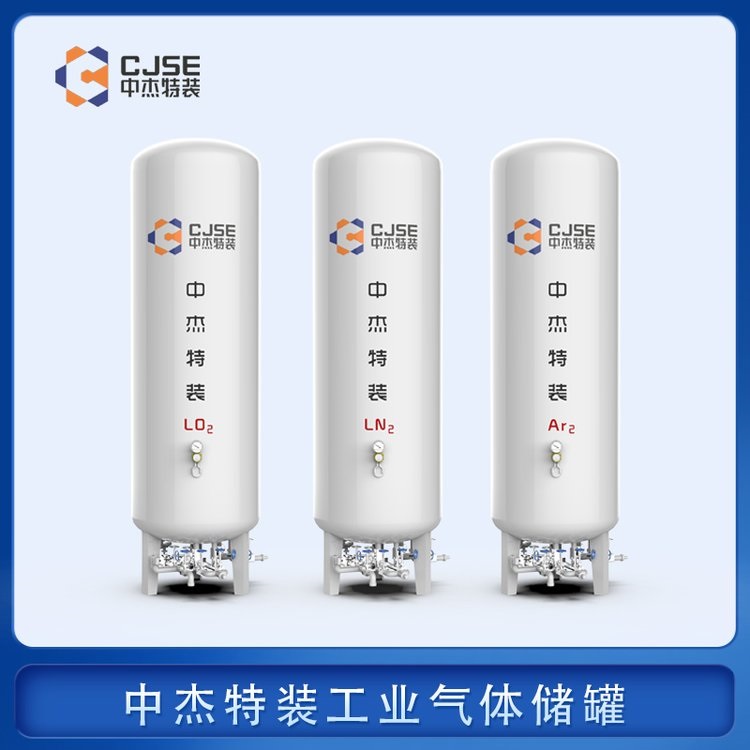
When conducting routine inspections of CO2 storage tanks, follow these steps:
外观检查:Inspect the tank for any visible damage, corrosion, or oil leakage. Pay attention to the tank shell, valves, and pipe connections for any abnormalities.
Valve and Pipe Inspection: Check the tank's inlet and outlet valves and pipe connections for proper operation, leakage, or looseness. Ensure valves are operable and reliable.
Pressure Relief Device Inspection: Verify that the tank's pressure relief devices (such as safety valves) are functioning correctly. Confirm that the set pressure of the pressure relief device meets requirements.
Level Measurement System Inspection: Check the accuracy and reliability of the level measurement system. Calibrate the level sensors to ensure accurate level measurement.
Pressure and Temperature Inspection: Verify that the tank's pressure and temperature sensors are functioning properly. Confirm the accuracy of pressure and temperature measurements.
Safety Equipment Inspection: Check the tank's safety equipment, such as safety valves, pressure sensors, and temperature sensors, for proper operation. Verify that their set parameters meet requirements.
Fire Protection Equipment Inspection: Ensure that fire protection equipment around the tank is intact and check that fire extinguishers, sprinkler systems, etc., are operating correctly.
Liquid and Gas Quality Inspection: Ensure that the quality of CO2 liquid and gas in the tank meets requirements, with no impurities or contaminants.
Documentation and Reporting: Record the date of the inspection, the items inspected, identified issues, and measures taken. Submit inspection reports to relevant departments or management as needed.
The above are general steps for routine inspections of CO2 storage tanks. Specific operations should be tailored to the tank's characteristics and requirements. During inspections, follow relevant safety operation procedures and have trained personnel conduct the operations.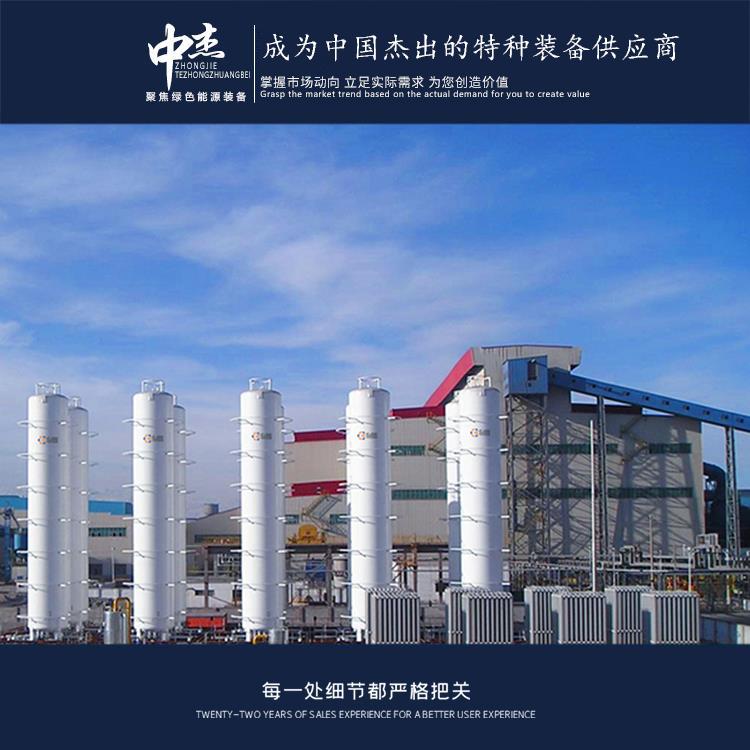
Low Temperature Carbon Dioxide Storage Tank Knowledge
1. Structure of Low Temperature Carbon Dioxide Storage Tanks
Low temperature carbon dioxide storage tanks typically feature a double-walled cylindrical design, with the inner cylinder made of 6MnDR alloy steel and the outer cylinder of Q245R or Q345R pressure vessel steel plate. The piping is made of austenitic stainless steel, and the jacket is filled with high vacuum pearlite sand or insulated with multiple layers. The storage tanks are equipped with valves for operation, which are arranged for ease of use. Pressure gauges and level indicators are also installed for monitoring the internal pressure and liquid level of the tank.
2. Key Features of Low Temperature Carbon Dioxide Storage Tanks
(1) The storage tanks are fitted with couplings for filling tanker trucks, allowing fluid supply to vaporizers, tanker trucks, and pumps.
(2) Both the inner and outer cylinders are equipped with safety devices to ensure safe operation for users.
(3) The insulation material of the storage tanks has been specially treated to provide a longer vacuum life. Additionally, the tanks are equipped with vacuum gauges for measuring the jacket vacuum when necessary.
3. Transportation of Low Temperature Carbon Dioxide Storage Tanks
(1) During road transportation, the storage tank should be securely fastened to the vehicle, traveling at moderate speeds, and collision with other objects is strictly prohibited.
(2) After the storage tank arrives, the unloading personnel should work together with the equipment supervisor to develop a scientific and reasonable unloading plan.
4. Installation of Low Temperature Carbon Dioxide Storage Tanks
(1) Once the storage tank arrives at the installation site, it can be placed when the installation conditions are met. During the installation process, collision and striking are prohibited, and special attention should be given to the explosion-proof equipment on the outer cylinder and the vacuum valve, which must not be touched.
(2) Perform an airtightness test on the inner cylinder system of the storage tank using nitrogen to the working pressure. After checking that valves, pipes, flanges, etc., are free of leaks, the installation is complete.
(3) The installation dimensions of the storage tank are specified in the supply documents. When considering filling and emptying liquids with tanker trucks, the vehicle's travel route should be taken into account.
Shandong Zhongjie Special Equipment, welcome customers to our factory for business discussions.
WeChat Official Account

Scan to follow Official Account



















