


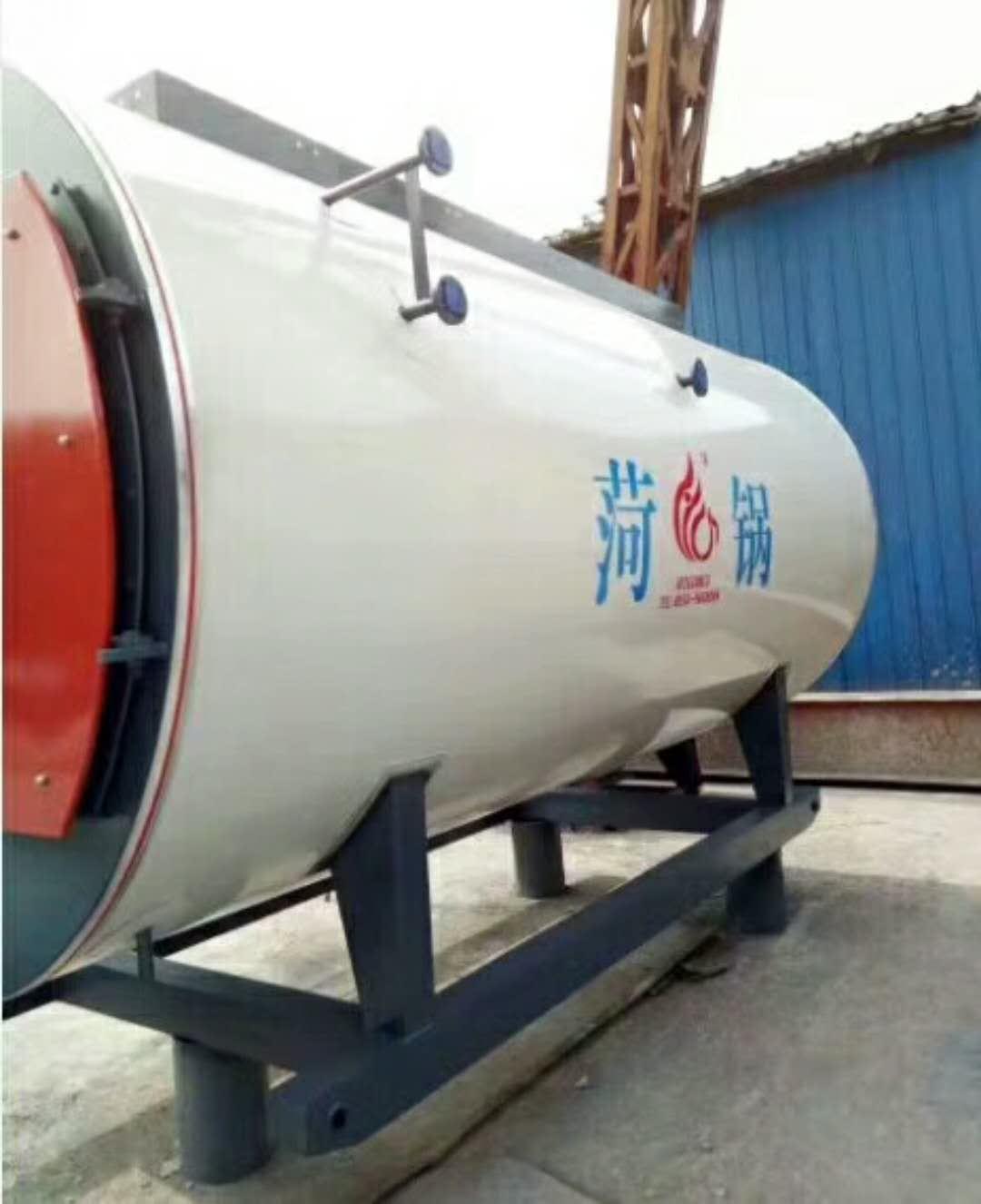

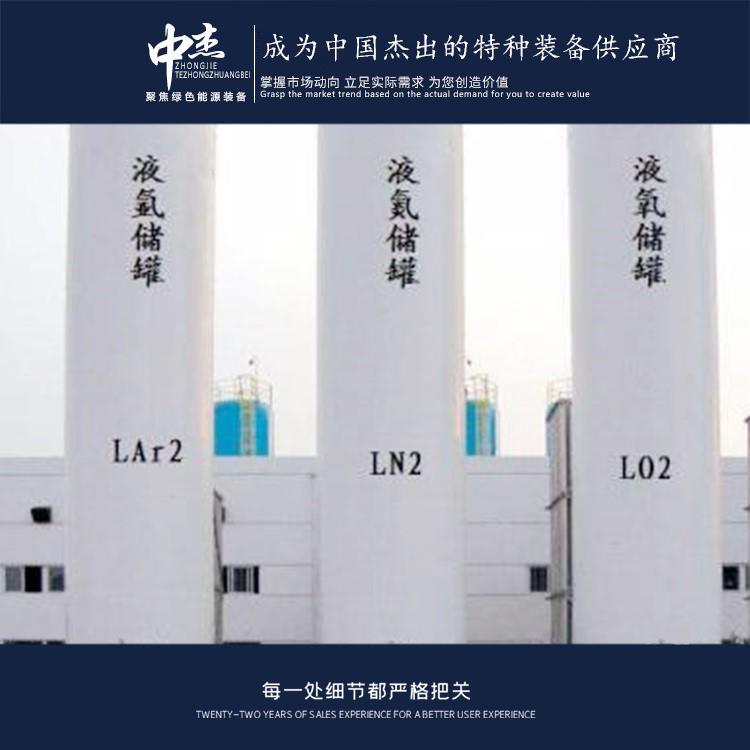
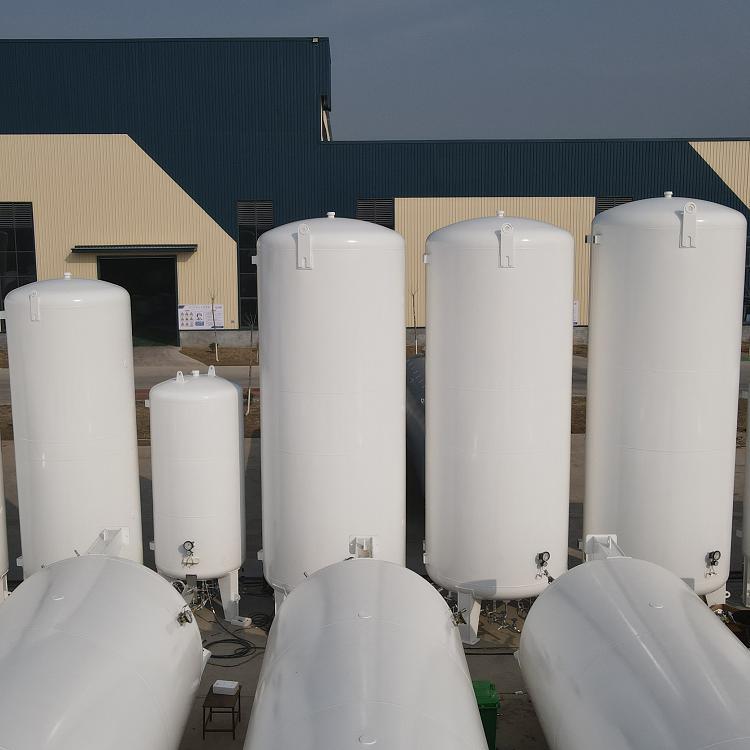


















Shandong Zhongjie Special Equipment's main products include: fuel (gas) boilers, organic heat carrier boilers, biomass boilers, waste heat recovery boilers, and other boiler products; vacuum insulation cryogenic pressure vessels such as LNG tanks, oxygen/nitrogen/argon tanks, and CO2 tanks; pressure vessel products such as denitrification engineering equipment, heat storage and energy storage equipment, and complete chemical equipment; central air conditioning and HVAC equipment such as ground (water) source heat pumps, air source units, water-cooled screw units, and air-cooled modular units. Planned products include large-scale energy centers, LNG transport vehicles, LNG tank containers, and other green energy equipment.
Carbon dioxide storage tanks are equipment used for storing carbon dioxide gas. They are typically made of high-strength materials with sealing capabilities to prevent the leakage of stored carbon dioxide. The design and capacity of the tanks can be adjusted as needed to accommodate various applications. Carbon dioxide storage tanks are widely used in various fields, including industrial production and food processing. In the industrial sector, these tanks are commonly used for storing and supplying carbon dioxide gas for processes such as welding, gas protection, and fire suppression. In the food processing industry, they are used to produce carbonated beverages and frozen foods. In the medical field, carbon dioxide tanks can be used to produce medical gases like breathing gases and anesthetic gases. The development and manufacturing of carbon dioxide storage tanks involve multiple manufacturers and technologies. Different companies may employ various designs and manufacturing processes to meet the diverse needs of users. Moreover, relevant safety standards and regulations must be adhered to ensure the safe operation and use of the tanks.
Carbon dioxide has a wide range of applications in the food freezing industry. Here are some common uses of carbon dioxide in food freezing:
1. Frozen Food Processing: Carbon dioxide is often used in the processing of frozen foods. By exposing food to liquid carbon dioxide, temperatures can be rapidly reduced for quick freezing, which effectively preserves the quality, texture, and nutritional value of the food.
2. Frozen Storage: Carbon dioxide is also employed in the freezing storage of food. During the storage process, food is placed in a low-temperature environment, where the cooling effect of carbon dioxide lowers the temperature below the freezing point, extending the shelf life of the product.
3. Frozen Transportation: Carbon dioxide plays a crucial role in the freezing transportation of food. By utilizing carbon dioxide freezing technology during transportation, the low-temperature state of the food is maintained, preventing quality loss.
4. Frozen Display: In the retail food industry, carbon dioxide is used in frozen display cases. By injecting carbon dioxide gas into the display cases, the low-temperature state of the food is preserved, maintaining freshness and quality while on display.
Compared to traditional freezing techniques, carbon dioxide freezing offers advantages such as faster freezing, better freezing quality, and minimal impact on food quality. However, safety precautions must be taken when using carbon dioxide freezing technology to avoid leaks and potential harm to humans. Therefore, it is essential to follow relevant safety procedures and guidelines when using carbon dioxide for food freezing.
The reasons for not allowing a CO2 storage tank to be left empty for long periods are mainly as follows:
1. Safety Risks: Carbon dioxide is a high-pressure gas that maintains its liquid state only under certain internal pressure. If CO2 is released from the tank into the atmosphere for an extended period, it can cause a decrease in tank pressure, potentially leading to structural failure or explosions, posing safety hazards.
2. Resource Waste: Carbon dioxide is a valuable resource with extensive applications in industries and other sectors. Keeping a CO2 storage tank empty for long durations is wasteful and does not align with sustainable development principles.
3. Environmental Impact: As a greenhouse gas, CO2 contributes to climate change and environmental issues. Prolonged emptying of CO2 storage tanks can increase atmospheric CO2 concentrations, exacerbating these problems.
Therefore, to ensure safety, conserve resources, and protect the environment, CO2 storage tanks should be used and managed in accordance with established procedures and requirements, avoiding prolonged idleness. When CO2 is no longer needed in the tank, appropriate disposal methods such as recycling, reuse, or safe discharge should be employed.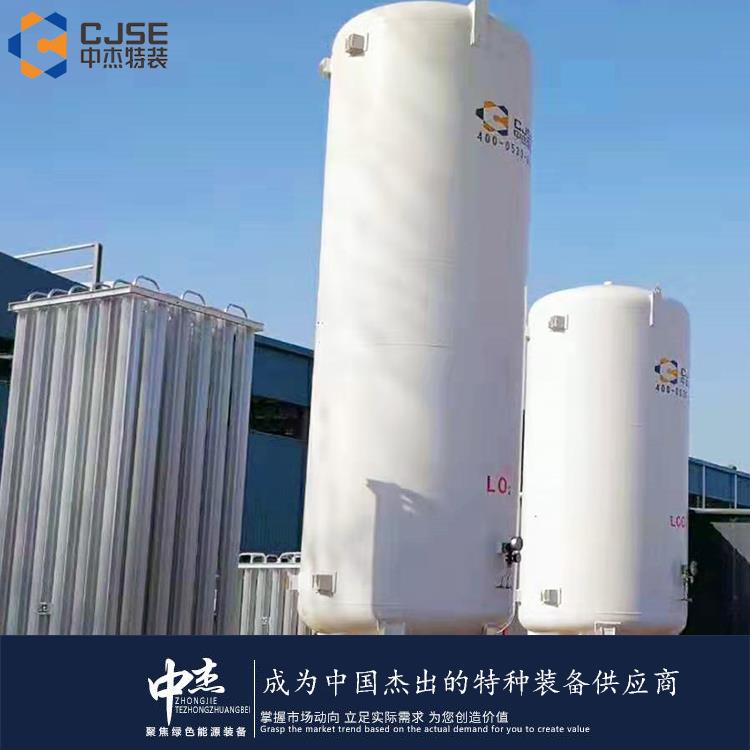
The working principle of a carbon dioxide storage tank involves the compression and liquefaction of carbon dioxide. Here is a brief description of the working principle of a carbon dioxide storage tank: Compression: Carbon dioxide gas is first compressed to a higher pressure by a compressor. This process compresses the gas into a high-pressure state, enabling it to be converted into a liquid. Cooling: The compressed carbon dioxide gas enters a cooler, where it is rapidly cooled through a cooling agent or system within the cooler. This process cools the gas below its boiling point, converting it into a liquid. Storage: The cooled carbon dioxide liquid is stored in a sealed tank, which typically has an insulating layer to reduce the evaporation of liquid carbon dioxide and maintain a low temperature. The tank's internal pressure is maintained within a certain range to ensure stable storage of the liquid carbon dioxide. Supply: When carbon dioxide is needed, it can be extracted from the tank through valves and a pipeline system. By controlling the opening and flow of the valves, liquid carbon dioxide can be supplied to the required equipment or system. It should be noted that the working principle of carbon dioxide storage tanks may vary depending on specific design and manufacturing. When using a carbon dioxide storage tank, follow the operation manual and safety guidelines, and cooperate with local regulatory agencies and personnel to ensure the tank's safety and reliability.
Our company highly values technological innovation and research and development. We possess 1 municipal-level enterprise technology center in Heze City, equipped with non-destructive testing, physical and chemical testing, welding testing, hydrostatic testing, and other testing facilities. We have over 600 pieces of equipment, including CNC machine tools, X-ray flaw detectors, digital ultrasonic flaw detectors, mechanical property testing machines, chemical analyzers, spectrometers, tensile testing machines, plasma welding machines, and more. The key products we have developed, such as thermal pressure vessel welding, biomass boiler emission reduction, and waste heat utilization, have successively been selected for multiple Shandong Provincial Department of Industry and Information Technology Science and Technology Innovation projects, Shandong Provincial Key Projects, and Heze City Innovation and Excellence projects. We have accumulated 27 authorized utility models, 16 authorized inventions, participated in drafting 2 standards, 2 industrial standards, and registered 15 trademarks. The technical team, in collaboration with Professor Li Yajiang of Shandong University, has jointly developed deep cryogenic container processing technology using the international plasma arc + wire filling tungsten inert gas arc welding (PAW-GTAW) technology. After provincial-level scientific and technological achievement appraisal, the technology level has reached an international standard in the field of deep cryogenic container manufacturing. Choose ZJ Special Equipment, and let's create brilliance together!
WeChat Official Account

Scan to follow Official Account



















