


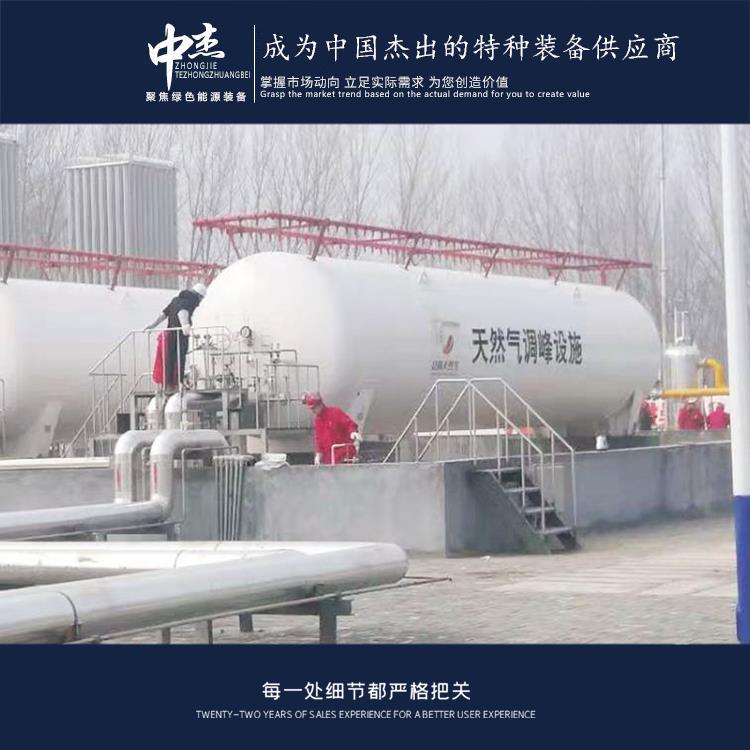

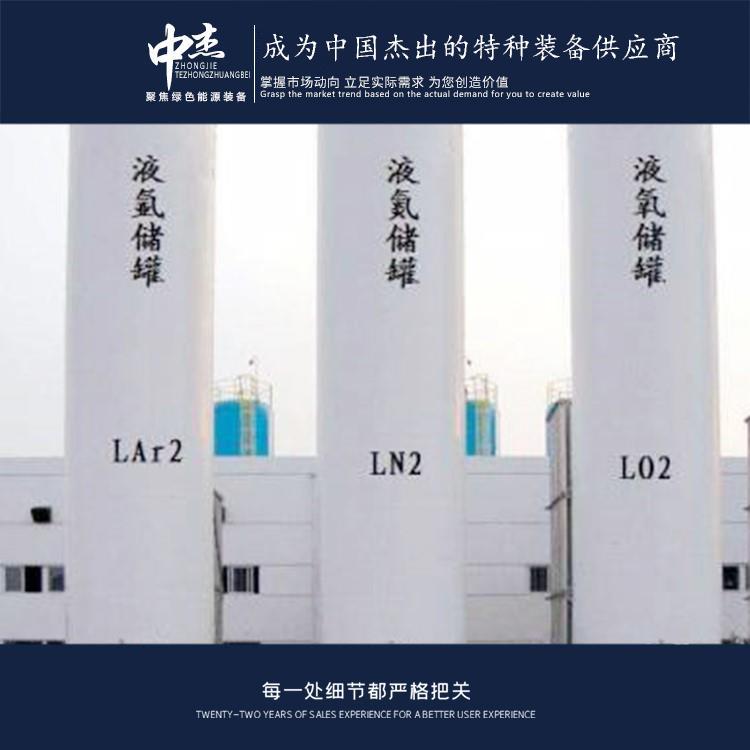
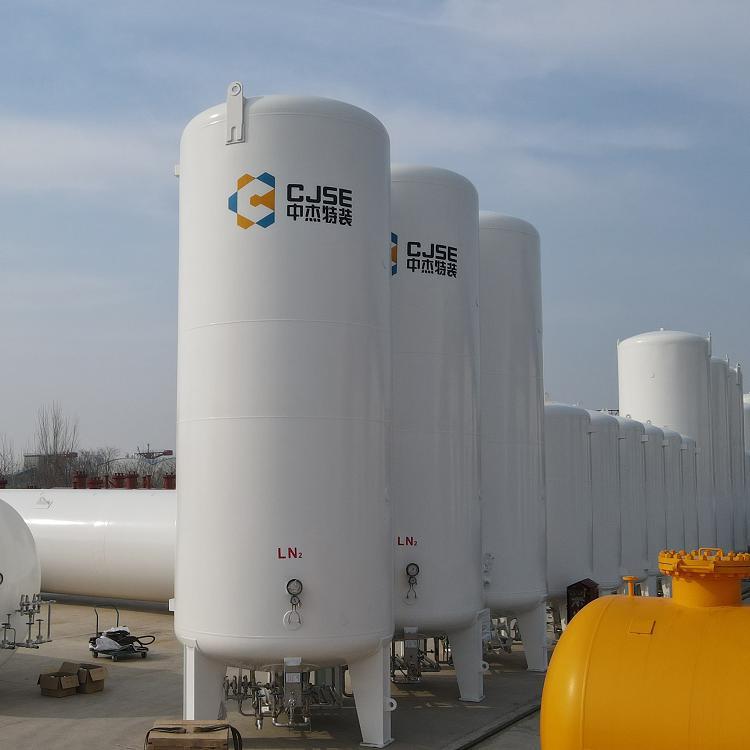


















Shandong Zhongjie Special Equipment's main products include: fuel (gas) boilers, organic heat carrier boilers, biomass boilers, waste heat boilers, and other boiler products; vacuum insulation deep-chilled pressure vessels such as LNG storage tanks, oxygen/nitrogen/argon storage tanks, and CO2 storage tanks; pressure vessel products such as denitrification engineering equipment, heat storage and energy storage equipment, and complete chemical equipment sets; central air conditioning and ventilation equipment like ground (water) source heat pumps, air source units, water-cooled screw units, and air-cooled modular units. Planned products include large-scale energy centers, LNG transport vehicles, LNG tank containers, and other green energy equipment.
Carbon dioxide tanks are equipment used for storing carbon dioxide gas. They are typically made from high-strength materials with sealing capabilities to prevent the leakage of stored carbon dioxide gas. The design and capacity of the tanks can be adjusted to meet various application needs. Carbon dioxide tanks are widely used across various industries, including industrial production and food processing. In the industrial sector, these tanks are commonly used to store and supply carbon dioxide gas for processes like welding, gas protection, and fire suppression. In the food processing industry, they can be used to produce carbonated beverages and frozen foods. In the medical field, carbon dioxide tanks are utilized to manufacture medical gases such as breathing gases and anesthetic gases. The development and manufacturing of carbon dioxide tanks involve multiple manufacturers and technologies. Different companies may employ various design and manufacturing processes to meet diverse customer requirements. Additionally, relevant safety standards and regulations must be adhered to ensure the safe operation and use of the tanks.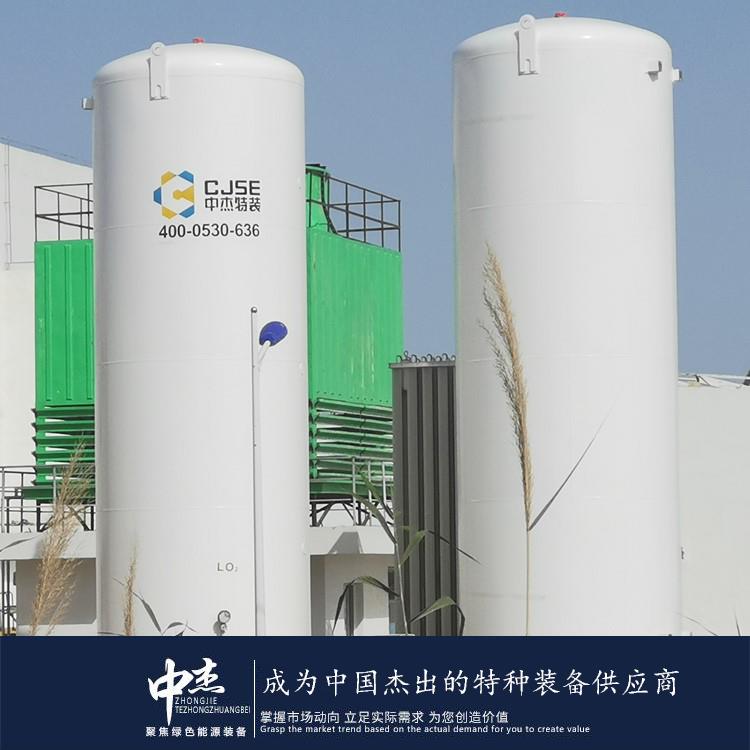
Carbon Dioxide Applications in the New Energy Sector:
Carbon Capture and Storage (CCS): This technology reduces CO2 emissions by capturing CO2 from industrial sources and storing it underground to prevent its release into the atmosphere. It aids in lowering greenhouse gas emissions and mitigating climate change.
Carbon Utilization: CO2 can be utilized to produce valuable chemicals and fuels. For instance, through CO2 catalytic conversion technology, CO2 can be transformed into fuels like ethanol. This technology helps decrease reliance on traditional fossil fuels and promotes sustainable energy development.
Carbon Dioxide Batteries: A novel battery technology that uses CO2 as an electro material. By converting CO2 into electricity, these batteries can serve as a sustainable energy storage solution, advancing electric vehicles and renewable energy sources.
Carbon Dioxide Photocatalysis: This technique uses solar energy to convert CO2 into useful chemicals. With the help of photocatalysts, CO2 and water can be transformed into combustible gases or organic compounds, achieving the resourceful utilization of CO2.
These applications aim to reduce CO2 emissions, enhance energy efficiency, and promote sustainable energy development. However, these technologies are still under development and research, requiring further technological breakthroughs and practical validation.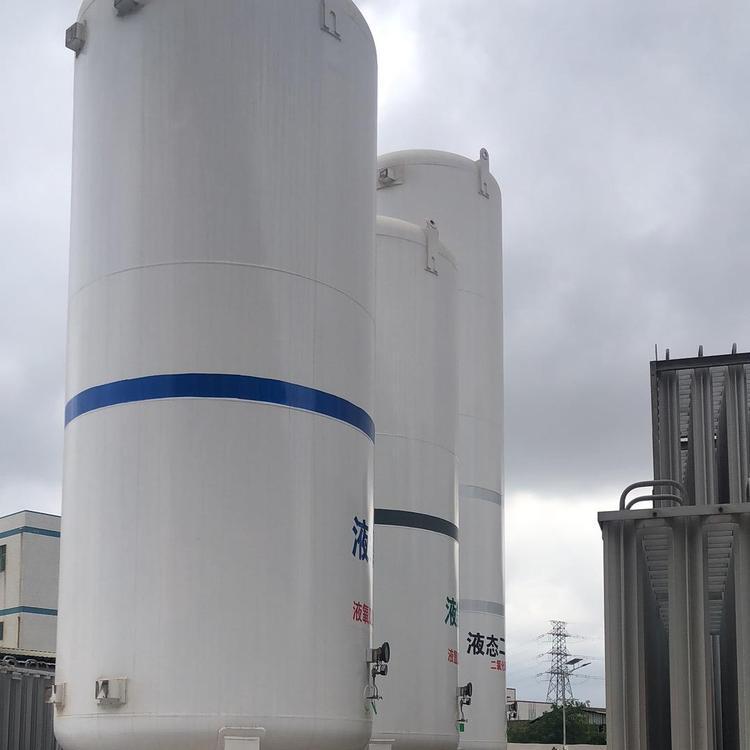
For the maintenance of CO2 storage tanks, here are some recommended methods:
Regular Inspections: Conduct regular checks of the tank's exterior and interior, including inspecting for corrosion, cracks, and leaks. Non-destructive testing methods, such as ultrasonic testing, can be used to assess the tank's integrity.
Cleaning and Corrosion Protection: Regularly clean the tank's exterior to remove dirt and debris. For tanks coated with corrosion-resistant paint, regularly inspect the coating's condition and perform repairs or recoating to protect the tank from corrosion.
Leak Detection: Regularly perform leak detection to ensure there are no leakage issues. Use gas detectors or leak detectors for testing, or evaluate the tank's sealing performance through pressure tests.
Safety Valve Inspection: Regularly check and test the operational status of safety valves to ensure they function properly under overpressure conditions. Adjust and test according to the specifications and requirements of the safety valves.
Pipe and Valve Maintenance: Regularly inspect and maintain the pipes and valves connected to the tank to ensure their proper operation and sealing performance. Clean and lubricate valves, and check for leaks at pipe connections.
Documentation: Record the dates, contents, and results of maintenance, establishing a maintenance record for the tank. Retain relevant documents and reports for future reference and review.
Please note that for the maintenance of CO2 storage tanks, it is recommended to follow relevant safety operating procedures and standards. If you do not possess the necessary knowledge and experience, it is advisable to consult professionals or manufacturers for maintenance work.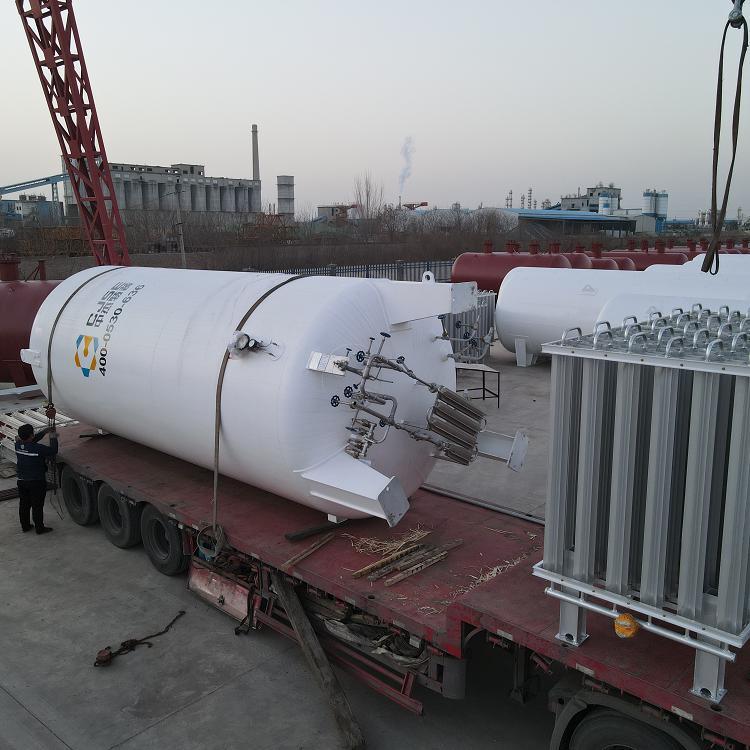
In recent years, the expansion of low-temperature liquid storage tanks has reached its peak due to the following reasons:
1. Increased Energy Demand: With economic growth and population increase, the demand for energy is on the rise. Low-temperature liquid storage tanks are primarily used for storing liquefied natural gas (LNG), liquid oxygen (LOX), liquid nitrogen (LIN), and other low-temperature liquid energy sources to meet the growing energy demand.
2. Greenhouse Gas Emission Reduction: These tanks can store and transport liquid carbon dioxide (CO2) for carbon capture and storage (CCS) technologies, reducing greenhouse gas emissions. As the focus on environmental protection and climate change grows, the demand for low-temperature liquid storage tanks in the CCS field also increases.
3. Industrial Development Needs: The application of low-temperature liquid storage tanks in the industrial sector is also increasing. For instance, in chemical, pharmaceutical, food and beverage industries, there is a need to store and transport low-temperature liquid raw materials or products such as liquid nitrogen, liquid oxygen, and liquid ethylene. With the development of these industries, the demand for low-temperature liquid storage tanks also grows accordingly.
4. Technological Advancement and Innovation: In recent years, the design, manufacturing, and transportation technologies of low-temperature liquid storage tanks have continuously advanced and innovated. The application of new materials, optimization of tank structures, and improvements in safety control systems have made these tanks safer and more reliable, further driving their expansion to a peak.
In summary, factors such as increased energy demand, greenhouse gas emission reduction, industrial development needs, and technological advancement and innovation have collectively driven the expansion of low-temperature liquid storage tanks to a peak in recent years. As related industries develop and technology advances,
Shandong Zhongjie Special Equipment, welcome customers to visit our factory for business discussions.
WeChat Official Account

Scan to follow Official Account



















