


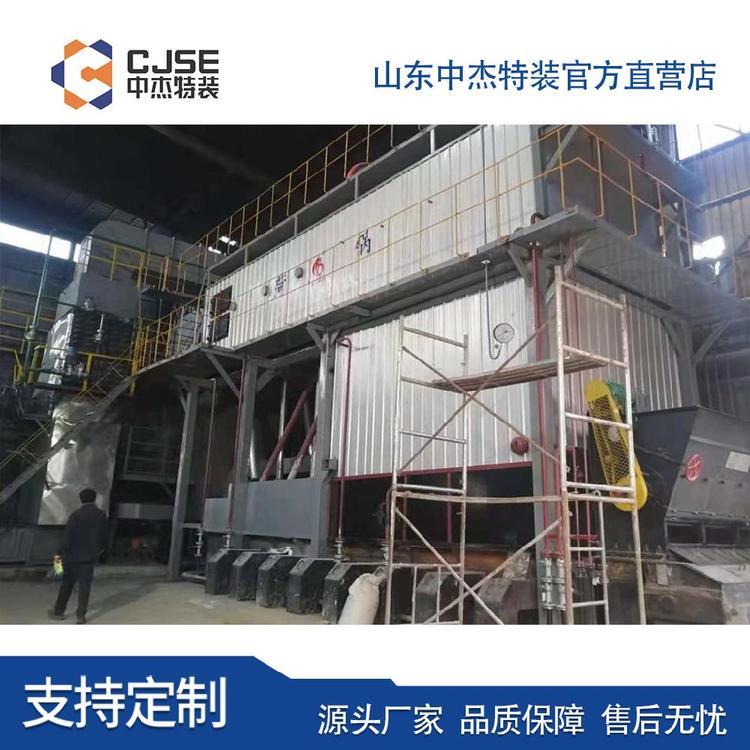

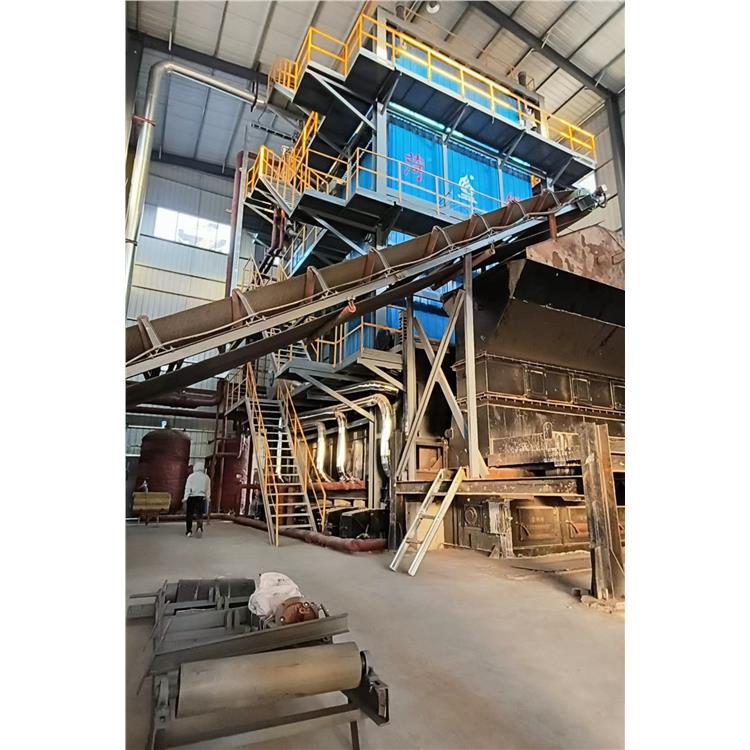
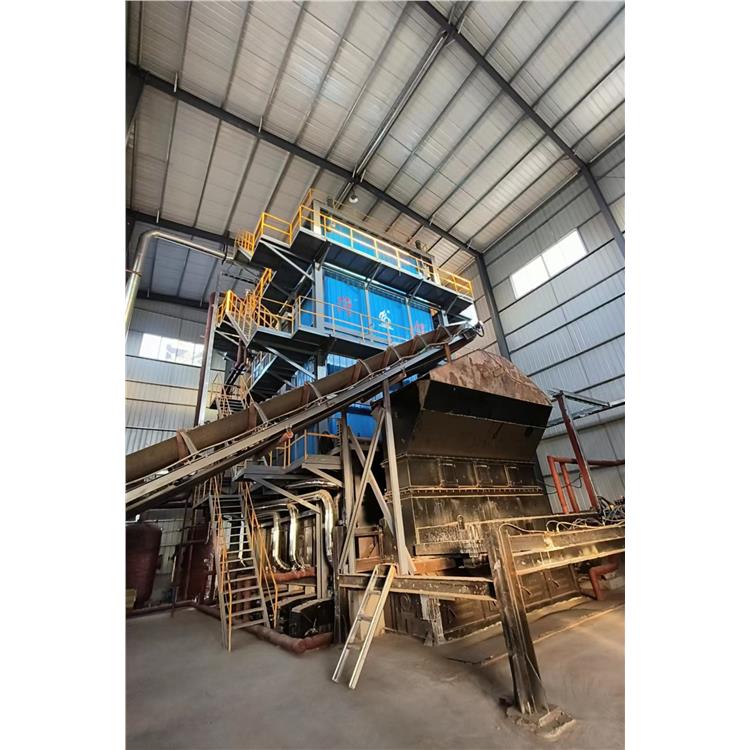


















Shandong Zhongjie Special Equipment Co., Ltd. (formerly Heze Boiler Factory Co., Ltd.) was established in 2001, located at No. 2218 Jinnan Road, Economic and Technological Development Zone, Heze City, with a registered capital of 50 million yuan and total assets of 500 million yuan. The company has 7 business centers: boiler, deep-freeze vessel, pressure vessel, central air conditioning, engineering installation, international trade, and Internet of Things. It has three factory areas on Jinnan Road, East Changjiang Road, and Bohai Road, covering a total area of 200,000 square meters, with the main workshop area of 83,000 square meters. Currently, there are 710 employees, including 247 engineers and technicians and 82 intermediate-level technicians. In December 2016, it was recognized as a "High-Tech Enterprise" by the Science and Technology Department. In June 2021, it was identified as a "Specialized and New Enterprise in Shandong Province" by the Industrial and Information Technology Department. In June 2022, it was recognized as a "Gazelle Enterprise in Shandong Province" and in August 2022, it was identified as a "Specialized and New Small Giant Enterprise" by the Ministry of Industry and Information Technology.
Energy-saving methods for biomass hot water boilers mainly include the following aspects:
Fuel Selection: Opt for biomass fuels in bulk, such as wood chips and straw, ensuring the moisture content and particle size meet the boiler's requirements. Low moisture content and appropriate particle size of the fuel can enhance combustion efficiency and reduce energy waste.
Combustion Optimization: Enhance combustion efficiency by optimizing the combustion process. Adjust combustion parameters, such as combustion temperature and duration, to achieve more complete combustion and reduce fuel wastage.
Heat Recovery Utilization: Utilize waste heat from flue gas for energy recovery. By installing flue gas waste heat recovery units, the excess heat in flue gas is captured and used for other heating needs, such as heating and hot water, to enhance energy efficiency.
Boiler Insulation: Enhance the insulation of the boiler to minimize heat loss. Insulate the boiler shell and pipes to reduce heat dissipation and improve the boiler's thermal efficiency.
Control System Optimization: Optimizes the boiler control system to achieve precise temperature and pressure control. Through reasonable control strategies, reduces energy waste and enhances the operational efficiency of the boiler.
Regular Maintenance: Perform regular maintenance on biomass hot water boilers to ensure normal operation. Clean the combustion chamber, heat exchanger, and other components, inspect and replace worn parts to guarantee the boiler's operation.
Energy Management: Establish a scientific energy management system, monitor and analyze energy consumption, and formulate reasonable energy-saving measures. Continuously optimize the operation of boilers through energy management methods to achieve energy-saving goals.
By utilizing the above energy-saving methods comprehensively, the energy efficiency of biomass hot water boilers can be enhanced, reducing energy waste, and achieving the goal of energy conservation and environmental protection.
Biomass boilers offer the following environmental advantages:
Renewable Energy: The fuel used in biomass boilers is renewable, such as wood chips, straw, and waste products. Compared to fossil fuels, the use of biomass fuel can reduce dependence on finite resources and decrease energy consumption.
Low carbon emissions: The amount of carbon dioxide released during the combustion of biomass fuel is roughly equivalent to the amount absorbed during its growth, creating a closed carbon cycle. Compared to the combustion of fossil fuels, biomass boilers emit less carbon, contributing to the reduction of greenhouse gas emissions.
Reducing Pollutant Emissions: The combustion of biomass fuel produces relatively fewer pollutants. Compared to coal combustion, biomass boilers emit lower amounts of nitrogen oxides, sulfur oxides, and particulate matter, resulting in less pollution to the atmosphere.
Waste Utilization: Biomass boilers can use waste materials as fuel, such as crop straw and wood waste. If these wastes are not utilized, they may impact the environment. By utilizing biomass boilers, we can achieve the resourceful utilization of waste, reducing the issues of waste accumulation and disposal.
Heat Recovery Utilization: Biomass boiler flue gas contains a large amount of heat energy, which can be recovered and utilized through flue gas waste heat recovery equipment. Using the excess heat in flue gas for heating, hot water, etc., improves energy utilization efficiency and reduces energy waste.
Sustainable Development: High sustainability of biomass fuel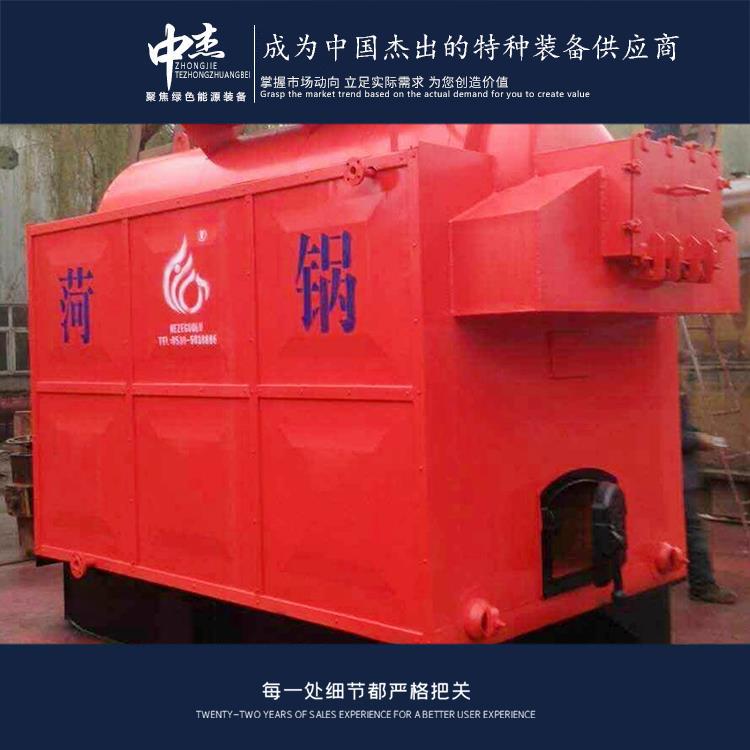
Biomass boiler tube end reduction refers to the process of reducing the diameter of the tube ends within a certain length range. This treatment enhances the tube's strength and rigidity, reduces stress concentration, and improves its vibration resistance and durability.
Specific methods for constricting include:
Cold shrink joint: A mechanical method of cold working the end of a pipe to gradually reduce its diameter, forming a shrink joint. This method is simple and easy to perform, suitable for general shrink joint requirements.
Hot Shrink Ends: This method involves heating the end of the tube to soften it, then forming it into a shrink end shape through mechanical means. It allows for more complex shrink end shapes but requires specialized equipment and technology.
The benefits of a tapered design include:
Enhance the tube's strength and rigidity, reduce stress concentration in the tube, and minimize the risk of deformation and fracturing.
Enhance the tube's vibration resistance, reduce vibration and resonance during operation, and extend the tube's service life.
Reduce the risk of pipe leakage and enhance the sealing performance of the pipeline system.
Note that the neck treatment must be tailored to the specific boiler design and operational requirements to ensure the neck size and shape meet design specifications, and that the wall thickness at the neck is not less than the standard requirements to guarantee the safe and reliable operation of the pipes.
A chain biomass boiler is a common type of biomass boiler, and its working principle and process are as follows:
Fuel Supply: Biomass fuels (such as wood chips, straw, etc.) are conveyed to the combustion chamber of the chain grate boiler through the feeding system.
The combustion process: Fuel is ignited in the combustion chamber while the chain boiler's chain system begins to operate. The fuel is gradually propelled forward by the chain movement, simultaneously burning within the combustion chamber. During combustion, the fuel is thoroughly mixed with air, and the heat energy produced is transferred to the boiler's water or other working medium.
Flue Gas Emission: The smoke generated by combustion is channeled through the flue system of the combustion chamber and exhausted into the chimney. During the flue gas emission process, treatment with flue gas purification equipment can reduce the particulate matter and gas pollutants in the emissions.
Heat Recovery: The heat generated from combustion is transferred to water or other working substances through a boiler's heat exchanger, raising their temperature. After heat recovery, the hot water or steam can be used for heating, hot water supply, or other industrial processes.
Control System: Chain biomass chain boilers are typically equipped with an automatic control system for monitoring and adjusting parameters such as temperature, pressure, and fuel supply during the combustion process. The control system can automatically adjust according to actual needs to ensure the safe operation and performance of the boiler.
Overall, biomass chain grate boilers gradually feed biomass fuel into the combustion chamber through a chain system for burning. The thermal energy is transferred to water or other working substances via heat exchangers, achieving energy recovery and utilization. These boilers offer high combustion efficiency and strong fuel adaptability, and are widely used in heating, industrial heating, and other fields.
Our company attaches great importance to technological innovation and R&D design, boasting one municipal-level enterprise technology center in Heze City. We have established testing facilities for non-destructive testing, physical and chemical testing, welding testing, hydrostatic testing, and more. Equipped with over 600 pieces of various equipment including CNC machine tools, X-ray flaw detectors, digital ultrasonic flaw detectors, mechanical property testing machines, chemical analyzers, spectrometers, tensile testing machines, plasma welding machines, and others, our developed key products such as temperature and pressure vessel welding, biomass boiler emission reduction, and waste heat recovery have successively been shortlisted for multiple Shandong Provincial Department of Industry and Information Technology science and technology innovation projects, key provincial projects, and Heze City innovation and excellence projects. We have cumulatively obtained 27 authorized utility models, 16 authorized inventions, participated in drafting 2 standards, 2 industry standards, and registered 15 trademarks. The technical team of our company, in collaboration with Professor Li Yajiang of Shandong University, has developed deep cryogenic container processing technology using the international plasma arc + wire feeding argon arc welding (PAW-GTAW) technology. After provincial-level scientific and technological achievement identification, the technical level has reached international standards in the field of deep cryogenic container manufacturing. Choose Zhongjie Special Equipment, let's create brilliance together!
WeChat Official Account

Scan to follow Official Account



















