


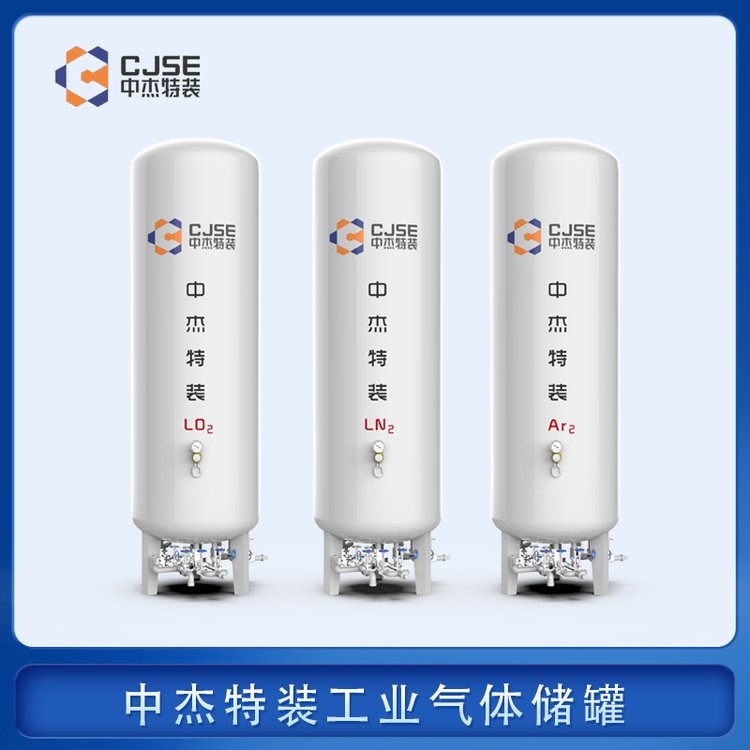


















Shandong Zhongjie Special Equipment (formerly Heze Boiler Factory Co., Ltd.) holds an A-grade boiler manufacturing license, A2-grade pressure vessel manufacturing license, A2-grade pressure vessel design license, B-grade boiler installation license, and GB2/Class, GC2/Class pressure pipeline installation license, as well as an electromechanical equipment installation contracting qualification. It is a member of the China Boiler and Water Treatment Association, the China Chemical Equipment Association, and the理事 member of the Shandong Equipment Manufacturing Association. The company has also passed the ISO9001 Quality Management System, ISO14001 Environmental Management System, OHSAS18001 Occupational Health and Safety Management System certifications, and the ASME/U2 certification.
Pressure Vessel Standards: Liquid carbon dioxide storage tanks are generally considered pressure vessels, and their design, manufacturing, and use should comply with the relevant pressure vessel standards. In China, common pressure vessel standards include GB150 "Steel Pressure Vessels" and GB18435 "Storage Tanks." Safety Standards: The use of liquid carbon dioxide storage tanks should adhere to relevant safety standards and regulations. For instance, in China, the safe operation of liquid carbon dioxide storage tanks should follow standards such as GB50028 "Design Code for Petroleum and Chemical Enterprises" and GB50016 "Fire Prevention Code for Building Design." Inspection and Testing Standards: The inspection and testing of liquid carbon dioxide storage tanks should comply with the applicable standards and regulations. For example, regular inspections of liquid carbon dioxide storage tanks can refer to standards like GB/T 19638 "Regulations for Periodic Inspection of Pressure Vessels." Environmental Protection Standards: The use of liquid carbon dioxide storage tanks should conform to relevant environmental protection standards and regulations. For instance, in China, the exhaust emissions from liquid carbon dioxide storage tanks should comply with standards such as "Emission Standards for Air Pollutants."
Common defects that may occur during the operation of pressure vessels include corrosion. Here are some causes that can lead to corrosion in pressure vessels: Chemical Media: Certain chemical media are corrosive, such as acids, bases, and salts. When these media come into contact with the vessel material, corrosion may occur. Humidity and Moisture: High humidity environments or long-term exposure to moisture can lead to corrosion on the vessel surface. Especially in the presence of oxygen, the corrosion rate may increase. Rusting: When the protective layer on the vessel surface (such as coatings or plating) is damaged or destroyed, the vessel may experience rusting. Rusting can damage the vessel's surface and may lead to further corrosion. Electrochemical Corrosion: When different metals or metals and non-metals come into contact, an electrochemical corrosion battery may form. This type of corrosion can lead to localized corrosion on the vessel surface. Welding Defects: Defects like weld porosity and cracks may be introduced during the welding process. These defects can become starting points for corrosion. Corrosion weakens the structural integrity of the vessel, increasing the risk of leakage or rupture. Therefore, regular inspection and maintenance of the corrosion-resistant layer, coating, or plating on pressure vessels are important. If corrosion issues are found, appropriate measures should be taken to repair or replace the damaged parts. Additionally, selecting appropriate materials and corrosion prevention measures, as well as proper operational and maintenance methods, can reduce the risk of corrosion in pressure vessels. Adhering to relevant safety operation procedures and standards ensures the safe operation of pressure vessels.
Carbon dioxide storage tanks are equipment used for storing and transporting carbon dioxide gas, with their operation based on the principles of pressure vessels and the physical properties of carbon dioxide. Pressure Vessel Principle: A carbon dioxide storage tank is a pressure vessel capable of withstanding the pressure of the internal gas. It is typically made from high-strength materials such as steel. The tank's design and structure can withstand high pressure, ensuring the safe storage and transportation of the gas. Compressed Gas Storage: Carbon dioxide is a gas at room temperature but can be compressed into a liquid under high pressure. Storage tanks utilize high pressure to compress the gas into a liquid, achieving a higher storage density. The volume occupied by liquid carbon dioxide is relatively small, allowing for more gas storage. Level Control: The storage tank is equipped with a level control system for monitoring and controlling the level of liquid carbon dioxide. The level control system usually includes level sensors and control valves to ensure the tank's level remains within a safe range. Pressure Control: The tank also features a pressure control system for monitoring and controlling the gas pressure within the tank. The pressure control system typically includes pressure sensors and safety valves to ensure the tank's pressure remains within a safe range, preventing damage or safety risks due to excessive or insufficient pressure. Through these principles, carbon dioxide storage tanks can safely store and transport carbon dioxide gas to meet the needs of various fields, such as food processing, beverage manufacturing, and fire extinguishing. When using carbon dioxide storage tanks, it is necessary to follow relevant safety operating procedures and guidelines to ensure safe operation and use.
The primary reason for pre-cooling a carbon dioxide tank before use is to ensure that the carbon dioxide inside the tank remains in a liquid state and maintains a stable temperature during storage and supply. The pre-cooling process typically involves the following steps:
Tank Cooling: Before the tank is put into service, the internal temperature of the tank must be cooled to a sufficiently low level to convert the carbon dioxide from a gas to a liquid. This can be achieved by injecting a cooling medium (such as liquid nitrogen) into the tank or by using an external cooling device.
Tank Pre-filling: After the tank has been cooled, liquid carbon dioxide must be pre-filled into the tank to fill it and maintain a certain pressure. The purpose of pre-filling is to provide sufficient carbon dioxide supply during storage and supply and to keep the tank pressure stable.
By pre-cooling, the liquid state of the carbon dioxide inside the tank is ensured, preventing premature evaporation and energy loss. Additionally, pre-cooling helps to lower the tank temperature in advance, reducing carbon dioxide evaporation and pressure fluctuations, thereby improving the tank's operational efficiency and safety.
It should be noted that the specific methods and requirements for pre-cooling may vary depending on the tank design and application scenarios. When performing pre-cooling operations, it is necessary to follow relevant safety operation procedures and standards to ensure the safety and effectiveness of the operation.
Shandong Zhongjie Special Equipment, welcome customers to visit our factory for cooperation discussions.
WeChat Official Account

Scan to follow Official Account



















