


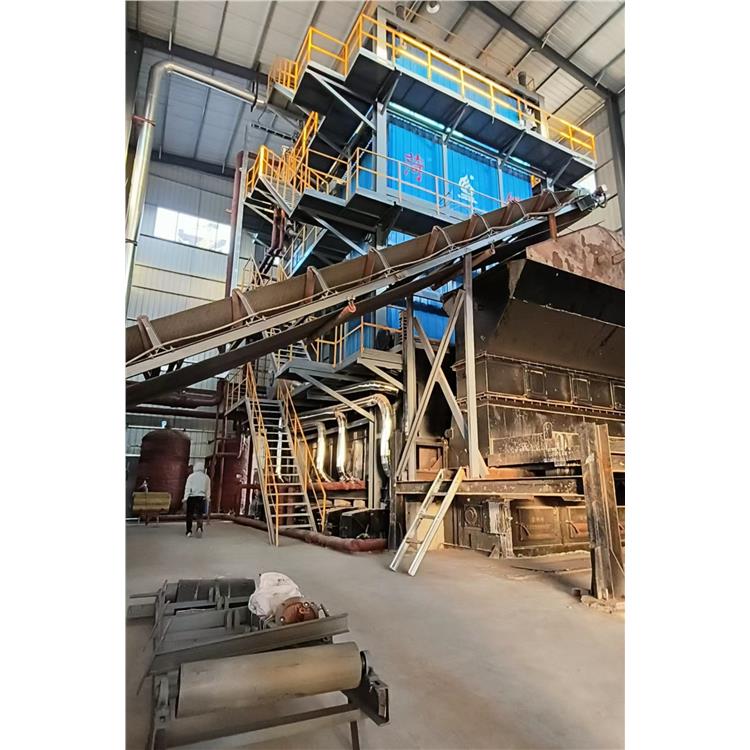

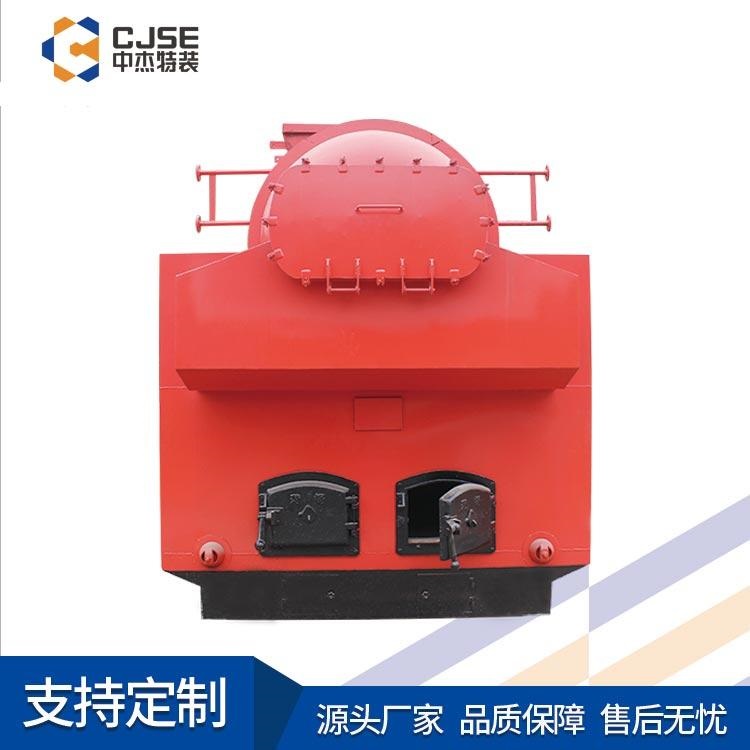
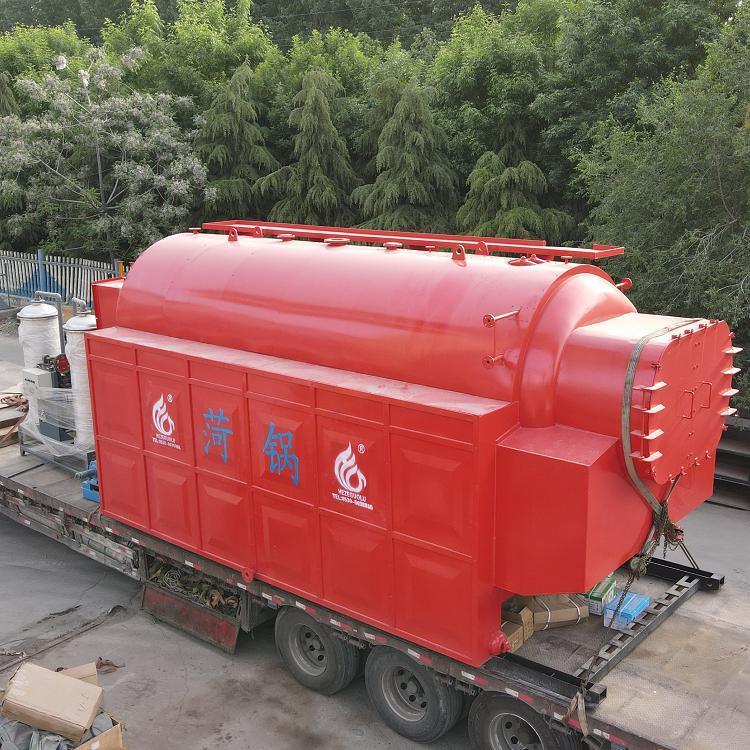


















Shandong Zhongjie Special Equipment (formerly Heze Boiler Factory Co., Ltd.) holds an A-grade boiler manufacturing license, an A2-grade pressure vessel manufacturing license, an A2-grade pressure vessel design license, a B-grade boiler installation license, and GB2/Class and GC2/Class pressure pipeline installation licenses, as well as a qualification for electromechanical equipment installation contracting. It is a member of the China Boiler and Water Treatment Association, the China Chemical Equipment Association, and the理事 unit of the Shandong Equipment Manufacturing Association. The company has also passed certifications for the ISO9001 Quality Management System, ISO14001 Environmental Management System, OHSAS18001 Occupational Health and Safety Management System, and the American ASME/U2 certification.
The extinguishing process and maintenance methods for the fully automatic biomass boiler are as follows:
Extinguishing Process:
Cease Fuel Supply: Prior to extinguishing the biomass boiler, first stop the fuel supply to ensure the fuel supply pipeline is closed.
Turn off the burner: Switch the burner's switch or the extinguish button on the control panel to the off position, stopping the burner's operation.
Allow to Cool: Wait until the boiler cools to a safe temperature, which usually takes some time. Do not operate during this period to avoid any accidents.
Shut off Power: After the boiler has completely cooled down, turn off the boiler's power switch to ensure the boiler is de-energized.
Maintenance Instructions:
Clean Combustion Chamber: Regularly clean the combustion chamber of ash and dirt produced during the combustion process. Use appropriate tools and cleaning agents for cleaning to ensure the chamber remains clear and clean.
Heat Exchanger Cleaning: Regularly clean heat exchangers, especially those on the flue side. Combustion may produce particulates and slag in the flue gas, which can adhere to the heat exchanger surface, affecting heat transfer efficiency. Appropriate cleaning methods, such as mechanical or chemical cleaning, can reduce the accumulation of dirt.
Inspect and Replace Critical Parts: Regularly inspect and replace critical parts such as burners, valves, and sensors. Ensure these components operate and perform normally to avoid malfunctions and potential safety hazards.
Water Treatment: Proper water treatment for boiler feedwater to prevent impurities and sediments from depositing inside the boiler. Methods such as water softening, deoxygenation, and scale removal can be employed to maintain the cleanliness and stability of the supply.
Regular Maintenance: Perform regular maintenance and upkeep, including checking and cleaning control systems, inspecting electrical connections, lubricating moving parts, etc. Develop a corresponding maintenance plan based on the boiler's usage and the manufacturer's recommendations.
Above is the extinguishing process and maintenance methods for the fully automatic biomass boiler. Through proper operation and regular maintenance, it ensures the safe operation of the boiler and extends its service life.
The phenomenon of biomass boiler economizer tube damage may include the following situations:
Pipe Corrosion: Flue gases produced by biomass combustion contain certain acidic substances, which may lead to corrosion of economizer pipes. Long-term corrosion can result in the thinning of pipe wall thickness, the formation of holes and cracks.
Pipe blockage: During biomass combustion, flue gas may contain some ash and particulates, which may deposit and accumulate in the economizer pipe, leading to blockage. Blockage can affect the flow of flue gas and reduce heat exchange efficiency.
Pipe fatigue: The varying operating temperatures and pressures in biomass boilers can lead to long-term thermal expansion and contraction, causing fatigue damage to economizer pipes, such as cracking and deformation.
For the above issues, the following solutions can be adopted:
Enhanced Corrosion Protection: Corrosion treatment can be applied internally to economizer pipes, such as applying corrosion-resistant coatings or manufacturing pipes from corrosion-resistant materials, to minimize corrosion occurrence.
Regular cleaning and maintenance: Regularly clean and maintain the economizer to prevent the accumulation of ash and particles inside the pipes, which can lead to blockages. Methods such as mechanical cleaning and water flushing can be employed.
Enhanced Monitoring and Inspection: Regularly inspect economizers, including pipe thickness measurements and crack detection, to promptly identify issues and implement repair measures.
Optimize operating parameters: Reasonably adjust the operating parameters of the biomass boiler, such as combustion temperature and air volume, to minimize damage to the economizer.
When planning and arranging the bag dust collector for biomass boilers, the following aspects should be considered:
Baghouse location: The baghouse should be positioned near the biomass boiler flue gas outlet to effectively capture particulates in the flue gas. Additionally, the location of the baghouse should be convenient for operation and maintenance, ensuring ease of cleaning and filter bag replacement.
Layout of smoke进出口: The smoke进出口 of the bag filter should be connected to the flue gas pipeline of the biomass boiler to ensure smooth entry and exit of the smoke from the dust collector. The layout should consider the uniformity of smoke flow and minimize resistance to enhance the dust removal effect and operating efficiency of the system.
Baghouse dust collector dimensions and capacity: Determine the size and capacity of the baghouse based on the biomass boiler's flue gas flow rate and particulate matter load. Ensure the baghouse meets the flue gas treatment requirements and achieves the anticipated dust removal effect.
Bag filter arrangement and selection: Bag filters are the core components of bag dust collectors. The appropriate filter material and specifications should be chosen based on the characteristics of flue gas and the nature of particulates. The arrangement of the filters should be rational to ensure the flue gas can pass through the filters evenly, capturing the particulates to the maximum extent.
Dust removal system arrangement: Bag filters require regular cleaning to maintain filter bag cleanliness and dust removal efficiency. The arrangement of the dust removal system should facilitate operation and maintenance, ensuring the effectiveness and efficiency of cleaning.
Emission pipeline layout: Post-filtered flue gas must be discharged into the atmosphere. The layout of the emission pipeline should ensure the safety and compliance of flue gas emissions.
When planning and arranging biomass boiler bag dust collectors, it is recommended to collaborate with environmental engineers or equipment suppliers, design and construct based on specific conditions, to ensure the operation and environmental protection effect of the dust removal system.
A biomass boiler bag dust collector is a commonly used flue gas purification equipment, designed to remove particulate matter from the flue gas produced by the combustion of biomass boilers. Its operating principle is as follows:
Smoke enters the dust collector: Smoke from the biomass boiler combustion chamber passes through the flue into the bag dust collector.
Pre-treatment: Prior to entering the bag filter, flue gas may undergo pre-treatment, such as desulfurization and denitrification, to reduce corrosion and damage to the bags.
Filter: After smoke enters the bag dust collector, it passes through the bag filter area. The interior of the bag dust collector is equipped with numerous filter bags. As the smoke passes through the filter bags, particulate matter is captured by them, and the purified smoke exits through the filter bags.
Particulate Matter Collection: Particulates gradually accumulate on the filter bag, forming a layer of ash. As the thickness of the ash layer increases over time, it affects the resistance of the flue gas passing through the filter bag, necessitating a cleaning operation.
Ash Cleaning: To maintain the normal operation of the bag dust collector, regular ash cleaning is required. Ash cleaning can be done in various ways, such as mechanical impact and pulse jetting. Ash cleaning will cause the ash layer to fall off, with particles collected in the ash hopper.
Emissions: After dust removal treatment, the purified flue gas meets the emission standards and can be discharged into the atmosphere through the chimney.
Bag dust collectors operate based on the capture and separation of particulates by filter bags, maintaining their permeability and dust removal efficiency through continuous cleaning operations. The particulate capture capability of bag dust collectors effectively purifies flue gas produced by biomass boiler combustion, protecting the environment.
Our company places great emphasis on technological innovation and R&D, boasting one municipal-level enterprise technology center in Heze City. We have established testing facilities for non-destructive testing, physical and chemical testing, welding testing, hydrostatic testing, and more. Equipped with over 600 pieces of various equipment including CNC machine tools, X-ray flaw detectors, digital ultrasonic flaw detectors, mechanical property testing machines, chemical analyzers, spectrometers, tensile testing machines, plasma welding machines, and more, our key products and technologies such as welding for temperature and pressure vessels, biomass boiler emissions reduction, and waste heat utilization have successively been shortlisted for multiple Shandong Provincial Department of Industry and Information Technology science and technology projects, Shandong key projects, and Heze City innovation and excellence projects. We have cumulatively obtained 27 authorized utility model patents, 16 authorized invention patents, participated in drafting 2 standards, 2 industry standards, and registered 15 trademarks. Our technical team, in collaboration with Professor Yajiang Li from Shandong University, has developed deep cryogenic vessel processing technology using the internationally recognized plasma arc + filler wire tungsten inert gas (PAW-GTAW) welding technique. After provincial-level scientific and technological achievement evaluation, our technology level in deep cryogenic vessel manufacturing has reached international standards. Choose Zhongjie Special Equipment, and let's create brilliance together!
WeChat Official Account

Scan to follow Official Account



















