



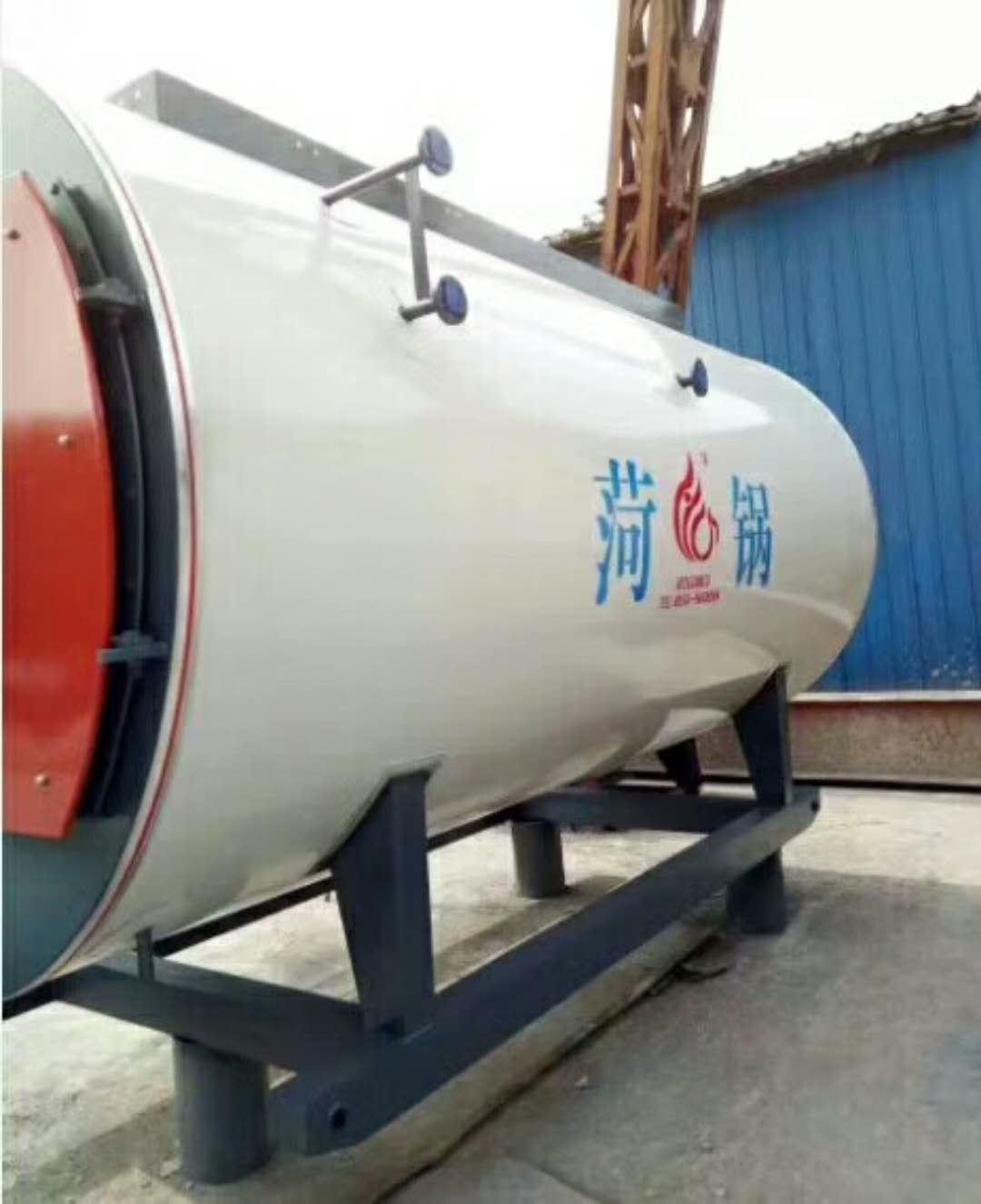
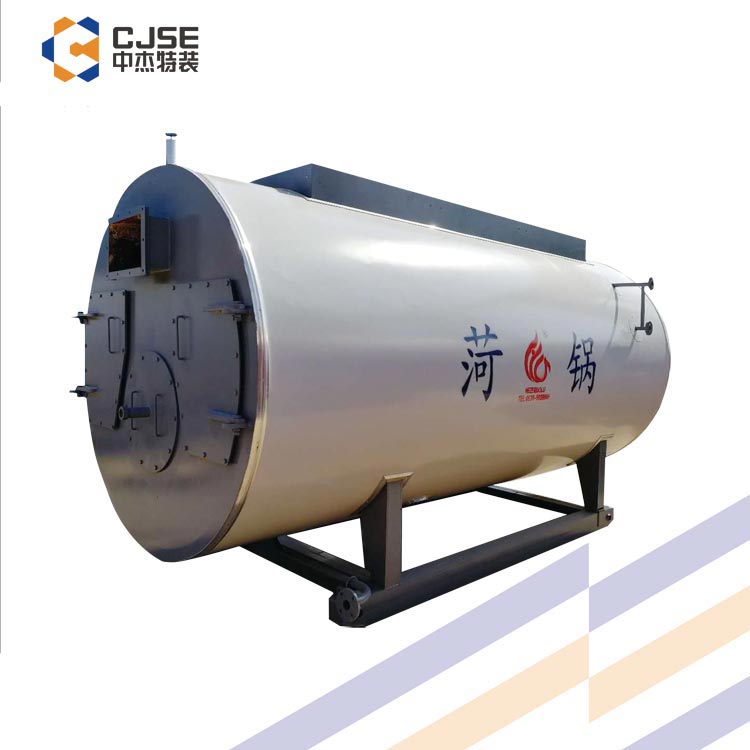


















Shandong Zhongjie Special Equipment Co., Ltd. specializes in: fuel (gas) boilers, organic heat carrier boilers, biomass boilers, waste heat recovery boilers, and other boiler products; vacuum insulated cryogenic pressure vessels such as LNG storage tanks, oxygen/nitrogen/argon storage tanks, and CO2 storage tanks; pressure vessel products including denitrification engineering equipment, heat storage and energy storage equipment, and complete chemical equipment sets; central air conditioning and HVAC equipment such as ground (water) source heat pumps, air source units, water-cooled screw units, and air-cooled modular units. Planned products include large-scale energy centers, LNG transport vehicles, LNG tank containers, and other green energy equipment.
Industrial boiler thermal deaeration is a commonly used deaeration method, featuring:
- Deaeration: Thermal deaeration involves heating the boiler feed water to release dissolved oxygen from the water using heat. As the water temperature increases during the thermal deaeration process, the solubility of oxygen decreases, thereby effectively removing oxygen from the water.
- No Chemicals Required: Unlike other deaeration methods, thermal deaeration does not require chemicals, thus avoiding environmental pollution and equipment corrosion caused by chemicals. Additionally, it reduces operating costs and complexity.
- Automated Control: Thermal deaeration can be achieved through an automated control system, which adjusts the feed water temperature and flow rate based on the boiler's operating status and water quality to achieve optimal deaeration results.
- Wide Application Range: Thermal deaeration is suitable for various types of industrial boilers, including coal-fired, gas-fired, and oil-fired boilers. Whether it's a small or large boiler, thermal deaeration can be used for deaeration treatment.
- Improves Boiler Efficiency: Removing dissolved oxygen from the water reduces corrosion and oxidation reactions within the boiler, extending its lifespan. Also, reducing oxygen levels can enhance the boiler's thermal efficiency and reduce energy consumption.
- Note: While thermal deaeration effectively removes oxygen from the water, it may not address other water quality issues such as hardness and alkalinity, which may require additional water treatment methods. Therefore, in practical applications, it's necessary to consider water quality characteristics and boiler requirements to select an appropriate deaeration method.
The purpose of oxygen removal from feed water in industrial boilers is to reduce oxygen corrosion and bubble formation within the boiler, ensuring the safety and normal operation of the boiler and pipeline systems. The main methods of oxygen removal include:
1. Mechanical Oxygen Removal: Removing oxygen from water using physical methods. Common mechanical oxygen removal equipment includes deaerators and degassers. Deaerators eliminate oxygen by atomizing water into a thin film, taking advantage of the difference in gas solubility. Degassers, on the other hand, remove oxygen by atomizing water into fine droplets, utilizing the same solubility difference.
2. Thermal Oxygen Removal: Removing oxygen from water by heating the water body, taking advantage of the fact that oxygen solubility decreases with temperature. Common thermal oxygen removal equipment includes deaerator pots and deaerators. Deaerator pots release oxygen from water by heating it to saturation temperature. Deaerators remove oxygen by heating the water, using the decreased solubility of oxygen.
3. Chemical Oxygen Removal: Removing oxygen from water by adding chemicals that react with it, thus eliminating the oxygen. Common chemical oxygen removal agents include salts and reducers. Chemical oxygen removal is often used in high-pressure boiler systems and can effectively remove oxygen from water.
The choice of oxygen removal method and equipment depends on the specific boiler system and water quality. In practice, a combination of oxygen removal methods is often used to achieve the desired effect. The selection and operation of oxygen removal equipment should be assessed and adjusted based on the actual situation to ensure the safety and normal operation of the boiler system.
To optimize and improve the planning of gas boiler systems, consider the following aspects:
1. Energy Audit and Assessment: Conduct a comprehensive energy audit and assessment to understand the energy consumption of the gas boiler system and identify potential energy-saving opportunities. Through data analysis and energy measurement, determine the main sources of energy consumption and bottlenecks to provide a basis for subsequent optimization.
2. Combustion System Optimization: Optimize the combustion system of the gas boiler, including adjustments and cleaning of burners, control of gas-to-air ratios, and maintenance of the combustion chamber. Ensure high combustion efficiency and gas utilization, reducing energy waste.
3. Heat Recovery Utilization: Consider installing heat recovery devices such as waste heat recovery units or flue gas heat exchangers. These devices can utilize the excess heat in the flue gas emitted by the gas boiler to heat water or other equipment requiring heat, enhancing energy efficiency.
4. Pipe Insulation and Leak Inspection: Ensure that the insulation of gas and hot water pipes is effective to reduce energy loss. Regularly inspect for pipe leaks and repair them promptly to avoid energy waste and safety hazards.
5. Control System Upgrade: Consider upgrading the control system of the gas boiler to incorporate automated control technology. Through precise control and adjustment, achieve optimized operation of the gas boiler.
Fuel and gas boiler combustion safety and explosion prevention are crucial. Here are some related safety measures:
1. Burner Selection and Adjustment: Choose burners that meet standards and specifications, and ensure proper installation. The burner's parameters and adjustments should align with design requirements to ensure stable and safe combustion processes.
2. Fuel Supply System: The fuel supply system of fuel and gas boilers must be safe and reliable. Equipment such as fuel storage tanks,输送管道, and filters should be regularly inspected and maintained to prevent leaks and blockages.
3. Combustion Control System: The combustion control system of fuel and gas boilers should have the necessary control capabilities. The system should be able to monitor and adjust combustion parameters, such as fuel supply and combustion air volume, to ensure stable and safe combustion processes.
4. Safety Valves and Pressure Switches: Safety valves and pressure switches should be installed on fuel and gas boilers to protect safe operation. Safety valves can automatically open and release overpressure gas or steam when exceeding the set pressure to prevent boiler explosions.
5. Gas Leak Detection: For gas boilers, gas leak detection devices should be installed. These devices can detect gas leaks in a timely manner and trigger alarms to prevent gas accumulation and explosions.
6. Regular Inspection and Maintenance: Regularly inspect and maintain fuel and gas boilers, including cleaning burners, checking the combustion system, and adjusting combustion parameters. Promptly repair and replace damaged parts to ensure normal operation and safety performance of the equipment.
7. Training and Operating Procedures: Train operators to ensure they understand and follow proper operating procedures and safety protocols.
Zhong Jie Special Equipment upholds the grand vision of "realizing employees' dreams, creating value for customers, and striving for the prosperity and strength of our motherland," focusing solely on the development of green energy equipment. We dedicate products and services with high cost-performance to society!
WeChat Official Account

Scan to follow Official Account



















