



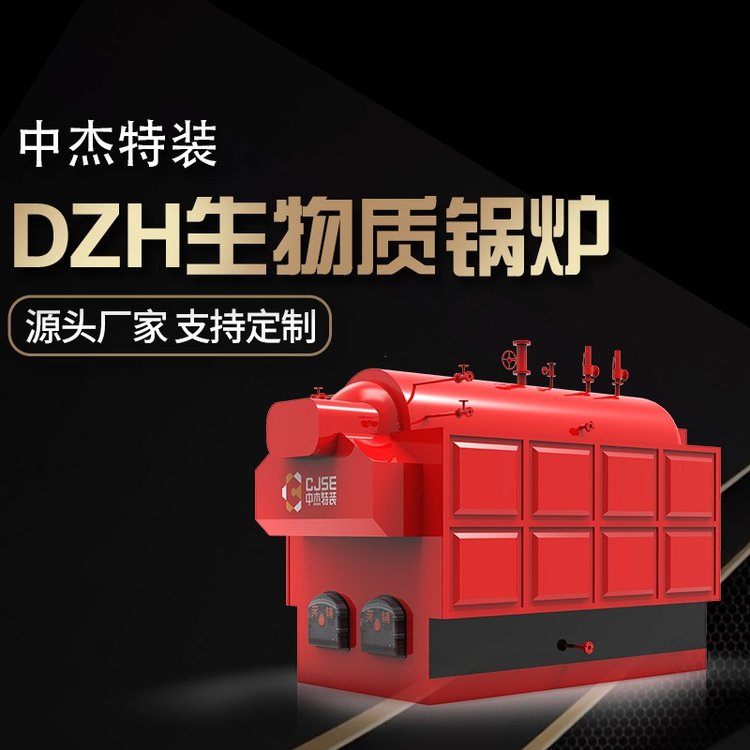
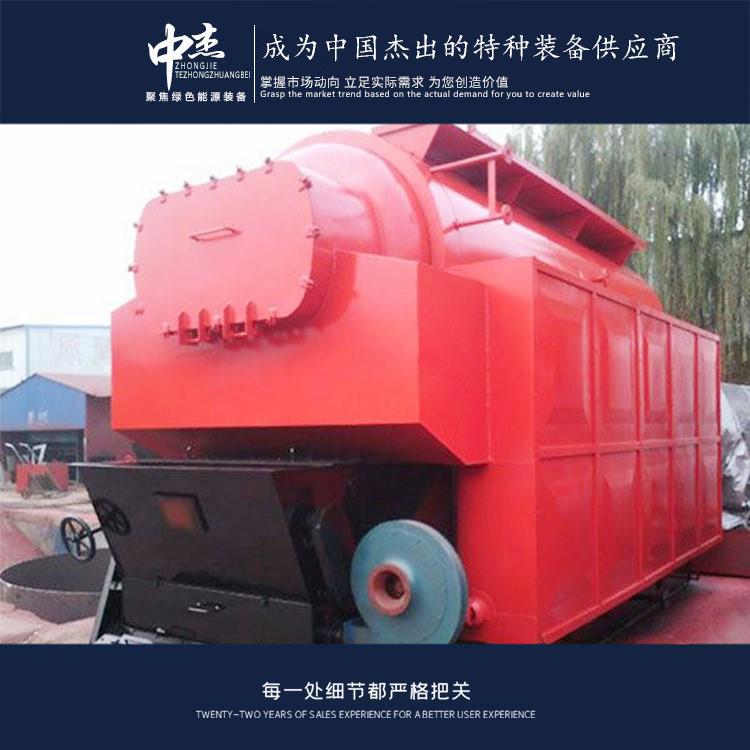


















Shandong Zhongjie Special Equipment Co., Ltd. specializes in the following main products: fuel (gas) boilers, organic heat carrier boilers, biomass boilers, waste heat recovery boilers, and other boiler products; vacuum insulation cryogenic pressure vessels such as LNG tanks, oxygen/nitrogen/argon tanks, and CO2 tanks; pressure vessel products including denitrification engineering equipment, heat storage and energy storage equipment, and complete chemical equipment sets; central air conditioning and HVAC equipment such as ground (water) source heat pumps, air source units, water-cooled screw units, and air-cooled modular units. Planned products include large-scale energy centers, LNG transport vehicles, LNG tank containers, and other green energy equipment.
The pressure-setting methods for biomass hot water boilers mainly include the following:
Natural Circulation Constant Pressure: Natural circulation constant pressure refers to the process of circulating hot water to the heating system through natural convection within the boiler. Under the natural circulation constant pressure method, there is a significant height difference between the supply and return water pipes of the boiler, which is achieved through the density difference of the hot water, realizing natural circulation. This method is suitable for small-scale biomass hot water boilers and is characterized by simplicity and cost-effectiveness.
Forced Circulation Constant Pressure: This is achieved by using a circulating pump to force hot water to circulate through the heating system. Under the forced circulation constant pressure method, the boiler provides sufficient water pressure through the circulating pump, ensuring smooth flow of hot water. This method is suitable for large-scale biomass hot water boilers and is characterized by stability.
Micro-positive Pressure Constant Pressure: Micro-positive pressure constant pressure maintains a slight positive pressure in the boiler system to ensure stable circulation of hot water. Under this method, the pressure in the boiler system is slightly higher than atmospheric pressure, driving the circulation of hot water through pressure difference. This approach is suitable for situations requiring higher heating temperatures and longer heating distances.
Above are the common pressure-setting methods for biomass hot water boilers. According to specific usage requirements and system design, a suitable pressure-setting method can be chosen to ensure the normal operation and heating effect of the boiler.
Controlling the formation of slag in biomass boilers is a crucial measure to ensure the normal operation of the boiler and extend its lifespan. Here are some common methods to control slag formation in biomass boilers:
Select fuel wisely: Opt for high-quality, properly moisture-content biomass fuel to avoid using excessively wet or impure fuel, which can reduce the likelihood of coking.
Regulate Combustion Temperature: Reasonably control the combustion temperature of biomass boilers to avoid excessively high temperatures, reducing the fuel's residence time in the furnace and minimizing the risk of slagging.
Enhance Furnace Cleaning: Regularly clean the furnace to remove ash and slag buildup, maintaining the furnace's passageways clear and minimizing the risk of coking.
Regulate Excess Air: Properly control the air supply during the combustion process of biomass boilers to prevent excessive air from entering the furnace, reducing the risk of fuel oxidation and slagging.
Regular Ash Blowing: Conduct regular ash blowing on components such as economizers and superheaters of biomass boilers to remove ash and slag, maintaining the efficiency of heat exchange and reducing the likelihood of scale formation.
Enhanced Monitoring and Inspection: Regularly monitor and inspect biomass boilers, including parameters such as furnace temperature, flue gas composition, and furnace pressure, to promptly identify any anomalies and take appropriate actions.
These measures can help control the fouling issue in biomass boilers, maintain normal boiler operation, and extend the service life of the boiler. Additionally, based on specific circumstances, other appropriate measures can be taken in conjunction with actual operating experience and technical requirements.
When using biomass boilers, here are some common usage methods and precautions:
Operation Manual: First, carefully read and understand the operation manual for the biomass boiler. The manual will provide detailed instructions and guidance on safe operation, ignition, fuel supply, and combustion adjustment.
Fuel Selection: Choose appropriate biomass fuels such as wood chips, straw, wheat straw, fruit shells, etc. Ensure the fuel quality is good, dry, and free of impurities to guarantee optimal combustion and the normal operation of the boiler.
Ignition Procedure: Follow the instructions in the operation manual for ignition. Typically, you need to activate the igniter or ignition device, ensure there is sufficient ignition fuel, and adhere to safety operating procedures.
Fuel Regulation: Adjust burning parameters such as fuel supply, oxygen supply, and combustion temperature based on the boiler's operating status and requirements. Regulation can be done according to the instructions in the operation manual, using the control panel or an automated control system.
Cleaning and Maintenance: Regularly clean and maintain biomass boilers, including the combustion chamber, flue, and heat exchanger components. Ensure the boiler's combustion efficiency and safety.
Safety Precautions: When using biomass boilers, please observe the following safety guidelines: Ensure adequate ventilation around the boiler to prevent smoke accumulation from combustion; Regularly inspect and replace key components such as burners and valves; Adhere to the safety operating procedures in the manual to avoid accidents caused by operation errors.
Please note that the above information is for general usage and precautions only. Specific methods and operational details may vary between different biomass boiler models and manufacturers. Therefore, it is recommended to thoroughly read and follow the manufacturer's operating manual and guidelines before using a biomass boiler.
Possible reasons for the black smoke produced by biomass boiler combustion may include:
Incomplete combustion: Inadequate oxygen supply or insufficient combustion temperature of biomass fuel can lead to incomplete combustion, resulting in a large amount of smoke and soot. This may be due to poor ventilation in the combustion chamber, poor fuel quality, or incorrect settings of combustion parameters.
High moisture content: Excessive water content in biomass fuel can lead to a large amount of steam evaporation during combustion, lowering the combustion temperature and affecting the combustion efficiency, resulting in the production of black smoke.
Fuel Quality Issue: If biomass fuel contains impurities, ash, or uneven moisture content, it can affect the combustion process, leading to incomplete combustion and the production of black smoke.
Combustion Equipment Issues: If there are malfunctions or wear in the combustion equipment of biomass boilers, such as slagging in the combustion chamber or clogging of the burners, it can affect the combustion efficiency and lead to the production of black smoke.
To reduce the emission of black smoke, the following measures can be taken:
Ensure adequate oxygen supply: Adjust the ventilation system of the combustion equipment to ensure sufficient oxygen supply, enhance combustion efficiency, and reduce the production of black smoke.
Control combustion temperature: Adjust combustion parameters such as combustion temperature and duration to ensure complete fuel combustion and minimize the production of black smoke.
Optimize fuel quality: Select biomass fuel in appropriate quantities, ensuring consistent dryness and quality, reducing moisture content and impurities, enhancing combustion efficiency.
Regular Maintenance: Regularly maintain and service biomass boilers to clean the combustion chamber, burners, and other components, ensuring the equipment operates smoothly and reducing the emission of black smoke.
Install Pollutant Control Equipment: As required, install flue gas purification equipment such as dust collectors and desulfurization units to effectively remove particles generated during the combustion process.
Shandong Zhongjie Special Equipment, welcome customers to visit our factory for business discussions.
WeChat Official Account

Scan to follow Official Account



















