



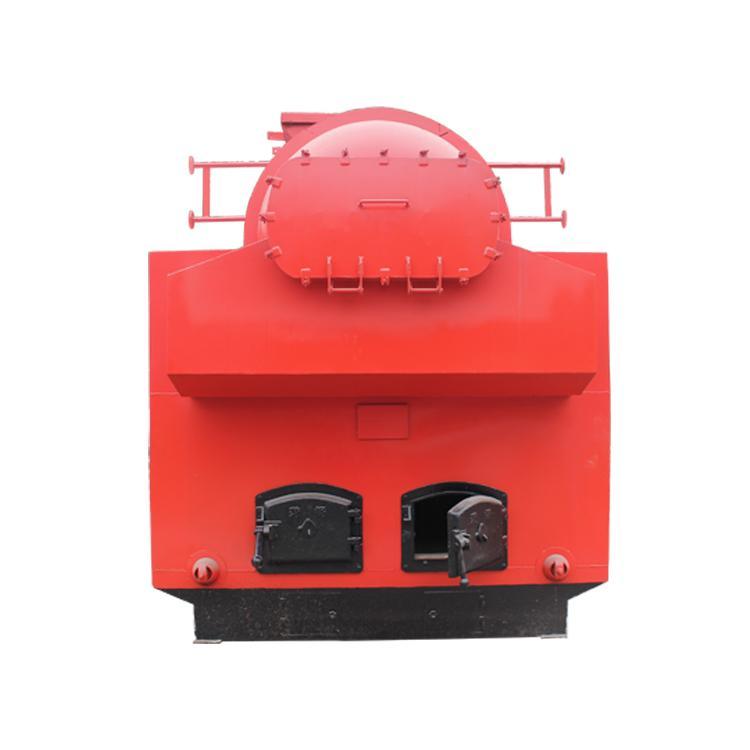


















Shandong Zhongjie Special Equipment Co., Ltd. specializes in the following main products: fuel (gas) boilers, organic heat carrier boilers, biomass boilers, waste heat recovery boilers, and other boiler products; vacuum insulation cryogenic pressure vessels such as LNG tanks, oxygen/nitrogen/argon tanks, CO2 tanks; pressure vessel products including denitrification engineering equipment, heat storage and energy storage equipment, and complete chemical equipment sets; central air conditioning and HVAC equipment such as ground (water) source heat pumps, air source units, water-cooled screw units, and air-cooled modular units. Planned products include large-scale energy centers, LNG transport vehicles, LNG tank containers, and other green energy equipment.
The emission characteristics of biomass fuel boiler flue gases mainly include the following aspects:
Particulate Emissions: During the combustion process of biomass fuel boilers, particulates are produced, including visible dust and fine particles. The amount of particulate emissions is related to fuel characteristics, combustion temperature, and combustion equipment, among other factors. Generally, biomass fuel boilers emit fewer particulates than coal boilers, but dust removal equipment is still required for treatment.
(SO2) Emissions: The content of SO2 in biomass fuel is generally low, so the SO2 emissions from biomass fuel boilers are usually low. However, in certain situations, such as using waste as fuel, the SO2 emissions may increase. Measures such as combustion control and desulfurization units can be adopted to control SO2 emissions.
NOx Emissions: The NOx emissions from biomass fuel boilers are related to factors such as fuel characteristics, combustion temperature, and combustion equipment. Biomass fuel contains a higher nitrogen content, which generates a certain amount of NOx during combustion. To control NOx emissions, measures such as low-NOx combustion technology, combustion control, and denitrification devices can be adopted.
(CO) Emissions: CO emissions from biomass fuel boilers are typically low due to the relatively complete combustion process of biomass fuel. However, in cases of incomplete combustion or unstable burning, CO emissions may increase. To control CO emissions, it is necessary to ensure a sufficient and stable combustion process.
Volatile Organic Compounds (VOCs) Emissions: The VOCs emissions from biomass fuel boilers are related to the fuel characteristics and combustion conditions. Some biomass fuels contain volatile organic compounds.
The biomass boiler body typically consists of the following components, each serving a specific function:
Furnace Chamber: The furnace chamber is the area where biomass fuel is burned, serving as the space for combustion and heat exchange. The fuel within the chamber releases heat energy during the combustion process, while flue gases exchange heat with water through the furnace chamber.
Flue: The flue is a passage for the flow of flue gas, guiding the exhaust gas from the furnace to the chimney for排放. The flue gas inside exchanges heat with the boiler water, transferring the heat from the flue gas to the water to improve thermal efficiency.
Boiler Drum: The boiler drum is the main part that holds water and steam, where water is heated to convert into steam. It is equipped with a water level control device inside to regulate the water level and ensure the safe operation of the boiler.
Grate: A grate is a device used to support and burn biomass fuel, which evenly distributes the fuel within the furnace chamber and provides air supply to promote the combustion process.
Superheater: A superheater is a device that heats the saturated steam in a boiler to increase its temperature and pressure. It transfers heat from the flue gas to the steam through heat exchange between the two.
Condenser: A condenser is a device used to condense steam into water, releasing the heat from the steam. By exchanging heat with a cooling medium (such as cold water), a condenser converts the heat from the steam into thermal energy, enhancing thermal efficiency.
Chimney: A chimney is a conduit for releasing flue gases into the atmosphere, serving as an exhaust.
A biomass boiler economizer is a device used to recover excess heat from flue gas, which serves to enhance the boiler's thermal efficiency and reduce energy waste. The economizer accomplishes this by transferring heat from the flue gas to the boiler's incoming water, preheating it and thereby reducing fuel consumption.
According to their different structures and working principles, biomass boiler economizers can be categorized into the following types:
Tubular Economizer: A common type of economizer, consisting of a series of parallel pipes. Flue gas flows over the outside of the pipes, while feedwater circulates inside them. Heat transfer through the pipe walls recovers the excess heat from the flue gas.
Finned economizer: The finned economizer, built on the basis of the tubular economizer, adds fins to increase the heat transfer area and improve efficiency. It is suitable for high flue gas temperatures.
Direct-Flow Economizer: The direct-flow economizer is a structure that separates flue gas and incoming water separately, achieving cross heat transfer between the flue gas and incoming water through multiple parallel flue gas channels and water channels, thereby improving heat transfer efficiency.
Recirculation refers to the process of reintroducing the excess heat from the economizer's recovered flue gas back into the boiler combustion area to enhance combustion temperature and thermal efficiency. Recirculation can be controlled by adjusting the recirculation ratio, typically during the boiler's operation as needed. Recirculation can increase combustion temperature, improve combustion completeness, and reduce pollutants.
Adjusting the combustion of biomass boilers can be done through the following steps:
Establish combustion parameters: Determine appropriate combustion parameters based on the design of the biomass boiler and the fuel characteristics, including combustion temperature, oxygen supply, and fuel feeding rate.
Adjust combustion temperature: Adjust the combustion temperature based on the fuel characteristics and combustion requirements. Excessive combustion temperature may lead to overburning of the fuel and energy waste, while insufficient combustion temperature may result in incomplete combustion and increased emissions.
Control Oxygen Supply: Adjust the oxygen supply based on the oxygen content during the combustion process. Excessive oxygen supply may lead to incomplete fuel combustion and energy waste, while insufficient oxygen supply may result in incomplete combustion and increased emissions.
Adjust fuel supply rate: Adjust the fuel supply rate based on heat load and fuel characteristics. An excessive fuel supply rate may lead to overburning and energy waste, while an insufficient fuel supply rate may result in incomplete combustion and inadequate heating.
Monitoring and Adjustment: By monitoring critical parameters during the combustion process, such as combustion temperature, oxygen content, and flue gas composition, adjust combustion parameters promptly to ensure the stability of the combustion process.
Note: Adjusting the combustion of biomass boilers requires consideration of the specific kettle
Zhongjie Special Equipment upholds the grand vision of "realizing employees' dreams, creating value for customers, and striving for the prosperity and strength of our motherland," and is dedicated to the development of the green energy equipment industry. We commit to society with high-quality products and services at competitive prices!
WeChat Official Account

Scan to follow Official Account



















