


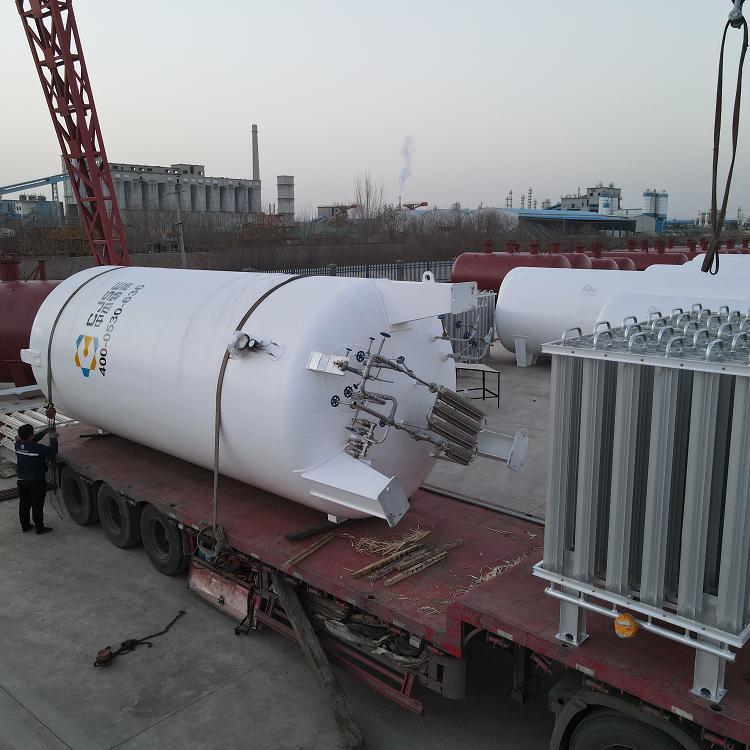

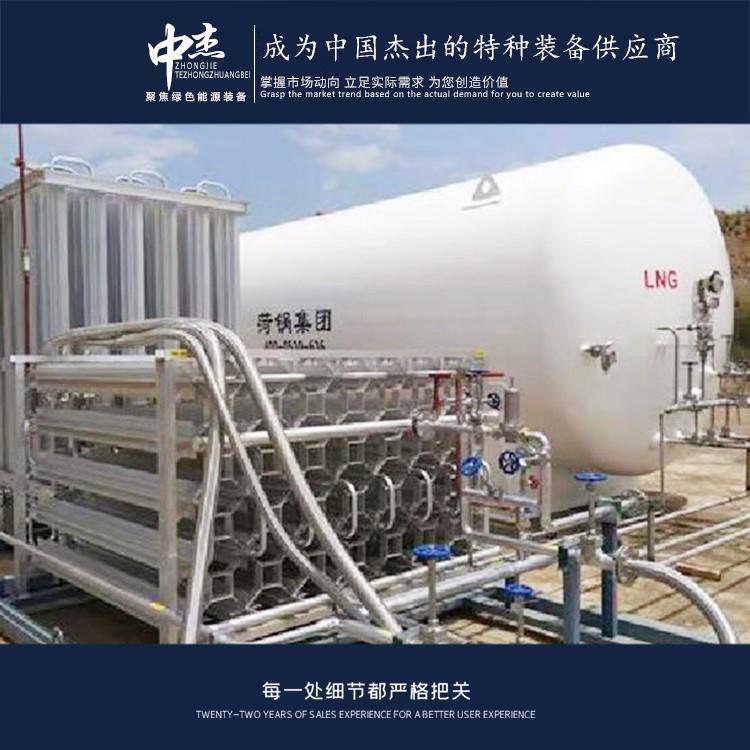


















Shandong Zhongjie Special Equipment's main products include: fuel (gas) boilers, organic heat carrier boilers, biomass boilers, waste heat recovery boilers, and other boiler products; vacuum insulation cryogenic pressure vessels such as LNG tanks, oxygen-nitrogen-argon tanks, and CO2 tanks; pressure vessel products like denitrification engineering equipment, heat storage and energy storage equipment, and complete chemical equipment sets; central air conditioning and HVAC equipment such as ground (water) source heat pumps, air source units, water-cooled screw units, and air-cooled modular units. Planned products include large-scale energy centers, LNG transport vehicles, and LNG tank containers, among other green energy equipment.
Before using the carbon dioxide tank, certain inspection and filling points must be addressed. Here are some common precautions:
* Inspect the tank's exterior: Look for any signs of obvious damage, corrosion, or leakage. Ensure the tank shell is undamaged.
* Check valves and fittings: Verify that the valves and fittings on the tank are securely fastened and there are no leaks. Ensure the normal operation of valves and fittings.
* Inspect the pressure gauge: Check that the pressure gauge on the tank is functioning properly and the readings are accurate. Replace or repair if abnormal.
* Check the level indicator: Verify that the level indicator on the tank is working correctly and accurately displays the liquid level. Repair or replace if abnormal.
* Inspect the pressure relief device: Check that the pressure relief device (e.g., safety valve) on the tank is functioning properly and the set pressure meets requirements. Repair or replace if abnormal.
* Check the filling equipment: Ensure the filling equipment (e.g., filling pipes, pumps) is operating normally with no leaks or blockages. Ensure the safety and reliability of the filling equipment.
* Filling operation: During the filling process, pay attention to the following:
* Control the filling speed, avoiding too fast or too slow.
* Control the filling pressure, ensuring it does not exceed the tank's rated pressure.
* Monitor the liquid level to ensure proper filling.
* Regularly check the filling equipment and valves to ensure they are functioning normally.
* Safety measures: Follow relevant safety regulations and procedures during the filling process. Operators should wear appropriate protective gear, such as antistatic clothing, gloves, etc.
* Note that specific inspection and filling points may vary depending on the tank type and application. Before using a carbon dioxide tank, inspect and operate according to relevant specifications and standards, and consult with experts to ensure safety and effectiveness.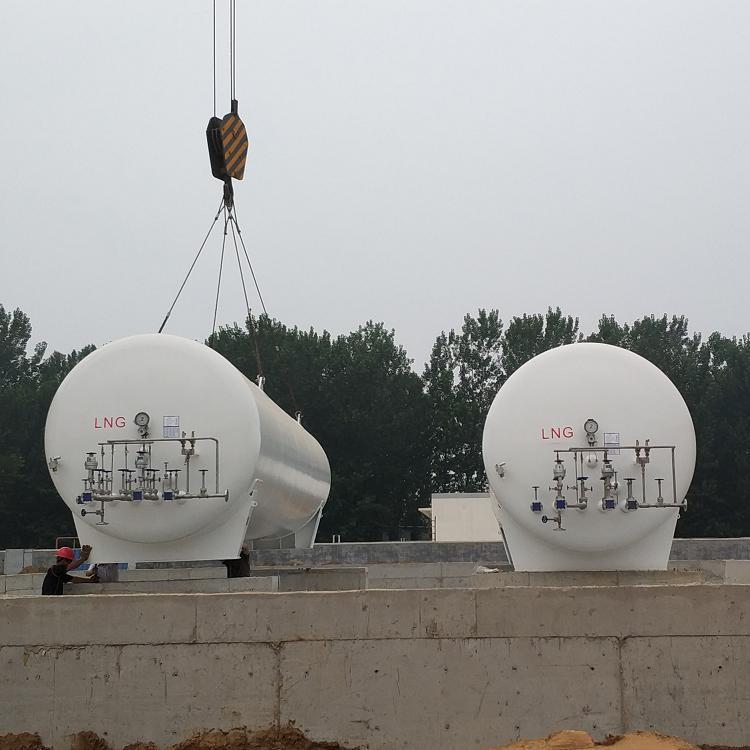
The spacing regulations for carbon dioxide storage tanks are typically governed by relevant safety codes and standards, with specific spacing requirements varying due to factors such as location, usage, and tank capacity. Here are some common spacing rules:
- Small Spacing Between Tanks: Generally, the small spacing between adjacent tanks should comply with relevant safety codes and standards. This space ensures that if one tank leaks or has an accident, the neighboring tank is not affected.
- Spacing Between Tanks and Buildings: The distance between tanks and buildings also needs to meet relevant codes and standards. This spacing ensures that the building is not affected in the event of a tank leak or accident.
- Spacing Between Tanks and Equipment: The spacing between tanks and other equipment (such as pipes, pumps, etc.) should also adhere to relevant codes and standards. This space ensures the proper operation and maintenance of the equipment.
- Safety and Evacuation Routes: Sufficient safety and evacuation routes should be provided around and between tanks for safe personnel evacuation during emergencies.
It is important to note that specific spacing rules may vary depending on different regions and industries. Therefore, when installing and using carbon dioxide storage tanks, it is essential to refer to local safety codes and standards and consult with experts to ensure compliance with relevant requirements.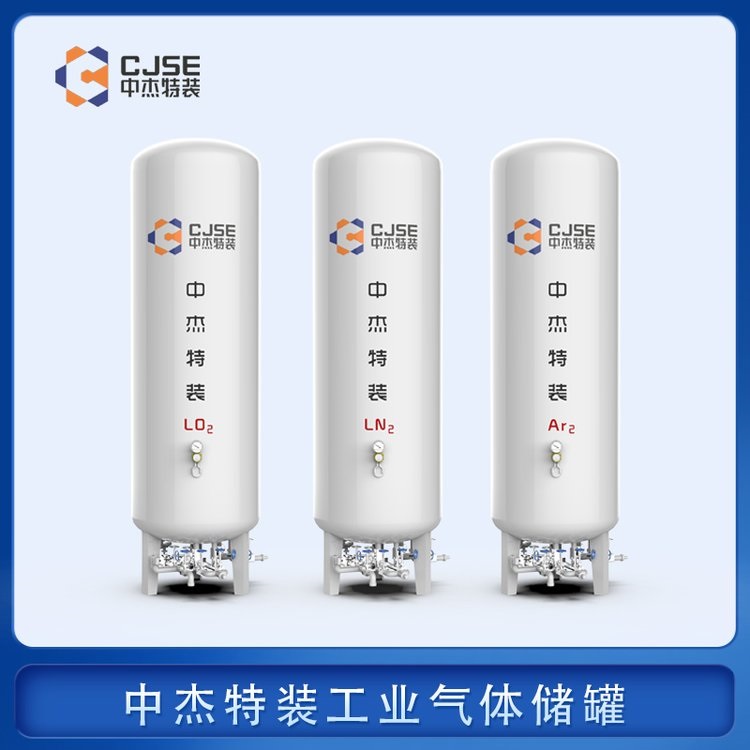
Construction features of carbon dioxide storage tanks mainly include the following aspects: Material selection: Carbon dioxide storage tanks are typically made of carbon steel or stainless steel to ensure their corrosion resistance and pressure-bearing performance. Welding technology: The welding process of the tank is crucial for its quality and safety. The welding process should comply with relevant standards and specifications to ensure the quality and strength of the welds. Corrosion prevention measures: Due to the corrosive nature of carbon dioxide, both the internal and external surfaces of the tank should be treated for corrosion prevention. Common corrosion prevention measures include applying anti-corrosion paint, coating with a corrosion-resistant layer, or using anti-corrosion coatings. Safety valves and pressure sensors: The tank should be equipped with safety valves and pressure sensors to monitor and control the internal pressure of the tank, ensuring safe operation. Steps for correctly installing a carbon dioxide storage tank are as follows: Site preparation: Select an appropriate site for installation, ensuring the site is level, stable, and meets safety distance requirements. Clear the site to ensure there are no obstructions or fire sources. Foundation construction: Construct the foundation based on the size and weight of the tank. The foundation should have sufficient strength and stability to support the weight and pressure of the tank. Tank installation: Place the tank on the foundation, ensuring there is appropriate padding and fastening devices between the tank and the foundation. Connect and secure the tank according to the tank's design requirements. Pipe connection: Connect the tank to the piping system as needed. Ensure the seals at the connection points are tight to prevent leaks. Safety equipment installation: Install the required safety equipment for the tank, such as safety valves, pressure sensors, temperature sensors, etc. Ensure these facilities are properly installed and connected.
Common defects in carbon dioxide storage tanks during use may include deformation. Here are some reasons that could lead to tank deformation: Overpressure: When the internal pressure of the tank exceeds its design pressure, deformation may occur. This could be due to operator error, system failure, or other causes. Temperature Fluctuations: Carbon dioxide storage tanks expand and contract with temperature changes, and if the temperature changes are too extreme or rapid, tank deformation may result. Internal Corrosion: If there is corrosion inside the tank, it can damage the structural integrity of the tank, leading to deformation. External Damage: External impacts, compressions, or other physical damages can cause tank deformation. Incorrect Installation or Use: Incorrect installation or usage methods can lead to uneven stress on the tank, causing deformation. Tank deformation may reduce the structural integrity of the tank, even posing risks of leakage or rupture. Therefore, it's important to regularly inspect and maintain the tank's integrity and to follow proper operation and installation procedures. If tank deformation is detected or other defects are suspected, the tank should be immediately discontinued from use and assistance from professionals should be sought for inspection and repair. Do not attempt to repair or continue using a defective tank to ensure operational safety.
Our company attaches great importance to technological innovation and R&D design, boasting 1 municipal-level enterprise technology center in Heze City. We have established test facilities for non-destructive testing,理化 analysis, welding, hydrostatic testing, etc., and are equipped with over 600 various instruments and equipment, including CNC machines, X-ray flaw detectors, digital ultrasonic flaw detectors, mechanical property testing machines, chemical analyzers, spectrometers, tensile testing machines, plasma welding machines, and more. The key products we have developed, such as temperature and pressure vessel welding, biomass boiler emission reduction, and waste heat recovery, have successively been selected for multiple Shandong Provincial Department of Industry and Information Technology science and technology innovation projects, Shandong Province key projects, and Heze City innovation and excellence projects. We have accumulated a total of 27 authorized utility models, 16 authorized inventions, participated in drafting 2 standards, 2 industry standards, and registered 15 trademarks. The technical team of our company, in collaboration with Professor Yijiang Li of Shandong University, has developed deep cryogenic container processing technology using the international plasma arc + filler wire tungsten inert gas (PAW-GTAW) welding technique. After provincial scientific and technological achievement assessment, the technology level has reached international standards in the field of deep cryogenic container manufacturing. Choose ZJ Special Equipment, and let's create brilliance together!
WeChat Official Account

Scan to follow Official Account



















