



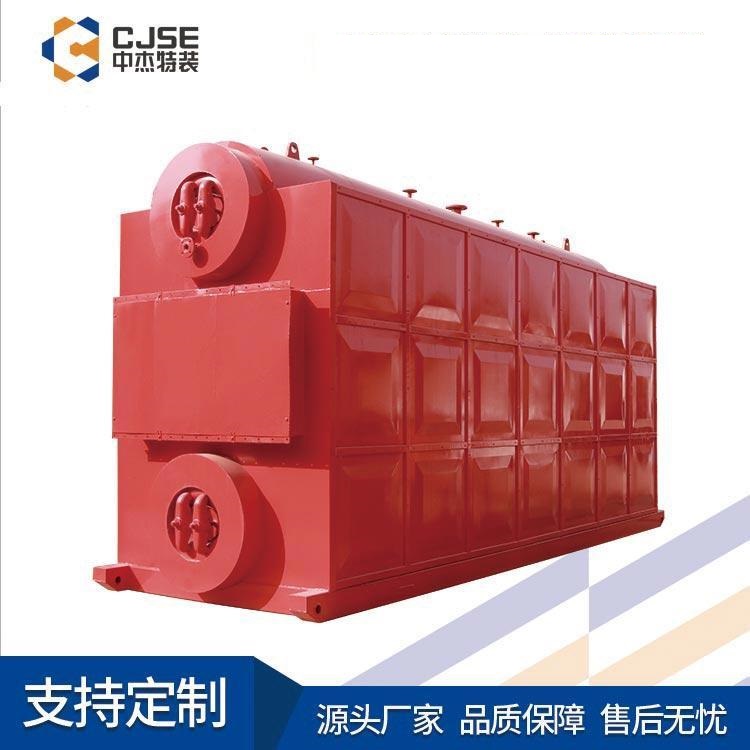
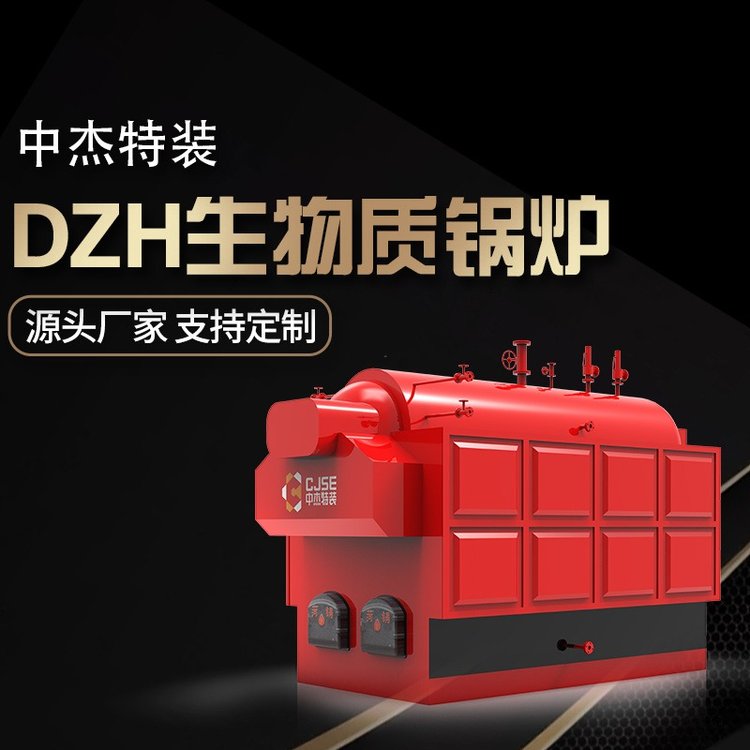


















Shandong Zhongjie Special Equipment (formerly Heze Boiler Factory Co., Ltd.) holds an A-grade boiler manufacturing license, an A2-grade pressure vessel manufacturing license, an A2-grade pressure vessel design license, a B-grade boiler installation license, and GB2/Class and GC2/Class pressure pipeline installation licenses, as well as an electromechanical equipment installation contracting qualification. It is a member of the China Boiler and Water Treatment Association, the China Chemical Equipment Association, and the理事 unit of the Shandong Equipment Manufacturing Association. The company has also passed the ISO9001 Quality Management System, ISO14001 Environmental Management System, OHSAS18001 Occupational Health and Safety Management System certifications, and the ASME/U2 certification.
A biomass boiler safety valve is a device used to ensure the safety of the boiler system. Its primary function is to automatically open and release excessive pressure when the internal pressure of the boiler exceeds the set value, preventing the boiler from exploding or causing other safety incidents.
Biomass boiler safety valves typically consist of the valve body, valve cover, spring, valve core, and seals. When the internal pressure of the boiler exceeds the set value, the spring is subjected to pressure, pushing the valve core upwards to allow pressure to be released through the valve body. Once the pressure drops below the set value, the spring re-closes the valve core, preventing further pressure release.
The set pressure of the safety valve is typically determined based on the boiler's design pressure and operational requirements. It should be selected and installed in accordance with relevant standards and specifications, and regularly inspected and maintained to ensure proper operation and reliability.
The presence of a biomass boiler safety valve effectively safeguards the boiler system's safety, preventing hazardous situations caused by excessive pressure. It is one of the crucial safety devices in the biomass boiler system.
Biomass steam boilers offer several advantages:
Renewable Energy: Biomass steam boilers utilize biomass fuels such as wood chips, straw, and husks, which are renewable. Compared to traditional fossil fuels, these fuels offer lower carbon emissions and environmental friendliness.
Diverse fuel options: Biomass steam boilers are adaptable to a variety of biomass fuels, such as sawdust, straw, and husks, etc., demonstrating strong fuel versatility. This allows for broad application of biomass steam boilers across different regions and industries.
Energy Utilization: Biomass steam boilers employ advanced combustion technology and heat recovery systems to achieve high energy utilization efficiency. Through optimized combustion processes and heat recovery, energy efficiency can be maximized and energy consumption minimized.
Flexible operation modes: Biomass steam boilers can be operated flexibly according to actual needs, such as manual control, automatic control, or remote monitoring, etc. This allows biomass steam boilers to meet requirements in various scenarios and provide a stable steam supply.
Superior Environmental Performance: Biomass steam boilers produce relatively fewer emissions during the combustion process, with less environmental impact. With reasonable combustion control and flue gas treatment devices, the content of emissions can be further reduced, meeting higher environmental protection standards.
Replace Traditional Boilers: Biomass steam boilers can replace traditional coal or oil-fired boilers, reducing dependence on fossil fuels and lowering energy costs and carbon emissions. This is significant for achieving sustainable development and reducing greenhouse gas emissions.
In summary, biomass steam boilers offer renewable energy and diversity.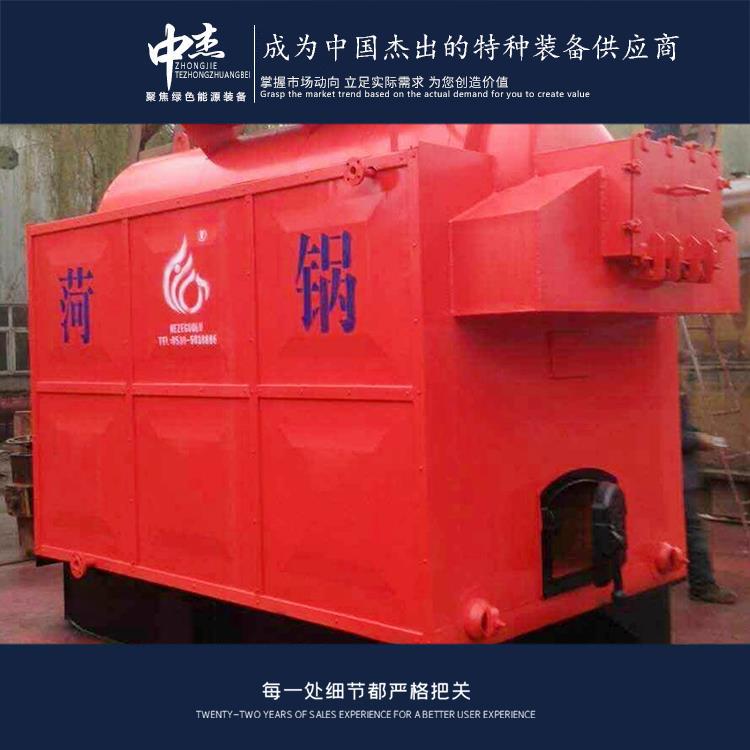
The SZL biomass boiler is a water-tube boiler with two drums and a chain grate, designed for burning biomass fuel. Below is the structural introduction of the SZL biomass boiler:
Drum: The SZL biomass boiler features two parallel water-tube drums, the upper drum for the combustion chamber and the lower drum for heat transfer of steam and flue gas.
Briquette Grate: The SZL biomass boiler employs a chain grate, through which the fuel enters the combustion chamber for the burning process. The design of the chain grate ensures uniform and complete combustion of the fuel.
Combustion Chamber: The combustion chamber is located within the upper cylinder, where the fuel is burned, releasing thermal energy. The structure and design of the combustion chamber ensure complete fuel combustion and efficient thermal energy conversion.
Flue Channel: The smoke produced by combustion passes through the flue channel into the lower cylinder, where it exchanges heat with the water inside the pipes, transferring thermal energy to the water and producing steam.
Water pipes: A large number of water pipes are arranged inside the lower drum of the SZL biomass boiler. Flue gas passes through these pipes, where it exchanges heat with the water, transferring thermal energy to it and generating steam.
Upper Equipment: The upper equipment of the SZL biomass boiler includes steam separators, level gauges, safety valves, etc., which are used to control and protect the safe operation of the boiler.
Equipment: The SZL biomass boiler includes auxiliary equipment such as the water supply system, effluent discharge system, and fuel supply system, which are used to provide the necessary water source for the boiler, treat waste water, and supply fuel, etc.
The SZL biomass boiler features a compact structure and high thermal efficiency, suitable for biomass fuel combustion. Its dual-drum and chain grate design ensures complete fuel combustion and heat conversion, while also offering excellent safety and reliability.
Reducing nitrogen oxide (NOx) emissions from biomass boilers can be achieved through the following measures:
Combustion Control Technology: Utilizes advanced combustion control techniques, such as low nitrogen combustion technology. By optimizing the combustion process and regulating the temperature and oxygen concentration, nitrogen oxide emissions are reduced. Methods like staged combustion and optimized combustion chamber design can be employed to lower combustion temperatures and extend combustion duration, further minimizing nitrogen oxide formation.
SNCR Technology: Selective Non-Catalytic Reduction (SNCR) technology involves injecting a reductant, such as urea solution, into the combustion process to react with nitrogen oxides, converting them into nitrogen and water. This technique can reduce the formation and emission of nitrogen oxides during combustion.
SCR Technology: Selective Catalytic Reduction (SCR) technology is a nitrogen oxide control method. By injecting urea solution into flue gas and passing it through a catalyst, nitrogen oxides are converted into nitrogen and water. SCR technology achieves nitrogen oxide removal at lower temperatures and is suitable for large biomass boilers.
Flue Gas Recirculation (FGR): FGR technology recycles a portion of flue gas back into the boiler combustion chamber, reducing combustion temperature and oxygen concentration, thereby decreasing the formation of nitrogen oxides. This technique can control nitrogen oxide emissions by adjusting the recirculation ratio.
Fuel selection and pretreatment: Choosing low nitrogen fuels, such as low nitrogen biomass fuel, can reduce the formation of nitrogen oxides. Additionally, for biomass fuels with high nitrogen content, pretreatment measures like drying and gasification can be taken to decrease the formation of nitrogen oxides during combustion.
Regular maintenance and cleaning: Regularly maintain and clean biomass boilers to ensure the cleanliness and proper operation of components such as burners and heat exchangers. Cleaning the combustion chamber and heat exchangers can reduce the accumulation of dirt, enhance heat transfer efficiency, and lower nitrogen oxide emissions.
By implementing the aforementioned measures comprehensively, nitrogen oxide emissions from biomass boilers can be effectively reduced, achieving both environmental protection and energy-saving goals. The specific measures to be chosen should be based on the characteristics of the boiler, its operating conditions, and emission requirements.
Our company places great emphasis on technological innovation and research and development. We have 1 municipal-level enterprise technology center in Heze City, equipped with testing facilities for non-destructive testing, physical and chemical testing, welding testing, hydrostatic testing, etc. We have over 600 pieces of equipment, including CNC machine tools, X-ray flaw detectors, digital ultrasonic flaw detectors, mechanical property testing machines, chemical analyzers, spectrometers, tensile testing machines, plasma welding machines, and more. Our key products and technologies, such as welding of temperature and pressure vessels, biomass boiler emissions reduction, and waste heat utilization, have successively been selected for multiple Shandong Provincial Department of Industry and Information Technology science and technology projects, Shandong Provincial key projects, and Heze City innovation and excellence projects. We have累计 obtained 27 authorized utility models, 16 authorized inventions, participated in drafting 2 standards, 2 industry standards, and registered 15 trademarks. Our technical team, in collaboration with Professor Yajiang Li of Shandong University, has jointly developed deep cryogenic container processing technology, utilizing the international plasma arc + filler wire tungsten inert gas arc welding (PAW-GTAW) technology. This technology has been appraised as reaching international standards in the field of deep cryogenic container manufacturing at the provincial level. Choose ZJ Special Equipment, and let's create brilliance together!
WeChat Official Account

Scan to follow Official Account



















