


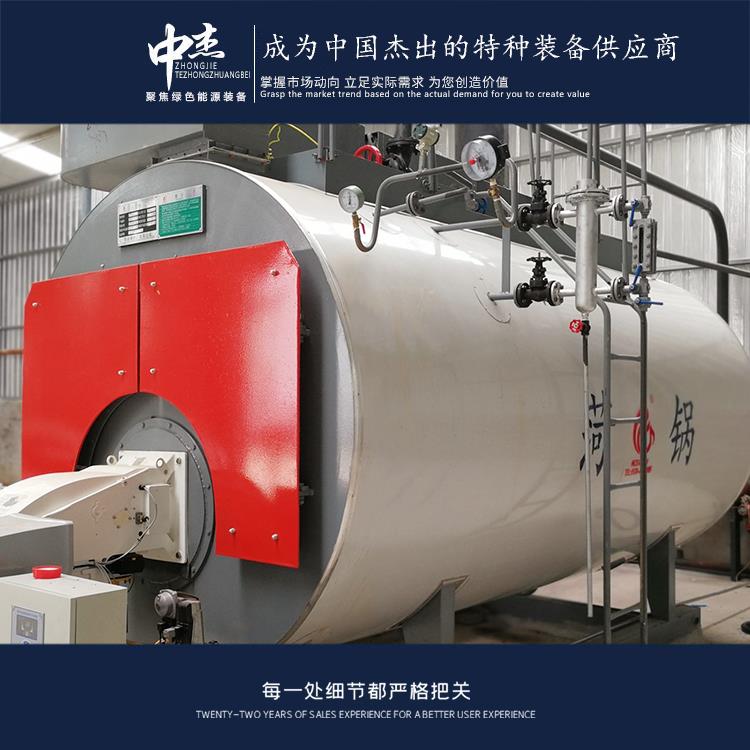

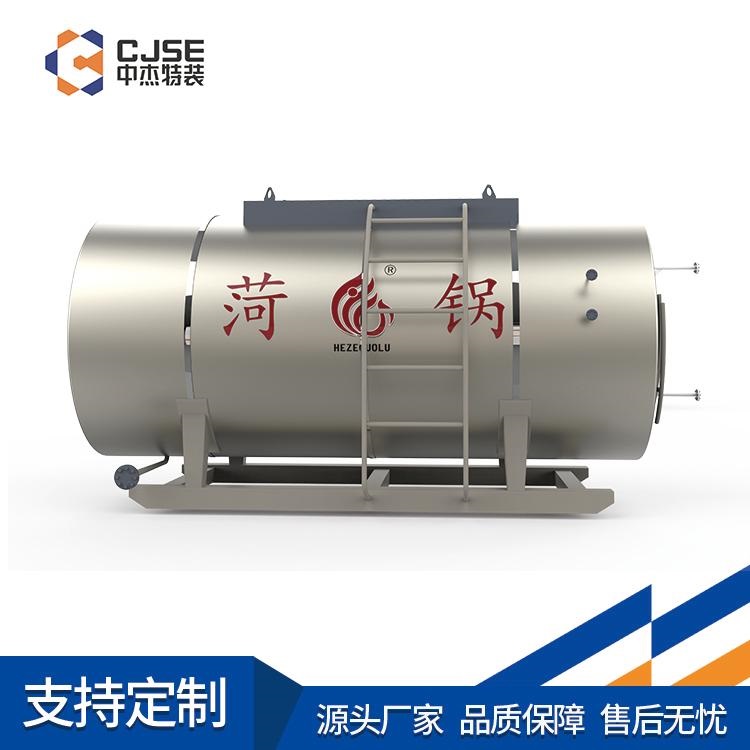
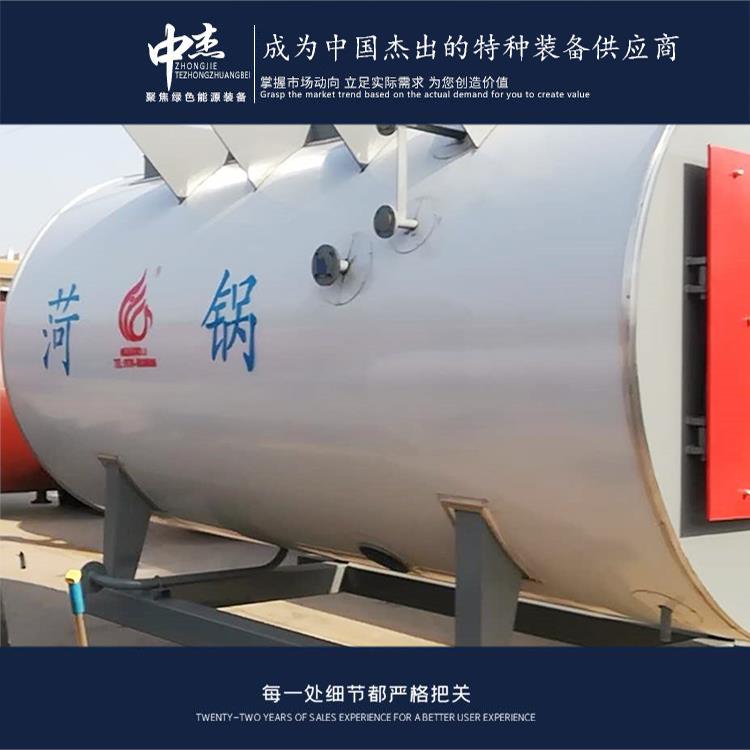


















Shandong Zhongjie Special Equipment (formerly Heze Boiler Factory Co., Ltd.) holds an A-grade boiler manufacturing license, an A2-grade pressure vessel manufacturing license, an A2-grade pressure vessel design license, a B-grade boiler installation license, and GB2/Class and GC2/Class pressure pipeline installation licenses, as well as a mechanical and electrical equipment installation contracting qualification. It is a member of the China Boiler and Water Treatment Association, the China Chemical Equipment Association, and the理事 member of the Shandong Equipment Manufacturing Association. The company has also passed certifications for the ISO9001 Quality Management System, ISO14001 Environmental Management System, OHSAS18001 Occupational Health and Safety Management System, and the American ASME/U2 certification.
Clean and environmentally friendly gas boilers offer several advantages:
- Low emissions: The exhaust from gas combustion has relatively low emissions, containing fewer pollutants such as nitrogen oxides and particulates. Compared to coal or oil-fired boilers, gas boilers have lower emissions and cause less environmental pollution.
- High thermal efficiency: Gas combustion has a high thermal efficiency, allowing for the full utilization of fuel energy and reducing energy waste. Compared to other traditional fuels like coal and oil, gas combustion is more efficient, providing more heat energy.
- Clean combustion: Gas combustion does not produce ash or soot, reducing the accumulation of carbon and dirt inside the boiler and in the flue. This reduces the cleaning and maintenance work of the boiler, extending its lifespan.
- Combustion stability: The combustion performance of gas is stable, with minimal flame fluctuations and explosion risks during combustion. This makes gas boilers safer and more reliable in operation.
- Fast start and stop: Compared to other fuels, gas boilers have faster and more flexible start-up and shutdown processes. This makes them suitable for scenarios requiring frequent start and stop, such as seasonal heating and hot water needs.
- Renewable energy integration: As a clean fuel, gas can be combined with renewable energy sources, such as solar hot water systems and biomass fuel. This integration can further improve energy utilization efficiency and environmental friendliness.
The decline in the consumption of thermal oil boilers can be attributed to several factors:
- Combustion Technology: Modern thermal oil boilers utilize advanced combustion techniques such as premixed combustion and flame control, ensuring complete fuel combustion and enhancing thermal energy utilization, thereby reducing energy consumption.
- Heat Recovery: Thermal oil boilers often generate a significant amount of excess heat during flue gas emissions. By employing heat recovery systems like flue gas heat recovery boilers or flue gas heat exchangers, the excess heat can be recovered and utilized, improving energy efficiency and reducing consumption.
- Intelligent Control Systems: Contemporary thermal oil boilers are equipped with intelligent control systems capable of real-time monitoring and adjustment of operating parameters such as temperature, pressure, and flow. This ensures optimal boiler operation, preventing energy waste and loss.
- Energy-saving Retrofitting and Optimization: Older thermal oil boilers can be retrofitted and optimized for energy savings. This includes installing energy-saving equipment like variable-speed drives and modified burners to enhance energy efficiency. Additionally, optimizing the boiler system, such as improving pipe insulation and reducing leaks, can reduce energy loss.
- Energy Management and Maintenance: Effective energy management and regular equipment maintenance are crucial factors in reducing energy consumption. Implementing energy management measures such as energy monitoring, metering, and promoting energy-saving awareness can identify and resolve energy waste issues. Regular equipment maintenance ensures proper operation and avoids unnecessary energy loss.
- In summary, the decline in energy consumption of thermal oil boilers can be achieved through combustion technology, heat recovery, intelligent control, energy-saving retrofitting, and effective energy management.
The management system for gas thermal oil furnace equipment incidents primarily includes the following aspects:
1. Equipment Safety Management System: Establish and improve the safety management system for gas thermal oil furnace equipment, clarify responsibilities and authorities, and ensure safe equipment operation. This includes safety operation procedures, emergency response plans, equipment inspection and maintenance schedules, etc.
2. Equipment Maintenance Management System: Establish a maintenance management system for equipment, clarify maintenance responsibilities and plans. This includes regular equipment inspections, maintenance, and repairs to ensure smooth and safe operation of the equipment.
3. Equipment Operation Management System: Establish an equipment operation management system, clarifying operation procedures and requirements. This includes startup, shutdown, adjustment, and monitoring processes to ensure equipment safety and operation.
4. Equipment Accident Management System: Establish an equipment accident management system, specifying reporting, investigation, and handling procedures. This includes requirements for equipment accident reporting, accountability, cause analysis, and improvement measures to reduce accidents and minimize losses.
5. Equipment Training and Assessment System: Establish a training and assessment system for equipment operators to ensure they possess necessary skills and knowledge. This includes equipment operation, safety, and technical training, along with regular assessments and evaluations of operators.
6. Equipment Inventory and Record Management System: Establish an inventory and record management system for equipment, recording operation status, maintenance records, accident records, etc. This includes equipment inventory management, maintenance record filling and preservation, and accident record organization and analysis for easier equipment management and issue tracing.
The aforementioned is some basic content of the management system for gas thermal oil furnace equipment incidents. Specific management systems should be formulated and improved based on actual conditions. Compliance with relevant laws, regulations, and standards is also required to ensure equipment safety and environmental performance.
To reduce the operating costs of gas boilers, consider the following aspects:
- Combustion System: Ensure the stability of the combustion system in the gas boiler. Regularly inspect and maintain the burners, clean the nozzles and combustion chamber, adjust the ratio of gas to air to enhance combustion efficiency and reduce gas waste.
- Energy-Saving Control System: Install and use energy-saving control systems, such as smart thermostats and timers. These systems can automatically adjust the boiler's operating status based on actual needs, avoiding unnecessary energy waste.
- Regular Maintenance: Conduct regular maintenance on gas boilers, including cleaning heat exchangers, inspecting and replacing seals, and clearing gas pipelines. Maintain the boiler's normal operating condition to reduce energy loss and the occurrence of malfunctions.
- Heat Recovery: Consider installing heat recovery devices such as waste heat recovery units or flue gas heat exchangers. These devices can utilize the excess heat from the flue gas emitted by the gas boiler to heat water or other equipment requiring heat, improving energy utilization efficiency.
- Pipe Insulation and Leak Inspection: Ensure that the insulation of gas and hot water pipelines is good to reduce energy loss. Regularly check for pipeline leaks and repair them promptly to avoid energy waste and safety hazards.
- Energy Management and Monitoring: Establish an effective energy management system to monitor and analyze the energy consumption of gas boilers. Through data analysis and optimizing operating strategies, identify energy-saving potential and areas for improvement.
- Training and Awareness: Provide employee training to enhance awareness of operating and maintaining gas boilers. Employee knowledge and skill improvement help in effective management and operation of gas boilers, reducing operating costs.
By considering these factors comprehensively, you can effectively reduce the operation costs of gas boilers.
Shandong Zhongjie Special Equipment, welcome customers to our factory for business discussions.
WeChat Official Account

Scan to follow Official Account



















