



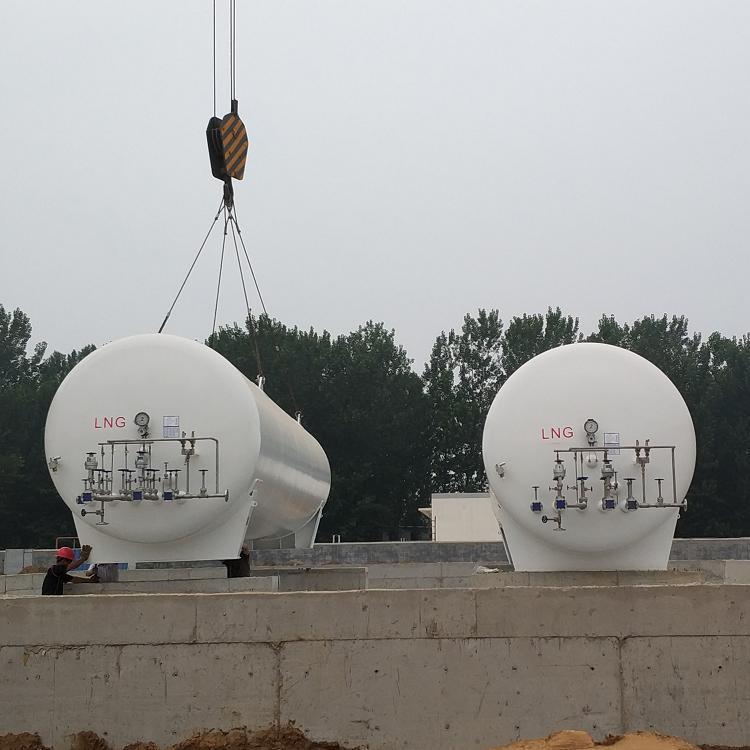
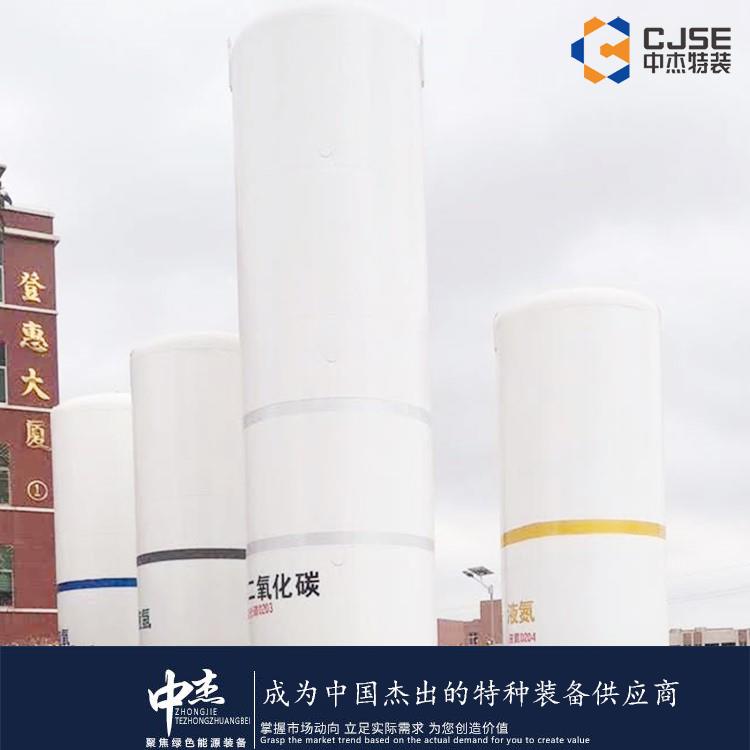


















Shandong Zhongjie Special Equipment's main products include: fuel (gas) boilers, organic heat carrier boilers, biomass boilers, waste heat recovery boilers, and other boiler products; vacuum insulation cryogenic pressure vessels such as LNG tanks, oxygen/nitrogen/argon tanks, and CO2 tanks; pressure vessel products such as denitrification engineering equipment, heat storage and energy storage equipment, and complete chemical equipment; central air conditioning and HVAC equipment such as ground (water) source heat pumps, air source units, water-cooled screw units, and air-cooled modular units. Planned products include large-scale energy centers, LNG transport vehicles, LNG tank containers, and other green energy equipment.
When using carbon dioxide storage tanks, the following safety procedures must be adhered to ensure safety:
Tank Operator Training: All operators must receive training to understand the characteristics, operational requirements, and safety measures of carbon dioxide storage tanks. The training should include safe tank operation, leak handling, emergency procedures, etc.
Safety Operating Procedures: Establish and follow relevant safety operating procedures, including tank startup, shutdown, inspection, and maintenance. Operators should operate in accordance with the procedures to ensure safe tank operation.
Leak Handling: Develop a leak handling program, including leak detection, emergency shutdown, and isolation of the leak source. Operators should be familiar with the leak handling procedures and be able to respond quickly and correctly to leak incidents.
Fire Prevention Measures: Carbon dioxide is flammable, so fire prevention measures must be taken when in use. Smoking, open flame operations, or the placement of flammable materials are prohibited near the tank. Ensure that fire protection equipment around the tank is in good condition and that fire drills are conducted regularly.
Waste Gas Emission: When using carbon dioxide storage tanks, ensure that waste gases are emitted correctly to avoid the accumulation of carbon dioxide in enclosed spaces, which can lead to asphyxiation and safety risks. Ensure the proper functioning and unobstructed operation of the waste gas emission system.
Regular Inspection and Maintenance: Conduct regular inspections of the tank's exterior, seals, valves, and pipe connections. If any anomalies or damage are found, repairs or replacements should be made promptly. Also, regularly inspect and maintain the tank's safety valves, pressure sensors, and other accessories.
Emergency Response Plan: Develop and implement an emergency response plan, including procedures for handling leak incidents, evacuation, and first aid measures. Operators should be familiar with the emergency response plan and conduct drills regularly.
Monitoring and Alarm Systems: Install and maintain monitoring and alarm systems for the tank.
Common defects that may occur during the use of pressure vessels include corrosion. Here are some causes that may lead to corrosion in pressure vessels:
Chemical media: Certain chemical media are corrosive, such as acids, alkalis, and salts. When these media come into contact with the vessel material, corrosion may occur.
Humidity and moisture: High humidity environments or long-term exposure to moisture can cause the vessel surface to corrode, especially when oxygen is present, which may accelerate the corrosion rate.
Rusting: When the protective layer on the vessel surface (such as coatings or plating) is damaged or destroyed, the vessel may rust. Rusting can damage the vessel's surface and may lead to further corrosion.
Electrochemical corrosion: When different metals or metals and non-metals come into contact, an electrochemical corrosion battery may form, which can cause localized corrosion on the vessel surface.
Welding defects: Defects such as weld pores and cracks may be introduced during the welding process, which may become starting points for corrosion.
Corrosion can weaken the structural strength of the vessel, increasing the risk of leakage or rupture. Therefore, regular inspection and maintenance of the anti-corrosion layer, coating, or plating on pressure vessels are important. If corrosion issues are found, appropriate measures should be taken to repair or replace the damaged parts.
In addition, selecting appropriate materials and anti-corrosion measures, as well as proper operation and maintenance methods, can reduce the risk of corrosion in pressure vessels. Adhering to relevant safety operation procedures and standards ensures the safe operation of pressure vessels.
Carbon dioxide tanks are equipment used for storing and transporting CO2. They are typically sealed containers with specialized design and structure to ensure safe storage and usage of CO2. Here are some common details about carbon dioxide tanks: Storage Form: CO2 is in a gaseous state at room temperature but can be compressed into a liquid under high pressure for easier storage and transportation. Carbon dioxide tanks are generally used for storing liquid CO2. Storage Pressure: These tanks usually store high-pressure CO2, with pressure around 20-25 bar. This high-pressure state helps maintain CO2 in a liquid state. Storage Capacity: The capacity of carbon dioxide tanks can vary based on requirements, from small ones of a few thousand liters to large ones of tens of thousands of liters. The choice of capacity depends on specific application needs. Safety: CO2 is colorless, odorless, and non-toxic, but at high concentrations, it can pose asphyxiation risks. Thus, appropriate safety measures such as ventilation and protective gear must be taken when using carbon dioxide tanks to ensure the safety of operators. Applications: Carbon dioxide tanks are widely used across various industries, including food and beverage, pharmaceutical, fire suppression, and gas supply. They are used for storing and providing CO2 to meet diverse industry demands. It is important to note that the design, manufacture, and use of carbon dioxide tanks should comply with relevant regulations, standards, and safety guidelines. Operators should follow the manual and safety guidelines, and cooperate with local regulatory authorities to ensure the tank's safety and reliability.
Common defects that may occur in the process of using CO2 storage tanks include deformation. Below are some reasons that may lead to tank deformation: Overpressure: When the internal pressure of the tank exceeds its design pressure, it may cause deformation. This could be due to operator error, system failure, or other causes. Temperature Fluctuations: CO2 storage tanks expand and contract with temperature changes, and if the temperature changes are too large or too rapid, it may lead to tank deformation. Internal Corrosion: If there are corrosion issues within the tank, the corrosion can damage the structural integrity of the tank, causing deformation. External Damage: External impacts, compressions, or other physical damages can lead to tank deformation. Incorrect Installation or Use: Incorrect installation or usage methods may cause uneven stress on the tank, resulting in deformation. Tank deformation may reduce the structural integrity of the tank, even posing risks of leakage or rupture. Therefore, it is important to regularly inspect and maintain the integrity of the tank and follow proper operational and installation procedures. If tank deformation or other defects are detected, or if there is suspicion of such issues, the tank should be immediately discontinued from use and professional assistance should be sought for inspection and repair. Do not attempt to repair or continue using a defective tank yourself to ensure operational safety.
Zhejiang ZheJie Special Equipment Co., Ltd. upholds the great vision of "Realizing Employees' Dreams, Creating Value for Clients, and Striving for Our Nation's Prosperity," dedicatedly focusing on the development of green energy equipment. We offer society products and services with high performance at competitive prices!
WeChat Official Account

Scan to follow Official Account



















