


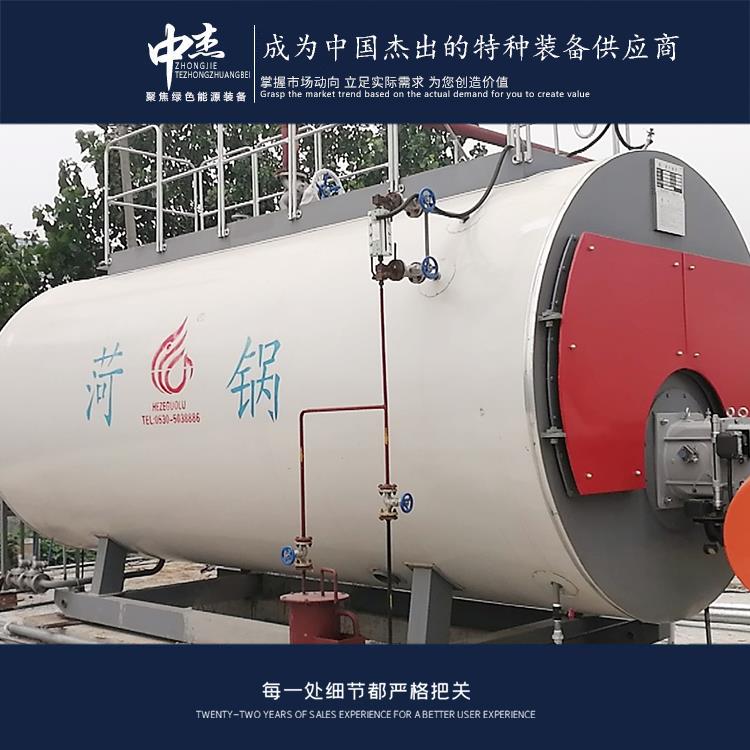

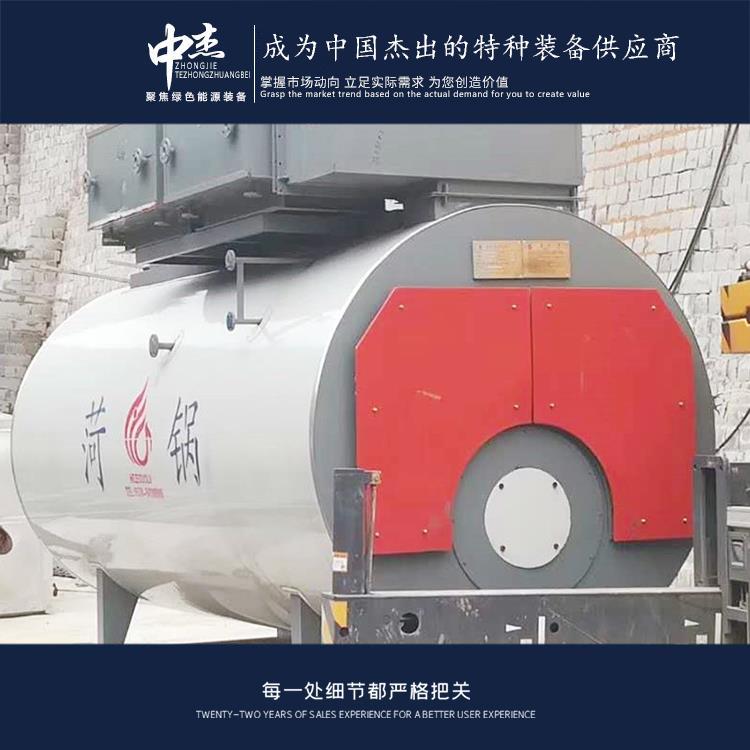
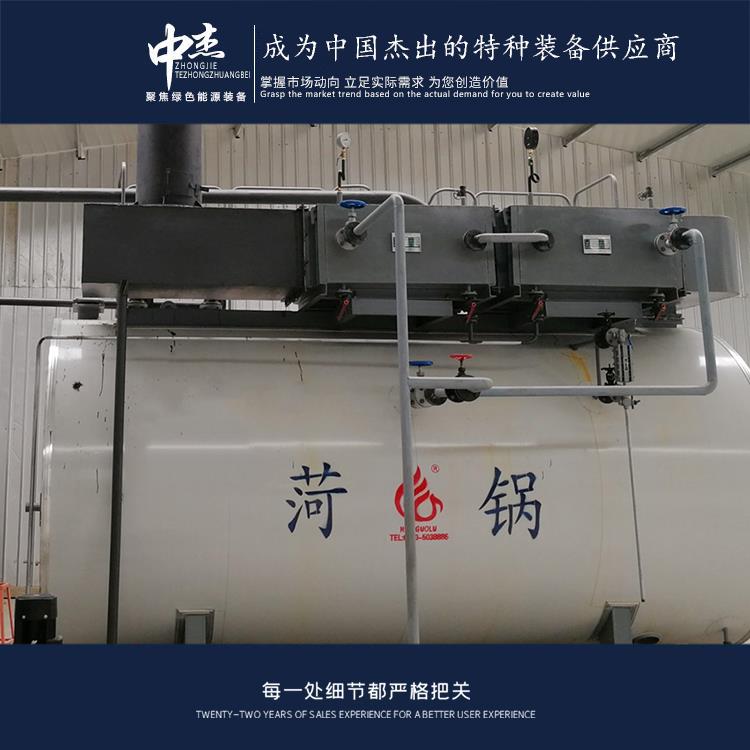


















Shandong Zhongjie Special Equipment specializes in products such as fuel (gas) boilers, organic heat carrier boilers, biomass boilers, waste heat recovery boilers, and other boiler products; vacuum insulation cryogenic pressure vessels like LNG, oxygen/nitrogen/argon storage tanks, and CO2 storage tanks; pressure vessel products including denitrification engineering equipment, heat storage and energy storage equipment, and complete chemical equipment sets; central air conditioning and ventilation equipment such as ground (water) source heat pumps, air source units, water-cooled screw units, and air-cooled modular units. Planned products include large-scale thermal energy centers, LNG transport vehicles, LNG tank containers, and other green energy equipment.
To ensure the safe handling of industrial boilers, attention should be given to the following aspects:
- Adhere to laws and regulations: Understand and comply with relevant laws, regulations, and standards, including those governing boiler safety management and boiler operation and maintenance standards. Ensure compliance with legal requirements throughout the handling process.
- Establish a robust management system: Develop a comprehensive industrial boiler safety management system, clearly defining responsibilities and authorities, and standardizing operational procedures and safety measures. Create operational guidelines and emergency response plans to ensure orderly handling operations.
- Training and education: Train and educate personnel involved in the safe handling of industrial boilers to enhance their safety awareness and skill levels. This includes training for boiler operators, maintenance staff, and management personnel.
- Regular inspections and maintenance: Conduct regular inspections and maintenance on industrial boilers to ensure proper operation and safety performance. This includes checking and maintaining critical components such as the combustion system, water level control, safety valves, and pressure gauges.
- Safety equipment and tools: Equip necessary safety equipment and tools, such as safety valves, pressure gauges, water level indicators, and burners. Ensure the proper operation and effectiveness of these facilities and tools.
- Regular inspections and assessments: Regularly inspect and assess industrial boilers to ensure compliance with safety requirements. This includes routine pressure tests, water quality inspections, and combustion efficiency evaluations.
- Safety records and document management: Establish a comprehensive safety records and document management system to record the operation, maintenance, and accident records of industrial boilers. Promptly update and preserve relevant safety information.
- Regular drills and emergency response training: Conduct regular safety drills and emergency response training to improve the ability to respond to emergencies and the efficiency of emergency handling.
These are some basic points for ensuring the safe handling of industrial boilers. Specific operations should be carried out according to actual conditions and relevant requirements.
In textile processing factories, common types of boilers include the following:
- Steam Boiler: A common boiler type in textile processing plants, the steam boiler produces high-pressure, high-temperature steam for thermal processing, dyeing, boiling, and other processes in textile production. It boasts fast heating, stability, and other advantages.
- Hot Water Boiler: Suitable for low-temperature textile processing, such as washing and drying, the hot water boiler provides a stable supply of hot water with high temperature control accuracy and low energy consumption.
- Hot Air Furnace: Used for drying in textile processing, the hot air furnace transfers heat energy to textiles through the hot air produced by combustion, achieving rapid drying. It has the advantages of fast heating and high thermal efficiency.
When selecting the appropriate boiler type for a textile processing factory, consider the following factors:
- Process Requirements: Determine the required heat medium (steam, hot water, hot air) and parameters such as working temperature and pressure based on the specific process requirements of the textile factory.
- Energy Costs and Efficiency: Consider the energy consumption and efficiency of different boiler types, choosing one that meets processing needs and has high energy utilization efficiency.
- Environmental Protection Requirements: Pay attention to the emission standards and environmental performance of the boiler and choose the appropriate type accordingly.
- Maintenance and Operation: Evaluate the ease of maintenance and operation of the boiler, ensuring it is reliable and cost-effective in the long run.
Based on the provided information, I cannot accurately determine the heating area for a 40-ton gas-fired hot water boiler or the gas pressure for an atmospheric pressure gas boiler. The determination of these parameters requires considering multiple factors, including the boiler's design specifications, the type and quality of the gas, and the heating system's requirements. The heating area is typically calculated based on the size of the building or industrial production facility that needs heating, along with the heat load. Common calculation methods include heat load calculations based on the building's floor area, local climate conditions, and indoor temperature requirements. The gas pressure depends on the type of gas and the design of the gas supply system. Different types of gas (such as natural gas, etc.) have different pressure requirements. The gas pressure also needs to consider factors like the gas pipeline's length, diameter, and material. Therefore, to accurately determine the heating area for the 40-ton gas-fired hot water boiler and the gas pressure for the atmospheric pressure gas boiler, it is recommended to consult the boiler manufacturer or engineer, who can calculate and design based on the specific situation.
The decline in the consumption of thermal oil boilers can be attributed to several factors:
1. Combustion Technology: Modern thermal oil boilers employ advanced combustion technologies such as premixed combustion and flame control, which ensure complete fuel combustion, enhance thermal energy utilization, and thereby reduce energy consumption.
2. Heat Recovery: Thermal oil boilers typically generate a significant amount of excess heat during flue gas emissions. By utilizing heat recovery systems like flue gas heat recovery boilers or flue gas heat exchangers, the excess heat in flue gases can be recovered and reused, improving energy efficiency and reducing consumption.
3. Intelligent Control Systems: Contemporary thermal oil boilers are equipped with intelligent control systems capable of real-time monitoring and adjustment of operating parameters such as temperature, pressure, and flow rate. This ensures optimal boiler operation, preventing unnecessary energy waste and loss.
4. Energy-saving Retrofitting and Optimization: For older thermal oil boilers, energy-saving retrofitting and optimization can be performed. This includes installing energy-saving equipment like variable-frequency drives and modified burners to enhance equipment energy efficiency. Additionally, optimizing the boiler system, such as improving pipe insulation and reducing leaks, can further reduce energy loss.
5. Energy Management and Maintenance: Effective energy management and regular equipment maintenance are crucial factors in reducing energy consumption. Implementing energy management measures such as energy monitoring, metering, and promoting energy-saving awareness can identify and resolve energy waste issues. Regular equipment maintenance ensures smooth operation and prevents unnecessary energy loss.
In summary, the decline in energy consumption of thermal oil boilers can be achieved through combustion technology, heat recovery, intelligent control, retrofitting, and energy management.
Our company attaches great importance to technological innovation and R&D design. We have one municipal-level enterprise technology center in Heze City, equipped with testing facilities for non-destructive testing, physical and chemical testing, welding testing, hydrostatic testing, etc. We have over 600 types of equipment, including CNC machine tools, X-ray flaw detectors, digital ultrasonic flaw detectors, mechanical property testing machines, chemical analyzers, spectrometers, tensile testing machines, plasma welding machines, and more. The key products and technologies we have developed, such as temperature and pressure vessel welding, biomass boiler emission reduction, and waste heat utilization, have successively been selected for multiple Shandong Provincial Department of Industry and Information Technology science and technology innovation projects, Shandong Provincial key projects, and Heze City innovation and excellence projects. We have accumulated 27 authorized utility models, 16 authorized inventions, participated in drafting 2 standards, 2 industry standards, and registered 15 trademarks. The technical team of our company, in collaboration with Professor Yajiang Li of Shandong University, has developed deep cryogenic container processing technology using the international plasma arc + filler wire tungsten inert gas arc welding (PAW-GTAW) technology. The provincial-level scientific and technological achievement identification has confirmed that the technology level in the field of deep cryogenic container manufacturing has reached an international standard.
Choose ZJET for your custom outfit, let's create brilliance together!
WeChat Official Account

Scan to follow Official Account



















