


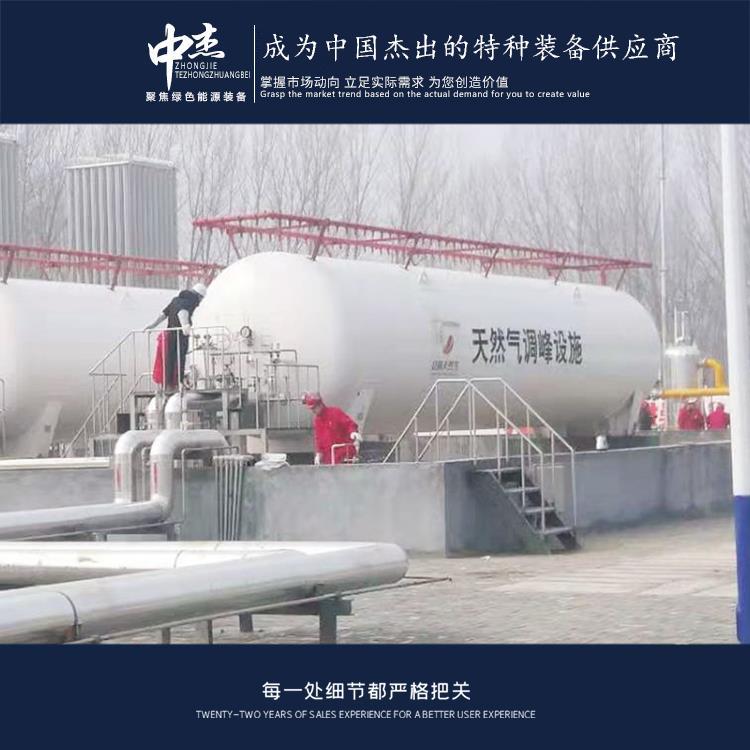

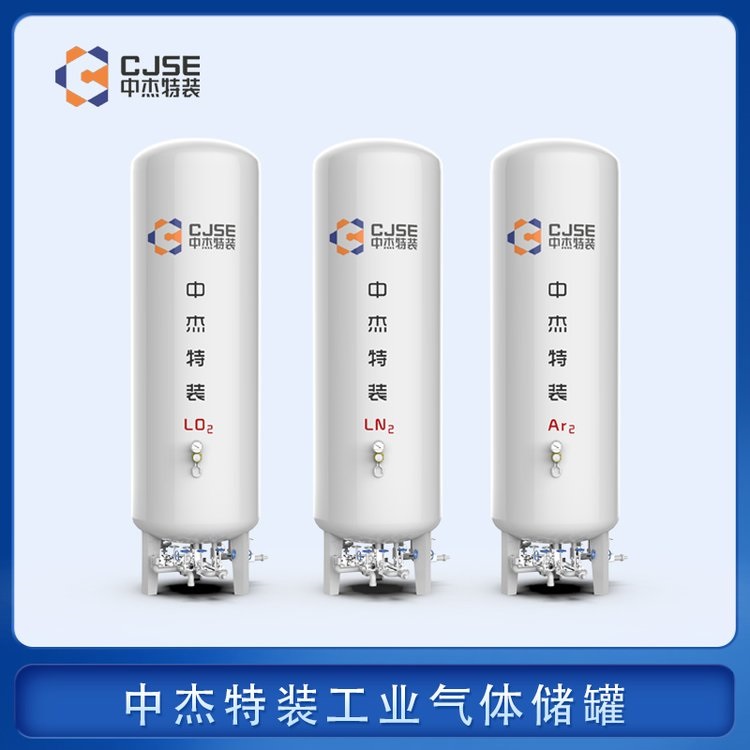
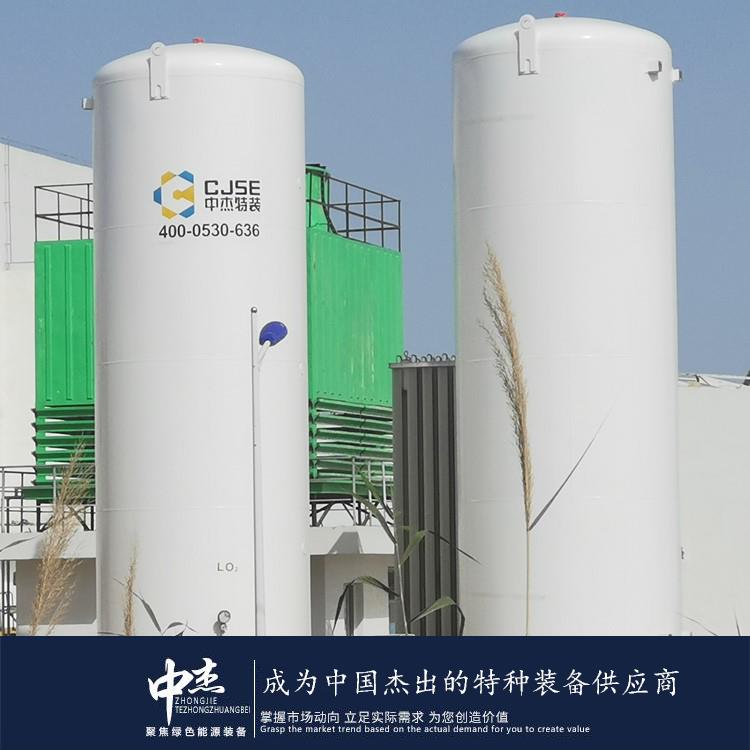


















Shandong Zhongjie Special Equipment (formerly Heze Boiler Factory Co., Ltd.) holds an A-grade boiler manufacturing license, an A2-grade pressure vessel manufacturing license, an A2-grade pressure vessel design license, a B-grade boiler installation license, and GB2/Class, GC2/Class pressure pipeline installation licenses, as well as a mechanical and electrical equipment installation contracting qualification. It is a member of the China Boiler and Water Treatment Association, the China Chemical Equipment Association, and the理事 unit of the Shandong Equipment Manufacturing Association. The company has also passed the ISO9001 Quality Management System, ISO14001 Environmental Management System, OHSAS18001 Occupational Health and Safety Management System certifications, and the American ASME/U2 certification.
Liquid oxygen storage tanks are high-pressure, highly oxidizing equipment, and special attention to safety is required during use. Here are some safety precautions for liquid oxygen storage tanks:
Operation: The operation of liquid oxygen storage tanks should be performed by trained and experienced personnel. Operators should be familiar with the tank's structure, performance, and operational procedures, and operate strictly according to the operation manual and safety regulations.
Fire Prevention Measures: Liquid oxygen is highly oxidizing and can easily cause fires and explosions. Open flames and sparks, as well as contact with high-temperature objects, should be prohibited around the liquid oxygen storage tank. Fire prevention facilities and fire extinguishing equipment should be established, and regular inspections and maintenance should be conducted.
Leakage Control: In the event of a leakage in a liquid oxygen storage tank, immediate measures should be taken to control the leakage. Leaks can lead to the evaporation of liquid oxygen and an increase in oxygen concentration, increasing the risk of fire and explosion. A leakage alarm system should be established, and leakage control devices and personal protective equipment should be provided.
Insulation Protection: Liquid oxygen storage tanks should have good insulation protection to reduce the evaporation of liquid oxygen and maintain a low temperature state. The insulation layer should be inspected and maintained regularly to ensure its integrity and insulating properties.
Safety Distance: A certain safety distance should be maintained around the liquid oxygen storage tank to prevent the spread of fires, explosions, and leaks. The specific requirements for safety distances should be assessed and determined according to local regulations and standards.
Regular Inspections and Maintenance: Liquid oxygen storage tanks should be inspected and maintained regularly, including checking the structural integrity of the tank, valves, and pipelines for tightness.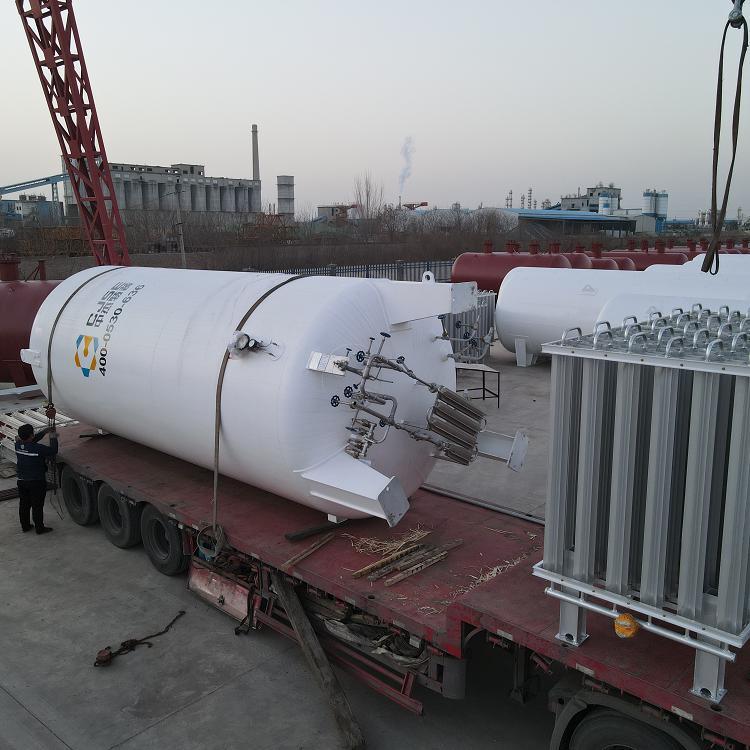
Liquid Oxygen Storage Tanks are specialized equipment that require careful attention to safety and an understanding of their characteristics. Below are the safety precautions and features of using liquid oxygen storage tanks:
**Safety Precautions:**
- **Operation:** The operation of liquid oxygen storage tanks should be carried out by trained and experienced personnel. Operators should be familiar with the tank's structure, performance, and operational procedures, and operate strictly according to the manual and safety regulations.
- **Fire Prevention Measures:** Liquid oxygen is highly oxidizing and can easily cause fires and explosions. Open flames and hot objects should be prohibited around the storage tank to prevent sparks and contact. Fire prevention facilities and fire extinguishing equipment should be established and regularly inspected and maintained.
- **Leakage Control:** In the event of a leakage, immediate measures should be taken to control the leakage. Leaks can cause evaporation of liquid oxygen and increase oxygen concentration, raising the risk of fire and explosion. A leakage alarm system should be set up, and leakage control devices and personal protective equipment should be provided.
- **Insulation Protection:** Liquid oxygen storage tanks should have good insulation to reduce evaporation and maintain low temperatures. The insulation layer should be regularly inspected and maintained to ensure its integrity and insulating properties.
- **Safety Distance:** A certain safety distance should be maintained around the liquid oxygen storage tank to prevent the spread of fires, explosions, and leaks. The specific requirements for safety distance should be assessed and determined according to local regulations and standards.
**Features:**
- **High Oxidizing Property:** Liquid oxygen is highly oxidizing and can support and intensify combustion. Therefore, special attention must be paid to fire and explosion prevention measures when using liquid oxygen storage tanks.
- **High-Pressure Storage:** Liquid oxygen storage tanks typically store high-pressure oxygen, with pressures usually around 2-5 bar. Therefore, pressure control and the safety of pressure relief devices should be noted during the operation and maintenance of liquid oxygen storage tanks.
- **Low-Temperature Storage:** The liquid oxygen in the storage tank is at a low temperature, usually around -183°C. Therefore, when contacting the liquid oxygen storage tank, appropriate protective measures should be taken.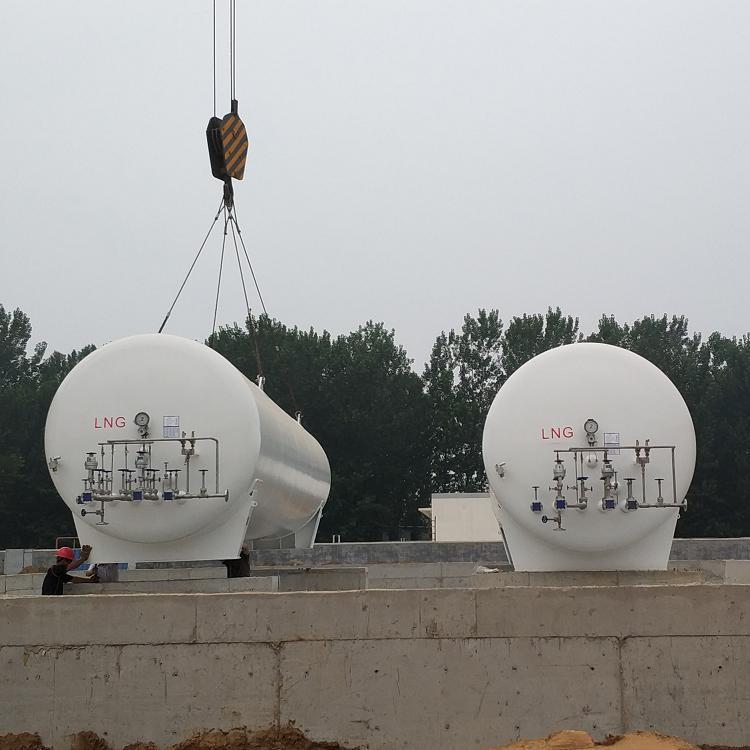
To extend the service life of low-temperature liquid storage tanks, the following measures can be taken:
Regular Inspections and Maintenance: Conduct regular visual inspections of the tank, including the shell, welds, valves, and fittings. Check for any abnormalities such as cracks, corrosion, or deformation, and promptly repair or replace damaged parts.
Maintain the insulation layer: Insulation is crucial for the thermal preservation of low-temperature liquid storage tanks. Regularly inspect the integrity and insulation performance of the insulation layer, repair or replace damaged insulation materials to ensure the tank's insulation effectiveness.
Control temperature and pressure: The temperature and pressure of the low-temperature liquid storage tank should be maintained within a safe range. Avoid excessive or low temperatures and pressures that could damage the tank. Implement appropriate cooling or heating measures to ensure stable temperature and pressure of the liquid.
Corrosion Protection: The shell and internal structure of the storage tank should be protected against corrosion and oxidation. Regularly inspect and maintain the protective coating to ensure its integrity.
Avoid excessive pressure and over-filling: Prevent the internal pressure of the tank from being too high or too low, as well as over-filling with liquid. Excessive pressure and over-filling can lead to structural破裂 or damage of the tank.
Regular cleaning and waste removal: Regularly clean the interior of the tank to remove accumulated impurities and dirt. Regularly remove waste to prevent damage to the tank from impurities and sediments in the liquid.
Safety Operation and Training: Ensure operators have knowledge and skills for safe handling of cryogenic liquid storage tanks. Enhance safety training to improve operators' safety awareness and emergency response capabilities.
Manage records and documents: Establish comprehensive management records and documents, including the usage of storage tanks.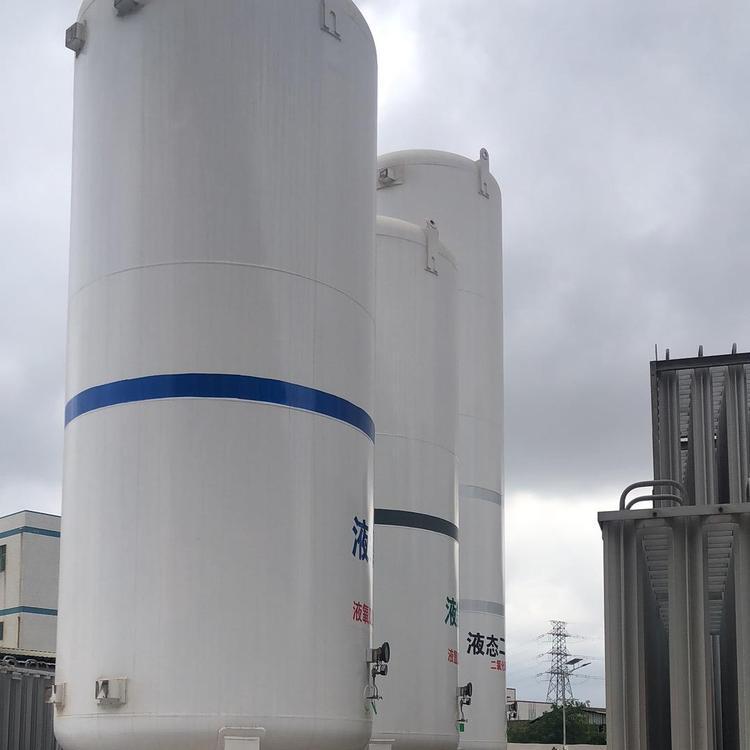
During the degreasing process of high vacuum pipelines in low-temperature liquid storage tanks, the following steps can be taken:
Preparation: Ensure the cleanliness and readiness of the defatting equipment and tools. Check the connections and seals of the pipeline system, ensuring there are no leaks.
Pipe Cleaning: Utilize suitable cleaning agents and tools to clean the pipes, removing surface dirt and grease. Methods can include mechanical brushing, high-pressure water washing, or chemical cleaning.
De-greasing Process: Select an appropriate de-greaser and inject it into the pipeline system. The de-greaser can be an organic solvent or an alkaline solution, the choice depending on the pipeline material and type of dirt. Ensure the de-greaser thoroughly covers the inner pipeline wall and maintains a certain contact time.
Pipe flushing: Drain the degreaser from the pipeline system and flush with clean water to remove any remaining degreaser and dirt. During flushing, high-pressure water or gas can be used for scrubbing to ensure the cleanliness of the pipeline interior.
Drying Pipe: Utilize drying equipment or ventilation systems to evaporate or exhaust moisture within the pipeline, ensuring the inner surface of the pipe remains dry. Drying can be achieved using hot air or nitrogen.
Inspection and Testing: After degreasing, inspect and test the pipeline to ensure its cleanliness and sealing integrity. Visual inspection, pressure testing, or other relevant tests can be conducted.
Note that when descaling high vacuum pipelines of low-temperature liquid storage tanks, it is crucial to adhere to the relevant safety operational procedures and guidelines. Ensure that operators are equipped with the necessary safety awareness and operational skills to prevent accidents.
Shandong Zhongjie Special Equipment, welcome clients for factory talks and cooperation.
WeChat Official Account

Scan to follow Official Account



















