



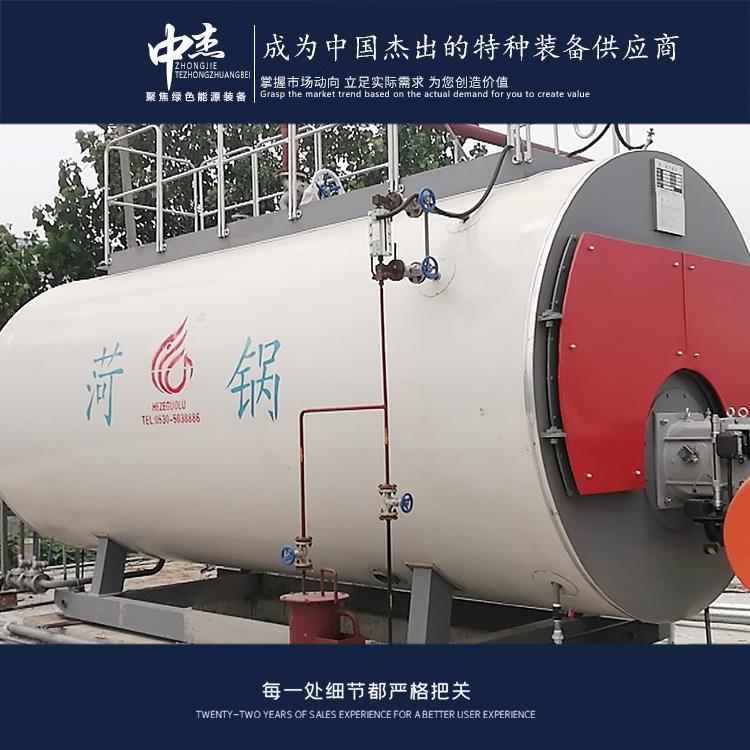
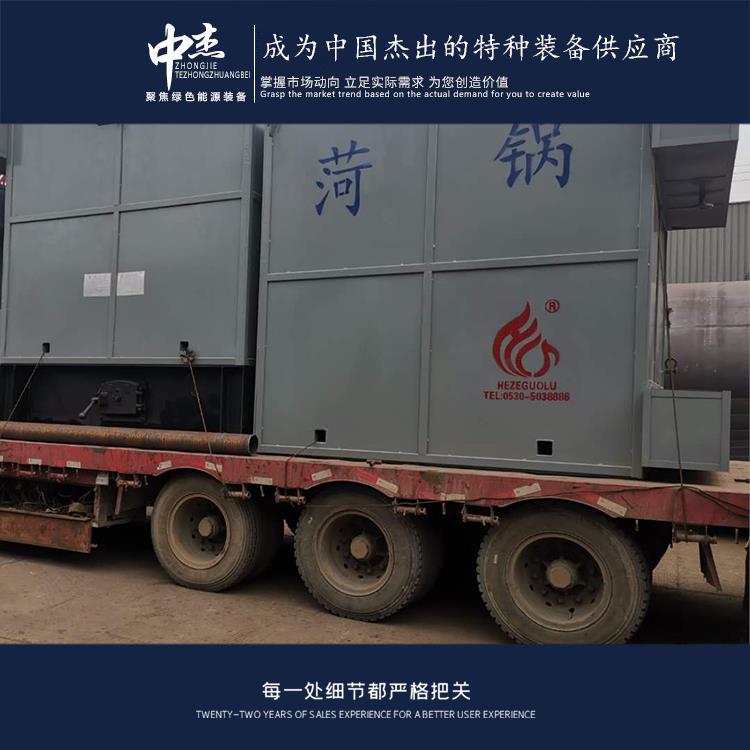


















Shandong Zhongjie Special Equipment's main products include: fuel (gas) boilers, organic heat carrier boilers, biomass boilers, waste heat recovery boilers, and other boiler products; vacuum insulation cryogenic pressure vessels such as LNG tanks, oxygen/nitrogen/argon tanks, and CO2 tanks; pressure vessel products such as denitrification engineering equipment, heat storage and energy storage equipment, and complete chemical equipment; central air conditioning and HVAC equipment such as ground (water) source heat pumps, air source units, water-cooled screw units, and air-cooled modular units. Planned products include large-scale energy centers, LNG transport vehicles, LNG tank containers, and other green energy equipment.
To ensure the safety management of industrial boilers, attention should be given to the following aspects:
- Adhere to laws and regulations: Understand and comply with relevant laws, regulations, and standards, including those for boiler safety management and standards for boiler use and maintenance. Ensure compliance with legal requirements throughout the management process.
- Establish a sound management system: Develop a comprehensive industrial boiler safety management system, define responsibilities and authorities, standardize operational procedures and safety measures. Formulate operational guidelines and emergency response plans to ensure orderly management of safety operations.
- Training and education: Conduct training and education for personnel involved in the safety management of industrial boilers to enhance their safety awareness and skill levels. This includes boiler operators, maintenance staff, and management personnel, all of whom should receive appropriate training.
- Regular inspections and maintenance: Conduct regular inspections and maintenance of industrial boilers to ensure normal operation and safety performance. This includes checking and maintaining key components such as the combustion system, water level control, safety valves, and pressure gauges.
- Safety equipment and facilities: Equip necessary safety equipment and facilities, such as safety valves, pressure gauges, water level indicators, and burners, to ensure their proper operation and effectiveness.
- Regular inspections and evaluations: Conduct regular inspections and evaluations of industrial boilers to ensure compliance with safety requirements. This includes regular pressure tests, water quality inspections, and combustion efficiency assessments.
- Safety records and档案 management: Establish a comprehensive system for safety records and document management, recording operational conditions, maintenance records, and accident reports for industrial boilers. Update and preserve relevant safety documentation in a timely manner.
- Regular drills and emergency response training: Organize regular safety drills and emergency response training to improve the ability to respond to emergencies and the efficiency of emergency handling.
The above are some basic points for ensuring the safety management of industrial boilers. Specific operations should be conducted according to actual circumstances and relevant requirements.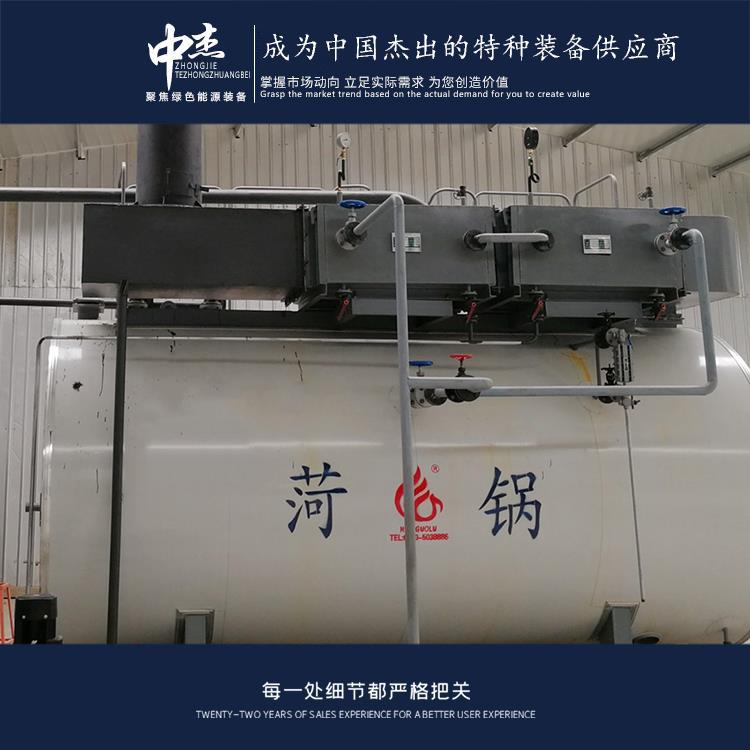
In industrial boiler systems, the key functional parameters of pumps include the following aspects:
- Flow Rate: The flow rate of a pump refers to the volume of liquid it pumps per unit of time. In industrial boilers, pumps must provide sufficient flow to meet the boiler's water requirements. The size of the flow rate depends on the boiler's rated evaporation capacity and the design requirements of the circulating water system.
- Head: The head of a pump is its ability to overcome the resistance of the liquid and lift it to a certain height. In industrial boilers, pumps must have adequate head to ensure water flows smoothly to all parts of the boiler, including the feed water and circulating water systems.
- Power: The power of a pump is the electrical or mechanical energy required to drive the pump. In industrial boilers, the power of the pump needs to be determined based on flow rate and head to meet the system's demands.
- Efficiency: The efficiency of a pump is the ratio of the input energy to the output fluid energy. High-efficiency pumps can reduce energy consumption and operating costs. In industrial boilers, selecting high-efficiency pumps can improve the system's energy efficiency performance.
- Operating Stability and Reliability: Pumps in industrial boiler systems must have good operating stability and reliability. They should be able to run stably for long periods without being affected by external interference or fluctuations and should be adaptable to different operating conditions.
- It is necessary to select the appropriate pump based on the specific industrial boiler system and design requirements, ensuring that the pump's functional parameters meet the system's needs. Additionally, the selection and operation of the pump must comply with relevant standards and specifications to ensure safe and reliable operation.
Possible reasons for uneven heat distribution in steam boilers may include the following aspects: Uneven combustion: During the combustion process, uneven mixing of fuel and air, or an improperly designed and adjusted burner, can lead to uneven combustion. This results in some areas producing more heat while others produce less. Pipe blockage: In the conveying pipes of steam boilers, the presence of blockages or scale can cause uneven heat transfer. Blockages or scale impede steam flow, limiting heat transfer in certain areas while allowing better heat transfer in others. Heat exchanger issues: If the heat exchangers in steam boilers have problems such as scaling, corrosion, or blockages, they can lead to uneven heat transfer. These issues affect the heat conduction efficiency of the heat exchangers, impacting heat transfer in some areas. Water level issues: Inaccurate or unstable water level control in steam boilers can result in uneven steam production. Both high and low water levels can affect steam production and distribution, leading to uneven heat. Boiler load changes: Changes in boiler load can also cause uneven heat distribution. When the load suddenly increases or decreases, the boiler's heat production and distribution may not adjust promptly, resulting in uneven heat. To address the issue of uneven heat distribution in steam boilers, regular inspection and maintenance of boiler equipment is necessary to ensure the normal operation of combustion and heat exchange processes. Additionally, adjusting burners and control systems reasonably, maintaining stable water levels, cleaning pipes and heat exchangers, and improving...
To optimize and improve the planning of gas boiler systems, consider the following aspects:
1. Energy Audit and Assessment: Conduct a comprehensive energy audit and assessment to understand the energy consumption of the gas boiler system and identify potential energy-saving opportunities. Through data analysis and energy measurement, determine the main sources of energy consumption and bottlenecks to provide a basis for subsequent optimization.
2. Combustion System Optimization: Optimize the combustion system of the gas boiler, including adjustments and cleaning of burners, control of gas-to-air ratios, and maintenance of the combustion chamber. Ensure high combustion efficiency and gas utilization, reducing energy waste.
3. Heat Recovery Utilization: Consider installing heat recovery devices such as waste heat recovery units or flue gas heat exchangers. These devices can utilize the excess heat from the flue gas emitted by the gas boiler to heat water or other equipment requiring heat, improving energy utilization efficiency.
4. Pipe Insulation and Leak Inspection: Ensure that the insulation performance of gas and hot water pipes is good to reduce energy loss. Regularly check for pipe leaks and repair them promptly to avoid energy waste and safety hazards.
5. Control System Upgrade: Consider upgrading the control system of the gas boiler with automated control technology. Through precise control and regulation, achieve optimal operation of the gas boiler.
Shandong Zhongjie Special Equipment, welcome customers to visit our factory for business discussions.
WeChat Official Account

Scan to follow Official Account



















