



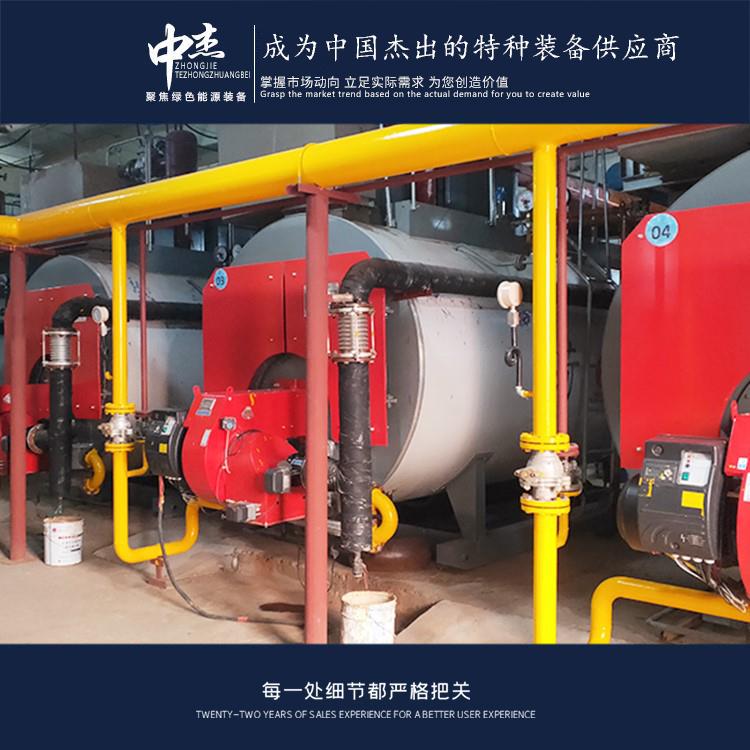
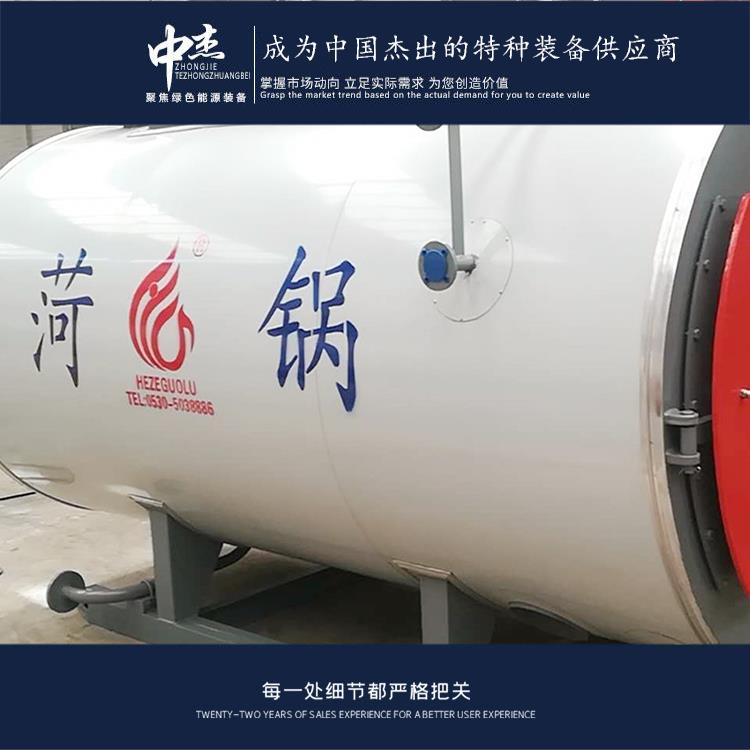


















Shandong Zhongjie Special Equipment (formerly Heze Boiler Factory Co., Ltd.) was established in 2001, located at No. 2218 Jinnan Road, Development Zone, Heze City, with a registered capital of 50 million yuan and total assets of 500 million yuan. The company has 7 business centers: boilers, deep-freeze containers, pressure vessels, central air conditioning, engineering installation, international trade, and Internet of Things. It has three factory sites on Jinnan Road, East Changjiang Road, and Bohai Road, covering a total of 200,000 square meters, with the main workshop spanning 83,000 square meters. Currently, there are 710 employees, including 247 engineers and technicians, and 82 intermediate-level technicians. In December 2016, it was recognized as a "High-Tech Enterprise" by the Science and Technology Department. In June 2021, it was identified as a "Specialized and New Enterprise in Shandong Province" by the Ministry of Industry and Information Technology. In June 2022, it was recognized as a "Gazelle Enterprise in Shandong Province," and in August 2022, it was identified as a "Specialized and New Small Giant Enterprise" by the Ministry of Industry and Information Technology.
The importance of energy-saving in steam boilers is significant for the following reasons: Energy Costs: Steam boilers typically use fuels (such as coal, gas, oil, etc.) to produce steam, and energy costs account for a substantial portion of the boiler's operating expenses. Energy-saving measures can reduce energy consumption and lower costs. Environmental Protection: The combustion process of steam boilers generates exhaust gases and dust, polluting the environment. Energy-saving can decrease fuel consumption and reduce emissions, positively impacting environmental protection. Sustainable Development: Energy-saving is a crucial aspect of sustainable development. By reducing energy consumption and extending the boiler's lifespan, resources can be conserved and waste minimized, achieving sustainable development. Measures for energy-saving include: Improving Boiler Thermal Efficiency: Enhance the boiler's combustion system, optimize combustion parameters, and increase heat exchange efficiency to improve the boiler's thermal efficiency and reduce energy waste. Heat Recovery Utilization: Employ heat recovery systems to capture and utilize the excess heat from the flue gases emitted by the boiler, using it for heating water or other processes requiring heat, thereby improving energy utilization efficiency. Application of Energy-Saving Equipment: Use energy-saving equipment such as variable frequency drives, energy-saving burners, and heat pumps to reduce energy consumption and improve energy efficiency.
To extend the service life of steam boilers, the following measures can be taken:
1. Regular Maintenance: Perform regular maintenance on the boiler, including cleaning the burner, flue, and heat exchanger, inspecting and replacing worn parts, to ensure normal operation and efficiency.
2. Water Quality Control: Maintain good water quality to prevent scale and corrosion from damaging the boiler. Conduct regular water quality tests and implement appropriate water treatment measures based on test results, such as descaling and replenishing missing chemicals.
3. Burn Control: Reasonably control the combustion process to ensure the normal operation and efficiency of the burner. Regularly inspect the burner's operating status, adjust combustion parameters, and avoid overheating or underheating issues.
4. Regular Cleaning: Regularly clean the flue and heat exchanger to remove accumulated dust and dirt, maintain heat exchange efficiency, and prevent overheating and energy loss.
5. Regular Inspection of Safety Devices: Regularly inspect the boiler's safety devices, including safety valves, pressure switches, and level controllers, to ensure they are functioning normally and to ensure safe boiler operation.
6. Record Keeping and Monitoring: Record the boiler's operating parameters, maintenance records, and fault situations, regularly monitor and analyze them, and address problems promptly.
7. Operator Training: Ensure operators have sufficient knowledge of boiler operation and maintenance, operate and maintain the boiler correctly, and avoid damage caused by operation errors and improper maintenance.
8. Regular Inspections: Based on the boiler's usage and the manufacturer's recommendations, perform regular major repairs and inspections, replace worn-out components, and extend the boiler's service life.
Please note that for safety and effectiveness, it is recommended that these maintenance and repair tasks be carried out by trained personnel.
Industrial boiler thermal deoxygenation is a commonly used deoxygenation method, characterized by:
- Deoxygenation: Thermal deoxygenation involves heating the boiler feedwater to release dissolved oxygen from the water using heat. As the water temperature rises during the thermal deoxygenation process, the solubility of oxygen decreases, allowing for effective removal of oxygen from the water.
- No Chemicals Required: Unlike other deoxygenation methods, thermal deoxygenation does not require the use of chemicals, thus avoiding environmental pollution and equipment corrosion caused by chemicals. It also reduces operating costs and complexity.
- Automated Control: Thermal deoxygenation can be achieved through automated control systems, which adjust the feedwater temperature and flow rate based on the boiler's operating status and water quality to achieve optimal deoxygenation.
- Wide Application Range: Thermal deoxygenation is suitable for various types of industrial boilers, including coal-fired, gas-fired, and oil-fired boilers. Whether for small or large boilers, thermal deoxygenation can be used for deoxygenation treatment.
- Improved Boiler Efficiency: Removing dissolved oxygen from the water reduces corrosion and oxidation reactions within the boiler, extending its lifespan. Additionally, reducing oxygen levels can enhance the boiler's thermal efficiency and lower energy consumption.
- Note: While thermal deoxygenation effectively removes oxygen from the water, it may not address other water quality issues such as hardness and alkalinity. Therefore, in practical applications, it is necessary to consider the water quality characteristics and boiler requirements to select an appropriate deoxygenation method.
The inspection contents and requirements for gas boilers typically include the following aspects:
- Safety Valve and Pressure Gauge: Check the installation and fastening of the safety valve and pressure gauge to ensure proper operation and accurate pressure display.
- Combustion System: Inspect the operational status of the burner, including ignition, combustion, and stability. Check the connections of the gas supply pipeline and valves to ensure no leaks.
- Flue and Heat Exchanger: Examine the cleanliness of the flue and heat exchanger, looking for dust and debris, to ensure efficient heat exchange and compliance with smoke emissions requirements.
- Water Level Control System: Check the operational status of the water level controller and gauge to ensure accurate and reliable water level control, preventing excessive or insufficient water levels.
- Gas Supply System: Inspect the installation and connections of the gas supply pipeline and valves to ensure normal gas supply and no leaks.
- Electrical System: Check the wiring and connections of the electrical system, including power supply, controllers, and sensors, to ensure normal operation of electrical equipment and avoid electrical failures.
- Safety Devices: Inspect the operational status of safety devices, including safety valves, pressure switches, and temperature controllers, to ensure proper functioning and ensure the safe operation of the boiler.
- Records and Documents: Review the boiler's operational records, maintenance records, and inspection reports, ensuring the completeness and accuracy of the operation and maintenance records.
The inspection of gas boilers should be conducted by an institution or individual with the appropriate qualifications, adhering to relevant laws, regulations, and standards. The frequency and specific requirements for inspections can be determined based on the boiler's usage and local regulations. Timely inspections and maintenance can ensure the safe and efficient operation of gas boilers.
Our company attaches great importance to technological innovation and research and development. We have one municipal enterprise technology center in Heze City, equipped with testing facilities for non-destructive testing, physical and chemical testing, welding testing, hydrostatic testing, etc. We have over 600 types of equipment, including CNC machine tools, X-ray flaw detectors, digital ultrasonic flaw detectors, mechanical property testing machines, chemical analyzers, spectrometers, tensile testing machines, plasma welding machines, and more. The key products and technologies we have developed, such as temperature and pressure vessel welding, biomass boiler emission reduction, and waste heat recovery, have successively been selected for multiple Shandong Province Science and Technology Innovation Projects, key provincial projects, and Heze City Innovation and Excellence Projects. We have accumulated 27 authorized utility model patents, 16 authorized invention patents, participated in drafting 2 standards, 2 industry standards, and registered 15 trademarks. The technical team of our company, in collaboration with Professor Li Yajiang of Shandong University, has developed deep cryogenic vessel processing technology, utilizing the international plasma arc + filler wire argon arc welding (PAW-GTAW) technology, which has been appraised as reaching an international level in deep cryogenic vessel manufacturing.
Choose ZJET Customization, let's create brilliance together!
WeChat Official Account

Scan to follow Official Account



















