





















Shandong Zhongjie Special Equipment (formerly Heze Boiler Factory Co., Ltd.) was established in 2001, located at No. 2218 Jinnan Road, Economic and Technological Development Zone, Heze City. With a registered capital of 50 million yuan and total assets of 500 million yuan, the company has 7 business centers: boiler, deep-freeze container, pressure vessel, central air conditioning, engineering installation, international trade, and Internet of Things. It operates three factory sites at Jinnan Road, East Changjiang Road, and Bohai Road, covering a total area of 200,000 square meters, with the main workshop spanning 83,000 square meters. It currently employs 710 people, including 247 engineering and technical personnel and 82 middle-level technical staff. In December 2016, it was recognized as a "High-tech Enterprise" by the Science and Technology Department. In June 2021, it was identified as a "Specialized, Fine, and New Enterprise of Shandong Province" by the Ministry of Industry and Information Technology. In June 2022, it was recognized as a "Gazelle Enterprise of Shandong Province" and in August 2022, as a "Specialized, Fine, and New Small Giant Enterprise" by the Ministry of Industry and Information Technology.
When using a 50-cubic-liter liquid oxygen tank, the following safety concerns should be noted:
Tanks Pressure Control: Ensure the liquid oxygen pressure within the storage tank remains within the safe range. Monitor and control the tank's pressure to avoid safety risks from either excessively high or low pressure.
Leakage and Fire Prevention: Regularly inspect the tanks and associated pipelines for seal integrity to prevent liquid oxygen leakage. Liquid oxygen is highly flammable, so fire prevention measures must be taken to ensure there are no sources of fire around the tanks.
Explosion-proof Measures: Oxygen in the liquid oxygen tank can cause explosions upon contact with flammable materials. Ensure there are no flammables around the tank and implement explosion-proof measures, such as explosion-proof electrical equipment and static grounding.
Safety valves and discharge systems: Tanks should be equipped with safety valves and discharge systems to prevent overpressure conditions. Ensure the proper operation of the safety valves and the unobstructed flow of the discharge systems.
Routine Maintenance and Inspection: Regularly maintain and inspect the storage tank, including cleaning, coating protection, and corrosion prevention. Ensure the structural integrity and safety of the tank.
Safety Operations and Training: Operators must undergo relevant safety training, familiarize themselves with the safe operation procedures and emergency response measures for liquid oxygen tanks. Adhere to the correct operational steps to ensure safe operation.
Environmental Monitoring: Regularly monitor environmental parameters such as oxygen concentration and temperature around the storage tanks to ensure safety.
Emergency Preparedness: Develop an emergency response plan, including measures for leaks, fires, and explosions. Equip with appropriate emergency equipment and firefighting supplies to handle unexpected events.
Above are some safety issues to be aware of when using a 50-cubic-liter liquid oxygen tank. To ensure safety, it is recommended to follow relevant safety regulations and operating guidelines, and seek assistance and guidance from professionals when necessary.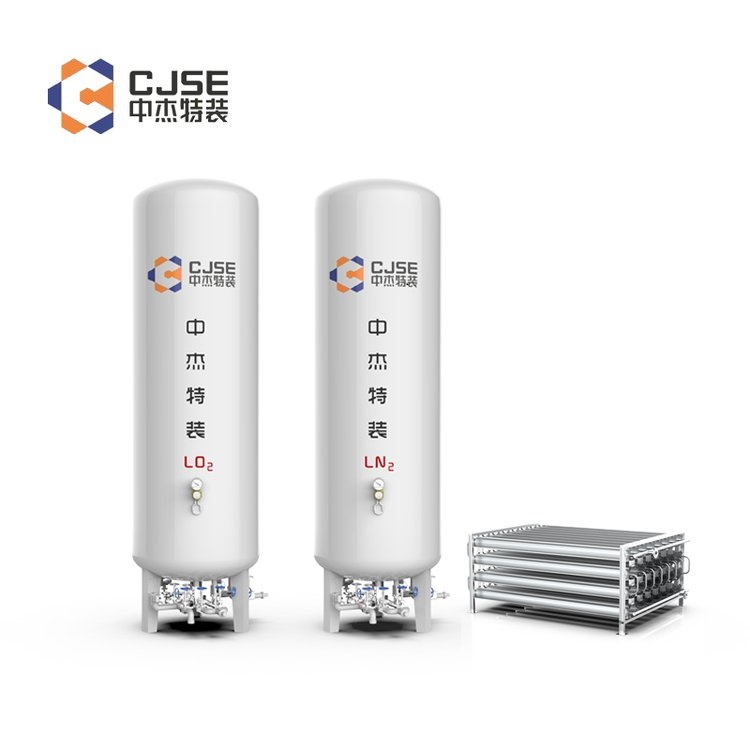
Several factors need to be considered when determining the design pressure and calculated pressure of a liquid oxygen storage tank:
Design Pressure: Design pressure refers to the maximum pressure a tank can withstand under normal operating conditions. When determining the design pressure, factors such as the working pressure range of liquid oxygen, the material strength of the tank, and the safety factor must be considered. Generally, the design pressure should be slightly higher than the high working pressure of liquid oxygen to ensure the tank's safety and reliability within the normal operating range.
Calculation Pressure: The calculation pressure refers to the actual working pressure of the tank under the design pressure. It is determined by calculating factors such as the properties of liquid oxygen, the geometric shape of the tank, and the material strength. The calculation pressure should take into account factors like the expansion coefficient of liquid oxygen, temperature changes, and pressure fluctuations to ensure the safety and stability of the tank under actual operating conditions.
Determining the design pressure and calculation pressure of liquid oxygen storage tanks typically requires adherence to relevant standards and specifications, such as Standard GB150 "Steel Pressure Vessels" and GB18442 "Technical Conditions for Storage Tanks of Liquid Oxygen, Liquid Nitrogen, and Liquid Argon." These standards and specifications provide detailed design and calculation methods to ensure the safety and reliability of the tanks.
In practical applications, the design pressure and calculated pressure of liquid oxygen storage tanks should be computed and determined by the pressure vessel designer. They will take into account specific engineering requirements, tank dimensions, materials, and other factors to ensure the tank's design and use comply with relevant safety standards and regulations.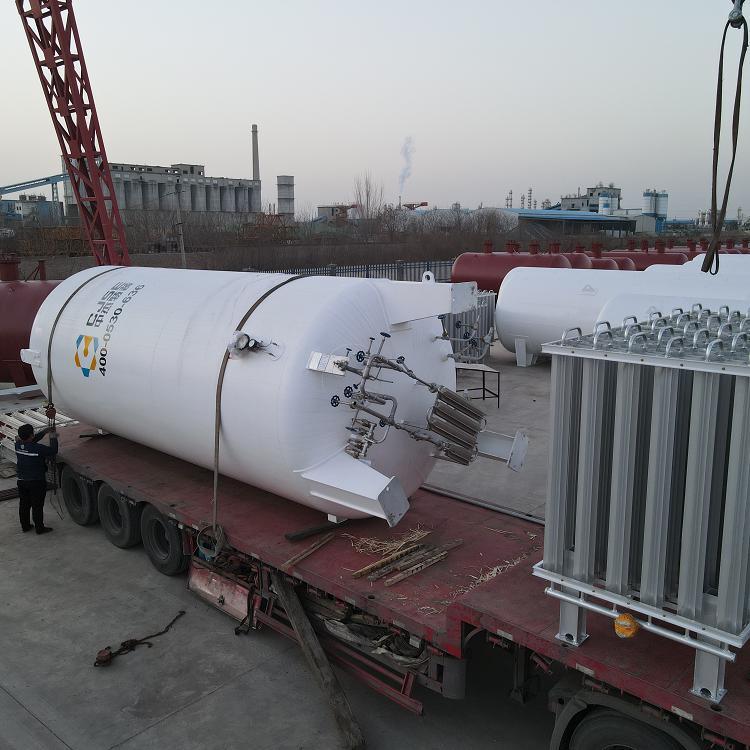
Leakage defects in liquid argon storage tanks may be caused by the following reasons:
Design or Manufacturing Defects: Defects in the design or manufacturing process of the tank, such as loose welds, improper material selection, or poor sealing, lead to leakage issues in the tank.
Corrosion and Oxidation: Long-term exposure to low temperatures can lead to corrosion and oxidation in liquid argon storage tanks. These processes can damage the surface protective layer of the tank, causing leakage issues.
Fatigue and Stress Cracking: During long-term use, tanks may experience fatigue and stress cracking due to temperature and pressure variations. These cracks can lead to a decrease in the tank's sealing performance, causing leaks.
Improper Operation: Failure to follow proper procedures during the storage tank's operation, such as overfilling with liquid argon or excessive pressure, can lead to tank damage and leakage.
External Damage: The tank may sustain damage from external factors such as mechanical impacts or objects.
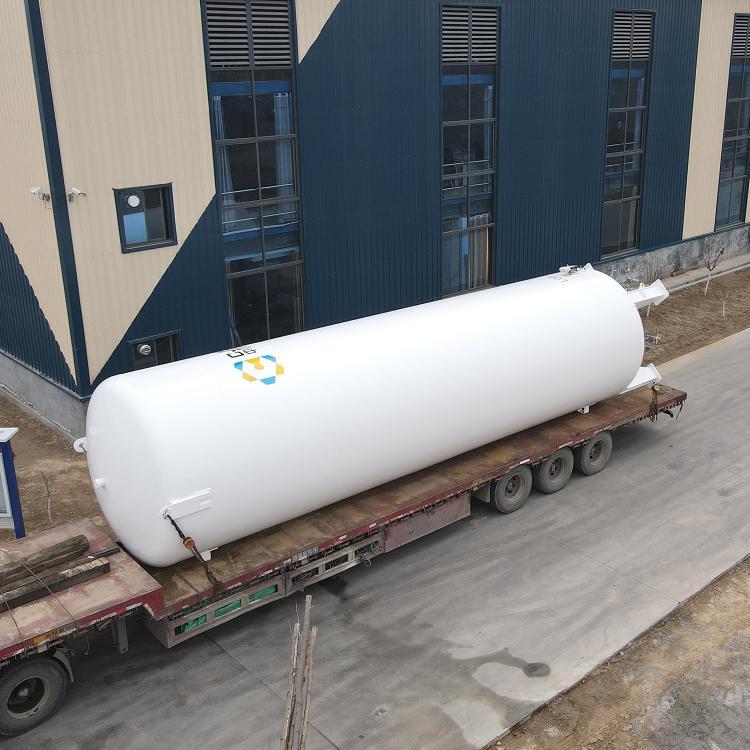
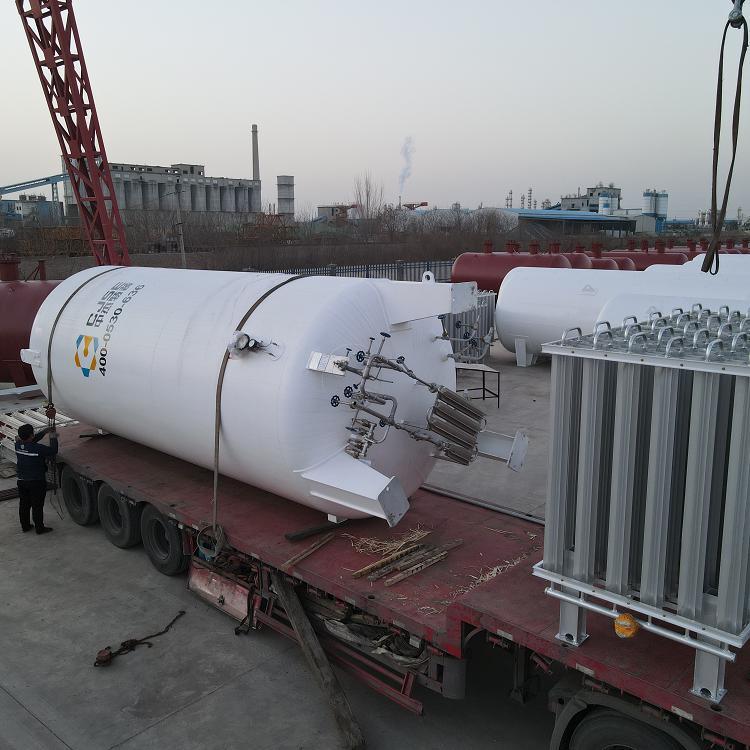
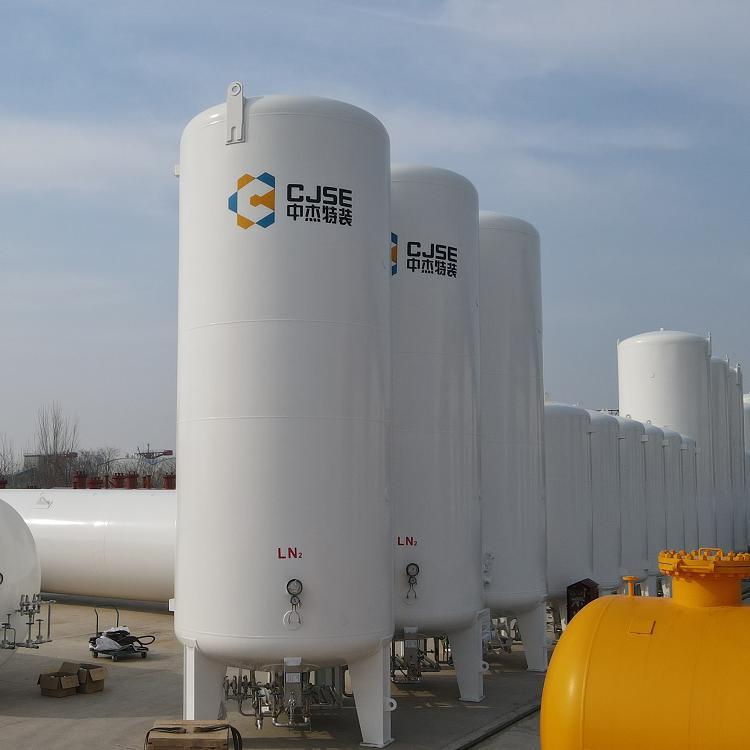
A liquid oxygen storage tank is a device used for storing liquid oxygen. Liquid oxygen is the liquid form obtained by cooling oxygen below its boiling point and is commonly used in fields such as medical devices, industrial production, and equipment. Liquid oxygen storage tanks are typically made of high-strength materials like stainless steel to ensure they can withstand the low temperatures and high pressures of liquid oxygen. The interior of the tank usually features an insulating layer to minimize evaporation of the liquid oxygen and maintain its低温 state. The design and manufacturing of liquid oxygen storage tanks must consider safety and reliability to prevent leaks and explosive situations. Strict operational procedures and safety standards must be followed when using liquid oxygen storage tanks to ensure the safety of personnel and equipment. The development and manufacturing of liquid oxygen storage tanks are carried out by engineers and technical teams, involving knowledge and technology from various fields such as materials science, mechanical engineering, and chemical engineering. Different manufacturers may use different design and manufacturing methods to meet the needs and application scenarios of different users.
Our company highly values technological innovation and R&D design. We possess 1 municipal-level enterprise technology center in Heze City, equipped with non-destructive testing, physical and chemical testing, welding testing, hydrostatic testing, and other testing facilities. We have over 600 types of equipment, including CNC machine tools, X-ray flaw detectors, digital ultrasonic flaw detectors, mechanical property testing machines, chemical analyzers, spectrometers, tensile testing machines, plasma welding machines, and more. Our key products and technologies, such as thermal pressure vessel welding, biomass boiler emission reduction, and waste heat utilization, have successively been shortlisted for multiple Shandong Provincial Department of Industry and Information Technology science and technology innovation projects, key projects in Shandong Province, and Heze City innovative and excellent projects, etc. We have cumulatively obtained 27 authorized utility model patents, 16 authorized invention patents, participated in drafting 2 standards, 2 industry standards, and registered 15 trademarks. Our technical team, in collaboration with Professor Li Yajiang of Shandong University, has developed deep cryogenic container processing technology using the internationally recognized plasma arc + filler wire tungsten inert gas arc welding (PAW-GTAW) technology. The provincial-level scientific and technological achievement assessment has determined that the technology level in the field of deep cryogenic container manufacturing has reached an international standard. Choose Zhongjie Special Equipment, and let's create brilliance together!
WeChat Official Account

Scan to follow Official Account



















