


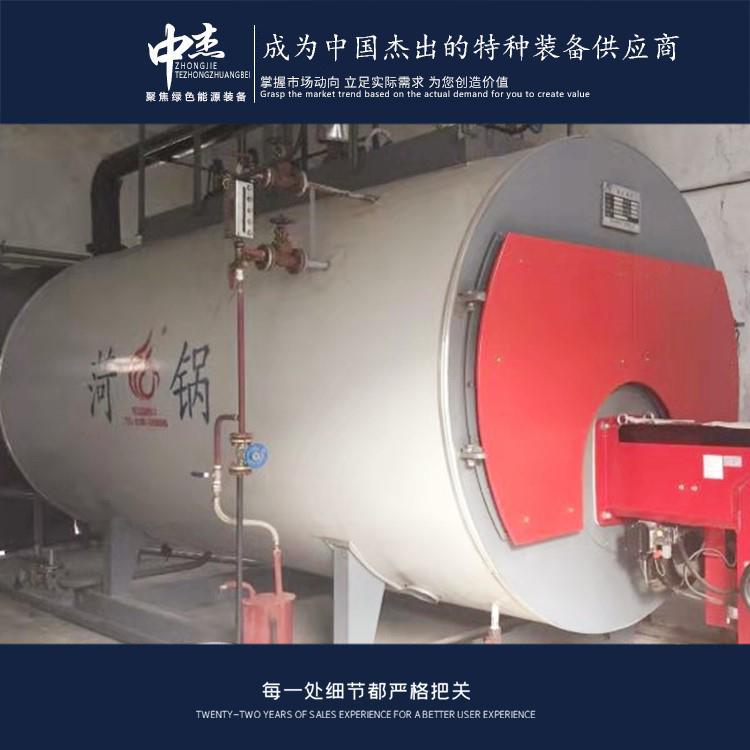

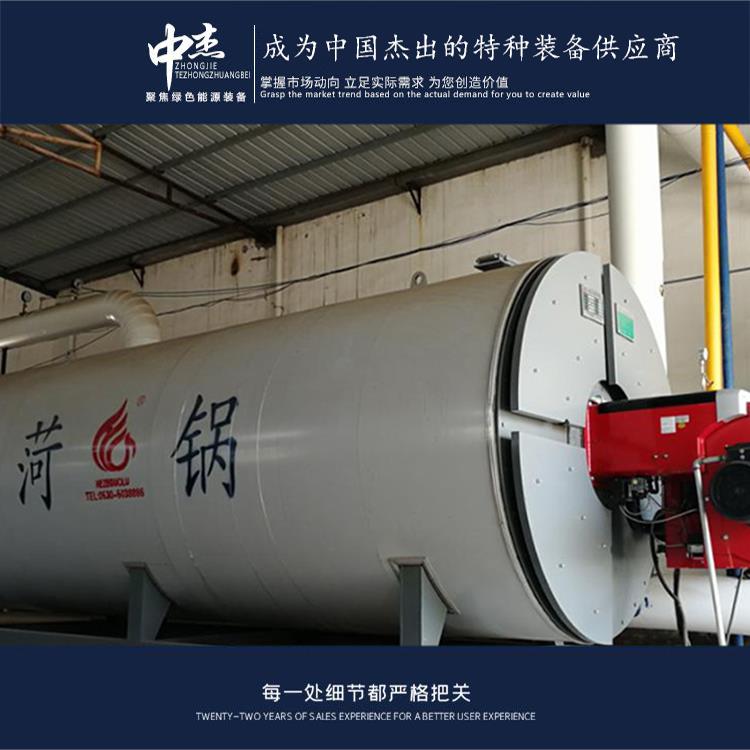
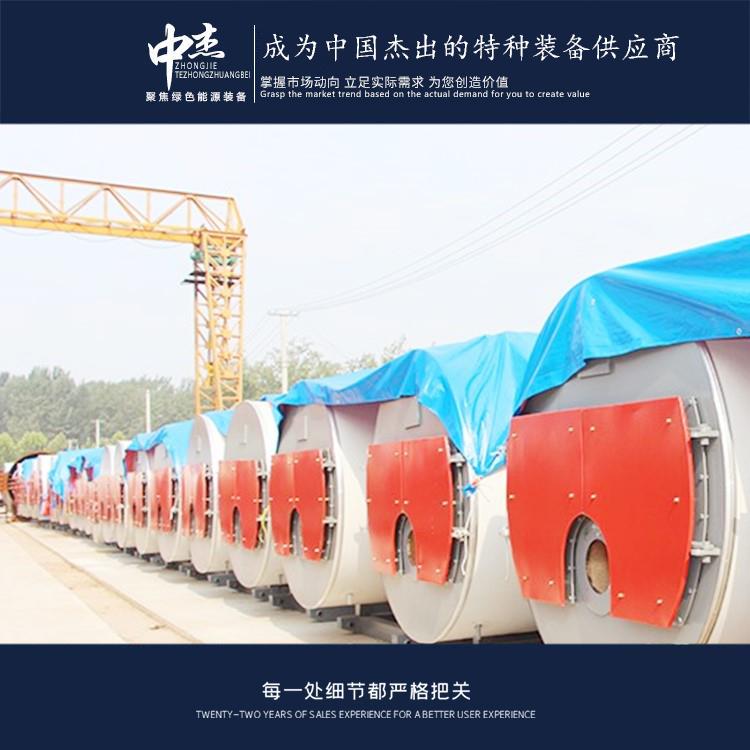


















Shandong Zhongjie Special Equipment Co., Ltd. (formerly Heze Boiler Factory Co., Ltd.) was established in 2001 and is located at No. 2218 Jinnan Road, Economic Development Zone, Heze City. With a registered capital of 50 million yuan and total assets of 500 million yuan, the company has seven business centers: boiler, deep-freeze containers, pressure vessels, central air conditioning, engineering installation, international trade, and the Internet of Things. It has three factory sites on Jinnan Road, East Yangtze Road, and Bohai Road, covering a total of 200,000 square meters, with the main workshop spanning 83,000 square meters. Currently, it has 710 employees, including 247 engineers and technicians, and 82 middle-level technicians. It was recognized as a "High-Tech Enterprise" by the Science and Technology Department in December 2016, named a "Specialized, Fine, and New Enterprise in Shandong Province" by the Ministry of Industry and Information Technology in June 2021, identified as a "Gazelle Enterprise in Shandong Province" in June 2022, and recognized as a "Specialized, Fine, and New Small Giant Enterprise" by the Ministry of Industry and Information Technology in August 2022.
The decline in the consumption of thermal oil boilers can be attributed to several factors:
- Combustion Technology: Modern thermal oil boilers utilize advanced combustion technologies, such as premixed combustion and combustion control, to achieve complete fuel combustion and enhance thermal energy efficiency, thereby reducing energy consumption.
- Heat Recovery: Thermal oil boilers typically generate a large amount of waste heat during flue gas emissions. By employing heat recovery systems like flue gas waste heat boilers or heat exchangers, the waste heat can be recovered and reused, improving energy utilization and reducing consumption.
- Intelligent Control Systems: Contemporary thermal oil boilers are equipped with intelligent control systems that can monitor and adjust operating parameters in real-time, such as temperature, pressure, and flow. Through precise control and regulation, these systems ensure optimal boiler operation, preventing energy waste and loss.
- Energy-saving Retrofitting and Optimization: For older thermal oil boilers, energy-saving retrofitting and optimization can be performed. This includes installing energy-saving equipment like variable-frequency drives and modified burners to enhance equipment efficiency. Additionally, optimizing the boiler system, such as improving pipe insulation and reducing leaks, can reduce energy loss.
- Energy Management and Maintenance: Effective energy management and regular equipment maintenance are crucial factors in reducing energy consumption. Rational energy management measures, such as energy monitoring, measurement, and fostering energy-saving awareness, help identify and address energy waste issues. Regular equipment maintenance ensures smooth operation and prevents unnecessary energy loss.
In summary, the reduction in energy consumption of thermal oil boilers can be achieved through combustion technology, heat recovery, intelligent control, energy-saving retrofitting, and effective energy management.
Clean and environmentally friendly gas boilers offer several advantages:
- Low emissions: The exhaust emissions from gas combustion are relatively low, with lesser amounts of pollutants like nitrogen oxides and particulates. Compared to coal or oil-fired boilers, gas boilers have lower emission levels, causing less environmental pollution.
- High thermal efficiency: Gas combustion has a higher thermal efficiency, allowing for the full utilization of fuel energy and reducing energy waste. Compared to other traditional fuels like coal and oil, gas combustion is more efficient, providing more heat energy.
- Clean combustion: Gas combustion does not produce ash or soot, reducing the accumulation of carbon and dirt inside the boiler and in the flue. This reduces the cleaning and maintenance work required for the boiler, extending its lifespan.
- Stable combustion: The combustion performance of gas is stable, with no significant flame fluctuations or explosion risks during combustion. This makes gas boilers safer and more reliable in operation.
- Fast start and stop: Compared to other fuels, gas boilers have faster and more flexible start and stop processes. This makes them suitable for scenarios requiring frequent start and stop, such as seasonal heating and hot water needs.
- Renewable energy integration: Gas, as a clean fuel, can be combined with renewable energy sources, such as solar hot water systems and biomass fuels. This integration can further improve energy utilization efficiency and environmental friendliness.
Steam boilers produce a certain amount of wastewater during operation, which requires effluent treatment. Here are the general steps for steam boiler effluent discharge:
Preparation: Before discharging, ensure the steam boiler is shut down and the pressure inside the boiler has been reduced to a safe level.
Open the Drain Valve: Locate the corresponding drain valve according to the design of the steam boiler and open it. The drain valve is typically found on the bottom or near the bottom of the boiler's drain pipe.
Discharge Wastewater: After opening the drain valve, wastewater will flow out of the drain pipe. Depending on the need, use a drain pump or gravity to discharge the wastewater.
Observe the Wastewater: During the discharge process, observe the wastewater's color, turbidity, and odor to determine if there are any abnormalities, such as sediment, impurities, or odors.
Close the Drain Valve: Close the drain valve once the wastewater has been discharged or the predetermined effluent target has been reached.
Clean the Drain System: Regularly clean the drain system to prevent blockages or accumulation of debris, ensuring the drain system remains clear.
Note that the specific steps and frequency of steam boiler effluent discharge may vary depending on the model, usage conditions, and operational requirements of the boiler. Therefore, it is advisable to refer to the boiler's operation manual or consult with experts for proper and safe operation.
The flow rate standard for heat-conducting oil in the oil pipes of a heat-conducting oil furnace is typically determined based on specific applications and equipment requirements, without a unified fixed value. However, generally speaking, the flow rate of heat-conducting oil within the pipes should be maintained within a reasonable range to ensure proper equipment operation and heat transfer efficiency. Excessive flow rate of heat-conducting oil may lead to: Increased system pressure loss and pump power consumption. Increased pipe friction loss, leading to energy loss. Increased system noise and vibration. A low flow rate of heat-conducting oil may cause: Insufficient heat transfer, affecting equipment thermal efficiency. Extended oil residence time in the pipes, prone to oxidation and thermal decomposition, impacting the oil's lifespan. Formation of carbon deposits in the pipes, increasing resistance and affecting fluid flow. Therefore, when designing and operating a heat-conducting oil furnace system, it's necessary to consider specific equipment parameters, the properties of the heat-conducting oil, and pipeline layout, among other factors, to determine the appropriate flow rate. Typically, the flow rate should be within the range of 0.5-2.0 m/s, but the actual figures should be adjusted and optimized based on the specific situation. In practice, flow rate control can be achieved by monitoring and adjusting the pump's flow rate and the pipe's resistance to meet the equipment's heat energy demands and operational requirements.
Zhongjie Special Equipment upholds the grand vision of "realizing employees' dreams, creating value for customers, and striving for the prosperity and strength of our motherland," and is dedicated to the development of the green energy equipment industry. We offer society high-value products and services!
WeChat Official Account

Scan to follow Official Account



















